Articles review on the net, revue d'articles sur la toile


Inscription : feeds, flux :
(Atom) Gabriel Real World News

08 juillet 2007

L'Afrique prend la Bastille

Des artistes africains au Bal du 13 juillet


On a plutôt l'habitude d'entendre les flonflons des accordéons le soir du 13 juillet à la Bastille. Une fois n'est pas coutume, la musique africaine et ses représentants demeurant pour la plupart en France, viendront proposer ce 13 juillet, une ambiance de fête particulière aux Parisiens. Revue de détail des prestigieux invités.
  • Alpha Blondy
  • Amadou et Mariam
  • Amel Mathlouthi
  • Ba Cissoko
  • Daby Touré
  • Dobet Gnahoré
  • Fally Ipupa
  • Jacob Desvarieux
  • la Jet Set
  • Johnny Clegg
  • les Tambours de Brazzaville
  • Lokua Kanza
  • Mory Kanté
  • Sergeo Polo
  • Souad Massi
  • Zao
  • Ismaël Lo
http://www.rfimusique.com/musiquefr/articles/091/article_16904.asp

Le succès fragile et coûteux de Musiques métisses

Sans tambour ni trompette, sans discours ni paillettes, le festival Musiques métisses d'Angoulême fêtait, du 1er au 5 juin, sa trentième édition. Une modestie à l'image de son directeur, Christian Mousset, ancien disquaire à Düsseldorf puis instituteur en Algérie, qui s'est installé en 1971 dans la cité charentaise. Fan de rhythm'n'blues et de soul music, il avait créé la manifestation en 1976 sous le nom de Jazz en France.

La découverte de l'Afrique noire en 1982, l'amour des musiques caraïbes ont rapidement bouleversé son identité. Pendant trois décennies, Musiques métisses aura porté — plus qu'accompagné — l'émergence de ce que, par commodité ou paresse, on nomme les"musiques du monde" et leur diffusion auprès du plus large public.

Musiques métisses a largement contribué à la vedettarisation de talents découverts sur les bords de la Charente, comme Cesaria Evora ou Johnny Clegg, vedette de la soirée d'ouverture avec ses compatriotes, les Mahotella Queens. Ces victoires ne sauraient cependant masquer les difficultés financières et logistiques de ce rendez-vous, sensible, par sa nature même, aux aléas politiques et circulatoires.

Car il se trouve que deux des plus importantes maisons de disques indépendantes françaises du secteur — - Next Music et Mélodie - — mettent la clé sous la porte. Il se trouve encore que Musiques métisses, qui fonctionne avec quatre permanents à l'année, peine à boucler le budget de cette trentième édition. En raison de deux désistements, celui de l'Adami (la Société civile pour l'administration des droits, des artistes et des musiciens interprètes) et celui du mécène France Télécom, qui apportait 50 000 euros. Autre coup dur, l'annulation du concert de Cesaria Evora pour raisons de santé. Si la somme de 1,2 million d'euros a finalement pu être réunie, Musiques métisses reste tributaire à 60 % des subventions (ville, département, région, Etat). Sa part d'autofinancement est faible — - 25 % —-, la moitié environ de celle des Francofolies de La Rochelle. Soucieux de cette dépendance, Christian Mousset souhaite augmenter ses fonds propres à hauteur de 40 %. Au prix d'un renoncement à l'un des principes fondateurs du festival, la gratuité de certains concerts.

Musiques métisses lutte en effet pour la démocratisation de l'accès aux musiques du monde. "Avec les concerts gratuits, je me fais ma propre concurrence, note Christian Mousset. Les gens de mon conseil d'administration aimeraient que je sois plus rigoureux dans mon approche financière. La gratuité n'est pas viable économiquement, elle permet de faire partager au plus grand nombre. Son abandon nous coupera d'une partie du public, celui des quartiers. L'idéal serait un site avec un droit d'entrée modeste, comme c'est le cas au Womad - World of Music Arts and Dance, organisation de promotion des cultures du monde fondée par le chanteur britannique Peter Gabriel -."

Ville de plus de 100 000 habitants, Angoulême abrite des communautés d'origine maghrébine (elle a hébergé un camp de harkis), ouest-africaine et comorienne. A l'année, Musiques métisses mène des actions auprès des populations défavorisées (notamment dans les lycées) tout en défendant le commerce équitable et le développement durable.

Comment concilier ces interventions sociales et les contraintes économiques d'un festival ? L'inflation des frais fixes, comme ceux de gardiennage et de sécurité, pèse lourdement. Heureusement, le festival a su s'attirer la sympathie des tourneurs (Mad Minute Music, Vivement ce soir, Caramba ou VO Music) qui lui consentent des réductions sur les cachets des artistes. "Aucun ne dépasse 20 000 euros - prix payé pour Johnny Clegg et Kassav' -, confie Christian Mousset. Et personne ne touche le smic." Le cachet le moins élevé (6 000 euros) est celui du Malien Djelimady Tounkhara.

AUCUN PRIVILÈGE

Il faut ajouter l'hébergement, la nourriture, parfois l'équipement. Christian Mousset a pu acheter des guitares et des amplificateurs à des musiciens qui sont repartis avec. Enfin, il y a les transports, dont le coût a considérablement augmenté avec la position quasi monopolistique d'Air France sur l'Afrique de l'Ouest. Le festival ne bénéficie d'aucun privilège alors que la compagnie belge Sabena accordait des réductions sur ses vols de l'ordre de 50 %.

"Si vous voulez faire venir un Congolais, il vous en coûte 1 500 euros pour l'aller-retour, résume Christian Mousset. Sans parler de cette forme de racket avec les tracasseries administratives, la photo qui n'est pas conforme, etc." Accordés à la tête du client, les visas menacent directement la venue des artistes. "Il suffit que deux musiciens camerounais ne rentrent pas pour que cela bloque tous les autres, rappelle Christian Mousset. Je leur conseille toujours de retourner au pays. Surtout si c'est un guitariste de plus ou un joueur de djembé. Il y a trop de concurrence en France."

Comment ne pas céder à la tentation de l'émigration ? "En dix jours, ces musiciens touchent en France l'équivalent de ce qu'ils gagnent chez eux en vingt mois, estime Mousset. A cause de la piraterie, il n'y a plus de travail dans les studios en Afrique." Et de rappeler cette triste réalité : "Un musicien qui joue dans une boîte de nuit de Kinshasa touche entre 1 et 2 euros par soir."

www.musiques-metisses.com.

Torture et empathie envers les pixels

VIRTUEL


Nos interactions avec les créatures virtuelles ne sont pas si différentes de celles qu'on entretient avec nos semblables. C'est ce que démontre une récente étude scientifique inspirée du docteur Milgram.

Les enfants ne sont pas seuls à manquer de discernement quand ils s'immergent dans le virtuel. Les adultes sont aussi victimes d'une certaine confusion, d'une perte de repères, d'une fausse impression d'échange.

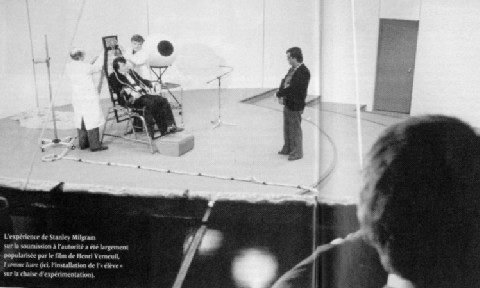
C'est ce que démontre Mel Slater, un professeur de psychologie britannique, qui a reproduit l'expérience de Stanley Milgram sur des sujets virtuels. L'expérience de Stanley Milgram?

Menée au début des années 60, elle est restée célèbre dans les annales de la psychologie, mais aussi dans celles du cinéma français grâce à «I comme Icare», le film d'Henri Verneuil avec Yves Montand où elle est mise en scène. Elle est aussi connue des fans de Peter Gabriel, qui a composé la chanson «Milgram's 37» pour un album des années 80.

En résumé, le professeur Milgram demandait à un sujet de faire passer une série des tests à un patient situé dans une pièce voisine. Lorsque celui-ci se trompait, il devait lui envoyer une décharge électrique de plus en plus forte au fil des erreurs. En fait, le «patient» était un acteur, ce qu'ignorait celui qui était en charge des «punitions».

Milgram établit que dans environ deux tiers des cas, les personnes testées acceptaient d'envoyer des doses fatales d'électricité (450 volts) si l'ordre leur était donné par une personne représentant l'autorité. Sous influence, vous et moi pouvons devenir des bourreaux ordinaires! C'est là une sorte de preuve apportée aux propos d'Hannah Arendt durant le procès d'Adolf Eichmann.

Récemment, Mel Slater et une équipe de University College de Londres ont effectué la même expérience avec un «patient» qui était un personnage virtuel. Les cobayes savaient que leur partenaire était irréel. Un premier groupe communiquait avec lui par un interface texte alors que les membres du second voyaient leur interlocuteur, en l'occurrence une interlocutrice, en représentation tridimensionnelle.

Dans le premier groupe, tous les participants administrèrent les vingt chocs demandés alors que dans le second qui faisait face à un être virtuel qui simulait souffrances et cris, ils ont arrêté l'expérience avant les 20 chocs fatals, certains sont allés jusqu'à 19, d'autres se sont arrêtés à 9 déjà.

Oh! surprise, l'analyse de leurs réactions physiologiques, tel leur rythme cardiaque, a montré qu'ils réagissaient comme en situation réelle et éprouvaient une empathie pour des pixels.

Les résultats de cette expérience menée avec des patients virtuels réjouissent son initiateur: «Voilà qui ouvre la porte à l'usage systématique des environnements virtuels dans le cadre d'études en laboratoire jusqu'ici impossibles pour des raisons éthiques ou pratiques. Par exemple, la violence liée au football, les attaques racistes, les agressions par les gangs et autres phénomènes. Pourquoi les gens participent-ils à de telles activités bien qu'elles soient contre leur nature? L'expérience originelle de Milgram aide à le comprendre, mais l'exploitation d'environnements virtuels peut faire avancer la recherche sur ces questions urgentes et difficiles ».

Mais l'intérêt de cette expérience déborde sa cible initiale, l'autorité et le conformisme, et pose la question des limites de notre perception de la réalité. Mel Slater commente: «Bien entendu, chacun sait qu'il ne produit en fait rien de grave. Mais certaines parties du système de perceptions considère néanmoins les évènements comme authentiques. Il y a des parties du cerveau qui ignorent ce qu'est la réalité virtuelle».

Pourquoi dès lors ne pas essayer de tromper le cerveau de personnes amputées en leur donnant le contrôle d'un membre virtuel, supprimant ainsi les douleurs liées à la disparition d'un bras ou d'une jambe? Une piste explorée en ce moment à l'Université de Manchester.

Une interrogation reste étrangement absente des commentaires mais néanmoins fondamentale: quid de la différence d'empathie entre un être humain non visible et un être virtuel visible? Les paris sont ouverts, l'expérience reste à tenter.

PAR GENEVIEVE GRIMM-GOBAT

Double public pour Genesis

Il y avait plusieurs publics au Parc des Princes, à Paris, samedi 30 juin, au concert de Genesis. Question d'histoire. En mai 1975, après la tournée mondiale du groupe britannique, son chanteur Peter Gabriel quitte la formation qu'il a cofondée fin 1967. Tony Banks (claviers), Steve Hackett (guitare), Mike Rutherford (basse et guitare) et Phil Collins (batterie et chant) continuent à quatre. Puis à trois, après le départ d'Hackett, en 1977. C'est ce trio, mené par Collins, qui va conquérir le monde vingt ans durant avec des chansons pop-rock efficaces.


Deux communautés se forment. Celle des fans du Genesis première époque, héros du rock progressif britannique des années 1970, qui concèdent au Genesis de l'éphémère deuxième époque d'avoir perpétué l'esprit originel. Et celle du Genesis troisième époque, avec ses tubes imparables, entre chansons d'amour et machines à danser.

Au Parc des Princes, c'est cette part qui domine, tant dans le public que du point de vue du répertoire d'une tournée "réunion" à succès, neuf ans après la mise en sommeil du trio par Collins. Plus de 800 000 places vendues pour l'Europe avec ressortie d'une compilation de 1999 étiquetée "Tour 2007" et réédition des enregistrements post-Gabriel.

Mais un cinquième du public parisien est constitué de la première communauté. A l'annonce de la tournée, en octobre 2006, des contacts avaient été pris entre les cinq musiciens. Sans suite. La participation de Genesis au Live Earth - 2 milliards de spectateurs et téléspectateurs attendus -, le 7 juillet, relance l'espoir. L'alerte au réchauffement climatique d'Al Gore aura-t-elle le même effet que le Live 8 de 2005 et la reformation d'un jour de Pink Floyd ?

Le spectacle de la tournée 2007 est impeccable, n'oublie pas un succès. Durant I Know What I Like (1973), sont projetées fugitivement les silhouettes de Gabriel et Hackett. Les dates de concerts des uns et des autres montrent qu'à moins d'un don d'ubiquité ou d'une surprise, les retrouvailles à cinq se feront sur écran.

Sylvain Siclier /Article paru dans l'édition du monde du 03.07.07

Genesis, le même refrain

Le groupe de Phil Collins, de nouveau ressuscité, a débuté sa tournée européenne à Bruxelles et passera samedi par le Parc des Princes. Genesis Samedi à 20 h 30 au Parc des Princes à Paris.

Aux deux tiers du concert, alors qu’un hululement futuriste vient de naître du côté des synthétiseurs, Phil Collins se pose face au public et, sérieux comme un pape, entame Mama (1983). Sa voix est faussement déchirante, insupportablement nasillarde. Des couleurs technoïdes tombent des projecteurs, le stade Roi-Baudouin se transforme en une gigantesque discothèque au moment du slow. Un sommet de mièvrerie, et pourtant c’est à cet instant précis qu’on comprend que, si Genesis ne restait pas nimbé d’un peu de sa gloire ancienne, un tel rituel n’aurait tout bonnement aucun sens ; que, si contestée fût-elle, sa brève période faste confère à sa décadence une tournure fascinante - et que c’est peut-être cela qui, au fond, attire les foules.

Pitre.
Genesis en 2007, c’est comme le débat sur les anciens soixante-huitards qui n’en finissent pas de se renier : depuis trente ans, le groupe donne le spectacle de son interminable dissolution et, ­depuis trente ans, le public en redemande.

Après une décennie de silence, la tournée européenne et américaine promet de remplir les stades et les caisses. Même si ce soir-là, à Bruxelles, le stade n’était pas complètement plein, les quadras en K-Way étaient là en nombre, sous la bruine, attendant dans une ambiance de kermesse d’école leurs idoles de jeunesse. Un couple est venu d’Italie parce qu’à Rome l’unique concert sera gratuit et qu’il y aura «trop de monde». Petit détail de la sociologie musicale européenne des années 70 : l’Italie fut le premier pays à placer Genesis en tête des ventes, avec Nursery Crime, en février 1972. Evidemment, ça fait un bail.

Malgré le fond de scène en forme de capot de Rolls-Royce et les feux d’artifice du finale, ce n’est même pas l’énorme barnum qu’on imagine. La scène est étonnamment petite et le spectacle tient plutôt des retrouvailles attendries. Le son est bon si l’on reste bien en face, et Phil Collins (56 ans) fait un pitre acceptable pour son âge. C’est comme avec d’anciens copains, on est content de se revoir mais on n’a plus grand-chose à se dire et on se réfugie dans les banalités. Ce qui, dans le cas qui nous ­occupe, veut dire les grimaces à ­répétition de Phil Collins, les nappes de violon de Tony Banks (57 ans) et l’inexi­stence du bassiste Mike Rutherford (56 ans). Les exemples abondent : Follow You Follow Me (1978), (1983), Home By the SeaNo Son of Mine (1991). Le public reprend les refrains, et on s’ennuie ferme. En quantité, sur deux heures et demie de concert, les titres de la grande époque (jusqu’à Duke, en 1980) font jeu égal avec ceux de la dérive ultérieure. Mais dans toutes retrouvailles l’important se situe ailleurs, dans ce qui n’est pas dit, dans l’idée même de séparation qui plane sur les têtes dès la première note et prend, au mitan du concert, la forme d’images vieillies projetées sur écran géant, en compagnie de Peter Gabriel et Steve Hackett. «Nous sommes Genesis et nous sommes là pour vous divertir», a lancé Collins en arrivant sur scène. Magnifique dénégation : sous prétexte d’entertainment, c’est une bataille contre le temps qui se joue dans Genesis version 2007. Une bataille un peu pathétique mais également émouvante, ce qui, en finalement, en fait tout le prix.

Emiettement.
Car ce groupe porte, comme une croix, le deuil jamais fait de ses ruptures, d’abord avec le chanteur Peter Gabriel en 1975, puis avec le guitariste Steve Hackett en 1977 (à cet égard, le second rôle où sont maintenus sur scène leurs deux remplaçants, Chester Thompson à la batterie et Daryl Stuermer à la guitare, fait un peu mal au cœur : Thompson a beau jouer depuis trente ans avec Genesis, pas question d’en faire un membre à part entière).

L’émiettement étant le destin de Genesis, Collins déserte à son tour l’entreprise en 1996. Restés seuls, Banks et Rutherford tentent un ultime album, qui fait un flop, avant de choisir la mise en sommeil de la marque déposée. Mais pas le constat de décès, surtout pas ! Durer et endurer, ne jamais finir, voilà la devise d’un groupe qui ne s’appelle pas Genesis par hasard.

Blessé.
Un homme porte les stigmates de la hantise de l’ultime séparation : le clavier Tony Banks. Dans les années 70, il domine le groupe, lui donne son cachet sophistiqué. Plus tard, tandis que le tournant variété le relègue au rang de faire-valoir, il entame une carrière solo qui ne trouvera jamais son public. Le voici de retour à ses synthés, orgueilleux et blessé. Dimanche, à Bruxelles, il n’a pas décroché un sourire, l’air d’être toujours à deux doigts de se lever et de dire «ça suffit, j’arrête». Mais non, il reste, s’entête en papy du rock, comme il le promettait dans une interview télé de 1978 (qu’on trouvera sur le coffret Genesis 1976-1982 , ressorti par EMI). Au journaliste qui lui demande s’il s’imagine encore sur scène à 40 ans : «On n’a pas l’habitude, dans le rock, de voir des gens âgés . Mais je ne vois pas pourquoi cela ne ­changerait pas.» Bizarrement, ­cette obstination finit par payer, quoique de façon ­intermittente.

I Know What I Like
(1974), délicieuse ritournelle, n’a pas pris une ride. In the ­Cage et The Carpet Crawlers, tous deux extraits de The Lamb Lies Down on Broadway (1976), le meilleur album de Genesis, manifestent une liberté mélodique ­incomparable. Plus surprenants encore, Behind the Lines (1979) et Los Endos (1976), deux instrumentaux qui auraient pu mal vieillir, démontrent, au contraire, que la grande invention du groupe avait bien été le mariage de deux sonorités antagonistes : la batterie volubile de Collins et les synthétiseurs grandiloquents de Banks, qui y trouvent enfin une raison d’être - faire contre-chant, ­explorer, agrandir l’espace musical.

En novembre, en même temps que l’annonce de sa reconstitution, le trio a proposé à Gabriel et Hackett de revenir eux aussi au bercail. Les intéressés ont dit non, puis peut-être, et ont suggéré plus tard. Le petit jeu peut durer longtemps : encore une minute, monsieur le bourreau.

Par Eric Aeschimann/Libération samedi 30 juin 2007

28 juin 2007

Osama the Hero

Osama the Hero is a disturbing examination of modern society.


Xavier Samuel plays the naive 17-year-old Gary

Genre :Theatre
Location: Carlton Courthouse
Address: 349 Drummond St, Carlton
Date: 21 June 2007 to 7 July 2007
Phone Bookings: (03) 9347 6142

When 17-year-old Gary chooses to do his school hero presentation on Osama bin Laden, he probably should be ready for some sort of reaction. There has been a spate of fire bombings on his local housing estate, and Gary - with his alternative views and knack of being in the wrong place at the wrong time - fits the bill of scapegoat to a tee.

What he cannot foresee is that a bunch of dysfunctional vigilantes will smash his face in with a hammer. The lack of proof is neither here nor there, as one of his torturers points out, "with terrorists you don't need evidence". And so the hammer blows rain down, like so many nails in the coffin of social tolerance and respect.

Osama the Hero, by British playwright Dennis Kelly, is a disturbing examination of modern society, where the vacuity and breakdown of social values breeds a climate of immorality and fear - and as Peter Gabriel noted, fear is the mother of violence.

Dennis Kelly's 2005 play received its Australian premiere last year at the Old Fitzroy in Sydney in a fine production by new company The Rabble, and is now being presented by La Mama.

The Carlton Courthouse theatre space has been transformed by Kate Davis' all-white design, which ramps up the metaphors of purity and innocence, then brings them crashing down as the floors are stained with blood and mired with guilt. Director Syd Brisbane keeps the pace bouncing along with nervous comedic energy in the first part - making the audience all the more vulnerable to the sickening violence that follows.

Xavier Samuel is an effectively naive Gary, Thomas Wright brings a speed-tinged mania to Francis, and Hannah Norris manages to invoke the image of Abu Ghraib guard Lynndie England in her portrayal of Louise, the ringleader in Gary's torture. Kevin Hopkins is very good as the 50-year-old Mark, acting out a fantasy relationship with teenage Mandy, sassily played by Jessie Beck.

The final section is a little cliched in structure but the monologues are still affecting, including Louise watching decapitation videos and Mark distracting himself with cooking tips. Never has salmon teriyaki seemed so unappetising.

Angélique Kidjo : femme de feu

Lauréate du prix Antonio Carlos Jobim, la Béninoise Angélique Kidjo est une battante dont le feu et l'opiniâtreté sont aujourd'hui récompensés par le 28 e Festival International de jazz de Montréal. Cette escale au Spectrum à l'aube du méga happening musical (jeudi, 18h) est l'occasion de célébrer cette artiste de culture panafricaine qui s'est toujours appliquée à intégrer la pop mondiale moderne à son riche patrimoine.

En Occident cette boule d'énergie est devenue l'une des figures les plus connues de ce genre pluriel qu'on nomme «musiques du monde». Elle ne cesse de ratisser le monde et conquérir de nouveaux auditoires. Car Angélique Kidjo, pour l'avoir interviewé à plusieurs reprises, est une authentique conquérante. En Afrique? Selon ses dires, elle fait les plus grandes salles lorsqu'elle ne remplit pas les stades.

«Ça fait peur même! Les policiers qui y font régner l'ordre me demandent les autographes. Faites votre boulot, je leur dis. Oui, on le fera, mais signez d'abord, qu'ils répondent! (rires) Lorsque je rentre chez moi, au Bénin, je ne me repose jamais. J'ai la pression! Il m'a déjà fallu me disputer avec des gardes du corps prêtés par le gouvernement pour qu'ils ne soient pas armés à mes côtés! Récemment, j'ai chanté dans plusieurs pays d'Afrique de l'Est. Lorsque je suis en Afrique, je m'efforce aussi d'y rencontrer les jeunes afin d'en saisir les sensibilités.»

Djin Djin, son plus récent album réalisé par l'éminent Tony Visconti, rassemble des pointures telles Carlos Santana, Peter Gabriel, le tandem malien Amadou et Mariam, la jeune chanteuse soul Josh Stone, le reggaeman Ziggy Marley (fils émérite de feu Bob) ou même le saxophoniste vedette Branford Marsalis. Joli réseau de contacts!

Carlos Santana, guitar hero s'il en est, n'en est pas à sa première collaboration avec la Béninoise qui réside en France depuis les années 80 - mère de famille, elle est mariée avec le bassiste Jean Hébrail. «J'avais connu Carlos alors que j'enregistrais sur Island. Chris Blackwell (le propriétaire du label) lui avait donné un de mes disques après quoi il m'avait offert de faire ses premières parties.»

Angélique Kidjo, par ailleurs, avait fait la connaissance de Peter Gabriel à l'époque de son merveilleux album So. «J'avais assisté à son spectacle au Zénith de Paris, il m'avait ensuite suggéré de monter sur scène avec lui pour entonner Shaking The Tree. Il y a un an et demi, j'étais en pleine écriture, je lui ai proposé un duo. Il m'a répondu que la chanson devait d'abord l'inspirer. Alors je lui ai fait plusieurs suggestions et il a choisi Salala Et Salala, vous vous en doutez bien, s'avère la meilleure chanson de Djin Djin...

Notre ubiquiste a aussi trouvé le moyen d'attirer Ziggy Marley dans sa toile!

«Sa mère (Rita Marley) et lui m'ont approché pour les 60 ans de l'anniversaire de son père (feu Bob), nous sommes allés ensemble en Éthiopie. Je l'avais préalablement connu quand j'avais enregistré Oyaya! à Los Angeles; il était en train d'enregistrer à côté de moi alors que j'étais en train de faire un ska à la latino. Toi tu es folle! m'avait-il dit alors. C'est comme ça qu'on est devenus potes.»
On comprendra le pouvoir attractif d'Angélique Kidjo, qu'elle exercera une fois de plus aujourd'hui. Le prix Jobim devrait sûrement constituer une motivation supplémentaire en ce sens: «Ça me fait grand plaisir que les gens du métier reconnaissent mon travail car je l'ai accompli en tentant d'expliquer au monde l'universalité de la musique. Ce prix-là me mène à croire que le message a réussi à passer.»

Youssou Ndour candidat pour diriger le gouvernement africain

Dakar, 27 juin (APS) - La star sénégalaise Youssou Ndour a fait part, mercredi soir à Dakar, de sa candidature pour diriger le prochain gouvernement africain, qui sera au menu des débats du prochain sommet de l’Union africaine, prévu du 1er au 2 juillet prochain à Accra (Ghana).

’Loin de toute politique politicienne, je déclare solennellement que je serai candidat pour diriger le prochain gouvernement africain’’, a dit Youssou Ndour lors de la clôture, au campus de l’université de Dakar, de la première partie de la tournée de promotion de ‘’Alsaama Day’’, sa nouvelle production.

’’J’en ai les capacités et suis conscient’’ des enjeux liés cette question, a-t-il ajouté sous un tonnerre d’applaudissements de ses nombreux fans, en présence notamment de l’international sénégalais de Bolton, Elhadj Diouf.

Youssou Ndour a été récemment classé par le magazine américain Time parmi les 100 personnalités les plus influentes du monde. A travers cette liste le magazine dit vouloir honorer ‘’les hommes et femmes dont le pouvoir, le talent ou l’exemple moral sont en train de transformer notre monde’’.

Premier sénégalais à figurer dans cette liste des personnalités les plus influentes du monde, Youssou Ndour a participé à ce titre à la dernière rencontre du G8 qui s’est tenue en Allemagne, dans la foulée de sa distinction à lui remise par Time.

Star incontestable au Sénégal, Youssou Ndour est également connu à travers le monde pour avoir partagé la scène mondiale avec des artistes aussi prestigieux que Peter Gabriel, Neneh Cherry, Axelle Red ou encore Wyclef Jean (ex-Fugees).

Ambassadeur de bonne volonté du Fonds des Nations unies pour l’enfance (Unicef) et du Bureau international du travail (BIT), Youssou Ndour s’affirme par ailleurs de plus en plus comme un entrepreneur culturel.

Il a à son actif plusieurs structures dont la maison de production ‘’Jololi’’, le studio ‘’Xippi’’, et le groupe de presse ‘’Futurs Médias’’.

23 juin 2007

Clean-up begins after rain brings flooding chaos

A massive thunderstorm that struck the Dublin area between 3pm and 4pm resulted in flash flooding, lightning strikes and leaky roofs in some parts of south Dublin. The Dublin airport weather station recorded 9mm of rain falling within the hour. Up to 20mm of rain was reported to have struck parts of Rathfarnham, leading to heavy congestion as roads were either impassable or down to one lane due to flooding.

Flooding was also reported around Blanchardstown, Castleknock and Lucan, as well as around the Strawberry Beds and Chapelizod. Some residents found themselves knee-deep in water around Rathfarnham after a tributary of the Dodder River burst its banks during the deluge. Parts of the M50 and the N7 were also flooded leading to traffic chaos and long tailbacks. Firefighters were kept busy as they were dispatched all over the city early yesterday evening to pump out houses inundated with rainwater.

There were no reports of any serious flooding, but pressure on the drainage system lifted manhole covers in numerous flashpoints around Dublin. A row of artisan cottages on Mount Brown in Inchicore was also flooded. The storm also led to a brief power outage in the Citywest and Tallaght areas after lightning struck a 110,000 volt ESB substation, but electricity was restored within 10 minutes and there were no serious problems elsewhere, according to the ESB.

The rain, however, did not dampen the spirits of 10,000 music fans who bore the brunt of the deluge at Marlay Park which hosted a concert by Peter Gabriel and Aussie rockers Crowded House whose hit 'Weather With You' whipped them into a soaked but happy frenzy, according to organisers.

Mudbaths and mudfights were also the order of the day for 140,000 festival-goers at Glastonbury in Somerset, England, despite the efforts of organisers to improve the drainage system. The deluge has become almost an annual event at the festival which experienced massive washouts in 1997, 1998 and 2005.

Racing enthusiasts were also ducking for cover at Ascot as the skies opened and drenched the largely well-heeled crowd, thanks to a low pressure system over much of the UK, Ireland and Wales bringing with it hot, humid weather. But the picture was much brighter for anyone living outside Leinster and parts of Munster yesterday. Most of the rest of the country experienced dry, sunny and relatively balmy conditions with notable exceptions in parts of counties Tipperary and Waterford. The soggy conditions are set to continue for much of the country today.

Tomorrow will see showers return with a vengeance and there may well be a repeat of yesterday's heavy thunderstorms, while Monday may seem more like a day in October with cool, windy and showery conditions, according at Aidan McNulty of Met Eireann. "Next week will seem more like late autumn but we still have July and August, so just because it's bad now doesn't mean the summer is over," he said

Allison Bray

22 juin 2007

WOMAD announces more acts

WOMAD, which is moving to a new site at Charlton Park, near Malmesbury in Wiltshire this year for its 25th anniversary, and is happening from Friday 27th to Sunday 29th July, has announced more acts.

The newbies confirmed are Asian Dub Foundation, Charlie Winston, Christopher of the Wolves, DJ Andy Smith, Dulsori, Guo Yue, Jewels Vass, Miles Hunt and Erica Nockalls, Mor Karbasi, N'Faly Kouyaté, Niki Stevens, Russ Jones, The Silk String Quartet, and Trilok Gurtu.

WOMAD has over 70 world-class artists from 40 countries performing over the festival weekend, including The Blind Boys Of Alabama playing a special Thursday night concert. Also playing over the three days of the festival: Peter Gabriel, Baaba Maal, Toots and the Maytals, Isaac Hayes, Seckou Keita Quartet, Taj Mahal, Ben Taylor, Chambao, Tinariwen, Candi Staton, Clube Do Balanço, Calexico, Dhol Foundation, DJ Shantel, Steel Pulse, Seth Lakeman, and more!

2007 is also a very special year for WOMAD, as festival co-founder Peter Gabriel will be headlining Friday night as the event celebrates 25 years by returning to the West Country after 17 years at Reading. To commemorate this milestone WOMAD will be releasing a three CD box set that will bring together some of the many highlights from the past quarter-century. The release will also include a 96-page book and is due out at the end of July to coincide with the festival.

WOMAD Charlton Park will feature seven stages and workshop areas, including a children's village, many more activities and festival features, all in the idyllic environment of Charlton's open lawns and rolling fields.

Tickets are on sale, priced at £120. Camping from Friday to Monday is included in the ticket price - if you wish to camp on the Thursday there's an extra charge of £10. Click here to buy.

Gabriel is a better father the second time around

British singer Peter Gabriel insists he's a better father to his children as an older parent - and is prepared to sideline his career for fatherhood. The former Genesis frontman has a son, Isaac, five, with his second wife Meadbh, as well as two grown daughters, Anna, 32, and Melanie, 30 from his first marriage. But Gabriel admits things have changed since the birth of his youngest child. He says, "I have a different perspective as a 57-year-old. I hope I give up more time to it. I know what my priorities should be. Tomorrow, Isaac is trying a day at this new school in London and I will be late for rehearsals to take him in. I wouldn't have done that the first time round."

World Music Day: The sounds of the planet

Let’s cut through the chase. The term World Music, no matter how much it has caught on today among the cognoscenti of Delhi University and beyond, was a marketing invention by the music industry in the 1980s to describe traditional music of any culture. Which means that it includes Celtic music from Irish band Lunasa and Chhebi music from Moroccan group Lemchaheb to the baul songs of Madan Bairagi from Bengal and the qawwali of the Sabri Brothers from Pakistan.

World Music is basically the kind of music that does not fall into the multitude of categories that is mainstream in the West. If other kinds of music across the world — and the accompanying instruments and styles of playing and singing — came under the spotlight, it was because of Western musicians, whether in classical music or pop or rock, bringing them closer to Western ears, introducing Western listeners to different kinds of sensibilities.

In other words, World Music has come to mean any kind of music that can’t be easily fitted into the categories that have been around for decades in record shops in the West.

Anything that’s not on the charts

One of the earliest Western musicians to inject an overtly ‘Other’ sound into their music was 19th-20th century classical composer Maurice Ravel, whose one-movement orchestral piece, Bolero, brought the Spanish dance and musical form into the mainstream.

Sure, there had been other ‘mainstream’ composers who had been influences by different sounds from across the world.

Mozart’s opera, The Abduction from the Seraglio, for instance, is his take on contemporary Turkish music. In his Violin Concerto No. 5 in A major, sometimes called the ‘Turkish Concerto’, he repeats this eastern influence that arouses the curiosity of listeners in this ‘other kind of music’. Not too dissimilar, if you think about it, from musicians in a different century presenting their audiences with sounds that intrigue and delight them.

Take Brian Jones, former member of the Rolling Stones, who is not only acknowledged as the first Western musician to introduce the sitar in a pop song (Paint It, Black in 1966, a full year before George Harrison played the Indian instrument in Within You Without Out), but also the man who produced arguably the first World Music album: Brian Jones Presents: The Pipes of Pan at Jajouka in 1971 showcasing the music from the Moroccan mountain town of Jajouka.
Our other sounds, their other sounds

But even if the term World Music — and its classification — is a Western invention, today, it has come to mean anything that is (or at least sounds) indigenous. ‘Folk’, ‘roots’ and ‘ethnic’ music just has a new name — and has a new set of listeners who give it the attention that it lacked when it was confined to a localised few.

Whether it’s Andean pan pipe music or steel drums in Jamaica or Brazil, or closer home, baul, bhatiali, bhangra, gajan, tappa, kirtan, langa, manganiar, more people are listening to these disparate sounds under the rubric of World Music.

Whether Nusrat Fateh Ali Khan’s qawwali is closer to Pearl Jam’s heavy R&B rock than it is to Paban Das Baul’s songs or whether Kailesh Kher’s sufi has closer sonic similarities to Robert Plant’s solo albums than the latter has to Led Zeppelin are questions that no longer bother us World Musicwallas.

But it is as a niche musical category that World Music is having its Golden Age today. It’s been 25 years since Fête de la Musique (literally Festival of Music) was initiated in France in 1982 marking June 21 as International World Music Day.

It’s another matter that the predecessors of Daler and Nusrat, Purna Das and Tejan Bai had been playing their stuff much before the likes of Paul Simon and Peter Gabriel ‘discovered’ then. If America wasn’t the world leader of music consumerism, would country star Garth Brooks been a World Music artiste? Think about it.

Ding! Dong!

Angélique Kidjo: "Djinn Djinn, c'est la cloche de l'église qui sonne et qui commence la journée. Comme un wake up call adressé aux Africains et aux Africaines pour qu'ils se sortent de leurs querelles ou de leur léthargie."

Angélique Kidjo pourra brandir le trophée Antonio Carlos Jobim qui la consacre, ici, comme un voix majeure dans le concert des musiques du monde.

C'est bien la faute à Kidjo si je me suis retrouvé sur la scène du Spectrum, il y a 12 ans, à danser avec un éminent collègue par une soirée littéralement torride! Mais que voulez-vous? Elle est comme ça. Une fille énergique qui ne tolère ni l'apathie ni l'indifférence. Et qui défend sa musique et ses mots comme pas une...

Chaque fois qu'elle nous visite, la chanteuse béninoise amène un projet et un groupe différents. Déjà Logozo, Fifa et Oremi étaient des albums quasi thématiques avec, chacun, son esthétique propre, puis Black Ivory Soul célébrait la rencontre entre Ouidah et Bahia et la douloureuse réminiscence de la traite des Noirs; enfin, Oyaya!, tout chaloupé, mettait l'accent sur les rythmes afro-cubains. Bref, une production boulimique, avec des périodes diverses, à l'image d'une artiste engagée et toujours en mouvement. Elle a chanté Hendrix et Gershwin en langue fon; aujourd'hui, c'est Maurice Ravel. Le Boléro devient Lonlon, un hymne à l'amour monumental, en langue mina, qui clôt ce nouveau disque intitulé Djinn Djinn! Titre qu'un journaliste américain se hasarde à traduire par "saisir le jour" dans un dialecte imaginaire. "Pas du tout!", rétorque Angélique avec sa répartie habituelle. "Djinn Djinn, c'est la cloche de l'église qui sonne et qui commence la journée. Un signal, comme un wake up call adressé aux Africains et aux Africaines pour qu'ils se sortent de leurs querelles ou de leur léthargie. Il y a tellement à construire. Prenons nos responsabilités! Le temps perdu ne peut se rattraper..."

Angélique parle toujours avec cette même détermination. Elle a la drive et le leadership et, pour emballer le tout, un ricanement fracassant. Déboutée récemment par la multinationale Sony-BMG, Angélique se rabat aussitôt sur l'étiquette indépendante Razor & Tie et complète son disque le plus luxueux par sa simple brochette d'invités: Alicia Keys, Brandford Marsalis, Peter Gabriel, Stephen Marley, Amadou & Mariam, Joss Stone et Carlos Santana... "Mon but était surtout de mettre en studio les percussions traditionnelles du Bénin, ce qui n'avait jamais été fait correctement avant. Il a fallu l'émergence du Gangwe Brass Band. Le tout à été fait à New York, et beaucoup mieux qu'à l'époque de Fifa, lorsque j'avais été là-bas pour enregistrer avec des musiciens qui n'avaient jamais travaillé en studio".

Au FIJM, Kidjo nous arrive avec une formation compacte sans fioriture, sans synthés inutiles, mais avec deux guitares et deux percussionnistes à l'avant-plan. De quoi faire un impact immédiat avec son afro-funk mâtiné de rock. Dix-sept ans après le choc frontal de Parakou, la plus internationale des artistes africaines aurait-elle fait le tour? "Je ne boucle jamais la boucle!" jette-t-elle en promettant d'en donner et d'en faire encore plus.

Le 28 juin à 18 h Au Spectrum de Montreal

17 juin 2007

Paula Cole sounds earnest and goopy on comeback album

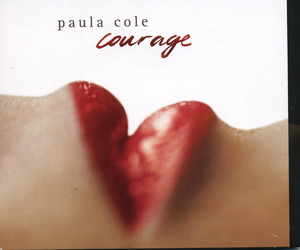
COURAGE/ Paula Cole/ Decca

"Please forgive me all my seriousness/My so-called spirituality,'' Paula Cole sings on Courage, her first new album since 1999. "I'm just a mess.''

Cole has always teetered between high-mindedness and insecurity, and that hasn't changed on Courage. Neither has her voice, rich and tremulous with more than a touch of Joni Mitchell. And neither has her fondness for plush pop.

Lonely Town, with Herbie Hancock on piano, aims for the delicacy of a jazz standard. Love Light climbs like a Peter Gabriel song, with its anthem-tinged melody underpinned by a plucked Moroccan lute. Its lyrics begin with a bird thinking its reflection is its perfect mate; it dies crashing into a windowpane.

Cole made three albums in the 1990s and won the 1997 Grammy Award as best new artist after her plaintive hit Where Have All the Cowboys Gone? She completed an album after her 1999 release, Amen, but it was rejected by her label, and Cole largely dropped out of the music business, occasionally releasing songs on her Web site. She has been raising her daughter, Sky.

The songs on Courage trace a storyline from a bitter breakup -- "I stop talking and fade to bleak/Feeling insignificant, atrophied and weak'' -- to a new start: "I wanna stop the conversation/I wanna kiss you.'' While many of them were written with seasoned studio musicians, they sound heartfelt. But as the self-help bromides pile up and the arrangements thicken, all the seriousness gets mighty goopy.

Inspiration is key, says songwriter

World music singer/songwriter Angelique Kidjo said inspiration is the most important ingredient for creating good, lasting art.

Angelique Kidjo is performing Friday at the Utah Arts Festival.

"The first thing that needs to happen when you write music is to be inspired," Kidjo said by phone from New York. "You can't write music to please anybody. And don't compromise. That's what I learned when I was singing with my mother's theater troupe as a child. If inspiration comes, you can't get me out of the studio. But let me tell you once I write a piece of music, it isn't mine anymore. It becomes everyone's."

Kidjo, who will headline Friday's Utah Arts Festival performances, began her singing career at age 6 in Africa. "My mother had a theater troupe and they would come to my house to rehearse. When I came home from school, I would hear all this singing. And found that I was right in the middle of it. Everybody looked so happy doing what they were doing and I wanted to mimic them. So I did. One day my mother saw me mimicking their movements and trying to sing along and she asked me, 'Do you want to do this, too?' I told her I did and I became a part of the troupe."

Kidjo learned a lot of lessons while under her mother's professional direction. "One thing I learned was to make sure you enjoy what you are doing. If you can't feel like you can give 180 percent on stage, don't bother. You will be wasting your time, and you will waste your audience's time."

When Kidjo decided to embark on her own career, she knew she would have plenty of challenges to overcome. "One that I still face is trying to get people to see that I am an artist first and an African second. There are many people who still don't give African artists the recognition they deserve. They think we belong in a museum. And when someone like me tries to expand the boundaries of art, they don't accept us. Let me tell you, that there are many good artists in Africa. We need to be recognized. We are not monkeys in a tree. We are artists."

Earlier this year, Kidjo released her 11th album, "Djin Djin." The title is the sound a bell makes that welcomes the day in Africa. She recorded songs with Alicia Keys, Branford Marsalis, Joss Stone, Peter Gabriel, Carlos Santana, Ziggy Marley and Josh Groban, to name a few.

"Recording with those other artists is my way of reaching out to the world and calling for unity," said Kidjo who has been awarded the Prix Afrique en Creation in 1992, theDanish Music Award for Best Female Singer in 1995 and the Kora Music Awards for Best African Female Artist in 1997.

"I wrote songs, without having certain singers in mind, and just let them choose which ones they liked," she said. "It was a good thing that no two artists liked the same song. I would have been in trouble. Just you try to say no to Peter Gabriel."

After Kidjo performs at the Utah Arts Festival, she will take a jaunt up to Canada to receive another music award. "It has been announced that I am to be awarded the Antonio Carlos Jobim Award on June 28. I am the first woman to receive it. And to me, it's a big deal."

The Jobim Award honors world-music artists who influence crossover music and jazz, said Kidjo. "The award is the epitome of what I've been trying to do all my life."

15 juin 2007

Peter Gabriel and themusic.com are proud to annonce...

Peter Gabriel and the Encore Series team at TheMusic.com have joined forces again to create THE PETER GABRIEL ENCORE SERIES 2007. Each show of the Peter Gabriel’s The Warm Up Tour will be recorded LIVE OFF THE SOUNDBOARD, mixed by Peter’s ‘Front of House’ Engineer, Ben Finlay, and pressed into high-quality manufactured 2-CD sets (not CD-Rs). Shows can be purchased separately, or for the ultimate fan, can be purchased as a complete set (all 22 shows) in either our Collectors Edition Box Set or Deluxe Limited Edition numbered Road Case.


For those unable to attend one of the concerts on this tour, the Encore Series offers a chance for you to experience Peter Gabriel from home, and for those of you that do see a show, an opportunity to relive the experience again and again...

As a special bonus, we are offering Full Moon Members a 10% discount on all Peter Gabriel Encore Series items (2007 Peter Gabriel Road Case not included). Please click here to sign-up with the Full Moon Club.

Items available from this Encore Series:
* Deluxe Numbered Road Case
(Europe)
* Collector's Boxes
(Europe)
* 2CD Sets
(Europe)
* Related Peter Gabriel items from the Groove Shop

Catherine Bell massage therapist of PG ?

With an extensive military career spanning nine years as fiery Marine Corps attorney Lt. Col. Sarah ("Mac") MacKenzie on "JAG" (1996-05), it seemed only natural that Catherine Bell would be approached by the producers of the television series "Army Wives."...

...The daughter of an English architect and an Iranian-born nurse was born in London, but raised in Los Angeles from the age of 2 with her mother and grandparents in the wake of her parents' divorce. Bell is fluent in Farsi because of the Iranian household, but attended a local Catholic school where she was taught by nuns. A very bright student, she matriculated to the University of California Los Angeles with every intention of becoming a biomedical engineer or studying medicine.

Bored, the beautiful Bell dropped out of school a year or so later and was immediately snapped up as a print and catalog model on the Los Angeles scene. A four-month modeling assignment in Japan opened her eyes to a strange new culture where she was frequently groped on Tokyo streets by short men. She was "very homesick," and was angry and fast enough to turn on unknown assailants with punches to the nose and elbows to the ribs.

Tired of long runways and hot photo studios, the 5-foot-10-inch Bell soon turned her attention to acting by enrolling in classes taught by heavyweight teacher Milton Katselas at The Beverly Hills Playhouse.

Eventually self-employed as a massage therapist (singer Peter Gabriel was among her clients) while auditioning for parts, she finally made her professional debut with one line on "Sugar and Spice" (1990) - a tasteless little sitcom with the 30-second shelf life.

Over the years she has played a number of aggressive military women, including her role in the feature film "Men of War" (1994) with Trevor Goddard - a strange Englishman passing himself off as an Australian in the U.S. who wound up playing Bell's off-and-on love interest Mic Brumby on "JAG" a year later.

"We had amoebic dysentery at the same time while shooting in Thailand and became friends," Bell said about her first meeting with Goddard.

Goddard - who lived a lie, claiming among other things to have been a professional boxer - died of an accidental drug overdose in June 2006. In the throes of a divorce, he left two young sons behind.

The announcement of his death, according to Bell, "was horrible. I was very shocked, very surprised - I think we all were. What a wonderful, sweet human being. I just adored him. But I knew he liked to party ...."

14 juin 2007

Record At Real World For Free

mi7.com launch competition to win 3 days of recording at Peter Gabriel's Real World Studios

mi7.com, one of the fastest-growing communities on the internet has announced a new music contest in conjunction with Peter Gabriel's world-famous Real World Studios. MI7 is offering one lucky artist or band the chance to record in this legendary world-famous studio.

Musicians throughout the world can enter the contest for free by simply creating a profile at mi7.com, upload some songs, and let the other members vote on them. The artist judged most deserving of the chance to record at Real World will be flown to London, chauffeur-driven to the beautiful English countryside of Wiltshire, and enjoy three days to record their music in the Big Room of Peter Gabriel's Real World Studios with a world-class producer - all expenses paid.

Per Larsen, CEO of MI7 told us, "At MI7 we've always believed in giving musicians the best tools they need to make their music. We're now taking it to the next level and giving them free access to one of the most legendary recording studios in the world. We're proud to be able to offer this once-in-a-lifetime opportunity for a great new band to live their dream!"

Real World Studios was founded by Peter Gabriel and is one of the finest studios in the world. The Big Room is why Real World is justifiably famous. It offers space and versatility on a grand scale for live recording and tracking. Equipped with a 72 channel SSL 9000 XL K series console together with a varied array of outboard equipment (including a large selection of vintage Neve modules), it offers the potential for truly state of the art recording and mixing.

About MI7

MI7 is a pan-European and Japanese partnership company staffed by professionals with many years of experience in all areas of the media industry. Representing a new concept in the distribution of media and music production products, MI7 brings competence, passion and results to both its customers and the industry. Plus, a bit of spice! Working in close cooperation with a selected range of manufacturers, MI7 has an extensive customer base that includes both media professionals and enthusiasts. In addition to offering distribution and customer service, MI7 also provides answers and solutions that make it easier for the customer to focus on what is really important, namely the creative flow.

Pricing and Availability:

The Real World Studios contest is now accepting songs and will run through October 31, 2007. As an added bonus, all entries submitted before June 30, 2007 will automatically be entered in a random drawing to win one of the world-class microphones available at Real World Studios, the SE Electronics Gemini. No purchase necessary. Official contest rules and details can be found at community.mi7.com/contests

More information: www.mi7.com

13 juin 2007

Rock Stars on Wheels

Maybe you’re familiar with Peter Gabriel. He was lead singer for the band Genesis from 1967-1975, preceding Phil Collins. He has been successful as a solo artist in the 1980s as well, with hits like “Sledgehammer,” “Shock the Monkey” and others. Apparently Gabriel also enjoys an occasional bike ride. Check out this YouTube video where he grabs a folding bike and cruises around and around a spinning circular stage while performing Solsbury Hill at a recent concert. No word on if he sings like that when he’s just pedaling around the neighborhood back home. Watch the video

Paula Cole's 'Courage'

New album is her first offering in 7 years


Paula Cole has a rich, resonant voice that seeps inside you, lending a feeling of warmth, intimacy and strength. She's also gifted with a finely tuned, grown-up compositional skill, creating anthemic pop and breezy jazz-tinged songs that likewise express our innermost feelings of romantic longing, disillusionment, resilience and triumph.

That's where Cole took us in the 1990s with her hits "Where Have All the Cowboys Gone" and "I Don't Want to Wait" (the theme from "Dawson's Creek"). And it's how she'll be bonding with listeners anew with "Courage," (Decca, A), the artist's first album in seven years.

Somewhat autobiographical, this album fills in the gaps of Cole's seven-year absence from the "hamster wheel" of the music industry. During the period she faced up to career rejection, gave birth to a daughter, broke up with the girl's father and delved deeply into meditation.

There's more than a hint of philosophical/spiritual awakening in object lessons like "Lovelight," which is evocative of her early collaborations with Peter Gabriel.

Also telling the tale quite well, are the bossa-nova-flavored "Hard to Be Soft" and the pop-rocking "14," which delves into the concerns of a woman conditioned to repress her emotions. But there's light at the end of the tunnel with songs like the reggae-tuned "Safe in Your Arms" and Cole's take-charge "I Wanna Kiss You.