Articles review on the net, revue d'articles sur la toile


Inscription : feeds, flux :
(Atom) Gabriel Real World News

Affichage des articles dont le libellé est musical reference. Afficher tous les articles

01 mars 2009

AR Rahman: "I share my Oscars with Peter Gabriel"

‘Oscar was like my national award’

CHENNAI: “There are many forces that divide us here from caste to religion. May music be the force that unifies us,” began AR Rahman, in a speech that was marked with characteristic humility and oodles of references to religion. Who better to state that than the musician himself who has left the entire country to collectively celebrate his arrival at the international platform with two Oscars? (...)

AR Rahman
says his award was a recognition for World Music, given the nature of his score for the film. “So, I thought I must owe it all to Peter Gabriel, the musician who is seen as one of the forerunners to propagate World Music. He has in fact, inspired many Indians like me and Mandolin U Shrinivas. I’d like to share my award with him,” Rahman said. (...)

Sharadha Narayanan, Express Buzz, 28 Feb 2009


22 février 2009

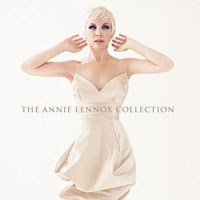
Annie Lennox: 'Shining Light'

By Nick Levine, Music Editor, digital spy

Released on Monday, March 2 2009

Member of the British rock aristocracy covers decade-old indie anthem for 'Best Of' comp – sounds pretty heinous, right? Imagine Sting taking on 'Last Nite' or Peter Gabriel having a crack at 'Pumping On Your Stereo'. But against the odds, Annie Lennox's cover of 'Shining Light' – an Ivor Novello winner for Ash back in 2001, lest we forget – is the best thing she's done in years.

This is largely because it's filled with something Lennox's own songs have been missing lately – joy. Here she sounds positively radiant, wrapping her still magnificent voice around Tim Wheeler's tender, vaguely spiritual lyrics. The result, flanked by typically gorgeous Lennox harmonies, is really quite life-affirming. Hmm... maybe Sting should think about that Strokes cover after all?

14 février 2009

Trumpeter Jon Hassell strives to unite North and South

By Alexander Varty, Staraigh.com, February 12, 2009


Jon Hassell's résumé makes him sound like a charter member of music's Mensa club—and for good reason. The trumpeter's early mentor was the German visionary Karlheinz Stockhausen, and he later studied with Pandit Pran Nath, the North Indian guru to such pioneering minimalists as Terry Riley and La Monte Young.

He's also performed with Brian Eno, David Byrne, Ry Cooder, and Peter Gabriel—a who's who of the smartest people in popular music. And then there's the fact that it only takes a couple of minutes, once I reach him at home in Los Angeles, before we sail off into a discussion of polytonality versus atonality. For the record, Hassell prefers the former, although he has made close examination of pioneering serialist Anton Webern's scores.

Still, he stresses that he is an “untheoretical” musician. “For me the proof is in the sound,” he says. “And that's all that really matters.”

That sound—a digitally harmonized trumpet, blowing sweetly over shimmering clouds of electronics and deep, dublike bass lines—is one of the most gorgeous things going. You can pick it apart in terms of how his melodic lines derive from Hindu devotional singing, or how his rhythms have been impacted by West African drumming, but for Hassell it all comes down to reconciling North and South—which happens to be the topic of a book he's been working on for more than a decade.
“It's called The North and South of You, and the subtitle is Making the World Safe for Pleasure,” he explains. “Briefly put, if you project the body onto the globe or the globe onto the body, the northern situation of the body is intellectual or abstract, while the southern is sensual. In the global situation, it's like ‘developed' versus ‘underdeveloped'. And included in the underdeveloped category, of course, is just about all the music that we love.”

With his slow, dreamy, and often intricately patterned music, Hassell hopes to offer his listeners an experience that combines intellectual stimulation with sensual delight. And he delivers just that on his latest release, Last night the moon came dropping its clothes in the street, which takes its title from a Rumi poem and its inspiration from a little-known Norwegian festival.

“The hook, if you will, is that it's a remix festival,” he says of Punkt, which takes place in the seaside town of Kristiansand. “What happens is that a group is invited to perform in the big hall, and then simultaneously there's a remix going on in a smaller room.”

In concert with his quintet, Maarifa Street, Hassell explores similar terrain. He and Tunisian violinist Kheir Eddine M'Kachiche contribute melodies, bassist Peter Freeman provides the pulse, and laptop jockeys J. A. Deane and Jan Bang create live electronic soundscapes by sampling and processing the others' work.
“I'm trying to encourage everybody in this band to go places that are surprising,” he comments. And, more often than not, they do.

Jon Hassell and Maarifa Street play the Chan Centre for the Performing Arts on Saturday (February 14).

08 février 2009

World Music Icon Angelique Kidjo visits Oahu

Angelique Kidjo is one of the hottest names in World Music today attracting the admiration of audiences and other renown musicians alike. Her last album, Djin Djin featured guest appearances by Josh Groban, Carlos Santana, Alicia Keys, Joss Stone, Peter Gabriel, Ziggy Marley and Branford Marsalis. Angelique Kidjo will be performing at LCC Theatre on Sunday, February 22, 2009 at 7 pm. Given that such a wide variety of notable musicians welcome the opportunity to collaborate with her, it should come as no surprise that Kidjo is backed by highly skilled musicians who support her in performances of original compositions as well as renditions of the songs of Jimi Hendrix, The Rolling Stones, George Gershwin and others. Kidjo is fluent in Fon and Yoruba, languages of her birthplace of Benin, and father and mother, respectively. She is also fluent in English and French and performs in each of these languages.

Kidjo is a voracious consumer of music. She started out performing with her family as a child. When she got older, she moved to Paris where she studied progressively more advanced music and vocal techniques with various teachers while performing with different musical groups. As her career grew from supporting greats like Nina Simone and personal idol Miriam Makeba, to being recognized as a headliner in her own right, her cultural repertoire likewise grew. Over the years her albums have included rock, jazz, funk, Caribbean and Brazilian flavors and techniques mixed with her rich Beninese heritage.

While Kidjo's name may not be familiar to people, her music just might be via its appearance in pop culture. Her songs have appeared in episodes of the Simpsons, Six Feet Under, Without A Trace and on the big screen in Ace Ventura, Streetfighter, Krippendorf's Tribe, The Wild Thornberrys Movie, Sahara, and Blood Diamond. Just as her songs are representative of different parts of the world, Kidjo is also a fervent advocate for improving the lives of peoples around the globe. She has been UNICEF Goodwill Ambassador since 2002. She created a foundation that supports and promotes secondary and higher education for girls in Africa. The number of occasions she has lent her talent to benefit or promote causes are legion.

Jon Hassell returns to Tennessee for first U.S. tour in two decades

By Steve Wildsmith of The Daily Times Staff, February 05. 2009


Jon Hassell may have roots deep into the West Tennessee soil, but his musical branches stretch toward stages and fans around the world.

Today, the Memphis-born trumpet player returns to his home state, playing only his second concert on U.S. soil in two decades (the first was on Thursday night). He has a new album -- "Last night the moon came dropping its clothes in the street" -- that continues the lifelong dedication he has for pushing the boundaries of composition and performance.

"My aim has always been to do something that pleases myself, and after having gone through the sort of intellectual side of things and the abstract side of things, I came up with this idea of 'Fourth World,'" Hassell told The Daily Times during a recent interview. "It was supposed to be a quickie logo that said something about First World technology and Third World spirituality and tradition. I've always felt as though I was doing something that was completely accessible -- something that had this sensuality to it that was immediately appealing, yet something that had some kind of clockwork and structure inside of it that was different than classical music or popular music or jazz.

"It was kind of my attempt to create a fictional village, if you will, where there's a return to tradition for our time using the technology we have today. It's a bit like sampling is used in hip-hop -- futuristic music with all of these samples, like taking something that happened in a studio in the 1950s and throwing it into this other atmosphere and making little mosaics out of it.
"Instead of having a tambura background, I have this background of tiny little one-second excerpts put together into this mosaic," he added. "If you look at it closely with a microscope internally, it's an abstraction, but on the surface, I'm going for beauty and sensuality."

Hassell's divergent career began at the Eastman School of Music, where he became more and more interested in experimental expression and the relatively new genre of music known as avant-garde. In the mid-1960s, he studied in Germany; upon returning to New York, he performed with both Terry Riley and La Monte Young before studying with Indian singer Pandit Pran Nath.

"They had brought him over to do concerts in New York, and that was a big revelation for me," Hassell said. "I was exposed to this whole pedagogical teaching process -- he would sing a phrase, and you would sing it back; if you didn't get it right, he would sing it again; if you still didn't get it right, he would simplify it for you. I was so blessed to have that way of learning something after going through the traditional Western educational system.

"Raga, to me, sounds like calligraphy in the air. It exposed me to a completely different way of looking at things. If you look at it in Western notations, it seems like a Western scale, but with all of the curves and the way the pitches are connected and formed, you wouldn't even relate it to a major scale.
"That became like a mirror, a lens, through which I saw everything else," Hassell added.

Hassell's education with Pran Nath led him to incorporate the vocal inflections of raga -- melodic modes used in Indian classical music -- into his trumpet playing, which developed an entirely new style for both his instrument and his music. His 1977 album, "Vernal Equinox," was the beginning of a lifelong quest to create music so integrated that any particular moment lifted from a specific composition could not be tied to a particular genre or nation.

Over the years, his music caught the ear of such producers, composers and musicians as Brian Eno, Peter Gabriel, Ry Cooder and U2's Bono. His playing has been featured in such films as "The Last Temptation of Christ," "Million Dollar Hotel" and "Angel Eyes," among others.

His new album, which returns Hassell to the ECM label on which he last recorded in 1984, takes its title from a 13th century poem. It's sublime in its beauty; atmospheric and haunting and futuristic, a record that wouldn't be out of place as the soundtrack to the classic sci-fi flick "Blade Runner" Ridley Scott. Hassell has described the record as a "continuous piece, almost symphonic, with a cinematic construction," and its genesis can be traced to the first step in Hassell's creative process -- sitting in a metaphorical dark room, purging himself of outside input, searching for the seed of a new creation that piques his interest.

"I've been working on a book for a long time called 'The North and South of You: Making the World Safe for Pleasure,'" Hassell said. "It's not a conventional book; it's more of a lot of headline pages with a lot of little sample quotations. It's almost structured from the point of view of sampling, and one of the pages is called, 'What is it I really like?'"

Critic's pick: Jon Hassell

By Walter Tunis Contributing Music Writer


Last night the moon came dropping its clothes in the street

The primary exposure pop audiences have received to the immensely impressionistic but entirely modern music of trumpeter Jon Hassell has come through brief, sustained bursts.

In 1980, he was part of the dense funk turbulence that circulated around Talking Heads' masterful Remain in Light (that's Hassell sounding the muted trumpet call during Houses in Motion). That same year, he teamed with Remain in Light producer Brian Eno for an ambient worldbeat blend that Hassell has referred to as Fourth World music. But the resulting album's title speaks directly to Hassell's sense of artistic mischief: Possible Music.

Nearly a decade later he became part of a similarly ambient but more decidedly Eastern musical collage that Peter Gabriel designed as a soundtrack for Martin Scorsese's The Last Temptation of Christ, an album subsequently released as Passion.

There is considerably more to Hassell's career than those run-ins with the art rock elite. But because the trumpeter records infrequently and will tour (briefly) this winter in the United States for the first time in 20 years, it is easy to allow his daring atmospherics to slip into the ether. Indeed, many of Hassell's recordings could be graphed in ways that reflect his artistic and commercial visibility. One minute, his trumpet rings through a spacious portrait of broken grooves and darkly woven sonic backdrops. The next, it disappears into that fabric entirely.

On a new album with the luxuriant title of Last night the moon came dropping its clothes in the street, Hassell modernizes further the ambient world around him. It is dominated by spacious music where trumpet, violin and strains of echoing guitar rise from, and fade into, a sea of sample-laden musical shorelines.

The album's 11-minute title tune reflects much of the album's sense of mystery. A two-note chorus seemingly filtered through processed strings (there's no telling how it was really created) is repeated like a mantra. Over a calming center, Hassell and his cohorts add electronic gurgles, glowing shards of keyboards and fragments of trumpet that alternately seek to sooth and puncture the otherworldly music.

The slow-motion montage Courtrais works from a similar makeup. Hassell's muted horn has a more sustained presence here, but he favors coloring a surface populated by chimelike keyboards and modest sampled drones — much in the way Miles Davis did on In a Silent Way, only without such direct grooves — than play conventional, compositional phrases.

Such moments are both warm and wintry. The album-opening Aurora suggests a return to Hassell's Fourth World concept with a faint air of Eastern percussion (that we can only assume was constructed by samples as no drummer of percussionist is credited) before the tune quietly implodes into a contemplative wash of keyboards that trumpet and guitar subtly augment.

On the closing Light on Water, with mock percussion again summoning a steady but synthetic rhythm, Hassell once more evokes the spirit and cool of Davis in a tune that sings a haunting, wordless melody. How apt. The album takes its lengthy title from a 13th-century Sufi poem by Jalaluddin Rumi. Its next line: “I took it as a sign to start singing.” And sing Last night does, in its own wondrously ethereal and indefinable fashion.

Bat For Lashes’ Natasha Khan Talks New Album

By Joseph Patel, Published by MTV News on Wednesday, January 28, 2009


Bat For Lashes’ Natasha Khan Talks New Album While I Try To Work Up The Courage To Propose To Her

Yesterday, things on our floor came to a standstill as we welcomed the lovely and talented Natasha Khan to the MTV News offices. Some of you may know the half-British, half-Pakistani Khan by her nom de guerre, Bat for Lashes, or by her lesser-known standing as my future wife. Either way, we were all sort of transfixed because she makes beautiful, dystopian pop music and carries herself with this whimsical-but-thoughtful abandon, and she’s pretty gorgeous all the way around. Win/win/win.

Anyway, the Bat for Lashes song, “What’s a Girl to Do,” and its “Donnie Darko”-inspired music video, is what got me hooked on Khan and her music a couple of years ago, and she’ll be releasing her second album, Two Suns, in April. She was stopping by New York for a week, on her way to Brazil to shoot a video for a new song called “Daniel.” We took some time to talk about Two Suns.

Khan says she was inspired a lot by the eclectic range of 1980s pop, and artists like Kate Bush, Peter Gabriel and the Cure, who we look back on and remember fondly. She also admitted to us that she channeled a little bit of Beyoncé and her alter-ego Sasha Fierce on this album, in that she too created a character — in this case, Pearl — in which to sing her new songs through. We’ll let Natasha explain more thoroughly.

We’ll have more from this Bat for Lashes interview coming to you in the next few days. I’ll also let you know where we will be registering for our wedding.


25 janvier 2009

Gary Go - Wonderful Video

On Contactmusic.com :

Video for Wonderful from Gary Go.


Gary Go releases his new single 'Wonderful' on February 16 2009 through Decca Records. When Gary applied for a job at Peter Gabriel's recording studio 'Real World' in Bath, Peter told him he should concentrate at working on his writing. Those words stuck with Gary and quickly he was picked up by a record label. Gary Go will release his self-titled, self-produced album in early 2009. Gary will also be playing a few dates throughout February.
7 Feb Glasgow O2 Academy Glasgow
8 Feb Manchester Apollo Manchester
9 Feb Bristol Academy Bristol
11 Feb Wolverhampton Civic Hall Wolverhampton
12 Feb Roundhouse, London London
13 Feb Roundhouse, London London
17 Feb Luminaire, London (HEADLINE SHOW)

Gary Go - Wonderful


Click Here for all you need to know about: Gary Go

21 décembre 2008

Soul Science rocks the Casbah

< Justin Adams (right background), Juldeh Camara (foreground) and Salah Dawson Miller create a mighty groove music on Soul Science. CREDIT: photo Gavin Matheson
John Goodman, North Shore News, Friday, December 12, 2008

Like his idol Joe Strummer, British musician Justin Adams was brought up overseas. A childhood spent in the Middle East gave him a unique perspective and an infinite number of options.

"I just read Strummer's biography," says Adams over the phone from London, grabbing a bite between soundcheck and show. "He was a total hero of mine. And I grew up very much with that Do-It-Yourself punk ethic. I value engagement and passion -- I hate confusing music with sport and showing off virtuosity without emotional content. I just don't see the point of that."

In his own music Adams combines Western rock and blues with African and Islamic traditional influences although it took him awhile to reconcile the different approaches. Going to school in England in the late '70s he was immersed in punk and post-punk culture like everybody else and started playing music during that time. "It was a very creative period," he says. "We were listening to James Brown, Fela Kuti and Public Image Ltd. I kind of forgot about my childhood."

On a trip to Turkey he heard Islamic music for the first time since his childhood and began exploring the exotic, modal sounds of his youth. "I bought myself a couple of Turkish instruments and immediately started incorporating that into my playing," he says. "Often people would say, "Why are you playing those funny scales or what are you doing?' It took a little while before I found any kindred spirits that were into that. I met up with this guy Jah Wobble and he encouraged me. As did Robert Plant further on down the line."

Adams himself is the consummate collaborator. Since the early '90s he's worked with the likes of Sinead O'Connor, Natacha Atlas, Brian Eno, Hector Zazou, Peter Gabriel, Billy Bragg and Tinariwen. For several years he was a member of Jah Wobble's Invaders of the Heart and more recently he has been guitarist in Robert Plant's Strange Sensations band on and off between other projects.

Plant and Adams encourage each other in their explorations of North and West African music and its connection to American blues. One listen to Led Zeppelin's Kashmir will tell you Plant has known a thing or two about non-Western music for some time. "He was playing Gnoua music and working in Morocco before I ever met him," says Adams. "You can't say I introduced him to those things but I don't think he had worked with an English musician before who was as into it as me. We're like fellow enthusiasts and whenever one of us goes to Barbesse in Paris, where the North Africans live, we always bring each other back a DVD or a CD of music. We enthuse together. A real high point in my life was taking Robert out to the Festival in the Desert and playing together. It really was an incredible thing I still can't quite believe it happened."

To repay the favour Plant introduced his guitarist to Deep South Delta Blues culture while they were on an American tour. "He took me to Clarksdale, Mississippi. We had an incredible time going round and meeting friends of his there, going to juke joints and stuff. Unbelievable."

For more than a decade Adams has been heavily involved in the North and West African music scenes as both a musician and a producer. He's made several albums with the French band Lo'Jo and through them became intstrumental in getting the word out about the brilliant Tuareg band Tinariwen.

There's nothing the least bit stuffy or academic about Adams' musical projects. All traditional sources are respected but they are also only a starting point for further exploration. Everybody at a Justin Adams session is expected to find their place in the mix and groove accordingly.

Gambian spike fiddle player Juldeh Camara is the perfect foil for Adams' unique take on music. Traditional and modern worlds come together on their new album, Soul Science, which was released earlier this year on the World Village label. The duo recorded the album in Adams' home studio with percussionist Salah Dawson Miller sitting in on many of the tracks.

Camara called Adams up out of the blue one day when he was working with Plant. The African musician was working in England and had learned about Adams from a mutual friend. They arranged to meet up but first Adams thought he'd better do some research and be prepared. "I did have a CD of Gambian music which I knew I had and there were particularly some tracks I liked so I went to those looked at the small print on the back of the CD and sure enough it was Juldeh playing on those tracks I'd been listening to for ages. What had attracted me to the tunes is that mixture of trancy, often 6/8 rhythms that you find in Moroccan music. They have that slight pained thing of the blues about them -- they're not sweet, sugary, happy tunes. The overall mood is slightly dark. You know those slightly uneasy notes that come from Islamic music or that you find in the blues. It really attracted me."

Although Camara was known primarily as a traditional musician he had worked on some Western fusion projects before meeting Adams. "I think what is maybe unusual about my approach is that outwardly it's really modern. I mean I'm into all kinds of stuff from Velvet Underground to dub reggae to hip hop and experimental Ornette Coleman and all that but I really like the old African rhythms. I love the subtle swing in them. A lot of people doing, quote 'world music', start with what is basically a 4/4 rock beat and then they add flavours on top but what I' m doing is almost the reverse. My building blocks are pretty traditional and then I'm more liable to use a flavour of rock. You think you're listening to rock music but actually any African musician can play along with it."

Adams prepared a couple of rhythms in advance before meeting up with Camara. "I'd just overdubbed some percussion instruments and I said, 'Do you think you can play to this?' And thank God my years in music taught me to record the first take. Don't think this is just a tryout and we'll do it all properly later -- record the first because you never know what is going to happen. Track one on the album is pretty much (the first thing we played). It might be a second or third take but it's certainly within the first hour of us doing anything together. I'd prepared the rhythm and he just played over the top."

All of the material on the album is credited to Adams and Camara. They constructed the songs in the studio with both written and improvisational sections and recorded them over five days. "Juldeh is a Fulani griot," says Adams. "Griot's are ancestral storytellers of their people who tell oral histories and play all the important ceremonies. It reminds me of what people say when they are analyzing Robert Johnson -- 'There's two lines here you can also find in a Bukka White song -- the second verse has nothing to do with the first verse.' The griot can improvise like a well of sayings and poems and social injunctions and that's what Juldeh's doing. Some of the time it's an actual written song but everything has an improvisatory note to it."

The whole record rocks with a vengeance. As much as Adams defers to Camara, Soul Science, wouldn't have come out the way it did without the British musician pushing the conceptual envelope at every turn. "Having worked with Robert Plant for a few years I wanted to rock," he says. "I've become less scared of rocking out and more into that primal rock'n'roll spirit. Also working with Tinariwen influenced me hugely in that trancy rhythm and that whole approach to guitar playing. I was really primed by those two experiences and I just wanted to do something that was gritty and not too glossy. That's really what I was thinking about."

INTERVIEW: Shara Worden of My Brightest Diamond

Dianca Potts, criticalmass.blogs.citypaper.net, 12/12/08
<
Shara Worden

Matt Wingall | myspace.com/mybrightestdiamond

My Brightest Diamond
plays Philly, Dec. 12, at the First Unitarian Church. Dianca Potts talked to frontwoman Shara Worden about what song she can’t play live, bizarre/amazing towns in Colorado, her upcoming collaboration with The Decemberists and what she typically buys at Target.

City Paper: Your second full-length, A Thousand Shark’s Teeth, was released this past summer. In what ways is it different from the material on your debut, Bring Me the Workhorse?

Shara Worden: The records were made about the same time … well actually, they were started at the same time and didn’t finish at the same time, but they were an experiment in one way of trying to bring strings and drums together. [On] Bring Me The Workhorse, the strings took a step down, got put in the background a lot more than they did in the orchestration on Shark’s Teeth, so it was a way of trying to negotiate this relationship between the dynamic range and kind of flexibility that you have in classical music with the more traditional orchestration.

CP: What were some of your inspirations for this album?

SW: Alice [in Wonderland] was very influential, and Peter Gabriel was another one. …

Visually, the German installation artist Anselm Kiefer was very key for me. I read a lot of his interviews and saw a couple of his exhibitions … he explores a lot of man’s desire to ascend to the heavens, and so I wrote a couple songs kind of based on that idea. He also employs ladders or sometimes staircases to indicate man’s desire to ascend. And so we used a lot of the ladders and big skies and charred black — you know, burned hells and the sea for the images for the photographs.


CP: What are some of your favorite tracks from Shark’s Teeth?

SW: I really love playing “From the Top of the World.” I enjoy that song a lot. I like all of them, but I think some of them don’t work very well live. Some of them, I feel like the last half of the record — or at least [closing track] “The Diamond” — every time I’ve tried to play it live, I’ve never liked it and I’ve cut it off the program. [It's] sort of ironic since that song named the band, but it just really doesn’t want to be played [live]. Yet, anyway.

CP: I know you did an EP that’s already released — the remixes for A Thousand Shark’s Teeth. I was wondering about the other two EPs I’ve heard about. What’s going on with them and what artists will be involved?

SW: David M. Stith is going to do a remix EP and also Sun Lux, who [remixed] “Inside A Boy.” David does all my artwork and he also sings on my records and he did a remix for “Tear it Down.” I just heard the Sun Lux ones this week and I’m so excited about them. They’re so beautiful. He just puts so much into these remixes. I do all of the arranging myself and it’s sort of my baby, [but] I have very little input in terms of the remixes and it’s really fun to separate yourself from your material. To hear the way someone else approaches it, it’s really refreshing and kind of gets me out of the boxes I have around myself.

CP: You guys have been on tour for awhile. Any fun stories to share?

SW: Story time, story time … what can I give you for story time? One of my favorite shows was in Paonia, Colorado, and it was this teeny-tiny little town. I think there’s 1,500 people in the whole town. There’s an 100-year-old movie theater and they brought us in … we didn’t really know what to expect ’cause when you pull into town, there’s the one little strip of Main Street and it’s definitely like a one-horse town. I went over to do something on the radio and they had a fantastic radio facility that was just amazing, and the people were so cool. They fed us an organic dinner that was all made locally by the owner. I think it was all [from] their farm, and they cooked us this amazing meal and we played the show and people were just dancing. It was like being with lettuce gnomes and little wood fairies. I mean these people were just so amazing.
After the show, there was this lady and she has this sort of parlor that felt like you were in a 1920s brothel or something — red velvet everywhere, with old-school naked lady pictures up. She had a bar with a café and then in the back. Everybody came over from the show and all the ladies of the town started dressing up in like antique lingerie and feather hats and feather boas. A bunch of us girls went into the secret stash of this lady’s old costumes and everything, and it was so special because you sort of make these assumptions about what a place is going to be like and these people were really very special. It was definitely one of the biggest highlights of the tour was sort of being there.

CP: You cover Soft Cell’s “Tainted Love.” What made you pick that?

SW: We started doing that a year ago or something when I was touring with The Decemberists. In the song “Workhorse,” the bass line goes “bomp bomp bo-de-de-de-da-de” and I was like, “Guys, look! This sounds like, ‘Bomp-bomp, Now I feel I’ve got to … bomp bomp.’ So we were like this flows directly from into “Tainted Love,” so we started breaking out the glowsticks, you know what I’m saying?

CP: What are your post-tour plans for My Brightest Diamond? What do you guys have planned?

SW: I’m going to sing on Lori Anderson’s record in January, so that’s going to be one of my big things. And I also sang on the new Decemberists record. It’s going to be like a rock opera — or it is a rock opera of sorts. Becky Stark from Lavender Diamond and I … I am playing the wicked queen figure.

CP: That’s awesome. Two diamonds.

SW: Yeah, totally. So the two diamond girls are going to join forces with The Decemberists — it’s like a 3-D affair. There’s [also] a compilation called Red, Hot and Indie, and I did a Nina Simone song for that, so that will be coming out next year, too. I’m really excited about [the plans] because it’s doing all stuff that’s sort of different for me. Since I’ve been in My Brightest Diamond layin’ so hardcore for awhile, it’ll be fun to kind of do some things with other people.

CP: Last question: What are your favorite things these days? Books, music, colors, foods, shapes, sizes … anything.

SW: Favorite things are made of glass and metal. I’ve just been collecting anything glass that sort of has pitch. I’ve been buying candle holders at Target and hand-blown balls of glass that have pitches that sort of hum. My skull hoodie is also a favorite thing, and Limonata San Pellegrino.

19 décembre 2008

‘Cape Cod Kwassa Kwassa’ Vampire Weekend

Songs of the Year 2008

‘Cape Cod Kwassa Kwassa’ Vampire Weekend

Long Island highlife evoking the spirit of Paul Simon’s Graceland, replete with baffling references to Peter Gabriel.


23 novembre 2008

David Byrne & Brian Eno : Everything that happens will happen today

Hugo Cassavetti, Telerama n° 3070 - 15 novembre 2008


La dernière fois que David Byrne et Brian Eno ont enregistré en tandem remonte à 1981. A l'époque, le révolutionnaire My life in the bush of ghosts, avec ses rythmes afrobeat concassés et ses samples avant l'heure de chants ethniques, a posé les jalons du crossover world, qui allait irriguer tout un pan du rock des années 80, de Peter Gabriel à Sting. Sans oublier, bien sûr, Paul Simon et son impérial Graceland.

Dans un curieux mais peut-être logique retour des choses, ce nouveau projet semble partir des derniers travaux de Simon - dont le Surprise fut coproduit par Brian Eno - pour chercher un point d'équilibre entre les habillages sonores du cofondateur de Roxy Music (Eno) et la facette crooner de l'ancien leader des Talking Heads (Byrne). Car Everything that happens... est d'abord un disque de chansons, avec ses envoûtantes mélopées qui rappellent autant la veine mélodique d'un Here she comes (Before and after science) que d'un Heaven (Fear of music).

Eno, on a tendance à l'oublier, n'est pas qu'un sorcier du son mais aussi un amoureux éperdu de la voix. Il a conçu ici un somptueux écrin « gospel folk électronique » pour celle clairement stimulée de Byrne. Bercé par les mélodies hypnotiques, on découvre progressivement les subtils échafaudages rythmiques et paysages sonores élaborés par le plus instinctif des producteurs et compositeurs intellos.


M for Montreal hits the ground running

Jamie O'Meara, hour.ca,November 6th, 2008


M for Montreal pulls on Winter Gloves

The third instalment of popular Montreal music showcase M for Montreal has announced its dates for 2008: Nov. 20 to 22. Founded by Glastonbury Festival programmer Martin Elbourne (who also co-founded the long-running WOMAD Festival with Peter Gabriel) and Sébastien Nasra of Avalanche Productions, M for Montreal describes itself as an "export and network" showcase that brings together about 50 hand-picked international delegates representing buyers, journalists and other music industry players for the purpose of promoting Montreal music and artists. It also has a talent for selecting the best and brightest of Montreal's expansive independent music scene for its live music showcases.

The final lineup of bands selected to play at this year's M for Montreal is as follows: Winter Gloves, Duchess Says, Beast, Pas Chic Chic, Radio Radio, Chinatown, The National Parcs, Les Dales Hawerchuk, Arkells, Woodhands, CLAASS, Gatineau and Red Mass. Also, playing at the closing party titled M for Métropolis are big names Karkwa, We Are Wolves and Pierre Lapointe (with still others to be named soon).

Delegates representing NME, XFM, The Guardian, Spiegel Online, Dour Festival, Central Park Summer Stage and the Coachella and Glastonbury Festivals, among many others, will be invited to two industry panels: one "exploring the work of music supervisors," and the other "discussing the state of the French live show industry." Ticket and other information may be found at www.mformontreal.com.

Excursions to the outer edge of contemporary jazz

By James Scanlon, For The Prague Post, November 5th, 2008


Trumpeter Jon Hassell brings his 'Fourth World' soundscapes to Prague

For three decades, American trumpet player and composer Jon Hassell has been pioneering atmospheric soundscapes that transcend all the possibilities of conventional jazz, avant-garde and world music. It’s earned him unending plaudits from artists of the ambient persuasion, and many more.

In an interview in The Guardian last year, Brian Eno revealed the huge debt he owes Hassell after hearing his 1977 debut album Vernal Equinox. “This record fascinated me,” Eno said. “It was dreamy, strange, meditative music that was inflected by Indian, African and South American music, but also seemed located in the lineage of tonal minimalism. It was music I felt I’d been waiting for.”

Born in Memphis, Tennessee, in 1937, Hassell fine-honed the art of “vocal trumpet” after meeting Indian vocal master Pandit Pran Nath. His technique of rousing ethereal, digitally altered trumpet lines forms the basis of what Hassell calls “Fourth World” music. It’s a concept that combines minimalism with African and Asian styles through the use of electronic instrumentation.

Listening to albums like Vernal Equinox, the curiously titled The Surgeon of the Nightsky Restores Dead Things by the Power of Sound (1991) and Maarifa Street (2005), you get a sense of being sucked into a vortex of hypnotic sounds that transports you to other worlds. It’s all part of the ambiguity of Hassell’s Fourth World, which he defines as “an attitude, something that happens when a respectful, intelligent and creative mind meets the tension between north and south. … I think of north and south not only in global terms, but also, for example, within the body.”

Classically trained in composition at American conservatories, Hassell expanded his musical palette considerably after further studies with the likes of electronic genius Karlheinz Stockhausen in Darmstadt, Germany. It was there that he met classmates Holger Czukay and Irwin Schmidt, who went on to form the wildly feral and experimental Can.

It wasn’t until he returned to the States in 1967 that Hassell started to concentrate on playing the trumpet again. His first recording duties came the following year when he was asked to help out on Terry Riley’s In C album. As Hassell’s reputation grew, so did the collaborations. Some highpoints include performing at Peter Gabriel’s first-ever WOMAD Festival in 1982, and contributions to Eno’s Ambient 4: On Land (1982) and Talking Heads’ Remain In Light (1980). He’s also worked with the Kronos Quartet, Ry Cooder and Ibrahim Ferrer, and pop stars like Bjork, Lloyd Cole and Tears For Fears.

For all that, there are critics who say that Hassell has borrowed too heavily from Miles Davis’ use of electronics and modal harmonies. Hassell’s response: “After years of trying to make the case for an improvisational music which is not jazz, and staying away from the clichés of jazz instrumentation and styles, I started to feel free enough to let more obvious elements of my respect for Miles creep in from time to time.”

Like Davis’, a lot of Hassell’s compositions are open-ended. But the unpredictability is one of the best things about them, not knowing what’s going to happen next.

This past May, Hassell surprised many by performing “In Tsegihi,” a choral piece for 100 voices and a chamber group in the atmospheric surroundings of Norwich Cathedral, England. At 71, he is still breaking new ground as he comes to Prague, armed with material both old and new. While it’s impossible to say what he’ll do with it, it’s guaranteed to be fresh and inventive.

Cape Cod, Whassa Kwassa?

By Bree Barton, Special for cctoday, 03/11/08


(...) So what IS CCKK?


What is Cape Cod Kwassa Kwassa? It's a song about love, labels, and Peter Gabriel. Apparently, Peter Gabriel himself has expressed interest in doing a cover, though he's not yet sure whether he would keep this part of the lyrics - "Peter Gabriel too" - or substitute something different. In a sense, having Peter Gabriel sing "Peter Gabriel too" would be the most logical, thematically appropriate thing in the world; still, it's getting a little meta for a pop song (...)

17 novembre 2008

It's not all glitz for Goldfrapp

By Andy Welch, Halesowen news, Saturday 1st November 2008


Goldfrapp begin their UK tour in Cambridge on Thursday October 23. We talk to Alison Goldfrapp and Will Gregory about their music, working relationship and the ups and downs of life on the road.

It's no wonder that thousands of musically-minded people aspire to being in a band. After all, what could be better than flying around the world to play to fans who've parted with hard-earned cash to see you perform? Most things, according to Alison Goldfrapp, one half of the electro duo to which she gives her name.

"I love performing, don't get me wrong," she says, "but I hate touring."

Having just come back from a brief trip to Australia to play the iconic Sydney Opera House - smaller than Alison imagined, but beautiful nevertheless - it might just be jetlag talking. Considering she's wearing an enormous pair of sunglasses even though we're indoors, it's difficult to know whether the notoriously acerbic singer is being serious.

"Some journalists ask stupid questions, or have their angle they want to get across," she admits later, "and I guess I'm just not very good at hiding what I think of people."

Today, at least, she's great company, and, along with her musical partner Will Gregory, explains in vast detail the intricacies of touring, travelling, their songwriting style and many other topics, some more related to their music than others.

"It's a funny thing, touring," 42-year-old Alison begins. "Like I said, I hate it, but at the same time, you get addicted to it. There is this weird bubble you live in, the routine. I can understand people freaking out on tours, throwing things out of windows, because you have no control over anything you do. You have to rely on everyone around you to get it right, and if they don't, you find yourself going mad at them because the smallest detail has become so important and annoying," she says.

"You don't have to think what you're doing, or have any responsibility," Will adds.

Will's experience of touring comes largely from his time as a self-employed musician. He doesn't actually play live as part of Goldfrapp now, and hasn't done since they first toured after their 2000 debut Felt Mountain.

As a multi-instrumentalist, however, 49-year-old Will has performed with Spiritualized, Tears For Fears, Peter Gabriel and fellow Bristolians Portishead. He also played on the latter's recent album, Third.

"I always think touring's a bit like being in the army," he continues. "When I was a lot younger, I remember seeing a photo of myself before and after a tour and, believe it or not, I looked so much better after, really young and healthy! I suppose before, I was this self-employed musician wondering where money and food were coming from. On tour, I was eating well and sleeping."

As he finishes the sentence, a playful smile runs across Alison's face. "You need to come on tour Will! I'll stay at home, and you go out on the road." Well, that's not such a bad idea," he answers. "I've got a little boy now, so I'll go on tour for a rest."

Goldfrapp's most recent album Seventh Tree was released in February 2008 and received rapturous reviews for its blending of whimsical, distinctly English folk, sun-kissed, West Coast harmonies and the band's established electronic sound. Seventh Tree is arguably the band's finest album, and as far as musical arrangements are concerned, the most complicated.

For Alison and Will, recreating their music on stage has always been something of a problem. Both are said to have to been unhappy with the sound of their early tours, a factor that in turn led Will to stop playing on stage in order to concentrate on the music from the front-of-house, like an audience member.

"What I contributed on stage was tiny in comparison to what Alison did anyway," he remarks, humbly. "And now we have someone who can play keyboards better than me anyway. I don't think our sound would have come along so far if I'd stayed on stage."

Despite the numerous musicians on stage during their current live shows, Alison maintains that regardless of Seventh Tree's complexities, it's actually easiest for her to sing live. "On the last album in particular, there was so much... stuff happening," she says. "Every available space was filled with synths, just popping up here, there and everywhere. I found it quite hard to sing to, and felt quite alien to the rest of the sounds. In many ways, it's easier to sing these songs, and more of a sense of being 'in' the music. We also worried about how the set was going to work, with things like Eat Yourself off this latest album next to something like Ooh La La, but it works," she continues. "Having that contrast is great, and I love the setlist at the moment."

Since Goldfrapp made their debut, visuals have always played an important part in everything they've done. Live shows have often seen Alison parading seductively around the stage with bottle-blond hair, like some sort of modern-day Marlene Dietrich.

That image has been toned down of late - "mainly because I thought it was taking over the music" she admits - but also because it was becoming hard to maintain while on tour. These days, in-keeping with Seventh Tree's pastoral, rural contents, you'll find Alison and accompanying musicians sporting white or natural-coloured flowing gowns.

"I design all the stage costumes," says Alison, coyly. "I've always been interested in the current theme, and I suppose all the albums are inspired by nature, the idea of paganism, certain kinds of films and folk music. Folk can be a really broad spectrum of things," she concludes. "People immediately get this idea of someone sitting playing a guitar round a campfire, but it's so much more than that. There's a whole world, waiting to be discovered."

11 novembre 2008

Navigation Cole 'Porter: Paula Cole returns to native Rockport

Rockport - Paula Cole is happy to be back at home.


The Grammy Award-winning singer/songwriter recently moved from New York to Rockport, where she grew up. Cole, who lives with her 6-year-old daughter, Sky, said she wanted her parents, who live here, and her daughter to know each other. Cole also started a new relationship. “Love - that’s why I moved.” Cole said. “I wanted to do it for years.” Cole also recently concluded divorce proceedings. “It’s been a long and hard past few years,” Cole said. Now that the divorce is final, Cole feels free to sing and talk about it.

On Oct. 30, Cole will headline the annual benefit for The Center for Arts in Natick. “A lot of those feelings come out in my music,” Cole said. “Thank God for music - it’s my therapy.”

Cole hit it big with her 1996 album, “This Fire.” The album featured the singles “Where Have All the Cowboys Gone?” and “I Don’t Want to Wait,” which was the theme song for the show “Dawson’s Creek.” Cole won Best New Artist at the 1997 Grammy Awards.

After her 1999 album, “Amen,” she waited eight years before releasing a new one. “I just felt misunderstood and depressed by the music business,” Cole said. “I was in a bad place in my life.” Then Bobby Colomby, a producer and friend, came to the rescue. “He put fun in music again,” Cole said.

Now one of Cole’s managers, Colomby threw her into a new context of jazz, “which I love,” she said. Cole calls Miles Davis as big of an influence as Annie Lennox or Peter Gabriel, who she toured with in the 1990s.“Courage” came out last year.

“I’m having a second, more authentic career, without MTV, hit singles - for all the right reasons,” Cole said. “It’s just better, because I’m more comfortable in my own skin.”Cole got back to playing live shows last year. “I took a lot of time off,” Cole said. “The audiences have changed and dwindled.”

But she noticed that when she returned to the stage this year, the audiences have been building. Cole has never played at The Center for Arts in Natick, which last year hosted Judy Collins for its annual fall benefit concert. “I heard it’s a great place,” Cole said.

“We’re very excited about Paula Cole because she’s part of the next generation of artists,” said Terri Evans, a member of the center’s publicity team. Cole likes the cyclical feeling of interaction with an audience - a concept Evans thinks will work well in the intimate center. “For someone who is a significant and known artist like Paula Cole, that makes it even more special,” Evans said. “You’re seeing someone who would easily be in a larger venue.”

The benefit, celebrating its fifth anniversary at the center’s current location, is an event that regulars look forward to each year. The benefit features an online auction that starts Thursday, Oct. 23, Evans said. The auction includes contributions from past performers, such as a night out with one of them.

Cole has a light performance schedule right now, but said she is gearing up for a new album, possibly to be released next year. She still has a number of things she would like to accomplish, such as putting out a Christmas album. But she is sure of at least one thing - she won’t be taking another long hiatus. “I don’t expect big success,” Cole said. “I know how to listen to my heart more now. I’m not as afraid.”

23 octobre 2008

M pour Montréal dévoile la programmation de sa troisième édition

Le 21 octobre 2008, Julie Rhéaume, Branchez-vous

Karkwa participera au spectacle M pour Métropolis le 22 novembre.


La troisième édition du Festival M pour Montréal se déroulera du 20 au 22 novembre. Plusieurs délégués internationaux seront à nouveau de la partie afin de découvrir les talents montréalais. Cette année, on proposera également une plate-forme appelée T pour Toronto, qui permettra de présenter quelques artistes originaires de la Ville-Reine.

Une quinzaine de groupes montréalais joueront sur les scènes du Cabaret, du Studio Juste pour rire et des Foufounes électriques. Duchess Says, Beast, Pas Chic Chic, Radio Radio, Chinatown, Winter Gloves, The National Parcs et Les Dales Hawerchuk y présenteront notamment des prestations de type «showcase». Les noms d'autres artistes devraient s'ajouter à l'alignement musical au cours des prochains jours.

Le 20 et 21 novembre, les organisateurs présenteront également la plate-forme T pour Toronto. Woodhands, The Mark Inside et Arkells partageront notamment la scène avec les groupes de Montréal.

Le 22, on aura également droit au concert M pour Métropolis, qui aura lieu dans la salle du même nom. Karkwa, We Are Wolves, Pierre Lapointe ainsi que des invités surprises seront de la partie.

Une cinquantaine de délégués internationaux seront présents au Festival. Les organisateurs mentionnent que des représentants du Glastonbury Festival; du magazine NME; de Xfm et du journal The Guardian (Angleterre); du Coachella Valley Music and Arts Festival; The Windish Agency et du Central Park Summerstage (États-Unis); du Festival de Rock les Eurockéennes de Belfort; du Printemps de Bourges et des Inrockuptibles (France); du Paradiso (Pays-Bas); du Sziget Festival (Hongrie); du Festival Primavera Sound (Espagne); du Dour Festival (Belgique); du Spiegel Online (Allemagne); du Provinssirock (Finlande) et de DF Concerts (Écosse) ont déjà confirmé leur présence.

Les billets pour les spectacles seront disponibles à compter du vendredi 24 octobre, à midi, sur les réseaux Admission et Ticketpro. Un nombre limité de passeports pour les 3 jours sera disponible pour le public à prix spécial.

M pour Montréal est une initiative d'exportation et de réseautage fondée en 2006 par Sébastien Nasra (Avalanche Productions) en consultation avec le légendaire programmateur anglais Martin Elbourne (Glastonbury Festival, The Great Escape et cofondateur avec Peter Gabriel du WOMAD Festival), peut-on lire dans un communiqué.

19 octobre 2008

Fripp & Eno: No Pussyfooting / Evening Star

By John Kelman, allaboutjazz.com, Published: October 19, 2008

“Experimental electronic music would still exist without Fripp & Eno, but without them and these two highly regarded and influential albums, it would be a different beast altogether.”

Few artists think they're doing something momentous, something that can change the landscape of music. Most just follow their instincts, follow their ears, do what they do, and sometimes the result goes far beyond any expectations, personal or otherwise.

When King Crimson co-founder/guitarist Robert Fripp brought his pedal board to Roxy Music keyboardist Brian Eno's home studio on September 8, 1972, hooked himself up to two Revox reel-to-reel tape recorders and, utilizing this primitive, pre-digital approach to looping, recorded two improvised tracks, who was to know how significant they would become? Of course, were it not for Eno's real-time sonic manipulations of what went to tape, there'd never have been a 21-minute "The Heavenly Music Corporation," and the shape of electronic music would, no doubt, be fundamentally altered.

Fortunately, "The Heavenly Music Corporation" did get released, along with a second experiment called "Swastika Girls," as No Pussyfooting (1973), on Island Records' budget-priced Antilles label. Island didn't know what to do with this strange music that ranged from ethereal and, well, heavenly, to more angular and menacing; but No Pussyfooting—a Fripp reference to not compromising what he and Eno felt was right—still went on to sell over 100,000 copies in the UK and Europe.

While it finally reached North American shores (beyond being an expensive British import in the 1970s) in CD form in the 1980s, No Pussyfooting and its follow-up, Evening Star (Antilles, 1975), never sounded the way they deserved. With Fripp & Eno an ongoing collaboration that has become increasingly active again since the release of The Equatorial Stars (DGM Live, 2004) and Beyond Even (DGM Live, 2007), it makes perfect sense that the two albums that not only started it all for Fripp & Eno, but were vastly influential in the realms of electronic and ambient music, finally receive the sonic updating they deserve. Additionally, No Pussyfooting is expanded to a double-disc, with some interesting alternate views of the music that are the result of both happenstance and intention. (...)


TV on the Radio "Dear Science"

Michael Lavine, Sunday paper, Sunday, October 19, 2008

The frequency with which major labels hit the elusive target of artistic credibility meshed with popular acclaim has shrunken to such a degree that when it happens, it seems like an anomaly. Factor in the unlikelihood of those few acts releasing follow-up albums in the “give us a hit” pipeline, and you can see how unusual TV on the Radio is.

Although the band’s third full-length album (and second for a major) is somewhat slicker, there are enough unexpected twists and non-commercial turns to make this a relatively risky proposition for a company as bottom-line orientated as Interscope.

There also aren’t many predominantly black groups on the contemporary rock scene, let alone those that fuse TVOTR’s diverse elements of electronics, Euro-pop, soul, hip-hop and edgy funk. Pushing the envelope while appealing to the masses is a tricky tightrope to walk, but the band manages to make it look easy, and guests (the Antibalas horns and a classical string quartet) provide additional backspin to songs that are unpredictable to begin with.

Singer Tunde Adebimpe shifts from a soul-caressed croon to a dark, almost John Cale talk-sung style, and, on “Golden Age,” to a Prince-ly falsetto. His diverse palette paints each tune with a slightly different tone, but there’s sense of continuity to the disc.

Tunes like the ballad “Family Tree” manage to balance elements of indie rock, classical and Peter Gabriel-influenced pop without falling into either, remaining true to TVOTR’s experimental roots while boasting (gasp!) singalong choruses and a knotty eclecticism that feels entirely natural.

3 STARS—Hal Horowitz