Articles review on the net, revue d'articles sur la toile


Inscription : feeds, flux :
(Atom) Gabriel Real World News

16 avril 2008

Peter Gabriel lance The Filter

Il ne s'agit pas d'un nouvel album de Peter Gabriel, mais bien d'un nouveau réseau social se donnant pour objectif de faire découvrir à ses membres, films, musiques et clips vidéos.

En 1999, peu après avoir cofondé On Demand Distribution (OD2), spécialisé dans la distribution numérique de musique en ligne, Peter Gabriel a imaginé The Filter et a enregistré le nom de domaine thefilter.com.

«Au départ, nous étions convaincus que l'un des bonheurs de l'Internet serait la liberté de choisir, mais la plupart d'entre nous se noient dans un océan de possibilités. Un filtre intelligent peut éliminer le poids et l'ennui inhérents aux choix, tout en répondant à nos goûts et à nos besoins grâce à une profusion d'activités d'exploration et de découverte. The Filter est un compagnon en ligne intelligent, c'est-à-dire qu'une fois qu'il connaît votre personnalité, vos goûts et vos humeurs, il sera chaque fois en mesure de vous faire découvrir un trésor», explique Gabriel à propos de son site.

The Filter qui sera sous peu lancé en partenariat avec OD2 et Exabre, une société spécialisée dans les technologies de recommandations, utilise l'intelligence artificielle pour suggérer aux utilisateurs des œuvres similaires à leurs œuvres favorites. Pour ce faire, la base de données du site contient 4,5 millions de chansons et 330 000 titres de films. La base de données tiendra compte des goûts des utilisateurs et s'enrichira en fonction du nombre d'adhérents.

Actuellement en période de test beta privée, The Filter sera lancé le mois prochain et permettra notamment d'intégrer des profils déjà créés sur Flixter et Last.fm.

Marc-André Brouillard (Branchez-Vous)

Sa Dingding prix du BBC World Music Award

Sa Dingding, l'artiste chinoise qui perce, remporte le principal prix BBC World Music Award et est nominée pour le prix du public

La chanteuse/compositrice Sa Dingding contribue au maintien du feu des projecteurs sur son pays natal qu'est la Chine, en cette année olympique, en remportant le prestigieux prix BBC Radio 3 World Music Award pour l'Asie Pacifique. Grâce à ce prix, Sa Dingding devient le nouveau visage -et la nouvelle voix- de la Chine dans le monde entier.

Lauréate du prix Radio 3 World Music Award, Sa Dingding a été nominée pour le prix du public. Il est possible de voter en ligne jusqu'au 8 mai ici Ses fans sont encouragés à voter pour elle.

Sa Dingding fera également une apparition lors du concert des lauréats, le 30 juillet, au Royal Albert Hall, dans le cadre de la série de concerts de musique classique de la BBC. Elle a en outre confirmé sa présence parmi les artistes du festival WOMAD.

Le prestigieux prix BBC World Music Award est basé sur l'album Alive, dont la sortie, l'an passé, par l'intermédiaire d'Universal Music, a été saluée unanimement dans le monde entier. Pour plus d'informations au sujet de cet album et de Sa Dingding, veuillez visiter www.sadingding.co.uk

Sa Dingding est à l'origine d'un son puissant et sophistiqué, résultant de la fusion de la musique traditionnelle folklorique et des religions minoritaires de Chine, notamment le bouddhisme tibétain, avec la musique occidentale et l'électronique. Cette musique, mêlée à une voix forte et obsédante, aboutit à un son unique et émouvant.

Sa Dingding est déjà très connue en Chine pour avoir remporté le titre de Meilleure chanteuse folklorique après la sortie de son premier album en 1998. Bénéficiant d'une reconnaissance internationnale croissante, son récent voyage au Royaume-Uni a suscité un vif intérêt de toute une gamme de media, dont Newsnight et the Independent.

La fascination de Sa Dingding pour la musique de l'Asie du Sud provient des ses propres origines; elle est à moitié mongole. Elle joue des instruments traditionnels à corde, à vent et des percussions chinoises, et écrit dans plusieurs langues, dont le Sanskrit et une langue qu'elle a créée elle-même à partir des émotions qu'elle ressent grâce à la musique.

LONDRES -- (BUSINESS WIRE)

13 avril 2008

Youssou N'Dour, fer de lance du premier sommet mondial des "Etoiles pour la Terre"

En amont du premier Sommet mondial "Étoiles pour la Terre", prévu à Ouagadougou au Burkina Faso du 21 au 23 novembre, Youssou N'Dour a pris le temps d'expliquer la mission que lui a confiée le président burkinabé Blaise Compaoré. Il devra réunir des personnalités mondiales de la musique, du cinéma ou du sport, avec l'aide du public via Internet, pour "que l'Afrique se réapproprie la question environnementale".

"Je n'irais pas jusqu'à dire que c'est un échec des politiques et des décideurs, mais il faut bien reconnaître qu'ils ne peuvent pas régler à eux seuls les problèmes", a expliqué Youssou N'Dour dans un entretien accordé à l'Associated Press (AP), lors d'un récent passage à Paris début avril.

"You", ainsi que le surnomment ses intimes, dont Peter Gabriel, discret mais présent au moment de l'entretien, estime que "depuis quelques dizaines d'années déjà, il y a une émergence d'artistes engagés, qui soutiennent des causes justes de par le monde". "Nous (les artistes), on parle aux gens d'une autre manière et nous les rallions beaucoup plus vite à une cause, parce qu'on se rassemble tous".

Pour les politiques, celui dont on dit qu'au Sénégal, qu'"il est aussi puissant que le président (Abdoulaye) Wade", ne mâche pas ses mots. "C'est justement dans ce cadre-là que j'interviens, car eux, (les politiques) sont coincés dans des accords, alors que nous, artistes sommes libres de dire les choses", plaide Youssou N'Dour, le regard assagi, derrière ses lunettes noires de bakélite.

Pour l'artiste-militant, il est temps que l'Afrique prenne des initiatives. "Comme tous les combats menés sur le continent (noir), avec la valeur plus que symbolique du Burkina Faso, un pays d'Afrique enclavé, n'ayant donc pas accès à la mer".

"Là où je devrais convaincre mes confrères et consoeurs, j'irais", promet le roi du "mbalax" qui ne veut pas s'encombrer de courriels mais aller sur place rencontrer les prestigieux noms de son carnet d'adresses, où figurent entre autres, les numéros de portables du chanteur de U2 Bono, de la chanteuse Madonna, des acteurs George Clooney, Leonardo DiCaprio ou du footballeur Zinedine Zidane.

Les personnalités invitées au Sommet de Ouagadougou seront soit adoubées par Youssou N'Dour, soit désignées par le vote du public sur Internet, parmi un panel des 500 célébrités de notoriété mondiale, quelque soit leurs activités ou leurs origines.

Parmi elles figurent le cinéaste espagnol Pedro Almodovar, le romancier brésilien Paolo Coelho, la top modèle britannique Kate Moss, le golfeur américain Tiger Woods, ou la femme la plus puissante des médias aux Etats-Unis, l'animatrice Oprah Winfrey.

Les célébrités élues viendront à Ouagadougou présenter 21 mesures pour la sauvegarde de la planète. Des mesures parfois symboliques, "comme planter un arbre dès l'instant où une carte grise est délivrée n'importe où dans le monde", mais aussi une facilitation à l'accès au microcrédit.

"Tout est admis", conclut celui qui est aussi ambassadeur des Nations-Unies, d'Amnesty International ou du Bureau international du travail (BIT). Et de conclure: "aujourd'hui, l'Afrique et les Africains doivent reprendre les rênes de leur vie, celles de leur destinée".

Interrogé sur le discours de Dakar prononcé en juillet dernier par Nicolas Sarkozy, l'artiste estime que cette allocution a été discutée "par des intellectuels et historiens" mais que, la prononcer devant des étudiants sénégalais était "une erreur symbolique", même si l'artiste, soucieux du détail, plaide que le président français "n'était pas l'auteur de son discours".

Plus incisif, Youssou N'Dour n'attend pas de la France qu'elle dise quoi faire aux Africains. "Nous avons une histoire qu'il faut assumer, les bons et les mauvais côtés. Nous avons beaucoup subi, mais nous sommes là, la tête haute", assène-t-il, joignant le geste à la parole. "Du reste, en Afrique, la France n'est plus leader (en terme d'investissements, NDLR): elle est derrière la Chine et les États-Unis", glisse-t-il dans un sourire. AP

- Sur Internet: http://www.hommesdeparole.org et http://www.voteforearth.org

Peter Gabriel Biographie par Franck Buioni

VOILA A QUOI RESSEMBLE LA BIO. BIENTOT, TOUS LES DETAILS POUR CEUX QUI SOUHAITENT EN FAIRE L'ACQUISITION.

"PETER GABRIEL, BIOGRAPHIE", par Franck BUIONI. Illustration, maquette et mise en page Chloé et Guylaine COLLEWET. Photos additionnelles Jean Philipe BEUF. Editions LULU PUBLISHING, CAROLINE DU NORD (USA), imprimé en ESPAGNE.

En vente dans les jours qui viennent en librairie et directement sur le net auprès de LULU PUBLISHING. Tous les détails concernant les conditions de vente seront indiqués lors de l'attribution de l'ISBN et du dépot légal de la BNF.

Voir le site de THE INTRUDER : http://franckiegoes.blogspot.com/

Big Blue Ball, black and blue Vinyl 2 LP, CD

Originally, planned as a Peter Gabriel project, "Big Blue Ball", a Gabriel owned Real World Records release, has morphed into a collection of tracks featuring a worldwide mix of artists. It would be fair to say that the music is from “around the world” and defies characterization as "world music". The lead track, "The Whole Thing" featuring Francis Bebey, Alex Faku, Tim Finn, Peter Gabriel, Karl Wallinger, Andy White could have been included on the last Gabriel release UP” in terms of its theme and feel. “Everything Comes from You” is another outstanding track with an ethereal introduction that transitions into a chat infused Sinead O’Connor vocal supported by piano, guitar and bass drum. The album ends with the title track “Big Blue Ball” , an upbeat ballad sung by Karl Wallinger supported by Peter Gabriel and Manu Katché. Overall the record just works and after a few listens begins to reveal the notion that we and our musics are all interconnected on this big blue ball we call earth. The CD was mastered by Tony Cousins at Metroplis in London and the 2 LP vinyl editions were mastered and cut by Chris Bellman at Bernie Grundman Mastering in Hollywood, using Classic’s “ALL TUBE” cutting system. Packaged in Deluxe Gatefold Jacket.

Track Listing

"Whole Thing (Original Mix)" (featuring Francis Bebey, Alex Faku, Tim Finn, Peter Gabriel, Karl Wallinger, Andy White)

"Habibe" (featuring Natacha Atlas, Hossam Ramzy, Neil Sparkes)

"Shadow" (featuring Juan Cañizares, Papa Wemba)

"altus silva" (featuring Joseph Arthur, Ronan Browne, Deep Forest, James McNally, Iarla Ó Lionáird, Vernon Reid)

"Exit Through You" (featuring Joseph Arthur, Peter Gabriel, Karl Wallinger)

"Everything Comes From You" (featuring Richard Evans, Joji Hirota, Sevara Nazarkhan, Sinead O’Connor, Guo Yue)

"Burn You Up, Burn You Down" (featuring Billy Cobham, Peter Gabriel, The Holmes Brothers, Wendy Melvoin, Arona N’diaye, Jah Wobble)

"Forest" (featuring Levon Minassian, Arona N’Diaye, Vernon Reid, Hukwe Zawose)

"Rivers" (featuring Vernon Reid, Marta Sebestyen, Karl Wallinger)

"Jijy" (featuring Arona N’Diaye, Rossy, Jah Wobble)

"Big Blue Ball" (featuring Peter Gabriel, Manu Katché, Karl Wallinger)

THE MUSIC.COM

11 avril 2008

Afrique, la rock alternative

Tendance. Foals, Vampire Weekend, Yeasayer… Plusieurs groupes anglo-saxons dans le vent puisent une partie de leurs influences sur le continent noir. Ambient, new wave ou punk croisent hi-life et afro-beat.

Quand l’Upper West Side new-yorkais fraie avec le souk congolais, et qu’Oxford titille la polyrythmie ghanéenne, l’underground délocalise ses oreilles sur le continent africain pour mieux satisfaire sa soif de fraîcheur musicale. On avait connu la prise d’assaut de la péninsule indienne avec Asian Dub Foundation et la redoutable M.I.A, fusionnant electro, drum n’bass, jungle, avec un zeste de folklore indo-pakistanais. Ailleurs, les Brésiliens CSS et Bonde do Rolê ont mis à l’ordre du jour le funk carioca.

Polyrythmie. Mais alors que les promoteurs de ces fusions culturelles avaient tous plus ou moins un pied sur leur continent d’origine avant de s’exporter en Occident, voici cette fois l’exubérante polyrythmie africaine véhiculée par des gamins bercés par le rock indé, britannique ou américain. Kora sénégalaise, souk congolais, kuduro angolais, benga kenyan… les genres abondent. A l’origine de ces dérives : le hi-life. Né au Ghana et en Sierra Leone dans les années 20,c’est la première fusion entre mélodies occidentales et rythmiques tribales, combinant cuivres jazzy, guitare, batterie, basse, harmonica et accordéon. Des groupes comme The Tempos et The Black Beats ont contribué à populariser le hi-life dans les années 50, avant qu’il n’aboutisse à l’afrobeat ou au juju.

Aujourd’hui conjugué au post-punk (Foals), partie prenante d’un patchwork ambient (Yeasayer) ou encore choyé par quelques guitares (Vampire Weekend), le hi-life n’en est pourtant pas à sa première introduction dans l’indé occidental. Cités comme références, Paul Simon et son multiprimé Graceland - enregistré en plein apartheid à Johannesburg, précurseur de la world music -, David Byrne des Talking Heads, le producteur Brian Eno, ou, plus récemment, Damon Albarn, le leader de Blur, qui multiplie notamment les échanges avec le Mali. «On a tous grandi pendant que la planète rapetissait, autant sur un aspect économique que culturel : les médias nous donnent accès à n’importe quel endroit du monde en cliquant sur deux boutons», explique Ira Wolf Tuton, guitariste de Yeasayer. Et la curiosité fait le reste pour retrouver la matière première : radios, blogs, vieux disquaires… et enseignement supérieur. Comme pour Joanna Newsom, étudiante en musicologie, bien vite obsédée par les progressions de la kora et de la harpe africaines ; ou encore Ian Eagleson, docteur en ethnomusicologie kenyane, cofondateur du groupe Extra Golden.

Quand les érudits prolongent leurs recherches sur scène, d’autres se fient au hasard. «Sans le savoir, on jouait déjà de la guitare d’une façon assez similaire au hi-life , résume Yanis Philippakis, le chanteur de Foals. En fait, on cherchait juste quelque chose de nouveau à incorporer dans notre musique.» De fait, autoproclamés «vampires culturels», ces têtes chercheuses qui viennent de sortir leur premier album tentent le grand écart entre Tom Petty, Marvin Gaye, Mulatu Astatke et Konono n°1.

Contours. «Le défi, c’est de partir de ce patchwork d’influences pour faire quelque chose de nouveau avec. On essaie simplement d’élargir notre inspiration dans le but de réinterpréter ce que l’on voit comme étant de la musique pop», explique Ira Wolf Tuton. Le hi-life permet alors de redessiner les contours de la pop. Yannis Philippakis, de Foals, revendique cependant une démarche «plus intuitive» : «On aime créer à partir de textures disparates, fusionner des éléments culturellement différents dans un format pop. Créer quelque chose qui continue de communiquer à un niveau non intellectuel, en utilisant parfois des références occultes.»

Mystique. «Les communautés cherchent à partager une émotion particulière et, pour ce faire, combinent leurs forces pour donner à cette émotion une intensité de plus en plus grande. C’est ce qui m’excite avec la voix, l’idée de communier»,expose encore Ira Wolf Tuton, au nom de Yeasayer. Mais la connotation mystique ne séduit pas tous les groupes de néo-afro-pop, à commencer par Vampire Weekend. «Il faut veiller à ne pas opposer un Occident logique et moderne, au reste du monde, ancien et superstitieux», développe Ezra Koenig, chanteur du groupe américain, qui vient d’ailleurs d’enregistrer une chanson avec Esau Mwamwaya, du Malawi ( «il était vraiment très ouvert d’esprit»). De même, Foals a collaboré avec les Antibalas Afrobeat Orchestra et Ira Wolf Tuton se déclare durablement marqué par un voyage effectué jadis en Tunisie («une expérience incroyable») .

Louanges. Les groupes afro-pop se partagent aujourd’hui les louanges médiatiques, à l’image de Vampire Weekend, auréolé avant même la sortie de son premier album, arrivé dans les bacs que depuis quelques semaines. La bannière de cette mouvance, foncièrement disparate sur la forme (ambient, new wave, folk, souk, punk…), se justifie avant tout par une démarche similaire d’ouverture d’esprit, d’innovation musicale et un fonds rythmique et vocal tiré du hi-life, donnant une forme d’enthousiasme susceptible de faire chavirer les scènes occidentales.

MATHILDE CARTON

Sa Ding Ding: China's next major export?

Scanning The Independent the other day, we came across a piece about a gloriously named singer called 萨顶顶 (Sa Ding Ding) that caught our eye. Born to a Mongolian mother and Han Chinese father, the article calls her a 'former Mongolian nomad' who is 'poised to sweep the globe' with her blend of traditional folk sounds and dance music. Intrigued, we had a hunt on Baidu's ever-reliable MP3 search engine (not that Shanghaiist condones illegal downloading of course) and found that searching for her name in characters returns quite a few results.

Singing in Tibetan, Sanskrit, Lagu, and a Sigur Rós-style made-up language, Sa Ding Ding's music reminds Shanghaiist of the sort of thing Nitin Sawhney has been doing for years — folky warbling vocals and traditional instruments set to low-fi dance beats — but her music is certainly an interesting departure from the wave of bubblegum pop groups found on most Chinese radio stations (as much as we love S.H.E. and Jolin Tsai). People are already talking about her as the next Björk — although that's perhaps not the most favourable of comparisons in China right now — or the next Enya — a really unfavourable comparison in Shanghaiist's eyes.

To be honest, at first we found her songs a bit grating, but the more we listen, the more they are growing on us and a few tracks in particular stand out — '万物生' ('Alive'), '锡林河边的老人' ('Oldster by Xilian River'), '飞鸟和花' ('Flickering with Blossoms'). We reckon it's Sunday morning listening or the sort of thing you'd hear playing in an organic café somewhere but someone over at music industry monolith Universal is banking on Ding Ding going really big — with a series of high profile performances scheduled throughout the summer.

She will travel to London this week where she is hotly tipped to celebrate the re-release of her album '万物生' ('Alive') by walking away with a BBC Radio 3 World Music Award. Such recognition is highly coveted by artists who fall under that most ridiculously entitled of genres, 'World Music' (to be fair to the Beeb they regionalise it), and Ding Ding's record company is planning to use her UK appearance as a launch pad for her re-released album, following it with a series of performances — including WOMAD and the Royal Albert Hall — before bringing her back to Beijing for a special concert during the Olympics, when they suspect there may be a few journalists milling about in the capital.

Given all the fuss then, you may well be hearing a lot more from Sa Ding Ding in the near future.

For more info, check her official site.

By Jake Newby

State Radio


(...) The Boston-based trio State Radio, which is touring in support of its new CD, “Year of the Crow.” The band’s sophomore album was released digitally in September, when it debuted at No. 9 on iTunes Alternative Charts, and had its physical release to stores in February via Ruff Shod Records. Recorded with Tchad Blake (Pearl Jam, Peter Gabriel, Soul Coughing) at Peter Gabriel’s Real World Studios in Wiltshire, England, the album features the single “Gang of Thieves” and captures the band’s live energy and spirit. The band’s song “Keepsake” was featured on the Nov. 19 finale of Showtime’s hit series “Weeds.” Having recently performed at the Langerado Music Festival in Florida and this year’s SXSW, the band also is slated to make appearances at some of America’s biggest summer festivals, including Bonnaroo, Wakarusa, Rothbury and Summerfest.

10 avril 2008

China's Sa Dingding in line for World Music award

China's folk fusion queen Sa Dingding has been nominated for a prestigious World Music award by BBC Radio. The multi-talented singer, songwriter, instrumentalist and choreographer is expected to attend the awards ceremony, which will take place in London on April 10.

In a busy spring and summer promoting her album Alive, Sa Dingding has two more UK dates planned. She is in the line-up for the July 25 – 27 World of Music, Arts and Dance (WOMAD) festival in Malmesbury, Wiltshire and is also scheduled to perform at a Promenade concert in London's Royal Albert Hall. The Promenade concerts, usually known as the Proms, are Britain's leading classical music festival.

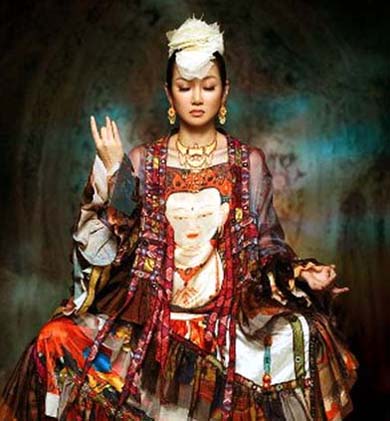
Sa Dingding's striking performances combine Buddhist influences with elements from China's indigenous minority cultures. Born to a Han Chinese father and a Mongolian mother, the twenty-five year old sings in Mandarin, Tibetan, Sanskrit and Lahu (a language spoken in south-west China's Yunnan Province) as well as penning lyrics in her own, invented language. She plays several classical Chinese instruments including the zheng, a type of zither, and the horse-head fiddle.

Critics see Sa Dingding's creative combination of traditional music and electronic beats as a welcome change from the usual Chinese fare of derivative pop jingles and bland hip-hop. She may be poised to make the elusive leap from national fame to international stardom using her British dates as a springboard.

(China.org.cn April 3, 2008) By John Sexton

Africa unite

Zanzibar's legendary Bi Kidude in As Old as My Tongue

Vues d'Afrique film festival showcases a continent in crisis

Africans have long complained the only images the West sees of Africa are those of drought, famine, poverty, AIDS and civil war. Well, don't expect Montreal's 24th annual Vues d'Afrique film festival to change that view much.

Even the opening film, Délice Paloma, written and directed by acclaimed Algerian filmmaker Nadir Moknèche, isn't your typical feel-good movie. Délice Paloma, which shocked audiences in conservative Algeria last year, is a flick about scams, con artists, sex workers and homosexuality in modern-day Algiers starring national treasure Biyouna as a whore called Madame Aldjeria (Algeria), whose newest recruit, Paloma, is dubbed "Délice" (Sweet).

Another much-anticipated film, the Rwanda-Korea-American co-production Munyurangabo, tells the story of two friends in post-genocide Kigali, one a Hutu, the other a Tutsi, and their falling out over tribal lines when the going gets tough. My problem with this plodding film by first-time feature film director Lee Isaac Chung is that the 35mm film is way too grainy, too slow and 20 minutes too long.

Music lovers will adore the hour-long British documentary As Old as My Tongue about legendary Zanzibari singer Bi Kidude, who continued singing into her 90s against the widespread wishes of Muslim conservatives in her native Zanzibar. The camera follows the dirt-poor Kidude as she tours Western Europe, winding down with her appearance at Peter Gabriel's WOMAD Festival in London. A remarkable film about a remarkable woman.

The NFB also figures prominently at the fest, notably Ottawa-born director Dana Inkster's terrific doc Twenty-Four Days in Brooks, about the split among whites and visible-minority immigrants striking at Alberta's Lakeside Packers, one of the largest slaughterhouses in the world.

My hands-down favourite film at the fest this year is the awesome NFB doc Dieu a-t-il quitte l'Afrique? about five young Senegalese men desperately hoping to find work in Europe, but unable to escape Africa. Directed by Musa Diengi Kala, who used to run Youssou N'Dour's Dakar recording studio, this is a beautifully shot, tightly wound, riveting work with a superb soundtrack that attacks not just the pillaging West, but African leaders for their abdication of duty. This is a film that will stay with you long after the cinema lights go up.

Overall, this year's edition of Vues d'Afrique is a steady-as-she-goes edition, although it'd be great to see more English-language films and the introduction of a bilingual festival program guide. Maybe next year.

Vues d'Afrique
At various theatres in Montreal, April 10 to 20
www.vuesdafrique.org

Richard Burnett

Human Rights Video in a Participatory Culture

One of our goals at the Center for Future Civic Media is to identify best practices from existing projects which might inform those initiatives which will emerge from the Center. We want to understand how people out there are using the tools available to them right now to enhance civic awareness, to play informal watchdog functions within the culture, to call attention to problems and force governments and other institutions to respond, to skirt around censorship and other kinds of regulation over communication, and so forth. (...)

Last week, on my personal blog and on the Future Civic Media Blog we've been featuring an interview with Sam Gregory, Program Director at Witness, a human rights organization founded by Peter Gabriel in the late 1980s, designed to put cameras into the hands of everyday people around the world so that they can document abuses by authorities. The organization emerged in the aftermath of the Rodney King video, which had sparked much greater public awareness of police brutality in the United States, and the hope was to create what Gregory refers to as a "participatory panopticon," as the wide spread availability of media production tools and the expansion of a distribution network for digital video makes it possible for people to record and transmit their own experiences of abuse. (...)

From Rodney King to Burma: An Interview with Witness's Sam Gregory (Part One)

(...) an you tell us something about the thinking which led to the creation of WITNESS? How has your organization's vision shifted over time in response to shifts in the nature of participatory culture?
In the late 1980's, our founder, Peter Gabriel had been participating in the Amnesty Human Rights Now Tour, travelling the world and meeting human rights activists at each concert stop. And in many cases, it struck him that their stories were not being heard, and that new tools like the consumer video-camera could perhaps change that. Fast-forward a couple of years, and the Rodney King incident brought the possibilities home. From the window of his apartment George Holliday filmed a sequence of graphic human rights violations that generated massive media attention. That provided the impetus for the creation of WITNESS - founded in the assumption that if you could place cameras in the hands of the people who chose to be "in the wrong place at the right time", i.e. human rights advocates and activists around the world living and working with communities affected by violations, then you would enable a new way to mobilize action for real change. (...)

Our founder, Peter Gabriel talks sometimes about "little brothers" and "little sisters" watching Big Brother, and this world of the 'participatory panopticon' as Jamais Cascio calls it - is one filled with emancipatory potential as long as we can make sure that the footage that circulates helps facilitate voice and change, rather than enable repression.(...)
Blog Entries by Henry Jenkins

06 avril 2008

Big Blue Ball !


Big Blue Ball (Limited Edition 150 Gram Blue Vinyl: 2LP)
Big Blue Ball
Limited Edition blue vinyl – 1000 copies. An album of all-star international collaborations which grew from "recording weeks" at Peter Gabriel's Real World Studios in the early 1990's. Featuring Peter Gabriel, Karl Wallinger, Joseph Arthur, Sinead O’Connor, Papa Wemba, Natacha Atlas, Holmes Brothers, Hukwe Zawose and more. Produced by Gabriel, Wallinger (World Party) and Stephen Hague (Pet Shop Boys, New Order).

TRACK LISTING:

1. Whole Thing (Original Mix)
featuring Francis Bebey, Alex Faku, Tim Finn, Peter Gabriel, Karl Walllinger, Andy White
2. Habibe
featuring Natacha Atlas, Hossam Ramzy, Neil Sparkes
3. Shadow
featuring Juan Cañizares, Papa Wemba
4. altus silva
featuring Joseph Arthur, Ronan Browne, Deep Forest, James McNally, Iarla Ó Lionáird, Vernon Reid
5. Exit Through You
featuring Joseph Arthur, Peter Gabriel, Karl Wallinger
6. Everything Comes From You
featuring Richard Evans, Joji Hirota, Sevara Nazarkhan, Sinead O’Connor, Guo Yue
7. Burn You Up, Burn You Down
featuring Billy Cobham, Peter Gabriel, The Holmes Brothers, Wendy Melvoin, Arona N’diaye, Jah Wobble
8. Forest
featuring Levon Minassian, Arona N’Diaye, Vernon Reid, Hukwe Zawose
9. Rivers
featuring Vernon Reid, Marta Sebestyen, Karl Wallinger
10. Jijy
featuring Arona N’Diaye, Rossy, Jah Wobble
11. Big Blue Ball
featuring Peter Gabriel, Manu Katché, Karl Wallinger

Beauty triumphs throughout Daniel Lanois album

Daniel Lanois - Here Is What Is
(Red Floor Records, 2008)


The new album by Canadian-born Daniel Lanois is a soundtrack to his film of the same name. The documentary is described by Lanois as a "travelogue of his life over the past year." He is on a quest for the "source of art, rather than everything that surrounds it." The film includes appearances by U2, Emmylou Harris, Willie Nelson, Sinead O'Connor and Aaron Neville, among others.

In addition to his work as a celebrated composer and performer Lanois is best known as a producer. He has received 10 Grammys and five Junos and was responsible for producing landmark albums including U2's Joshua Tree, Unforgettable Fire, Achtung Baby, How to Dismantle an Atomic Bomb and All That You Can't Leave Behind; Bob Dylan's Oh Mercy and Time Out of Mind; Peter Gabriel's So and Us; Willie Nelson's Teatro; and the soundtrack to Billy Bob Thornton's Slingblade.

The music on Here Is What Is is a collection of startlingly powerful music, including grooves, atmospheres and other soundscapes. Some tracks feature dialogue from the film. Frequent collaborators are gathered together including Brian Eno, Garth Hudson (the Band), and drummer Brian Blade.

This May Be My Last Time is a powerful gospel-infused performance featuring Brian Blade's father and his Zionist Baptist Church in Shreveport, La.

Lovechild features Garth Hudson improvising on piano and Lanois playing his trademark ethereal pedal steel (which he calls his "church in a suitcase").

Sacred and Secular is spine-chilling as Eno, Lanois and Blade engage in a rich musical dialogue.

Other highlights include Joy (with its Hammond B3), Blue Bus and Bells of Oaxaca.

Daniel Lanois is clearly in a league of his own with this music. Beauty triumphs throughout the album, leaving the listener begging for more and running to the store to buy the accompanying DVD.

Posted By David Reed

Emmanuel Jal Joins MtVu's "Turn It Up" Fight Against Darfur Genocide

"War Child" Feature Documentary Part of Tribeca Film Festival's Line-Up. Jal's "Warchild" Digital Track Now Available on iTunes

Former Sudanese child soldier turned international hip-hop artist EMMANUEL JAL will be part of "Turn It Up," mtvU's month-long "leaks" and music video premieres promotion to fight against the Darfur Genocide. Launched in partnership with STAND, a Student Anti-Genocide Coalition, Jal will join artists including Death Cab for Cutie, Atmosphere, Tapes 'n Tapes, Dizzee Rascal, Tokyo Police Club, The Long Blondes and others, in an effort to help marry the power of great music with college students' activist spirit, to take action on one of the world's most pressing humanitarian crises. Jal's upcoming album, "Warchild," due out May 13, will be part of this promotion. More information on "Turn It Up" can be found here: http://www.mtvu.com/

"War Child," the feature film documentary that tells the story of Jal's extraordinary life experiences, will screen at this year's Tribeca Film Festival held in New York later this month. A trailer from "War Child" can be viewed here: http://warchildmovie.com/

The stunning title track from Jal's upcoming CD "Warchild" is now available as a digital single on iTunes beginning. The UK's daily newspaper The Independent called "Warchild" "...a riveting listening pleasure...I strongly recommend this piece of work to anybody who appreciates heartfelt, introspective and literate music." Jal has also just finished filming the video for the "Warchild" track; the video and exclusive behind-the-scenes footage will be available shortly.

Emmanuel Jal knows of the horrific Darfur situation better than most. For a seven-year period beginning when he was about six or seven years old, he was taken from his home and taught the skills to be a child soldier, fighting for the Sudan People's Liberation Army in Sudan's civil war. He learned how to fire a machine gun before he could ride a bike, and lives with the nightmares of the unspeakable things he had to do to survive. When he was about 13, he, along with some 400 other "child soldiers," courageously deserted the rebel lines, trekking through empty deserts in search of food and shelter. Only sixteen made it to the relative freedom of a refugee camp. Jal was one of them.

Music is what kept him going after returning to "the real world." On "Warchild," Jal mixes African with hip hop with world music rhythms, and tells his incredible story in songs like "Forced to Sin," "Many Rivers to Cross," "Baaki Wara," and the title track. Over the past several years, he has befriended artists like Peter Gabriel, Bono, Moby and Sir Bob Geldof who have helped Emmanuel in countless ways, whether with his music or his Gua Africa foundation that helps educate former child soldiers.

Folk group performing live for church cash campaign

A Church fundraising campaign sees its latest event take place next week with outstanding folk group Sheelanagig performing live. Aslackby Church fundraising efforts have been going well with their Film on Friday series. But on Friday April 11 at 7.30pm Sheelanagig will play in St James' Church, as part of their extensive spring tour.

At the end of December 2008, the band was listed as one of the best five live gigs in The Independent. Their acoustic world folk style combines Western swing with Arabic melodies, and klezmer with Irish reels. The five strong band has two albums behind them, the most recent, Baba Yaga's Ball, recorded at Peter Gabriel's Real World studios.

Last year they played on the Avalon Stage at Glastonbury and will be there again this year. Their festival highlights include The Big Chill, Trowbridge, Shepley Spring Festival, Lamar Tree Festival and Broadstairs Folk Festival to name but a few. They play regularly in Scotland, Ireland, Denmark and Italy where they performed last year at the Ferrara International Buskers Festival - and now Aslackby church.

Youssou N'Dour, Sénégal Inc.

Youssou N’Dour. Figure de la chanson mondiale, la star de Dakar diversifie ses activités en homme d’affaires avisé. Prudent, il évite la politique et préfère l’humanitaire.

Il a grandi «enchevauché» entre deux maisons. Son père, parce qu’il avait épousé une fille de griot et n’était pas griot, avait dû quitter la «grande maison», celle où, dans la tradition de la caste, les faits et gestes du quotidien au même titre que l’histoire passée nourrissent les récits des poètes musiciens. A ses 10 ans, Youssou est réclamé par sa grand-mère maternelle. «J’ai dormi pendant cinq ans dans sa chambre, j’avais le privilège de l’écouter longuement avant de dormir. Et le matin, je me levais tôt pour aller lui chercher de l’eau.» Les canalisations n’étaient pas encore arrivées dans la Médina, quartier pauvre de Dakar, qu’il traversait le mercredi et le week-end pour aller rejoindre ses parents et l’atelier de ferraille paternel.

De leur mésalliance, il tire sa liberté et sa destinée. «Le griot, à l’époque, ne se faisait respecter que lorsqu’il chantait dans les mariages, les baptêmes. Sinon, il n’attirait pas l’attention dans la vie de chaque jour.» Entre les premières cérémonies, où il se produit à 13 ans, et ses tours de chauffe dans un théâtre avec son groupe de musiciens, où il découvre que «des gens sont prêts à payer un billet pour venir [les] écouter», Youssou N’Dour a choisi. Il sera un «griot moderne».

Porté par une voix à nulle autre pareille, où résonnent les anciens, l’envie de changer le monde et une touche de muezzin, il est monté au firmament. Vénéré au Sénégal pour sa réussite, admiré sur la scène musicale pour ses audaces, messager de l’Afrique auprès du G8, il a rejoint la caste des artistes planétaires. «C’est la plus belle voix du monde», avait dit son découvreur, Peter Gabriel qui l’avait lancé dans le circuit. «Il était venu me voir alors que je passais pour la première fois à Londres. Je ne connaissais même pas sa musique. Il m’a invité à venir chez lui où il préparait son album So. Nous avons passé deux jours extraordinaires à chanter… C’est amusant, je dois l’avoir justement au téléphone aujourd’hui, on se parle toujours de nos projets, des nouvelles technologies et de leur influence sur l’industrie de la musique.»

En ces années world music et bands aid, Youssou N’Dour aurait pu tourner en orbite, une maison à Londres, une autre à New York. Au lieu de quoi, s’il globe-trotte toujours d’un concert à une conférence sur le paludisme, il ne se pose qu’à Dakar, son territoire. Et s’il a beaucoup de biens, tous ont une seule adresse : le Sénégal. Siège de la Youssou Inc.

Car ce griot-là, grand et élégant, très sur son quant-à-soi, est un cas d’espèce. Un entrepreneur hors pair. Qui le voit, côté cuisine, dériver ses produits jusqu’à publier, les Recettes de ma mère. Et, côté justes causes, lancer, voilà quelques semaines, une société de microcrédit avec l’appui financier de Benetton, baptisée Birima, du nom d’un ancien roi du Sénégal généreux et mélomane. «Il n’avait qu’une parole et la respectait. Donc, l’idée de Birima, c’est que les gens redeviennent crédibles par la parole donnée.» La parole, en guise de garantie simplifiée.

«Il est loin de l’image des anciens musiciens qui se soûlaient la gueule. C’est foncièrement un businessman, ce qui ne retire rien à son talent artistique, résume le jeune rappeur sénégalais Didier Awadi. Toute sa vie, il a osé, en musique comme en affaires.»

A ses débuts, «You», comme le surnomme Dakar, fusionne salsa et tradition, réinvente le rythme Mbalax, il s’essaie au R’n’B, à la musique arabe dans son album Egypte qui vante un islam éclairé, il approche le jazz, convoque le blues… Toujours à sa guise. Il a assuré ses positions à Dakar depuis longtemps maintenant, avec un studio moderne nommé Xippi, un label, Jololi, sous lequel il produit les jeunes musiciens sénégalais. Et il possède plusieurs clubs, dont le Thiossane où, avec son groupe le Super Etoile, il fait danser jusqu’au petit matin.

Youssou tient son marché en mains, en homme avisé. Quand les majors se prennent à rêver d’avoir dégotté un Phil Collins noir, puis quand elles comprennent que la rentabilité d’un chanteur en langue wolof ne va pas de soi, il sait qu’il peut compter sur sa base arrière. Même le tube 7 Seconds, en duo avec Neneh Cherry, n’a pas dévié sa trajectoire. Anglais pour elle, Wolof pour lui. Il se veut artiste du monde, pour l’Afrique.

A Dakar, son pouvoir s’étend aussi à la communication. Son groupe de presse, qui compte une radio, Radio Futur Medias (RFM), et un quotidien, l’Observateur, qui revendique le premier tirage du pays (55 000 exemplaires), doit se doter d’une télévision. «Si les gens ne sont pas informés, ils ne peuvent pas décider par eux-mêmes. C’est comme ça que l’on voit encore dans des pays d’Afrique, des gens être achetés pour leurs votes. C’est terrible ! Souvenez-vous aussi du rôle des médias [comme la radio des 1 000 collines, ndlr] dans les massacres du Rwanda.»

Lui fait bon ménage avec le pouvoir en place au Sénégal. Un temps, vu son appétit tout-terrain, on l’a dit partant pour la politique. Il était flatté. Puis tenté. Aujourd’hui, il en a fini avec cette idée, prétend qu’il n’en a pas le talent: «Les gens avec moi mangeraient des pierres.» Sans doute a-t-il senti que ce pouvoir-là lui rognerait les ailes. Il lui préfère les combats humanitaires. En juillet, il sera au Japon pour le G8, avec Bono. «Nous sommes parvenus à créer une nouvelle diplomatie, à faire avancer les choses sur l’annulation de la dette, les objectifs du millénaire, la lutte contre le paludisme.»

Des chefs d’Etat et de gouvernement qu’il a rencontrés, il cite Tony Blair en premier pour avoir mis son poids dans la balance sur la dette. S’il réprouve Bush sur l’Irak et bien d’autres choses, il reconnaît «ses efforts» dans la lutte contre le paludisme et le sida. A la France, il préfère évoquer l’Union européenne qui a établi une relation «plus claire, plus crédible» avec l’Afrique. Quant à Nicolas Sarkozy, qui, dans son discours de Dakar, a eu des relents néocolonialistes, il glisse qu’il «aura d’autres occasions de rectifier sa maladresse».

Tempéré et rassembleur, Youssou N’Dour voudrait rééquilibrer les plateaux de la balance. «L’Afrique a eu ses idées, ses inventions, ses visions, il faut les faire resurgir. Nous avons beaucoup reçu de la part des pays développés mais nous nous souvenons que nous avons aussi beaucoup apporté.»

Demain soir, quand la lumière s’allumera sur Bercy, il n’aura plus ces accents missionnaires, cette distance d’homme d’affaires, cette voix neutre et froide qui déçoit. Alors, celle-ci s’élèvera, polychrome et virtuose, pour la fête de la diaspora sénégalaise. Un grand bal africain d’une nuit qu’il a institué, auquel il convie une soixantaine d’invités de Dakar comme on donne des étrennes, où la danse réunira ceux venus de Milan, de Bruxelles et de la région parisienne. Alors, il chantera pour toute la famille, des refrains d’amour pour les femmes, des histoires sociales pour les hommes et des messages pour tous.

Marie Guichoux, Liberation

03 avril 2008

Living With Music: A Playlist by A.M. Homes

On Wednesdays, this blog is the delivery vehicle for “Living With Music,” a playlist of songs from a writer or some other kind of book-world personage. This week: The novelist A.M. Homes, whose most recent book is “The Mistress’s Daughter,” a memoir.

A.M. Homes’s March 2008 Playlist:

In retrospect and with the endless impulse toward revision, I look at this list thinking it’s all about sex and longing and metaphysical impossibility and the hand of god - and is there anything else? Is there something more - I expect nothing less.

1) Leonard Cohen’s Suzanne as sung by Peter Gabriel on “Tower Of Song.” A mysterious, erotic incantation that begins with shuffling drums, scratching wire brushes sweeping the snare, scratching, itching, writhing with the impossibility of it all. It’s endlessly inspiring for its romanticism, longing and applicability to any object of desire, the elusive that can never really be. I think of the ethereal Suzanne as she’s sung to us, “she brings you tea and oranges that come all the way from china,” and the reality of the “real” Suzanne, now frozen in lost time with a permanent view of the St. Lawrence River. Somehow always in my mind’s eye I had placed her in Greece, in Hydra with Cohen, but maybe I just made that up, maybe that was the next Suzanne for as unpossessible as she was or is, there is always another Suzanne. (...)

By Dwight Garner

Elle est Babel, ma musique

World. Le forum marseillais professionnel a réuni 12 000 spectateurs ce week-end.

Face aux Docks des Suds, où s’est tenu ce week-end le quatrième forum Babel Med Music, se dresse une vraie tour de Babel : l’édifice CMA-CGM, en construction, appelé à devenir le plus haut de Marseille. La nuit, illuminée et flanquée de deux grues gigantesques, cette masse de béton poétique devient un rêve d’installation d’art contemporain. Les Docks des Suds, anciens entrepôts du port autonome, accueillent chaque automne la Fiesta des Suds, dont Babel Med est le petit frère. Une partie accueille le marché des professionnels des musiques du monde. Le soir est réservé aux concerts : trente artistes sur trois jours. (...)

A l’heure du bilan cependant, deux chocs éclipsent tout le reste. Marseillais lui aussi, Levon Minassian est un des rares maîtres du duduk, une simple flûte à neuf trous, emblème de l’Arménie. Auteur de deux disques peu diffusés, les musiciens se l’arrachent, de Peter Gabriel (avec qui il doit entrer en studio) à Sting, sans oublier sa participation à des musiques de films (la Passion du Christ de Mel Gibson). Accompagné par un petit ensemble, il crée des vagues d’émotion avec cet instrument difficile entre tous. «Tout est dans la pression des lèvres sur l’embout, explique cet homme humble et rayonnant. Il faut dix ans de travail solitaire pour en tirer un son acceptable. Je m’exerce encore chaque jour, parfois deux heures, le plus souvent quatre, et continue à toujours trouver des nuances nouvelles.» (...)

31 mars 2008

Daniel Lanois Here Is What Is

This guy quietly has been at the epicenter of some of the most sonically adventurous yet commercially and artistically successful albums released in the last several decades. He was instrumental in five epochal U2 albums (including the shockingly, gloriously resilient Joshua Tree). He pulled Bob Dylan from a drifting period (the resulting Time Out of Mind and Oh Mercy remain brilliant). He helped catapult Peter Gabriel from steady cult fave to arena star without loss of credibility (So and Us). Emmylou Harris, Willie Nelson, Robbie Robertson and the Neville Brothers sing his praises whenever asked. Lucky Los Angelenos will recall Lanois touring on the back of Harris’ Wrecking Ball. The band took the stage at the Troubadour in timely fashion, but Lanois switched from guitar until the late drummer finally found the stage. Neither Harris nor Lanois nor the audience missed a beat.

I hope someone can introduce Lanois and Dave Alvin, their melding of texture and atmospherics would be fascinating.

Lanois has released his seventh in a string of solo albums. The title song references a Jamaican proverb, essentially meaning what you have in front of you is what you gotta use. And that adroitly sums up his philosophy.

For years Lanois and fellow traveler Brian Eno have collaborated and produced a mindset and canon that goes to the core of the creative process. The central catalyst they established with each other early on is “Whatever I say, you agree and whatever you say, I agree.” Eno points out that nothing then stands in the way of getting on with the creative process. Once underway, magic eventually unfolds.

Currently Lanois and Eno are now back in the studio with U2, cooking up (somewhat improbably, but ultimately inevitably) the Irish quartet’s next stunner.

In conjunction with his latest solo release, Lanois has produced a documentary. It sheds light on the magic of creating art. It portends a series of solo albums which Lanois will make available via his site www.redfloorrecords.com. He is most enamored of the steel guitar, what he repeatedly calls his “church in a suitcase.”

Lanois is a man of the world. He spent time in New Orleans but like Ray Davies, Lanois recently left there due to some bad circumstances he prefers to leave undiscussed. Lanois shifts his base of operations from LA to Toronto, and disembarks in Morocco or France when assembling with U2 and Eno.

Lanois has expressed a bifurcated view of technology. In some interviews he bemoans the advanced state of the recording process. Whereas in the analog days gone by, the studio represented a near-scared place of “hopes and dreams” wherein everyone looked forward to the expensive and important time therein. Now the studio is everywhere given the accessibility and ubiquity of recording equipment. In another interview, however, he delights in a battery-driven box the size of a cigarette pack, four of which Lanois says could record a fine album.

But the seeming dichotomy of high tech and low tech is resolved, subtly yet effectively as a flying mallet, in the title of his new album and the music captured therein.

Written by BRAD AUERBACH

30 mars 2008

Folk duo's Durham debut

One of the UK's finest folk duos are to make their Durham debut next week.

Show of Hands, featuring the combined talents of Steve Knightly and Phil Beer, are on a 19-date national tour, which reaches The Gala Theatre on Wednesday, April 9.

It marks a belated appearance in Durham for the award-winning duo, who had to cancel their tour in the autumn at the last minute following news that Mr Knightley's young son Jack had been diagnosed with leukaemia.

Mr Knightley said: "Jack has gone through his initial period of treatment with flying colours and although it will be nearly three years until the all clear, all the early signs are encouraging".

The tour has been timed to showcase their new double album Roots - The Best Of Show Of Hands. The band have won many plaudits over the years. They were described by Peter Gabriel as "one of the great English bands" and by Radio 2's Mike Harding as: "one of the finest folk duos ever to grace the scene."

By Mark Tallentire