Articles review on the net, revue d'articles sur la toile


Inscription : feeds, flux :
(Atom) Gabriel Real World News

22 février 2009

Annie Lennox: 'Shining Light'

By Nick Levine, Music Editor, digital spy

Released on Monday, March 2 2009

Member of the British rock aristocracy covers decade-old indie anthem for 'Best Of' comp – sounds pretty heinous, right? Imagine Sting taking on 'Last Nite' or Peter Gabriel having a crack at 'Pumping On Your Stereo'. But against the odds, Annie Lennox's cover of 'Shining Light' – an Ivor Novello winner for Ash back in 2001, lest we forget – is the best thing she's done in years.

This is largely because it's filled with something Lennox's own songs have been missing lately – joy. Here she sounds positively radiant, wrapping her still magnificent voice around Tim Wheeler's tender, vaguely spiritual lyrics. The result, flanked by typically gorgeous Lennox harmonies, is really quite life-affirming. Hmm... maybe Sting should think about that Strokes cover after all?

Face-to-face with Youssou N’Dour

BY MIKE AWOYINFA [ mikeawoyinfa@sunnewsonline.com ] Saturday, February 21, 2009


It was a case of the hunter being hunted as the unique, youthful Youssou N’Dour, the world-acclaimed Senegalese superstar singer sensationally turned the table against me. He took my tape recorder from me and started interviewing me—as you can see in this picture taken at our meeting in Lagos.

I had gone to interview him after his headline performance at the Glo CAF Award night, but he couldn’t believe his ears as I sang to him three of his hit songs—songs like ‘Set’ and ‘Mame Bamba.’ He was particularly impressed by my knowledge of the song ‘Without a Smile’ (same)—a sorrowful, melodious song lamenting the harsh, dry Sahelian terrain of his homeland where the trees stood gaunt and leafless, where the cows and goats were all dying under a severe drought. It is a song that features the jazz saxophonist Branford Marsalis playing a beautiful, melancholic solo—a melodic masterpiece that haunts every connoisseur of good music.

“Oh, you know the song?” N’Dour asks me as I hum the opening guitar melody. “You like that song?” Of course, I do.

In Nigeria, a country where he is almost an unknown and unsung prophet, N’Dour is moved and mesmerized by the fact that a journalist knows him in and out, and can even sing some of his songs. He got emotional. I could almost see happy tears of appreciation in his eyes encased in a pair of black glasses.

For my effort, Youssou N’Dour rewarded me with a free a cappella of the song which I recorded and which I will treasure for life. When he opens his mouth to sing, Youssou N’Dour transports you straight to celestial realms. I don’t want to use the word orgasmic, because children could be reading this piece. He is blessed with that special, golden voice that God gave to special people like our very own I.K. Dairo, whose house is just a stone’s throw away from my father’s compound in Ijebu-Jesha.

“Branford is a good friend of mine,” Youssou N’Dour tells me as we engage in this long conversation between a musical idol and a devotee. “Every time I go to the U.S., he came to us and played with us. It was Sting who made the connection between us. Branford is now a really big friend of mine. He is one of most talented musicians in the world.” Youssou, surprisingly speaks good English with a French and pseudo-American twist.

I ask the famous singer what the song ‘Without a Smile’ is about. “It’s about the desert, the countryside,” he explains. “People are expecting water and there is a year where there is drought, no water and all the animals are really dying. The song is about someone who follows the animals to see whether they are alive or dead. He didn’t know exactly if the animals are dead, but he asked. And people tried to help him to go to the area where the water is. It is really something traditional, something really local.

“Branford loved the song, because we did a late show in America and we played together. And we had a little time in the dressing room and I said: ‘Listen, Branford, I have a new song.’ And the guitar player started the melody of the song and Branford said: ‘I love it. When are you gonna record this song?’ I said: ‘Next month.’ He said: ‘Send me a tape. I can follow you on the song.’ And I sent him a tape. Three days after, he sent me back the tape with his own solo input. It blew my mind.”

I have not started this column with an introduction because Youssou N’Dour, is a global superstar who needs no introduction anywhere in the world—except, perhaps in Nigeria.

And over here, I am very proud to announce myself as his No.1 fan. So when he came to Nigeria to perform at the Glo CAF Award, I seized the opportunity to get this world exclusive interview which is one of the most fulfilling interviews of my career as a journalist.

For 45 precious minutes, there he sat face-to-face with me, sipping a bottle of Coca-Cola and munching peanuts as I bombarded him with questions I had always sought answers to. He talked about everything—his musical journey, his musical heroes, his humble beginnings, his stardom, his parentage, his love life and his divorce. Of course, we talked about his friend Dr. Mike Adenuga, whose biography we are writing—how they met at the airport in Mauritania and how they became instant friends, after begging Adenuga for a ride in his plane to Dakar.

One thing you can say of Youssou N’Dour: He is a nice, humble, funny, approachable guy without airs of superstardom around him. Talking about superstardom, he is a star who ranks among the greats like Bruce Springsteen, Tracy Chapman, Peter Gabriel, Bono, Sting and Stevie Wonder some of whom he has performed with on the world stage for Amnesty International. What stands Youssou N’Dour out is his unique angelic voice. And the beautiful poignant melodies. From our conversation, I got to know Youssou N’Dour as a newspaper publisher and a radio station owner in Senegal.

On why he went into newspaper publishing, he says: “First, what I think is that I am a young African who has had success, who has some money, who can play everywhere around the world. I have some money and I think about putting the money back into my country, supporting my country and helping to develop the economy, helping to support my fans and the people who helped me to be where I am today. I want to help the young people of my country. I have to create jobs for young people. There are a lot of talents in Senegal and all over Africa who don’t have a job. I have over 220 people working in my newspaper and on my radio. And for me, it is really important.

The other thing is that I try to be someone who helps the country to develop. My mission is to give people the opportunity and the voice to say what they want to say. I am not a politician. I am simply someone who wants to help the country and contribute to the flourishing of the institution of democracy in my country.”

It is still like a dream, but for real, I interviewed, Youssou N’Dour, the first African global superstar. If you don’t believe me, turn to the Great Encounter column inside this paper.

21 février 2009

Books - War Child: A Child Soldier's Story

In the mid-1980s, Emmanuel Jal was a seven year old Sudanese boy, living in a small village with his parents, aunts, uncles, and siblings. But as Sudan’s civil war moved closer—with the Islamic government seizing tribal lands for water, oil, and other resources—Jal’s family moved again and again, seeking peace. Then, on one terrible day, Jal was separated from his mother, and later learned she had been killed; his father Simon rose to become a powerful commander in the Christian Sudanese Liberation Army, fighting for the freedom of Sudan. Soon, Jal was conscripted into that army, one of 10,000 child soldiers, and fought through two separate civil wars over nearly a decade.

But, remarkably, Jal survived, and his life began to change when he was adopted by a British aid worker. He began the journey that would lead him to change his name and to music: recording and releasing his own album, which produced the number one hip-hop single in Kenya, and from there went on to perform with Moby, Bono, Peter Gabriel, and other international music stars. Shocking, inspiring, and finally hopeful, War Child is a memoir by a unique young man, who is determined to tell his story and in so doing bring peace to his homeland.

Soweto choir gets Oscar invite


The Soweto Gospel Choir will perform at the Oscars - the first time a South African act has received such an invitation. The choir has been nominated for an award for its song, Down to Earth.

Joburg's pride, the Grammy-Award winning Soweto Gospel Choir, will be performing at the 81st Academy Awards on Sunday, 22 February.

It's the first time the choir will perform at the Oscars, as the awards are better known, as well as the first time a South African act will perform at the annual red carpet event. The ceremony, taking place at the Kodak Theatre in Hollywood, in the United States, will be broadcast on MNET at 7.30pm on Monday, 23 February.

One of the choir's many songs, a collaboration with songwriters Peter Gabriel and Thomas Newman, has been nominated for an Oscar for Best Original Song. It already has a Grammy Award under its belt, for Best Song Written For Motion Picture, Television Or Other Visual Media. Down To Earth is the theme tune for the Disney animated movie, Wall-E, which itself has been nominated for Best Animated Feature Film.(....)


Nightmoves Captured On DVD

by Paul Cashmere - February 20 2009, photo by Ros O'Gorman

Santana playing Rod Laver Arena, Melbourne Australia

Nightmoves, the music TV show hosted by Lee Simon in the 70s and 80s, has been resurrected on DVD.

Nightmoves first aired in Australia on May 13, 1977 on Channel 7. It was originally designed to be an adult version of Countdown.

Simon continued to host the show when he took up the job of Program Director at EON-FM. The show gave birth to the simulcast, a joint radio and television broadcast, giving the audience to chance to hear the show in stereo. (Yes kids, we still had mono television in the early 80s).

Nightmoves attracted the real music stars, as opposed to the pop stars. The DVD features performances from international stars Joe Cocker, Graham Parker, Peter Frampton, Santana and Graham Bonnet. The Aussie line-up features extremely rare to find songs by Billy T, Wendy and the Rockets, Kevin Borich, Mother Goose and The Ferrets.

But wait, there’s more. The 3 disc set also features interviews with Peter Gabriel, Steve Winwood, Phil Collins, Glenn Shorrock and Beeb Birtles, Bill Wyman and more. Nightmoves will be released on March 2.

Dengue Fever's Cambodian Pop Is Perfect Soundtrack for Lost World


By Scott Thill, February 19, 2009

Los Angeles hybrid groove band Dengue Fever has combined Cambodian pop with surf, ska, psychedelia and funk, winning crossover success and critical acclaim. The group's next move? Playing a live soundtrack for The Lost World, the 1925 film adaptation of Sir Arthur Conan Doyle's dino-sci classic, when it screens this May at the San Francisco Film Festival.

The score will drop in what's shaping up to be a busy season for the sextet, which is led by siren Chhom Nimol. She was already a reputable Khmer singer in Cambodia before she was discovered by brothers Ethan and Zac Holtzman, who founded Dengue Fever in 2001.

For more on the band and its Cambodian musical influences, check out the biopic, Sleepwalking Through the Mekong (trailer below). The movie, which will be released on DVD in April, follows Dengue Fever as its members tour Phnom Penh and explores the roots of Cambodian rock from the '60s and '70s. The band will embark on a lengthy American and European tour in support of the DVD release.

Dengue Fever's third effort, Venus on Earth, was picked up last year by Peter Gabriel's Real World Records for distribution outside of the United States and Canada. As a band out of time and genre, the group seems a perfect fit for the San Francisco Film Festival's screening of a Library of Congress lifer.

"The Lost World is a classic exploration of man's fascination with his own prehistory," explained Film Society programming associate Sean Uyehara. "Like the territory depicted in the film, Dengue Fever's music comes from a time and place that no longer exists. The band and film both evoke the same kind of nostalgia."


Diverse musicians 'Change' their tunes for peace

By Edna Gundersen, USA TODAY


Natural studio: Playing for Change founder Mark Johnson, left, records an Indian musician for the album.

Further proving that music is the universal language, more than 100 musicians across the planet are entwining talents to promote world peace.

Playing for Change — Songs Around the World, a 10-tune CD/seven-track DVD due April 28 on Hear Music, captures mixes of known artists and street musicians from locales as far-flung as Nepal, the Himalayas and the Palestinian territories.

Grammy-winning engineer Mark Johnson spent a decade seeking and sequencing montages, including footage of the late Bob Marley on his War/No More Trouble updated with U2's Bono and players from the Congo, Israel, India, Ireland, South Africa, the USA, Zimbabwe and Ghana.

A video of Stand By Me, with U.S. buskers Roger Ridley and Grandpa Elliott spliced into a single performance with musicians from the Netherlands, Russia, Spain, Venezuela, France and Brazil, has drawn 7 million YouTube viewers (also at playingforchange.com).

Others tackle Marley's One Love, U2/Bob Dylan's Love Rescue Me, Peter Gabriel's Biko and Tracy Chapman's Talkin' Bout a Revolution. Some musicians will join a brief tour starting March 20 at South by Southwest in Austin.

TheFilter Gets More Money From Peter Gabriel

paidContent.org, Rafat Ali Wednesday, February 18, 2009

paidContent.org - Media Recommendation Firm TheFilter Gets More Money From Peter Gabriel

Music and digital media recommendation service and tech firm TheFilter, based in Bath, UK, has received more funding from musician Peter Gabriel, though the amount was not disclosed. The round was led by current investors Gabriel and Eden Ventures, and also attracted new high-profile private investors, including Roderick Banner, chairman of WPP-owned media agency Banner Corp, Michael Brochu, former CEO of LoudEye, as well as John Taysom, founder of We7.com, another Gabriel-backed company. Gabriel also backed OD2, one of the first digital music companies. Gabriel and Eden Ventures started with a $1.8 million investment alongside cofounders Rhett Ryder and Martin Hopkins, then led a $5 million round in 2007.

TheFilter started in the UK in 2007 and expanded to the U.S. last year, evolving from a music-playlist sharing site to other kinds of media, including movies and web video. Competition is from specialized sites such as Last.fm in music and Flixster in movies, as well as general social media sites.

Surviving a Hitch in an Army of Boys

By HOWARD W. FRENCH, the New York Times, Published: February 16, 2009


Barely pages into Emmanuel Jal’s fast-paced memoir about growing up amid modern African warfare, the reader is brought up short by the following sentence: “There was peace in Sudan for the first three years of my life, but I cannot remember it.” It is the first of many stark, declarative statements about a human condition of cruelty and wretchedness that afflicts the lives of countless young people in distant African lands, people whose stories we are unaccustomed to hearing.

Mr. Jal’s tale, of a lengthy and devastating civil war between northern and southern Sudan (not the conflict in Darfur, more familiar to readers today), begins in the mid-1980s when he is somewhere around the age of 7 — though he is not altogether sure because he inhabits a world where time is marked by seasons, including one for hunger, rather than calendars. At the very outset we are introduced to the boy’s family as they move southward through their country in a convoy of trucks from an area controlled by “African Arabs” to their own ethnic heartland, inhabited by “pure Africans,” in the book’s somewhat overly reductive language of ethnicity.

Four Arab men with angry eyes speak among themselves about a rebellion brewing in the country. It will fail, and the pure Africans who seek to revolt “will remain slaves beneath us just as they are meant to be,” one vows. Moments later, a fight breaks out when the Arabs steal the meager rations of Emmanuel’s family; after they begin to beat his uncle, the boy throws himself onto one of the men’s ankles and bites it.

The scene ends with a fadeout to unconsciousness. Thus started, time rushes past in this recollected tale of appalling violence, “like sand,” in the words of the narrator, “running through my fingers as I look back.” The attack in the truck marks Emmanuel’s loss of innocence, and with it is born a burning hatred for Arabs that will drive his behavior, often with tragic consequences, through most of the story.

Emmanuel is taken by his mother from one village to the next in the south, each time under the pretext that the new destination will be safer. There is little respite, though, as Sudan’s relentless army, bent on ethnic cleansing, unfailingly closes in and attacks anew. At one early stop the boy learns that his father has absented himself from the family to undergo officer training in the rebel southerners’ Sudan People’s Liberation Army (S.P.L.A.).

In quick succession the young boy witnesses the rape of an aunt and then is separated permanently from his mother amid another army onslaught. At the next way station he is taken in with scores of other children who are told they are being moved to Ethiopia to go to school. But once there, he is told he must join the southerners’ rebellion as a fighter. It is his father’s will, the boy is told. For good measure, an elder intones, “The gun does not know who is old or young.” Emmanuel, for the record, is 9.

Despite these grim contours, the story sometimes has the cloying feel of a fairy tale. This, perhaps, is a risk of the “as told to” genre. Mr. Jal, who received little schooling until well into his teens, after he was rescued by an aid worker, immigrated to England and eventually became a successful musician. His co-writer is Megan Lloyd Davies.

The writing is usually sturdy, and in a middle section that relates a long death march through the south it even rises to an urgency that recalls Jerzy Kozinski’s novel “The Painted Bird.” Elsewhere, though, it sometimes feels dreamily like Technicolor when color would do, and admits insufficient room for reflection on many themes, notably fear and hatred.

Some of the book’s most interesting observations seem almost inadvertent, depriving the reader of context that is important to understanding this conflict, and African conflicts in general. From Biafra to Rwanda, and now Darfur itself, the West has a long tradition of reducing them to good-versus-evil stories bereft not just of nuance but also of politics, history and complexity.

There is no gainsaying Mr. Jal’s experience of terror, but amid his frequent loathing for Arabs the book provides only a glimpse of the geopolitics of the war, with Ethiopia hosting hundreds of thousands of Sudanese refugees near their common border and allowing rebels to train on its territory.

In one recollection, the young Emmanuel, at the time he thinks he is being sent to school, astutely wonders why the Western aid workers are “nowhere to be found except in food lines or the hospital.” A few pages later he says that “while the khawajas” — a local expression for whites — “thought they ran the camp, it was the S.P.L.A. who were really in charge.”
These words amount to a provocative challenge to the myth of the beneficent and powerful Western humanitarian worker whose impact is thought exclusively good. Too often in African conflicts these workers’ presence has amounted to unacknowledged collusion.

Mr. Jal’s narrative makes another important point, but again almost incidentally. As horrible as civil conflicts are, often their collateral damage is worse. After lusting for vengeance against the Arabs, the boys’ first “battle” is a murderous raid against an Ethiopian village. The next combat is against the Ethiopian state, whose army evicts the rebels.

“War Child” ends with its least compelling material, a made-for-Hollywood account of how Mr. Jal succeeds as a antiwar musician, playing concerts around the world and toasted by the likes of Peter Gabriel. “I’m still a soldier,” he writes, “fighting with my pen and paper, for peace till the day I cease.”

Music site We7.com charts success

How-do.co.uk, Wednesday, 18 February 2009

Online music site, We7.com, the brainchild of Cheshire businessman Steve Purdham and rock star Peter Gabriel is aiming to double users in 2009. The venture allows music fans to listen to music for free, but each track is preceded by an advert. With close to a million users already, they’re aiming to hit 2m by the end of the year. Purdham, the former chief executive of Surfcontrol, told How-Do that the whole thing has proved "irrationally seductive."

"It’s all come together through fate. We [Purdham and Gabriel] first heard of the idea in 2006/2007 and we went in as investors, but I ended up wanting to run it." Describing it as a "work in progress," Purdham admits that it’s been a difficult 18 months to get everything in place. "We had to answer 3 questions. Can you get the music? Would an audience come and would advertisers pay the right rate to sustain it? So far we’ve only answered the first 2. We’ve got increasing numbers of unique hits and subscribers and 3.5m tracks online, so now we can go to advertisers to give them what they want."

As previously reported, one advertiser is Littlewoods. "We tell advertisers to forget the music, just tell us what demographic they’re aiming for and we’ll find the right songs. We can do it by age, location, gender, or jazz, blues and so on. We don’t link ads to specific artists." The majors have also now come on board: Music site We7.com charts success "I was seen as the devil, mentioning the 2 things labels hated the most ‘free music’ and ‘MP3 files!’" Sony signed a deal this time last year, with EMI, Warner and Universal following suit.

We7.com launched on November 11, 2008.

Angelique Kidjo in Hawaii

mauiweekly, Hawaii, February 19, 2009

Angelique Kidjo’s music celebrates the beauty of diversity, as well as the unity of cultures.

A four-time Grammy-nominated singer and composer, Angelique Kidjo brings her stunning voice and unforgettable stage presence to The MACC’s Castle Theater on Saturday, Feb. 21, at 7:30 p.m., as part of “The MACC Presents…” 2008-09 Global Rhythms Series.

Combining African and Western influences, Kidjo’s music celebrates the beauty of diversity, as well as the unity of cultures. Her musical influences include childhood idols James Brown, Aretha Franklin, Carlos Santana and Jimi Hendrix, as well as the Afropop, Caribbean zouk, Congolese rumba, jazz, gospel and Latin styles of music.

With her latest album Djin Djin (pronounced “gin gin”), she returns to her musical roots, bringing international artists such as Peter Gabriel, Alicia Keys, Ziggy Marley and Josh Groban to the musical world of Benin, her native country.

Kidjo launched her career at age six in the Beninese port village of Cotonou. The political turmoil in her country led her to relocate to Paris, the capital of world music, and then, ultimately, to New York City, where she now resides.

Fluent in multiple cultures and languages, Kidjo has won respect from her peers and expanded her following across national borders. Her diverse background also earned her access to humanitarians who sensed the passion in the words of her songs, resulting in her long-term dedication to global charity work. As a UNICEF goodwill ambassador, Kidjo has traveled far to mesmerize audiences on countless stages, speaking out on behalf of children for the international organization.

Kidjo recently sang at President Barack Obama’s inauguration, and now will bring her soul-stirring music to the Maui audience. Enjoy a delightful evening of African music, international beats, rhythms and tunes from this award-winning chanteuse.

Tickets are $12, $30 and $47 (half-price for keiki 12 and under), with a discount available to MACC annual donors. Visit The MACC Box Office or call 242-SHOW (7469) to charge by phone Monday through Saturday, 10 a.m. to 6 p.m. For patron convenience 24 hours a day, purchase tickets online at www.mauiarts.org.

February 19, 2009

15 février 2009

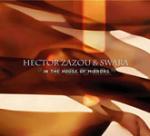
Hector Zazou & Swara: In the House of Mirrors

Pitchwork, Joshua Klein, February 12, 2009


Hector Zazou & Swara: In the House of Mirrors [Crammed; 2008]

French-Algerian composer Hector Zazou, one of the world's most prominent-- and most prolific-- musical synthesizers, died last September. He spent much of the past 30 years crossing border after border and culture with culture, with sometimes striking results. His was the rare name linking disparate Western avant-pop luminaries (such as Björk, Peter Gabriel, David Sylvian, John Cale, Laurie Anderson, Brian Eno, and many, many more) with a host of similarly diverse fellow composers and performers gathered from around the globe. He often dealt in concept albums, with inspiration drawn from the Arctic, Africa, and all points in between.

In the House of Mirrors, released just a few weeks after Zazou's death, features the composer's final fusion, bringing together four primary players from India and Uzbekistan-- Toir Kuziyev on tambur and oud, Milind Raykar on violin, Ronu Majumdar on flute, and Manish Pingle on slide guitar-- to record in Mumbai compositions envisioned as modern updates of Indian classic music. But for a man who loved his concept albums, Zazou here keeps the focus woozy and blurry. It's like a Ry Cooder record by way of Fripp & Eno, all over-lapping notes and drones, the melodies often entrancing but also tantalizingly open-ended and prone to meandering

Like similar-minded projects from Cooder (among other well-intentioned culture-vultures) the curiosity factor is one of the primary attractions of In the House of Mirrors, though the link between Uzbekistan and India is less than obvious. The musical traditions of the Central Asia country and the Indian subcontinent may overlap somewhere down the Silk Road, and one way or another the pan-Asian quartet (who call themselves Swara) wound up in Mumbai as eager collaborators. But their roots have less to bear on the results than the way they individually and collectively lend a tactile exoticism to what might have ended up just another mushy of electro-acoustic project à la Bill Laswell.

Which isn't to say tracks such as "Wanna Mako" don't flirt dangerously with new age, like the aural equivalent of burning incense. Or that the nearly 12-minute "Darbari (With Soul Without Rules)" doesn't sound like a film score wandering about in search of some visuals to. But Zazou, like many of his more ambitious fellow travelers, at least understood the importance of discord and darkness to his music, with mystery and ambiguity undercutting the more smoothed over surfaces. Certainly "Sisyphe" hums with a spooky sense of dread, while "Twice as Good as We Are" mines the collision of jazz, traditional Asian music, and the evocative echo of empty space with results worthy of the best of the ECM label.

Taken as a whole, however, Zazou's swan song is ironically hurt by one of its most prominent attributes. Zazou is such a seamless synthesist that he neglected to leave more of those aforementioned rough edges intact. For all its shadowy turns, In the House of Mirrors still remains simply too placid to make the most of its various and varied ingredients. After all, one of the most exciting things about fusion of this sort is the sense of recognition, parsing where all the pieces of the musical puzzle meet and how they may have mutated. In the House of Mirrors, on the other hand, is tour-brochure slick. While the collision of centuries old traditions with contemporary sounds has produced countless curiosities in the past, this particular one is ultimately missing the dirt and feet-on-the-ground grit needed to help it transcend the sterile bounds of the studio and achieve something more affecting rather than merely effective.

14 février 2009

Peter Gabriel Won't Perform At Academy Awards

By Nikki Finke on Thu, Feb 12th, 2009

Peter Gabriel Pissed At Oscar Producers And Won't Perform At Academy Awards


EXCLUSIVE:
I'm told that Peter Gabriel just pulled out of performing at the Academy Awards show. In a letter to the Academy Of Motion Picture Arts And Sciences, the co-writer and performer of Wall-E's "Down To Earth" says he doesn't think the nominated songs, and their writers and performers, are getting enough respect during this year's Oscars telecast. That's because the show's producers, Larry Mark and Bill Condon, have reduced the song segment to a medley of the three songs nominated for "achievement in music written for motion pictures (Original Song)" -- "Down to Earth” from WALL-E (Walt Disney), with music by Gabriel and Thomas Newman and lyric by Gabriel;

“Jai Ho”
from Slumdog Millionaire (Fox Searchlight) with music by A.R. Rahman nd lyric by Gulzar; and “O Saya” from Slumdog Millionaire (Fox Searchlight) with music and lyric by A.R. Rahman and Maya Arulpragasam.

I'm told the producers have slotted 90 seconds in the medley for each song sung by its original performer. But Gabriel said in his letter that he was only being offered 65 seconds for his song. "I don't feel that is sufficient time to do the song justice, and I have decided to withdraw from performing," Gabriel informed AMPAS. "I fully respect and look forward to the producers' right to revamp the show. Even though song writers are small players in the filmmmaking process, they are just as committed and work just as hard as the rest of the team, and I regret that this new version of the ceremony is being created in part at their expense." I'm told that the medley is the brainchild of the producers in their attempt to get the Oscar show's running time down to 3 hours -- which, frankly, would be a miracle given that it usually runs more than 4 hours. No word yet on whom the producers will choose to sing in place of Gabriel.

UPDATE: Here is the text of Peter Gabriel's letter:

"I was delighted when "Down to Earth" was nominated for an Oscar. I was also pleased to have been asked to perform the song in the Oscar ceremony. However, in recent discussions with the Producers, it became clear that despite there being only three nominees, only 60-65 seconds was being offered, and that was also in a medley of the three songs. I don't feel that is sufficient time to do the song justice, and have decided to withdraw from performing.

I fully respect and look forward to the Producers' right to revamp the show. Even though song writers are small players in the film making process, they are just as committed and work just as hard as the rest of the team and I regret that this new version of the ceremony is being created, in part, at their expense."

I still very much look forward to attending the ceremony."


Trumpeter Jon Hassell strives to unite North and South

By Alexander Varty, Staraigh.com, February 12, 2009


Jon Hassell's résumé makes him sound like a charter member of music's Mensa club—and for good reason. The trumpeter's early mentor was the German visionary Karlheinz Stockhausen, and he later studied with Pandit Pran Nath, the North Indian guru to such pioneering minimalists as Terry Riley and La Monte Young.

He's also performed with Brian Eno, David Byrne, Ry Cooder, and Peter Gabriel—a who's who of the smartest people in popular music. And then there's the fact that it only takes a couple of minutes, once I reach him at home in Los Angeles, before we sail off into a discussion of polytonality versus atonality. For the record, Hassell prefers the former, although he has made close examination of pioneering serialist Anton Webern's scores.

Still, he stresses that he is an “untheoretical” musician. “For me the proof is in the sound,” he says. “And that's all that really matters.”

That sound—a digitally harmonized trumpet, blowing sweetly over shimmering clouds of electronics and deep, dublike bass lines—is one of the most gorgeous things going. You can pick it apart in terms of how his melodic lines derive from Hindu devotional singing, or how his rhythms have been impacted by West African drumming, but for Hassell it all comes down to reconciling North and South—which happens to be the topic of a book he's been working on for more than a decade.
“It's called The North and South of You, and the subtitle is Making the World Safe for Pleasure,” he explains. “Briefly put, if you project the body onto the globe or the globe onto the body, the northern situation of the body is intellectual or abstract, while the southern is sensual. In the global situation, it's like ‘developed' versus ‘underdeveloped'. And included in the underdeveloped category, of course, is just about all the music that we love.”

With his slow, dreamy, and often intricately patterned music, Hassell hopes to offer his listeners an experience that combines intellectual stimulation with sensual delight. And he delivers just that on his latest release, Last night the moon came dropping its clothes in the street, which takes its title from a Rumi poem and its inspiration from a little-known Norwegian festival.

“The hook, if you will, is that it's a remix festival,” he says of Punkt, which takes place in the seaside town of Kristiansand. “What happens is that a group is invited to perform in the big hall, and then simultaneously there's a remix going on in a smaller room.”

In concert with his quintet, Maarifa Street, Hassell explores similar terrain. He and Tunisian violinist Kheir Eddine M'Kachiche contribute melodies, bassist Peter Freeman provides the pulse, and laptop jockeys J. A. Deane and Jan Bang create live electronic soundscapes by sampling and processing the others' work.
“I'm trying to encourage everybody in this band to go places that are surprising,” he comments. And, more often than not, they do.

Jon Hassell and Maarifa Street play the Chan Centre for the Performing Arts on Saturday (February 14).

13 février 2009

Peter Gabriel refuse de chanter seulement une minute aux Oscars, s'en retire


LOS ANGELES (AFP) — Le musicien britannique Peter Gabriel, sélectionné aux Oscars pour une chanson du film d'animation "Wall-E", a annoncé vendredi qu'il refusait de chanter seulement une minute sur scène, comme demandé par les organisateurs, et qu'il préférait ne pas se produire.

Dans une vidéo visible sur son site officiel, le chanteur qui fête vendredi ses 59 ans explique que les organisateurs de la grande soirée du 7e art lui ont demandé de se limiter à "65 secondes" de "Down to earth", qui concourt dans la catégorie de la chanson originale.

"Nous pensions que les chansons seraient chantées en entier. Mais les producteurs (des Oscars) ont changé la formule en raison de la chute des taux d'audience télévisée. Alors j'ai décidé de me retirer de la cérémonie", a ajouté l'interprète de "Sledgehammer".

"Je pense que c'est un peu dommage, parce que nous les auteurs-compositeurs, même si nous ne représentons qu'une petite partie du processus d'élaboration des films, nous travaillons toujours sacrément dur et méritons, je pense, une place au sein de la cérémonie", a-t-il ajouté.

"Je suis un vieux type et cette petite protestation ne va pas m'être dommageable, mais je pense que ce n'est pas aussi facile pour les autres artistes", se justifie Peter Gabriel.

Deux autres titres sont sélectionnés dans la catégorie de la meilleure chanson originale: "Jai Ho" et "O Saya", tous deux représentant "Slumdog Millionaire", favori de la cérémonie dans la catégorie reine du meilleur film.

Contactée par l'AFP, l'Académie des arts et des sciences du cinéma, organisatrice de la cérémonie, n'a pas réagi dans l'immédiat à la décision de Peter Gabriel, qui a dit qu'il avait toujours l'intention d'assister aux Oscars le 22 février depuis une place dans le public.

Peter Gabriel dit non aux Oscars

Canoë 13-02-2009


Peter Gabriel
a renoncé à la prestation qu’il prévoyait offrir lors de la prochaine cérémonie des Oscars, qui aura lieu le 22 février au Hollywood Kodak Theater.

La chanson de Gabriel intitulée Down To Earth, tirée du film Wall-E, est en lice pour le prix de la meilleure chanson. Il espérait l’interpréter en entier, mais s’est ravisé quand il a appris qu’il ne disposerait que de 65 secondes pour la mettre en valeur, dans un pot-pourri.

Sur son blogue vidéo, que l’on peut lire sur son site officiel Petergabriel.com, Gabriel mentionne que cette décision de ne pas diffuser la chanson en entier est «déplorable», mais qu’il assistera quand même à la cérémonie.

«Nous souhaitions offrir une prestation, dit-il. Nous avions présumé, parce que seules trois chansons étaient sélectionnées, que ces dernières seraient interprétées en entier. Mais les producteurs ont décidé de modifier le scénario de la soirée pour revamper leurs cotes d’écoute».

«L’une de leurs décisions fut d’écourter les chansons. Ils ont restreint à 65 secondes, au sein d’un pot-pourri, le temps nous disposions. Nous avons donc choisi de ne pas monter sur scène, mais je serai dans la salle.»

«À mon avis, c’est un tantinet déplorable. Je crois que les auteurs-compositeurs, même si leur travail ne représente qu'une petite partie du processus de production d'un film, travaillent très fort. Nous méritons une place à la cérémonie.»

«Suis-je un vieux crouton? Oui, et ça ne me fera aucun mal de protester un peu. Mais je suis certain que la cérémonie sera très agréable et je suis enthousiaste à l’idée d’y assister.»

Jai Ho et O Sava sont les deux autres pièces en lice pour le prix de la meilleure chanson. Elles sont toutes deux tirées du film Slumdog Millionnaire.

11 février 2009

Down to Earth - Best Original Song Nominee


Singing for their Oscar.

Beginning today, I'll be spotlighting the Academy Award nominees for Best Original Song. I must tell you upfront that showcasing these songs is a bittersweet task for me.

As I've mentioned, no less that 342 times, Bruce Springsteen was not nominated for his Golden Globe winning song, "The Wrestler." Nevertheless, I will leave the tears on my pillow and soldier on to present to you the first of the three songs up for an Oscar on February 22.

Peter Gabriel and Thomas Newman (Finding Nemo, American Beauty, Road to Perdition) teamed up to produce "Down to Earth" for Disney/Pixar's Wall-E. If you've seen the wonderful film - and really, you should - you'll recognize the song from end credits.

"Down to Earth" has that very Academy-friendly sound; it's impressive fare, but feels similar to something you've probably sample before. Thomas Newman is also an Academy favorite, having been nominated for 10 Oscars.

Check out "Down to Earth," (and a little bit of Wall-E - so cute!) and see if you think it achieves blast-off.

10 février 2009

Peter's February update

10-Feb-2009


Peter Gabriel
talks about a spate of award nominations and ceremonies including the Golden Globe Awards, the Grammy Awards and the Oscars's, all of which have 'Down To Earth' from Wall e in ther short lists. Enriching 'brain food' is recounted, having been eaten both at The World Economic forum and TED in the last couple of weeks. There is news of music from Charlie Winston and Spiro, whose track 'Antrobus' features in this months video. If that and the details missing from this description were not news a plenty, Peter also has an update on the forthcoming tour dates, 'Games Without Frontiers' on Real World Remixed and his work on the 'Scratch My Back' covers project in the studio. watch the video

Review: "Book of Love" pulses to the rhythmic beats of an amorous heart

by Brad Richason, Twin Cities Performance Art Examiner, February 9


Two dancers stand close to one another, familiar and at ease. As they exchange affectionate glances, more couples enter the stage. The gentle melody of Peter Gabriel's Book of Love begins to rise while the dancers respond in kind, drifting gracefully across the floor, their black and red attire swirling together into vibrant ever-shifting Valentines. So begins The Book of Love, an enchanting new production from the Beyond Ballroom Dance Company, now playing at the Southern Theater, in which every movement strikingly conveys another aspect of amorous captivation (...)

'Slumdog' vs. 'Wall-E' for best song

By Jon Burlingame, Variety, Mon., Feb. 9, 2009

No clear frontrunner among Oscar nominees

For the third time in the past 20 years, music-branch voters chose only three tunes as best song nominees. Two are from the same movie, and two of the singers are world-class world-music recording artists.

"Slumdog's" competition is the song from the end of the Disney-Pixar movie "Wall-E," co-written by Thomas Newman (also nominated for his score) and Peter Gabriel. The nom is Gabriel's first despite having composed scores for such films as "The Last Temptation of Christ" and "Rabbit-Proof Fence."

Eight of the past 20 song statuettes have gone to tunes from animated movies (all Disney pics but one). And nine of the past 20 have gone to popular artists (including Gabriel's ex-Genesis bandmate Phil Collins, for "Tarzan," another Disney toon). Also, Gabriel's human-rights and environmental activism would seem to coincide with the politics of many Acad voters.

And, in recent years, voters have spread the Oscar wealth among multiple pics. A "Slumdog" score win could translate into a "Wall-E" song win.