Articles review on the net, revue d'articles sur la toile


Inscription : feeds, flux :
(Atom) Gabriel Real World News

11 mars 2006

Video Advocacy

A couple of weeks ago, I attended an amazing conference called TED (for Technology, Entertainment and Design). You can read the complete description here in my Pogue's Posts entry, but here's a summary:


"It's four days of talks, each no longer than 18 minutes. The speakers are either famous, pioneers in their industries or just fascinating people--and often all three...They addressed climate crisis, the depletion of fossil fuels, African AIDS, third-world poverty, human-rights violations, the spiral of West-Islamic global hatred, lethal viruses, and other cheery subjects...The organizer of TED makes no bones about the fact that he wants this astonishing network of speakers and audience members to throw their expertise, brainpower and connections behind efforts to address the world's problems."

I wanted to share some of what I learned in this e-column, but I'm aware that some of this column's readers get cranky when the topic strays from consumer technology.

But one memorable talk involved BOTH consumer tech AND doing good in the world, which I thought I'd share with you. (I'll be back with gadget reviews next week.)

It was a talk by Peter Gabriel, the pop star. He didn't play or even mention music; instead, he described the progress of an outfit called Witness (witness.org), which he co-founded in 1992 for the purposes of what he calls "video advocacy."

What he means is helping native citizens film human-rights violations as they happen, so that the world can see what's really going on. It's much harder for wealthy countries to ignore the violence and oppression, Gabriel said, when they're watching a video of it.

So Witness sprouted up to supply camcorders and training to, so far, 200 human-rights groups ("partners") in 60 countries. It sounded like such a cool and important project that I decided to interview Gillian Caldwell, the group's executive director, for today's e-column.

DP: Strikes me that lots of the human-rights violations are in, well, hot, humid places that would be the enemy of camcorders. How have the cameras and tapes fared?

GC: Our team definitely has to keep climate in mind when they select the equipment packages, since some fare better in humid climates than others. As for the tapes, we try to get them shipped relatively quickly to our archivists, where they're catalogued, duplicated and stored in climate-controlled vaults for the production work.

DP: Isn't this technology new to, say, impoverished Africans? How do they know how to operate the camcorder, ship the tapes back, etc.?

GC: Most of the people we're training have never held a video camera before, so the relationship begins with an intensive, onsite training program that teaches them how to shoot, as well as what to shoot and why.

DP: Does every camcorder "seeding" bear fruit? Do you actually capture violence and stuff on film?

GC: Well, unlike, say, the Rodney King incident, our primary intention is not to capture human rights abuses in action, although that has on occasion happened. Instead, most of our footage highlights the aftermath.

For example, a reluctant Philippine government is now prosecuting the murderers of activists who were legally pursuing ancestral land claims--after footage taken of the attacks was broadcast nationwide in the Philippines and delivered to the Philippine president at the World Economic Forum. While Witness's partner did not actually capture the attack on tape (it took place early in the morning while everyone was sleeping), they were first on the scene of the attack, and captured irrefutable evidence.

DP: How do the people you supply with camcorders keep them from getting stolen, broken, lost, and so on?

GC: With the exception of some problems with theft in Nigeria, we've actually been pretty lucky. Our partners manage to maintain their equipment very well, and when the time comes for an upgrade, we provide it.

Power is a challenge; we generally provide extra battery packs. Some partners even have solar chargers for their equipment.

DP: At TED, Peter Gabriel mentioned a shift from camcorders to cameraphones?

GC: Staying ahead of the technology curve is a major challenge for us. Communications media have changed dramatically in the 14 years since Witness was founded. In the coming months, we will launch an initiative called the Witness Video Hub (www.witness.org/technology). Our hope is to let people around the world use cellphones and computers to upload media to a central Web site built to promote human rights.

We're facing an unprecedented frontier, with digital technology and the "participatory culture" it has inspired poised to explode. Witness needs to be at the forefront of this transition.

DP: Once the hub site goes up, how can you be sure that the filmed events are genuine?

GC: We're still thinking this through. Currently, we're committed to an open and participatory environment, allowing anyone anywhere to contribute footage. There may be a limited amount of material that we will be able to authenticate, but our goal is to not play a big role in this area. We don't want to serve as gatekeepers ourselves, but to allow for peer review to foster a sense of community responsibility and accountability.

08 mars 2006

Tout pour la musique

Dur et intransigeant avec les apprenties stars, Manu Katché est un pur. Beaucoup trop pour accepter de jouer totalement le jeu avec les impératifs de la télévision.

A entendre ses coups de gueule à répétition sur la Nouvelle Star,
Manu Katché peut agacer. Le célèbre batteur a affirmé régulièrement, à qui voulait bien l'entendre, lors de la saison précédente, que "le meilleur du pire", bêtisier des pires performances, était insupportable et que la musique est une chose beaucoup trop sérieuse pour supporter des guignols appâtés par le fameux quart d'heure de célébrité prédit par Andy Warohl.

Le titre même de l'émission ne trouve grâce à ses yeux.
"Les stars, c'est la fascination du vide. Je préférerais parler d'artistes." Mais alors Manu, si le concept de cette émission de télé crochet est tellement critiquable, pourquoi faire partie du jury? Besoin de promo pour ses projets de jazz? Joint dernièrement au bout du fil, la position de Manu Katché est bien plus subtile et honorable.

Passionné jusqu'au bout de ses baguettes, cet auteur-compositeur et parfois interprète gère très bien ces contradictions.
"Je participe à Nouvelle Star pour offrir mon expérience de musicien à des gens passionnés qui aimeraient faire de la musique leur métier. Le reste ne m'intéresse pas. Je sais que la télévision et les impératifs d'audience imposent ces à-côtés. Mais je ne les cautionne pas." Liberté de parole totale plutôt rare à la télévision. Un privilège dont Manu Katché est bien conscient: "Je suis totalement libre de dire ce que je pense. Je suis mon propre maître, ce qui n'est peut-être pas le cas de Dove Attia, rattaché à l'industrie du disque, qui peut-être doit mesurer ses propos."

Le système n'est pas la seule cible des critiques du bonhomme. Ses jugements à l'égard des apprenties stars sont souvent implacables.
"Mais je me dois d'être sincère, rétorque le batteur. La moindre des choses est d'être honnête à leur égard. Si je fais partie du jury, c'est grâce à la caution artistique que j'y apporte. Ce serait vraiment injuste de pousser des jeunes à faire ce métier alors qu'ils ne sont pas bons."

Maisons de disques démissionnaires


Batteur d'envergure internationale,
Manu Katché a collaboré avec Tracy Chapman, Peter Gabriel ou Sting entre autres pointures. Il n'hésite pas à s'engager pour des causes, dont celle de Youssou N'Dour contre la malaria. Il a également sorti fin 2005 un album, Neighbourhood. Certainement le premier album d'une longue série, que rien ne devrait venir contrarier. "Ce sera ma dernière participation à Nouvelle Star. Il faut absolument garder l'envie et la spontanéité, la curiosité et la disponibilité pour être jury. Je pense qu'après trois éditions, ma fraîcheur sera un peu entamée. Or, les candidats méritent une implication totale."

Certes. Mais ce travail de découverte ne serait-il pas celui des maisons de disques, trop frileuses aujourd'hui sur le développement de nouveaux artistes?


"C'est vrai. Il y a dix ans encore, elles employaient des chercheurs de talents qui arpentaient les petites salles de concert pour découvrir de nouveaux groupes. Aujourd'hui, c'est fini. Pour moi, il faudrait plutôt chercher là la crise des Majors et non toujours mettre en cause le téléchargement pirate."


Sarah Pernet


Nouvelle Star

M6
20h50

06 mars 2006

DAVID GILMOUR :- ON AN ISLAND

After being exposed to David Gilmour's 'On an Island' in its entirety, we can now confirm that it is the work of art we had hoped it would be.


It consists of a series of 10 beautifully understated songs that flow into each other exquisitely, providing the perfect foil for the return of this pioneering "rock" musician. Dave's guitar work is incomparably crystalline throughout the length of 'On an Island' and the actual solos that flow forth from his fingers are easily some of the best of his career. The production elements of this multi-layered recording are equally lush and you can be assured that the CD sounds outstanding on an appropriate hi-fi setup. Being totally worth the wait, 'On an Island' is a stunningly rousing album that "progressive" music enthusiasts will lap up with deep glee. Think Peter Gabriel, the Alan Parsons Project, some of Phil Manzanera's post Roxy Music stuff, Pink Floyd (of course) + Dave's other "solo" albums and you'll get the idea

-- it's an utterly essential release that we wholeheartedly recommend.

05 mars 2006

90 minutes de musique pour le Fifa Gala perdues ?

On ne peut recycler le gala d'ouverture de la coupe du monde

Vos amis Brian Eno et Peter Gabriel étaient aussi impliqués...

André Heller : Exact. Les deux avaient déjà composé et arrangé 90 minutes de musique. Ce n'est toutefois pas encore tout : Pour la scène il y aurait eu une innovation technique, à laquelle encore personne ne s'est osé avant nous - le terrain entier devait se transformer sur toute sa surface et devoiler un gigantesque écran d'ordinateur formé de LED, en interagissant avec jusqu'à 8000 figures avec des costumes de lumière commandés par ordinateur également. de cinq millions de petites images jusqu'à un énorme, tout était possible.

(traduit approximativement de l'allemand, le texte original ci-dessous)

Die WM-Eröffnung kann man nicht recyceln

(...)

Ihre Freunde Brian Eno und Peter Gabriel waren auch involviert...

Heller: Richtig. Die beiden haben bereits 90 Minuten Musik komponiert und arrangiert. Das ist aber noch nicht alles: Als Bühne gab es eine technische Innovation, an die sich noch niemand vor uns heran- gewagt hat – das ganze Spielfeld sollte sich in eine vom Computer ansteuerbare LED-Fläche verwandeln, darauf agierend bis zu 8000 Figuren mit ebenfalls computergesteuerten Lichtkostümen. Von fünf Millionen kleinen Bildern bis zu einem riesigen war alles möglich.

Tambourine Man

He used to earn pennies singing in Kolkata’s trains. Today Paris-based Baul singer Paban Das is cutting albums for Peter Gabriel’s label.

Trains running between Kolkata and north Bengal, after sauntering out of the metropolis, pick up speed around what can be broadly outlined as Baul territory: Bolpur, Santiniketan, Sainthia, Burdwan and Rampurhat. It is from around this region that Bauls—Bengal’s own hippies, its wandering minstrels—embark on the trains, sing their songs that philosophize about life and death and earn alms from passengers.

Forty four-year-old
Paban Das Baul was among the luckier and more gifted singers. He could be heard above the rattle of the rails and his voice evoked enough admiration and sympathy from passengers to help him earn anything from a rupee to Rs 200, as a foreign lady once gave him in Santiniketan. ‘‘It was a big sum in those days. But such sums came along only once in a while, otherwise what I got barely helped me subsist,’’ recalls Das, who started singing for alms with his father after their family had to sell off their land and property.

These days, a simple Google search collates the distance the man has travelled with his music. From Morocco, Switzerland, England, Belgium, Mexico and France, to a fusion of jazz, rock, gospel, ambient electronica and club.

Notwithstanding the background soundscape, the only time Das felt he was not allowed to come into his own with his singing is on the collaborative album
Tana Tani, which he released with UK-based State of Bengal member Sam Zaman. ‘‘They kept the vocal levels low and deliberately played up the background score. They wanted to create club music at the cost of Baul,’’ says the Paris-based musician who was in Kolkata recently.

In all this, there is an anomaly that has kept the singer-songwriter worried. The music of Bauls—riding the repute earned by
Purna Das Baul in the West during the ’60s—has had high-profile endorsers like Bob Dylan and Joan Baez. Das, a protégé‚ of Purna Das, has found recommendations from writers like Ruchir Joshi, who included him in his acclaimed documentary 11 Miles, and William Dalrymple.

In an article he wrote for The Guardian in the UK, Dalrymple is clearly besotted by
‘‘the celebrated Baul’’. His voice, Dalrymple wrote, was ‘‘deep and smoky, alternately urgent and sensuous’’.

Even musically, Das has collaborated with the likes of avant-garde musician and musicologist
Sam Mills, which resulted in the critically approved album Real Sugar, and with French jazz prodigy Cheick Tidiane.

His long-running relationship with musician
Peter Gabriel, whose label Real World has resulted in a number of albums; Das also performs at Gabriel’s music festival WOMAD.

None among his 11 albums, Das regrets, has been recorded in India or his home state, West Bengal. The couple of times Kolkata-based record companies have approached him, Das says, the terms set by them were so stiff that he had to walk away from the offer.


‘‘Recently one of the companies wanted to record my singing, but on the day of the recording I had a sore throat. When I told them that, they said that I’d have to pay for the entire recording cost and also for the accompanying musicians. There was no way I could pay that amount,’’
he rues.

There have been exceptions. The pioneer of the Asian Underground sound in the UK, tabla player
Talvin Singh, when he teamed up with Das at the recent Jaipur Festival, mentions being floored by the intensity of the music. ‘‘We had one helluva concert that night,’’ says Singh, hours before a recent concert in Kolkata. ‘‘We also had a few Rajasthani folk musicians joining me and Paban Das and the whole atmosphere was electrifying.’’

It was a 1979 French documentary film on the Bauls of Bengal called
Le Chant Des Fou (Songs of the Madmen), that led to Das getting invited to the country in 1980 by Radio France. His relationship with Paris has evolved since then. ‘‘Sometimes when I don’t have any concerts in France, I can earn my living by performing at public places,’’ he says.

By Shamik Bag

01 mars 2006

GABRIEL JUNIOR KNOWS WHAT HE WANTS

Rocker PETER GABRIEL only sings songs his three-year-old son ISAAC likes - or the toddler complains.

The former GENESIS frontman is convinced his son's musical taste is already finely developed, as he communicates his preferences all the time.

He says : "(I sing) anything rhythmic because that amuses Isaac".

"He's very opinionated about his music... 'I don't like this song! Play this one again!'"

28 février 2006

Thanks...Here's a Ball

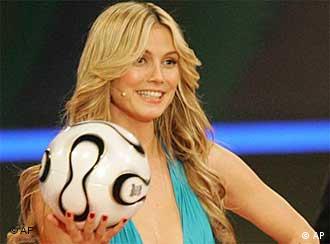
Balls like this are consolation prizes for the performers; model Heidi Klum is notBalls like this are consolation prizes for the performers;

More than 12,000 volunteer performers signed up for the opening gala of the soccer World Cup and practiced for months. When the event was cancelled, authorities made sure to thank them for their troubles...with a ball.


It was supposed to be a mega event to open one of the globe's biggest sporting events, featuring stars like
Peter Gabriel and Jesseye Norman. But then FIFA, world soccer's governing body, suddenly pulled the plug in January. The official reason, according to FIFA, was that the lavish opening ceremony to be held in Berlin's Olympic Stadium would damage the grass on the field before the first game on June 13 between Brazil and Croatia.

That left thousands of dancers and other performers who had answered calls to volunteer for the glitzy production planned by Austrian artist
André Heller, out in the cold. They weren't out of a pay check, since they'd been volunteers anyway, but they'd wasted hours and hours of painstaking practice. FIFA promised recompense in some form or another.

A month and a half later, it's been decided. FIFA will mail out about 12,000 soccer balls to the spurned performers.
It's claimed that grass is the reason the big show was nixed Now these aren't just any soccer balls; these are the official Adidas soccer balls of the World Cup, on which will be printed "vielen Dank!" ("Thanks a lot!").

According to the Tagesspiegel newspaper, there was much debate within FIFA as to what the redress would look like. Many preferred something cultural, such as special showings of the circus show
"Afrika, Afrika," also produced by Heller.

"That solution seemed to us to be too complicated,"
Markus Siegler, a FIFA spokesman, told the paper. But he insists FIFA didn't get off on the cheap, although it might seem a soccer ball is pretty paltry payback for months of rehearsing for a show that never was to be. "Of course we negotiated a reduced price," he said. "But the gift still cost FIFA 200,000 euros."

BAND IS A HIT AT PETER GABRIEL'S STUDIOS

Education Reporter A SCHOOL band is celebrating the release of its third CD with the help of world famous musician Peter Gabriel.

Monkton Combe School Big Band has completed the disc, called Moving On, at Gabriel's Real World recording studio in Box.

More professional know-how came in the shape of producer and arranger Cy Payne, who is well known in the big band world.

The CD contains 15 tracks performed by the school's musicians, creating a classy and sophisticated sound.

Director of Music at the school Bernard Newman said: "I am thrilled with this third album - the sound is fantastic and I know that they all enjoyed the experience of working in a state of the art studio like Real World.

"We have sent complimentary copies to BBC Bristol so we are hoping that they may add some of the tracks to their play list."

As well as having a strong following here at home, the band but has recently toured both Canada and America.

Copies of the CD are available by calling the school on 01225 721129.

27 février 2006

Global Dignity

Young Global Leaders Launch ''Global Dignity'' Public Awareness Campaign; Three International Leaders Initiate Five Dignity Principles Aimed at Encouraging People Worldwide to Lead an Empowered and Dignified Life

(...)


The principles were introduced during the World Economic Forum's Annual Meeting 2006 where more than over 150 participants quickly signed on to the project including former President of Finland Martti Ahtisaari, actor Michael Douglas, musician Peter Gabriel, author of best selling novel 'A Purpose Driven Life' Reverend Rick Warren, Nobel Peace Prize recipient and leading economic advisor Joseph Stiglitz, and Harvard Business School professor Michael Porter. (...)

22 février 2006

Tech conference attracts luminaries in Monterey

Stars will converge on Monterey event starting today

More than 900 corporate, scientific and artistic leaders will converge in Monterey this week for an invitation-only event whose very title -- Technology, Entertainment, Design -- reflects the agenda and fantasies of Silicon Valley.

Attendees will pay $4,400 to attend the event, which opens today and runs through Saturday. TED's place in tech history was established the first time it was held, in 1984, when Apple Computer showed off its new Macintosh.

In the ensuing years the conference, like Silicon Valley, has had its ups and downs and changes in leadership. But the seaside event has managed to keep its reputation for looking over the horizon.

"This is definitely one of the must-attend events of the year,'' said Shel Israel, whose San Carlos consulting firm, Conferenza, follows and rates the tech industry's many gatherings.

Israel said TED has managed to hold its own against events such as the prestigious Web 2.0 conference because it raises thought-provoking themes and attracts provocative speakers.

"There is a reason why TED happens in Monterey: It's a one-hour drive to Silicon Valley ... and that gives it a unique well of potential attendees and speakers,'' said Bruno Giussani, a Swiss author and former executive with the Davos World Economic Forum who helped organize a European version of TED in Oxford, England, last year.

This week's conference, billed as "The Future We Will Create," will feature notables such as Stanford Professor Paul Berg, who earned a Nobel Prize for helping invent the gene-splicing tool that helped develop biotechnology, and Sun Microsystems co-founder Bill Joy, the '80s-era software guru who now worries that some technologies are slipping out of human control.

Other speakers include music industry innovator Peter Gabriel and former Vice President Al Gore, who has reinvented himself as one of the forces behind San Francisco's pioneering grassroots video startup, Current TV....

Manu Katché 100 % cash

Manu katché, André Manoukian, Marianne James et Dove Attia (de gauche à droite) reviennent torturer les candidats de la « Nouvelle Star ». photo plug tv.

Après avoir bossé avec les plus grands (Sting, Peter Gabriel), le batteur, Manu Katché privilégie aujourd'hui sa propre carrière. Ce soir, il reprend du service aux côtés de Dove Attia, André Manoukian et Marianne James dans «Nouvelle Star ».

Auriez-vous rempilé avec un jury différent ?

Non, c'était nous quatre ou rien. Il y a une vraie alchimie. Evidemment, on n'est pas toujours d'accord. Comme on passe des heures ensemble, ça finit toujours par péter. Marianne et moi, on aime bien les prises de bec ! On est sans doute les deux plus tenaces pour défendre tel ou tel candidat. André et Dove sont plus cool.

Les membres du jury sont-ils les vraies stars du programme ?

On n'est pas des stars, mais quatre personnes qui ont des choses à dire. Notre franchise plaît. Le but de « Nouvelle Star » est avant tout d'être un tremplin pour les candidats qui peuvent accéder à un label, sans forcément être une star. Le rêve de Steeve Estatof (gagnant de la saison 2) était de pouvoir vivre de la musique. Il y est.

Sans avoir gagné, Amel Bent réussit mieux que les trois gagnants réunis. Pourquoi ?

Amel n'entrait pas dans le stéréotype de la jeune fille blonde et mince. Ça prouve qu'il y a deux publics. Celui qui envoie les SMS et celui qui achète les disques. C'est aussi pour ça qu'on a demandé à la production de pouvoir repêcher un candidat lors du premier direct. Le public ne vote pas toujours sur des critères musicaux. Cette saison, nous aurons aussi un programmateur musical avec qui on se concertera pour que les chansons correspondent mieux aux candidats. On leur fait trop souvent chanter les mêmes chansons pour ménagères de moins de 50 ans.

Comment jugez-vous le cru 2006 ?

Ça se professionnalise. Le niveau s'est nettement amélioré. Avant, on avait beaucoup de belles voix, mais on n'a pas besoin de clones de Lara Fabian. Le renouveau de la chanson française a été bénéfique. Les candidats se sont inspirés de Bénabar ou Raphaël sans les copier. Il y a plus d'auteurs-compositeurs cette année.

Et toujours autant de casseroles pour le bêtisier ?

On est un peu lassé de voir ces gens qui font un numéro pour « passer dans le poste ». Ce qui est plus drôle, c'est ceux qui pensent bien chanter et qui sont catastrophiques... Quelqu'un qui massacre du Sinatra les mains dans les poches, on lui dit que c'est merdique et on lui rend service.

18 février 2006

Momix show may be as quirky as its founder

Dancer-choreographer Moses Pendleton, who helped found the ground-breaking Pilobolus dance company before creating his own troupe, grew up on a cow farm in New England.

The world of modern dance may as well have been in Borneo as far as the young student Pendleton was concerned. He figured he'd go to college, follow his dad's wishes and major in large-animal veterinary medicine. That, or become a professional snow bum.

"I was a downhill racer," said a very upbeat and playful Pendleton, 56, from his home in Vermont.
"That's all I wanted to do. Then I broke my leg (at age 18), and I took a dance class at Dartmouth as part of my therapy to recuperate. And that was how it all started. It was never planned. I owe it all to a broken leg. Life is just series of accidents."

Make that beautiful, eye-dazzling accidents in Pendleton's case.

On Monday night, Pendleton's Momix company will perform a dance concert called "Momix: Passion" as part of the Seven Days of Opening Nights arts festival. The "Passion" dances are set to the exotic, Middle East-inspired music Peter Gabriel wrote in 1989 as the soundtrack for the Martin Scorsese film
"The Last Temptation of Christ."

"I just loved that score when I first heard it, and I could close my eyes and see the dance," Pendleton said.
"(Gabriel) came to the premiere when we performed it in London. . . . He said the dance helped him re-hear the score. He heard it in a new way."

Then Pendleton steered the conversation back to one of his favorite topics - cows.

"You know Peter grew up on a dairy farm in England," Pendleton said.
"We had a long talk about Herefords and Holsteins over lunch at his house in Bath. We had mutual dairy interests."

The name Momix, by the way, was taken from a feed supplement given to, what else, cows. He even jokingly refers to himself as a "cow-oeographer" because early films of his work show him running through a field of cows wearing a sheet.

These days, Momix shows are high-tech, multi-media affairs that are part Cirque de Soleil and part Twyla Tharp and part trippy light show. Dancers are suspended from ropes. Slide shows keep the images coming.

"Sit in the back of the auditorium when you go to the show," Pendleton said.
"You can see more that way. The farther you get from Momix, the more you like it."

Momix is a global business. Pendleton keeps several shows out on the road in such locales as Las Vegas and Italy. He's always looking for new dancers.

"If you have any good dancers down there (in Florida) send them up to New York for our auditions in May," Pendleton said. "The only thing is that we don't say break a leg before shows."

Article published Feb 17, 2006 By Mark Hinson

Elbow "Leaders of the Free World" (V2)

Anyone who sings as much about rain, black skies and alienation as this quintet does is either painfully unlucky in love or English.

This group is both, conjuring a palpable sense of place, specifically London, in spots in its haunting third album. It's a record (in stores Tuesday) that channels — who else? — Coldplay as well as Snow Patrol and even Peter Gabriel in its romantic yearnings and feelings of existential isolation.

The raw production makes it sound like Coldplay's Chris Martin banging out demo tapes from his garage, but the rough sonics directly parallel the frayed emotions lyricist and singer Guy Garvey puts on display, mostly emanating from the all-consuming obsession that can accompany failed relationships.

He has a poet's knack for evoking a world of feeling in the space of a few well-chosen words. He sings, "You were there / Puncture repair" as healing begins in "Puncture Repair"; "Shop shutters rattle down" telegraphs the way emotional self-defense kicks in with hurt in
"Forget Myself."

Garvey's voice, its lovely high register contrasting with a dusky lower range, conveys the multiplicity of responses to love's elusiveness — loneliness, self-pity, sadness, anger, confusion, hope — all of which blossom in "The Stops" into a shimmeringly gorgeous, Brian Wilson-esque pop chorus.

15 février 2006

Peter Gabriel to receive the Frankfurt Music Prize 2006


Presentation on the occasion of the international Musikmesse

Almost everyone is familiar with his legendary hits, such as 'Sledgehammer', 'Biko' and 'Big Time', and his videos are considered to be milestones in the history of pop culture: Peter Gabriel, rock musician, songwriter and video artist, will be awarded the 2006 Frankfurt Music Prize during the international Musikmesse.

He was singled out for the prize because, with his creative work, his appearances and his support for young talents, he laid a vital founda-tion stone for the future of rock and pop music. With this choice, the jury is honouring him as a leading musician on the European rock-music scene, for his musical achievements and his artistic and social activities. The prize will be presented by the Mayor of Frankfurt am Main, Petra Roth, at a ceremony in Frankfurt on the eve of the Musikmesse (28 March).

Peter Brian Gabriel was born in Great Britain in 1950, the son of an electrical engineer. In 1966, together with Tony Banks, Michael Rutherford and Anthony Phillips, he founded a band called 'The Garden Wall', which was soon renamed 'Genesis'. Later, they were joined by drummer Phil Collins. The band achieved a break through with its fourth album, and were known for their song-based progressive rock music and the theatrically staged live shows, which were primarily the work of Peter Gabriel and his fascination for visual interpretation.

In 1975, Gabriel announced that he was leaving the band and published his first solo album two years later. Gabriel was able to consolidate his career as a solo artist thanks to the successful single, 'Solsbury Hill'. Commercial success came with his third solo LP, which includes 'Biko', a political protest song that Gabriel dedicated to the South African anti-apartheid activist,
Steve Biko.

With his 1986 album, he demonstrated that social commitment and social involvement by no means contradict his existence as an avant-garde, modern music artist. His singles, 'Big Time' and 'Sledgehammer', were hits. And he produced videos such as the world had never seen before.

After touring the world for Amnesty in 1988, Peter became a human rights activist and set up an organisation called 'Witness', giving cameras to Human Rights groups around the world. He was awarded a Grammy for the soundtrack of the controversial Martin Scorsese film, 'Last Temptation of Christ'. Subsequently, Gabriel focused his attention on setting up his Real World Studios in the English county of Wiltshire, with the aim of offering unfettered creative opportunities for musicians of all different types of music from all over world.

It was not until 1992 that Gabriel reappeared on the musical radar screen, when he published his 'Us' album, which once again set new standards in the video world. Another album followed in September 2002 after a gap of almost ten years: 'Up'.

Culture et glamour italiens à l'honneur pour l'ouverture des Jeux

photo : Odd Anderson/AFP/Getty Images


Une danseuse italienne lors de la cérémonie d’ouverture des Jeux olympiques d’hiver de Turin, en Italie.

Keyvan Naraghi/Agence France-Presse

(...)

Finale grandiose

Autre temps fort de la cérémonie, et mystère savamment entretenu par les organisateurs, le chanteur britannique Peter Gabriel a interprété le titre universel de John Lennon, Imagine, après la formation d'une colombe par des acrobates sur la partie nord du stade dans un tableau dédié à la paix.

09 février 2006

Torino 2006: Day Of the Torch

(...) Olympic Games: the streets are crowded and there is a lot of expectations and curiosity surrounding the arrival of many VIPs in the city. Laura Bush, Anna of England, Serge of Yugoslavia, Alberto of Monaco, Emanuele Filiberto (torch carrier today), Sophia Loren, Susan Sarandon, Yoko Ono, Peter Gabriel and many others are expected for lunches, dinners and celebrations in a Turin which is preparing to be, as the head of state said in his message for the Games, "the capital of Italy once more".

07 février 2006

Promotion des droits de l’enfant : Un méga concert et un match international de foot en mars à Dakar

Le 1er mars prochain, le Stade Léopold Sédar Senghor vibrera aux rythmes d’un méga concert. Il y aura aussi un match de football entre les équipes de football de Norvège et les Lions du Sénégal. La révélation a été faite , lors du point de presse organisé par Plan Norvège. La manifestation a pour objectif de mobiliser des fonds pour la mise en œuvre des projets pour l’amélioration des conditions de vie de l’enfant.

La musique et le football seront mis au service des projets visant à améliorer les conditions de vie des enfants. Plan Norvège est l’initiateur de ce grand événement, dont l’objectif principal reste la mobilisation de fonds pour mettre en œuvre les programmes de soutien en faveur de cette couche de la population. « Depuis trois ans, nous travaillons sur ce projet et nous avons rencontré les autorités sénégalaises, le ministre du sport. Nous voulons organiser un match de football avec l’équipe du Sénégal. Mais, il y aura aussi un volet culturel avec la participation de grandes vedettes de la scène musicale mondiale « , dit le directeur de Plan Norvège,

Sandro. L’entraîneur de l’équipe Nationale de la Norvège, Age Hareider, a confirmé la participation de tous les grands joueurs de son pays . Le Match amical avec les Lions du Sénégal débutera à partir de 18 heures. Il sera retransmis en direct par les télévisions norvégienne et sénégalaise. Au cours de cette rencontre, des plaidoyers seront faits pour la promotion des droits de l’enfant.

Après le match, les footballeurs céderont le terrain aux grandes stars de la musique. Alpha Blondy, Angélique Kidjo, entre autres artistes du continent, sont attendus. L’événement verra également la participation du célèbre groupe norvégien « A-Ha », qui a battu le record d’affluence lors de l’un de ses concerts à Rio de Janeiro avec 175.000 spectateurs.

Mais les organisateurs ont placé haut la barre. Leur défi, c’est de faire venir des artistes de renommée internationale comme Sting, Peter Gabriel, Phil Collins, Tracy Chapman, Neneh Cherry pour ne citer que ceux-là. Les négociations vont bon train. Et les organisateurs gardent bon espoir, quant à leur participation. « Nous sommes en train de négocier avec des artistes de notoriété mondiale. Nous sommes entré en contact avec certains d’entre eux. Il y aura au moins une vingtaine d’artistes qui viendront des autres pays du monde « , souligne le producteur de cette manifestation, Odd Arvid. Youssou Ndour qui sera de la partie aidera les initiateurs à décrocher les grands artistes.

Mais les enfants aussi vont entrer dans la danse, car ils sont les premiers concernés par la manifestation. « Nous voulons que les enfants soient aussi les acteurs du développement. Ils vont interpréter une composition, avec l’encadrement de Didier Awadi « , souligne Aziz Dieng de Plan Sénégal. Le billet d’entrée est valable pour le concert et le match qui se dérouleront le 1er mars au Stade Léopold Sédar Senghor.

06 février 2006

Peter Gabriel and WITNESS on Charlie Rose


Watch an interview with WITNESS on PBS's Charlie Rose show from the Jan 30, 2006 broadcast, archived on Google Video
, $0.99 to download. The interview featured Peter Gabriel (co founder of WITNESS), Gillian Caldwell (Executive Director) and Van Jones (Executive Director for the Ella Baker Center for Human Rights, a WITNESS partner organization). Clips from WITNESS partner videos including "Dual Injustice" and "System Failure" were shown throughout the interview.

Kate Bush: not interested in the dirt.

Kate Bush, February 6, 2006

A truly revealing book about Kate Bush is yet to be written.

There should be a law against fans trying to write biographies of the objects of their idolatry. Rob Jovanovic is a serious, adoring Kate Bush fan. Very sensibly, Bush decided not to talk to him.

This didn't stop Jovanovic. Nor did British DJ John Peel's observation that he "couldn't take her [Bush] seriously". Nothing was going to dissuade Jovanovic, so off he went to the archives and talkative friends.

He wasn't interested in the dirt. For years rumours swirled around exactly what happened when Peter Gabriel and Bush performed the intensely emotional and sexy video of Don't Give Up. It doesn't even get a mention. Nor does Bush's strange relationship with Hugh Cornwell from the
Stranglers.

If you are happy with a distillation of Bush interviews and details of recordings, this is for you. The more revealing book exploring who Kate Bush really is is yet to be written.

05 février 2006

Martin Scorcese et la musique

Gangs of New York se déroule dans les années 1860. Scorsese, en parfait contrebandier, n’hésite pas à employer des musiques parfois volontairement " anachroniques " avec le récit du film, en compagnie de musiciens aussi divers que Peter Gabriel (déjà compositeur sur The last temptation of Christ, Scorsese 1988), Afro Celt Sound System, Howard Shore (compositeur sur After Hours, Scorsese 1985), U2 ou Jocelyn Pook (à qui l’on doit quelques musiques mémorables dans Eyes Wide Shut, Kubrick 1999). Ces musiques contemporaines offrent indéniablement une autre profondeur de champ émotionnelle à Gangs of New York.... (suit un long article fort interressant)