Articles review on the net, revue d'articles sur la toile


Inscription : feeds, flux :
(Atom) Gabriel Real World News

23 septembre 2006

Top Ten Songs by Peter Gabriel

Peter Gabriel's 30-year solo career has produced a wealth of extraordinary music.


Whether writing for a studio album, or for film, Gabriel is consistent in intensity and talent.

Gabriel's love songs can be every bit as poignant as his political pieces.

In nearly 30 years since becoming a solo artist, Peter Gabriel has released some of the most riveting music of a generation. Whether writing songs about relationships, politics, philosophy, or composing music for movie soundtracks, there is intensity to Peter Gabriel’s music that is consistent, and his compositions are inspiring.

What follows is my list of the top ten greatest songs by Peter Gabriel as a solo artist. Although he released some amazing work with Genesis, it is on his own that he really released his true genius. The most challenging thing about compiling this list was determining what to leave off it.

10. “In Your Eyes”
It is an extraordinary occasion when massive airplay cannot cause a song to become tired. “In Your Eyes,” from Peter Gabriel’s 1986 monster hit album So is one of those rarest of love songs. It is a beautiful and stirring song to listen to. It is radio friendly, but not dumbed down. The song is a simple masterpiece. “In your eyes, I see the doorway to a thousand churches.”

9. “The Tower that Ate People”
Peter Gabriel took some time off just before the turn of the millennium to compose a stage show that was performed New Year’s Eve 1999 at the Millennium Dome in London. The show was entitled OVO. The track “the Tower that Ate People” is a gritty song throughout, but progresses through some melodic moments that take the listener by surprise.

8. “Solsbury Hill”
Always one to do things his own way, artistically, Peter Gabriel named each of his first three solo albums Peter Gabriel. For clarity’s sake, they have become commonly known as [1], [2], and [3]. His 1977 first solo release, [1], included the single “Solsbury Hill,” a song that, nearly thirty years after its release, is as current and significant as it was when it was released.

7. “Here Comes the Flood”
Another track from [1], “Here Comes the Flood” is a simple, sad, melodic piece that is atypically sparse in production. A collaboration with Robert Fripp, an even more pared down version of the song can be heard on Fripp’s album Exposure. Both versions are beautiful.

6. “Washing of the Water”
1992’s Us, an album about loss and sadness recorded after Peter Gabriel’s break up with longtime partner Rosanna Arquette, is a work of art that offers several tracks of profound emotional intensity. “Washing of the Water” is a somber song that gains power as it progresses, while never increasing in tempo.

5. “Sky Blue”
In 2002, Peter Gabriel released his long awaited follow up to Us, entitled Up. The track “Sky Blue” is one of the most amazing pieces in Gabriel’s catalog, in my opinion. A song about continuous travel, he enlisted the amazing voices of the Blind Boys of Alabama for the song, and it is one that should not be missed.

4. “Family Snapshot”
A song that evokes the stories of John Hinckley, Jr. and Mark David Chapman, “Family Snapshot,” from Peter Gabriel’s third eponymous album from 1980 is a forceful song from the viewpoint of a messed up kid with family problems who is on a hunt to shoot the president. “The governor’s car is not far behind. He’s not the one I’ve got in mind.” The narrative of the song coupled with the force of the music portrays a mind slipping into insanity and violence to chilling effect.

3. “Biko”
Also from his third album, “Biko” is a much-lauded tribute to South African political activist Stephen Biko. It is a stirring song, dense in its production, and was an effective tool for raising awareness about Apartheid to a younger generation in the 1980s.

2. “It is Accomplished”
Peter Gabriel wrote and recorded the entire score to the 1989 film The Last Temptation of Christ. Entitled Passion by Gabriel, it is, in my opinion, one of the most effective, stunning movie soundtracks of all time. One of the last few tracks, entitled “It is Accomplished” is an instrumental that is clean and joyful, and wonderful to listen to.

1. “Secret World (Live)”
The studio version of “Secret World” is on Peter Gabriel’s Us. A beautiful, evocative, painful song in its original form, I have none-the-less chosen the live version from the 1994 Secret World Live CD as my pick for the number one song by Peter Gabriel. Gabriel is an amazing live performer, and the power and emotion of this live version of “Secret World” is absolutely staggering.

21 septembre 2006

Can Witness, Global Voices Make Human Rights Video Go Viral?

There is an impulse when we see quirky videos we like on YouTube to email them on to friends or co-workers. When those catchy videos start accumulating viewers, marketers say it’s gone viral through word-of-mouth popularity. So what if you could take videos shot by citizens of human rights violations, such as police brutality or torture, and got them to go viral, bringing more attention to the crimes?

That’s the hope of a pilot Human Rights Video Hub run as a joint venture of Witness and the Global Voices international blog aggregator.

The two non-profit groups have the perfect experience to make such a project work. Witness was co-founded by musician and activist Peter Gabriel in 1992, and has enabled people to videotape and publicize human rights abuses worldwide. And Global Voices has become a respected outlet in the blogosphere for its editors based around the world who aggregate and explain issues that bloggers are writing about in various countries. The site recently won the Grand Prize in the Knight-Batten Awards for Innovation in Journalism.

Gillian Caldwell Witness.JPG

While Witness was founded right after the infamous video of Rodney King being beaten by police, it’s only now that Gabriel’s vision for the non-profit can be realized with so many citizens having videocameras and videophones — and the global platform of the Internet to promote them. Gillian Caldwell (pictured here), the executive director of Witness, told me they had high hopes for the Video Hub helping to make the tools of video advocacy available to anyone in the world.

“[Gabriel’s] initial concept for Witness involved the establishment of a populist media-creation platform,” she said via email. “He wanted to put video cameras into the hands of as many human rights activists as possible in the hope that they would capture evidence of abuses and put their footage into the public sphere, provoking global response. Peter knew that moving images communicate with an immediacy matched by no other medium, and they inspire people to take action. Today, with the emerging possibilities of media creation and distribution demanding our fresh attention, it’s time to take the next step in Witness’ evolution.”

The Video Hub pilot just launched a couple weeks ago, and has two fascinating blog posts so far. One post explains how people are using cell phones to show police misconduct in Malaysia, while the other showcases a video of Chinese police beating people after a protest surrounding the possible murder of a young teacher in Ruian.

Sameer Padania.jpg

In both cases, Video Hub editor Sameer Padania (pictured here), who’s based in London, worked with Global Voices editors to help shape a deeper exploration of the issues surrounding the videos, which were both posted on YouTube. In fact, the Video Hub during its pilot phase will host no videos, instead relying on public video-sharing sites to do the hosting, and simply embedding the videos in Global Voices blog posts.

Giving Videos More Exposure

Rebecca MacKinnon (pictured below), a co-founder of Global Voices and former CNN correspondent in Asia, told me she is planning to move to Hong Kong in January to teach journalism at Hong Kong University. MacKinnon will continue to work on Global Voices, and will help oversee the Video Hub project. She told me Witness.org was paying Padania a part-time salary and that Global Voices would help publicize the content using word-of-mouth in the blogosphere. Plus, Global Voices managing editor Rachel Rawlins would check each post to make sure the content is appropriate and fits with the site’s overall mission.

Rebecca MacKinnon.jpg

“We have a certain approach to what gets posted and how things need to be posted so they get traction in the blogosphere,” MacKinnon said. “So we’re working with [Padania] so before his posts get published that he’s linking to [relevant content] that’s out there. He’s working with various regional editors who follow blogs in their region…For example, with the China post, he got a lot of help from our Chinese language editor John Kennedy who translates things out of the Chinese blogosphere. [Padania] coordinates with them, and our managing editor gets a final sign-off to make sure it’s appropriate for Global Voices and checks for grammatical errors and so forth.”

So far, the story on China has picked up the most traction online, with a post on China Daily News and on BBC’s Newsnight blog .

But one advisor on the Human Rights Video Hub project, Rik Panganiban, notes on his blog that there are issues with having people commenting publicly on the videos at YouTube:

You can already see on the YouTube page of the Malaysian video some potentially offensive and even re-victimizing messages emerging from the open comments feature that many online video hosting sites support. What is the useful purpose served for someone to risk beating, imprisonment and even death to film a human rights violation and then have random surfers post comments like “ur filming sux like shit!” and ” u had such a good chance…what a waste…sigh…your hand shaking or what??”

Even worse, you could have a debate rage in the comments section between government apologists and protestors, or between different factions on a particular political issue. At what point will this create more heat than light? This is perhaps an acceptable risk. A few hurtful words is still better than imprisonment or a beating. Still, people posting content on sites like You Tube need to be prepared for the potential backlash.

On that particular video, there’s even a comment on YouTube from someone named ggk21 who claims to have been at the scene and thinks the police had cause to fire shots in the air as the people there “really provoke police with threat.” That comment could plant seeds of doubt as to what the circumstances were surrounding the police’s conduct. Perhaps Padania will have to return to these videos and check out future leads as to what happened and debunk public comments when necessary.

For now, MacKinnon hopes that Global Voices can help give context to the range of videos you can find on YouTube, and help separate the wheat from chaff.

“We’re not creating a human rights YouTube thing,” she said. “That has a very tough set of issues, bandwidth and hosting costs of course. It’s very difficult to control an open system where anyone can upload video. You can get a lot of things that you wouldn’t want to be vouching for, and wouldn’t necessarily be human rights issues…If you go into YouTube on your own, you’ll find all kinds of things, but it’s hard to find anything in particular and you don’t have context about what you’re seeing. That’s what we’re trying to do with [the Video Hub], providing that curating function and providing context. The point here is giving people a platform to have their messages amplified.”

Witness’ Grand Plans

MacKinnon says the current Video Hub is an experiment, and that Global Voices will use the lessons learned to incorporate citizen-generated video reports — not necessarily related to human rights — into future projects, not as yet planned. The Video Hub’s editor, Sameer Padania, eventually would like to see people notify him of videos they’ve posted.

“At the moment, we’re still sizing up the territory with regard to the kinds of videos we are finding,” Padania told me via email. “At this early stage it’s unlikely we would come across wholly original footage that no one else had seen, but as we go along, and more people get to know about the site, that becomes more possible. At this stage, we’re unlikely to be dealing with a video where we would need to assist the person(s) involved directly. The planned full-scale Video Hub is more likely to face those sorts of issues, and over the course of the pilot, we’ll be modeling how we would need to act.”

Tina Gongsakdi.jpg

The Video Hub producer from Witness, Tina Gongsakdi (pictured here), told me her group takes very seriously the issues of safety for the videographer and for all the people involved in these troubling situations.

“Recently we have seen many examples of sites that have had to hand over user information to certain government organizations,” she told me via email. “Internet users often overestimate the security of their personal information — if the information is out there, ultimately it can be traced to you. As part of our support to users, we are providing guidance on anonymity [and security] , and also an extensive chapter in our ‘Video for Change’ training book on how to assess risk in filming, and ensure informed consent. However, we recognize that in an online context we do not have the capacity to provide comprehensive protection to individuals who post, and we are trying to make this clear to potential users.”

Despite all the risks, Witness still has plans to take the Video Hub to the next level after a three-to-six month pilot phase and accept videos directly to its site. The group’s executive director Gillian Caldwell envisions a site that will become “the global online destination” for video content related to human rights violations, and provide tools and resources for activists and journalists to take action and become engaged in the issues.

“The Video Hub will be a forum for online communities and individuals to organize around video and create positive change,” Caldwell said. “Imagine a ‘Darfur genocide’ user group, featuring daily uploads from mobile devices from four anonymous humanitarian aid workers of ongoing brutality, with coordinated email blasts including embedded links to the video targeting a U.S. Congressional subcommittee considering appropriations for an increase in security forces.”

Caldwell foresees a video site that will have three tiers of filtering: 1) Video Hub staff will review videos for inappropriate material such as copyright infringements or pornography; 2) users will rate videos for production quality, urgency and importance, and can flag inappropriate material; 3) editors and selected members of the human rights community will spotlight select videos that have been fact-checked to verify what happened.

It’s a nice plan, and the potential is obvious for creating such a video hub that allows submissions from the public and includes editorial vetting and context, such as what Global Voices is helping with today. But there are certainly tough issues surrounding such a future hub that is more open to submissions. As advisor Panganiban spells out on his blog :

There are a number of thorny questions to address in transforming Witness’ work into an Internet environment, including a number of difficult security, content management and community development challenges. How do you protect the identities of people who upload video content to the site? How do you manage the potentially thousands of videos that could be sent to the site? Should people be allowed to comment on and rate the videos? How to deal with graphic violence and sexual content?…

It seems self-evident that Witness.org staff are never going to be in a position to process, review, contextualize and translate video content on human rights situations coming in from around the world. So their goal should be to focus on discrete issue areas — such as child soldiers — and regions — like Southeast Asia — and then seek out local partners to work with them to manage the video content. In this way, they can slowly see what works and what doesn’t, and learn how to incorporate wider and wider communities of activists, translators, bloggers, techies and human rights experts.

What do you think? Do you like what you’ve seen of the pilot Video Hub, and what are your concerns or hopes for a more expanded hub in the future? Share your thoughts in the comments below.

[Photo of Rebecca MacKinnon by JD Lasica .]

Filed under Citizen Journalism, Digging Deeper, Online Video, Weblogs, World View
Permanent Link to This Post

Responses

Hardly coming out like gangbusters, unfortunately. A handful of poorly shot videos may be a lot better than nothing but jeez do I wish the left would crank it up a notch. Somebody pay the editor a full time salary for one thing. For gawdsake there's so much money being thrown around to get commercial interests up to speed around YouTube alone. Ugh.

Sameer (our video editor) will be posting soon on the dirth of compelling human rights-related video online at the moment. That dirth is part of the motivation for the forthcoming hub we are planning- we hope that generating a vibrant space online where human rights related content can be found and acted on - will motivate more people to upload content of what's going on all around them. For now, its fairly slim pickings for all the reasons Mark suggested in his post. As for paying Sameer a full-time salary -- we're ready and willing, Marshall....once we have the funds. Care to contribute? :)

20 septembre 2006

Robbie Robertson Receives Governor General's Award

The Governor General of Canada Awards for lifetime achievement for performing arts will be handed out in a private ceremony on Friday, Nov. 3rd, in Ottawa. Blues-rock legend Robbie Robertson has been named a 2006 recipient of the prestigious award in recognition of his outstanding contributions to the music industry in Canada. One of blues-rock musics most influential musicians, the singer-songwriter, guitarist and producer is a living symbol of the nations multicultural character. He is a living symbol of brilliant roots musicianship, spiritual insight and Canadas multicultural character,  the awards jury stated.The Governor General of Canada Awards for lifetime achievement for performing arts will be handed out in a private ceremony on Friday, Nov. 3rd, in Ottawa. Blues-rock legend Robbie Robertson has been named a 2006 recipient of the prestigious award in recognition of his outstanding contributions to the music industry in Canada. One of blues-rock musics most influential musicians, the singer-songwriter, guitarist and producer is a living symbol of the nations multicultural character.

He is a living symbol of brilliant roots musicianship, spiritual insight and Canadas multicultural character, the awards jury stated. The Governor General of Canada Awards for lifetime achievement for performing arts will be handed out in a private ceremony on Friday, Nov. 3rd, in Ottawa. Blues-rock legend Robbie Robertson has been named a 2006 recipient of the prestigious award in recognition of his outstanding contributions to the music industry in Canada. One of blues-rock music's most influential musicians, the singer-songwriter, guitarist and producer is a living symbol of the nation's multicultural character. "He is a living symbol of brilliant roots musicianship, spiritual insight and Canada's multicultural character, " the awards jury stated.

The son of a Mohawk mother and a Jewish father, Robertson grew up in Toronto and on the nearby Six Nations Reservation. He first rose to prominence in the early 1960s as part of The Hawks, backing rockabilly star Ronnie Hawkins. That group evolved into The Band: they toured with Bob Dylan, performed at Woodstock, and released a string of hugely successful albums, including Music from Big Pink (1968), The Band (1969), and their swan song, The Last Waltz (1976), also captured in a feature-length documentary directed by Martin Scorsese and produced by Mr. Robertson.

He began an extended association with Scorsese, collaborating on the music for Raging Bull (1980), King of Comedy (1983), The Color of Money (1986), Casino (1995), Gangs of New York (2002), and The Departed (2006). He also produced and starred in films, including Carny (1980) and The Crossing Guard (1995).

Robbie Robertson's hit songs range from such classics as "The Weight, " "Up on Cripple Creek" and "The Night They Drove Old Dixie Down" to the more recent "Showdown at Big Sky" and "Broken Arrow." He has performed with such stars as Neil Young, Joni Mitchell, U2, Peter Gabriel, Daniel Lanois and Gil Evans. He has released four recordings and was profiled in a PBS special about Native American music. He is currently working on a Native North American Broadway musical.

The other recipients of the Governor General's Award for Performing Arts 2006 include Lorne Phillips of television comedy fame, Mark Starowicz, a veteran CBC broadcaster and documentary filmmaker; Jacques Languirand, a longtime Radio-Canada broadcaster; Albert Millaire, a theatre actor and director; and Joysanne Sidimus, a dancer, writer and arts activist.

Montreal philanthropists Georges and Sherif Laoun are this year's recipients of the Ramon John Hnatyshyn Award for Voluntarism in the Performing Arts. Richard Bradshaw, director of the Canadian Opera Company, receives the National Arts Centre Award for exceptional achievement during the past performance year.

The Awards Gala will be telecast in English on CBC Television, Thursday January 4th, 2007 at 9:00 p.m. and can be heard on CBC Radio-Canada on Sunday, December 10th, 2006 at 10:30 p.m. for more information visit

16 septembre 2006

Hassan Hakmoun presents The Gift on Triloka Records

Moroccan Gnawa Master Musician Uproots the Past, Fuses with the Future


North Africa has long been a crossroads. The Gnawa people of Morocco descend from slaves from West Africa, but they claim spiritual descent from Bilal al-Habashi, an Ethiopian who was the Prophet Mohammed's first muezzin (caller to prayer). Gnawa music's integration of African rhythms and sensibility has been compared to the Blues and Santeria. But the Arabic context produced a unique sound. Not until Hassan Hakmoun's upcoming CD, The Gift, on Triloka Records (May 7, 2002) has the Arabic milieu of Gnawa been musically brought to the fore.

Hassan Hakmoun
has street smarts. By age four, he performed alongside snake charmers and fire-breathers on Marrakech streets. His mother is known throughout the city as a mystic healer. Her derdeba trance ceremonies are all-night affairs where hypnotic playing and chanting exorcise evil spirits. This musical form, steeped in Islamic mysticism and West African rhythms, lifts the spirit and heals the wounded with songs of praise. Out of these origins came an emissary infused with Gnawa music as well as rock and funk.

It's not surprising how Hakmoun got to New York. In 1987, he was brought there as part of a traditional ensemble funded by the Moroccan government. He liked it so much that - without a lick of English - the twenty-something singer and sintir player evaded his traveling companions and purposely missed his flight by hiding in the airport.

The night before, he had met composer Richard Horowitz, who came to his aid with a place to stay and a gig at a Moroccan restaurant on Bleecker Street. That night established the seeds of many years to come. The unknowing diners were soon ecstatically dancing instead of eating. A New York Times writer was dining there and began the buzz that led Hakmoun to the US stage as a premier world musician on par with Nusrat Fateh Ali Khan (they were the first signed to Peter Gabriel's Real World label). As fans lined up to praise Hakmoun, he disappeared again, this time with a waitress whose marriage soon became his legal passage to this land of dreams.

Hakmoun has resided in the US ever since. The pentatonic scale and driving rhythms of the sintir, a three-stringed long-necked African bass lute, are instantly appealing to many Western ears, and Hakmoun, has succeeded in presenting this music outside of Morocco to widespread critical acclaim. He was the only world musician invited to play Woodstock '94, and has performed on the Tonight Show with Jay Leno and on the WOMAD '94 tour. Hakmoun became a regular fixture in New York's rock, jazz, and fusion scenes, and earned his following for spanning multiple genres with his spiritually charged voice and playing.

The Gift teams Hakmoun with American-born producer Fabian Alsultany. The two have tackled the landmark task of bridging Gnawa with Arabic music while maintaining a forward-looking sound. Alsultany recruited over a hundred musicians to fill out the sound with strings as is common in popular Arabic music. The CD breaks new ground with a widely popular Arabic song, "Layla Layla" (without which no Arabic wedding is complete), which is unheard of from a Gnawa musician. Hakmoun carries the healing tradition to a wider audience with the life affirming single, "This Gift," a remarkable and timely duet with Grammy-winning singer-songwriter Paula Cole, with whom he fell in love while recording this song. The two now have a four-month old baby.

The new Triloka release and a 2002 late summer/fall tour return Hassan Hakmoun to the world's eyes and ears. Drawing deeply on an intensely spiritual and ancient tradition, listeners will move their bodies and souls to the sounds of The Gift

Author to give intriguing talk

Flutist Guo Yue has many talents

EVOCATIVE writer, composer, and performer Guo Yue will be shedding light on Chinese culture when he comes to Saffron Walden later this month. The multi-talented flautist, composer and chef is appearing in the town as part of the Saffron Walden Literary Festival, sponsored by The Saffron Walden Reporter and Dunmow Broadcast on Saturday September 30. Blessed with a captivating charisma, Guo will demonstrate his talents as he speaks about his life, plays the flute and prepares Chinese food.

Having grown up in the back streets of Beijing during the Chinese Cultural Revolution, Guo eventually came to the UK to study music and has contributed to the musical scores of The Last Emperor and The Killing Fields, working with Peter Gabriel.

Festival organiser Jo Burch said: "This is probably the most intriguing of the events we have on offer at the festival - a window into a culture very different from anything most of us have experienced. "Guo Yue's memoir is hugely evocative. His music is hauntingly beautiful. I am very much looking forward to seeing him in action."

Despite Guo's troubled childhood - his mother was beaten and taken away by Red Guards when he was 12, then taken away and "re-educated" for three years - the performer remains a positive force.

13 septembre 2006

Postcards From East Oceanside - Paula Cole

Named Best New Artist in 1997 with seven Grammy nominations for This Fire and nominated for Producer of the Year, singer/songwriter Paula Cole has come a long way very quickly.

Her first album was Harbinger in 1994. She toured with Peter Gabriel on his Secret World tour in 1994, before producing her second album This Fire in 1996.

The spiritually themed Amen followed in 1999. This album is a compilation of her greatest hits, with two new songs Tomorrow I Will Be Yours and Postcards from East Oceanside.

Paula has a distinctive voice, making the most of her very personal lyrics, which also tap into universal themes, often telling a story. Gentle and mellow for the most part, often bittersweet, she is also capable of surprises, such as the more jazzy Autumn Leaves.

The numbers are backed by rich and interesting instrumentation giving each number an individual flavour.

11 septembre 2006

Manu à Dinant

Dinant Jazz Nights (Belgique)


Du 29 septembre au 1er octobre 2006,
Dinant Jazz Nights présente
la 9ème édition de son festival
consacré entièrement au label ECM

(...) Le festival se terminera par ce qui peut être considéré comme un projet archétype d’ECM, le groupe Neighbourhood de Manu Katché qui a été assemblé par le batteur franco-africain et Manfred Eicher comme un projet unique et éphémère. Mais comme tant d’autres projets auparavant, il est devenu entre-temps un groupe tellement apprécié du public qu’il relève presque de l’institution. Le groupe comprend trois-quarts du quartet de Tomasz Stanko (Stanko, Wasilewski, Kurkiewicz), mais joue une musique nettement plus ensoleillée bâtie autour des mélodies de Manu, de ses modèles de groove et de ses rythmiques typiques. En ayant récemment remplacé l’influence d’origine de Jan Garbarek dans le groupe de Manu, le saxophoniste norvégien Trygve Seim complètera le quintet à Dinant. Bien que Katché soit plus connu pour ses nombreuses collaborations avec des musiciens de rock - Peter Gabriel, Sting, Robbie Robertson, Joni Mitchell, Dire Straits, Bee Gees, Simple Minds, Stéphane Eicher, Francis Cabrel... - le jazz est une priorité pour lui alors que ses premiers contacts avec la musique improvisée sont apparus par l’intermédiaire des albums d’ECM. Manu a largement contribué aux disques d’ECM depuis qu’il a collaboré en 1990 à « I Took Up The Runes » de Jan Garbarek. (...)

09 septembre 2006

Yusuf Islam set to release pop album

NEW YORK (Billboard) - Yusuf Islam, formerly known as Cat Stevens, is eying a November U.S. release date for his first album of pop music in 28 years.

"An Other Cup," recorded on Islam's own Ya imprint, will be released by Atlantic Records; internationally, the set will be released by Polydor.

Produced by Rick Nowells (Dido, Madonna), the set features contributions from former sidekicks guitarist Alun Davies and keyboardist Jean Roussel, as well as from Senegalese vocalist Youssou N'Dour, who is famed for his work with Peter Gabriel. Islam played guitar, piano and keyboard.

"An Other Cup" will include a cover of the Animals-popularized "Don't Let Me Be Misunderstood" and "Heaven/Where True Love Goes," which has been tapped as the first single.

Born Steven Georgiou in London in 1947, the artist scored hits as Cat Stevens with "Morning Has Broken," "Lady D'Arbanville," "Wild World," "The First Cut is the Deepest" and "Moon Shadow." He converted to Islam and changed his name in 1977, and two years later, retired from the music business.

In 1981, Islam began writing religious material, and he has released 10 albums of drum-and-vocal performances to date on his own UK-based label Mountain of Light. That material compiled on the recent album "Footsteps in the Light." His first secular recording since 1977 came in early 2005 with a new self-penned song, "Indian Ocean." Proceeds from the download-only track were donated to victims of the 2004 tsunami in the Indian Ocean.

07 septembre 2006

Anja Garbarek contributes to new Luc Besson Movie

Norwegian pop chanteuse inspires legendary French filmmaker Luc Besson to return to directing. Besson’s latest motion picture, Angel-A, is heavily inspired by the film’s soundtrack composed by Anja Garbarek. (...)

Strong Punkt Festival review

Allaboutjazz.com visited Kristiansand’s Punkt Festival in late August this year and awarded Anja Garbarek a glowing review for her appearance at the vibrant festival: “…returning to the theater, singer/songwriter Anja Garbarek—the daughter of legendary ECM saxophonist Jan Garbarek—put on the most structured show of the day. Garbarek's voice is bigger than her diminutive size would suggest, and like many of her influences—Kate Bush and Peter Gabriel in particular—she has a cultivated stage presence. Hers is highly produced music in a rock/pop vein, but with a deeper sense of feeling and construction than much of the disposable pop of today—especially in North America. Structured? Yes. Accessible? Yes. But Garbarek is a significant voice on the Scandinavian avant-pop scene, and the fact that she’s had little exposure in North America is criminal.”

Signal to Zidane

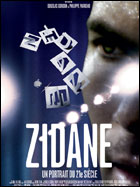
ZIDANE, UN PORTRAIT DU 21E SIECLE

de Douglas Gordon et Philippe Parreno

SYNOPSIS : Un portrait spectaculaire, magique, en temps réel et en action de Zinédine Zidane donnant au spectateur le sentiment d’être placé sur le terrain aux côtés du joueur. Tourné le 23 avril 2005 au stade Santiago Bernabeu durant un match de championnat de la Liga espagnole opposant le Real Madrid à Villareal, ce film colle aux crampons de la star du ballon rond durant l’intégralité de la rencontre, grâce à dix-sept caméras haute-définition capturant ses moindres faits et gestes.

Il y a, au tout début d’une chanson du dernier album de Peter Gabriel -Signal to Noise- un petit bruit étrange, auquel je suis surpris qu'aucun journaliste musical n’ait prêté attention. Traitant de la dépression nerveuse, de la lutte pour communiquer, la chanson (un duo avec Nusrat Fateh Ali Khan) est suffisamment explicite pour que tout y soit scrupuleusement identifié (1) (...)

(1) Selon moi, il s’agit d’un cri de perte de contrôle, de dépression, suivi d’un coup de batterie reflétant soit la sanction, soit le ... rebondissement ! La voix étant celle du chanteur.


04 septembre 2006

Harp-lute music mesmerises audience

N'faly Kouyaté from the Republic of Guinea captivated the audience with the kora, a West African harp-lute. Photo: Paul Zammit Cutajar

The haunting sounds of the kora - a West African harp-lute - echoed across the fields surrounding Verdala Palace, Buskett, on Saturday night mesmerising over 800 people who turned up for the open-air charity concert.

Percussionist Renzo Spiteri teamed up with N'faly Kouyaté from the Republic of Guinea to present an intense concert of world music, made all the more unique by the kora.

The two provided a seamless synergy and received resounding applause. The concert, in aid of the Community Chest Fund, was held under the patronage of the President and Mrs Fenech Adami. Mr Spiteri and Mr Kouyaté will be reuniting later this month to perform at the Womad Festival in South Korea, one of the biggest, most established festivals of world music.

Womad (World of Music, Arts and Dance) started in Shepton Mallet, England in 1982. It was pioneered by Peter Gabriel to bring together and celebrate various forms of music, arts and dance drawn from countries and cultures from all over the world. Some of the biggest names in the scene of world music have been especially handpicked for the occasion and Mr Spiteri is thrilled to be among them. "Taking part in Womad is the dream of every world music musician," Mr Spiteri said.

Malaria Awards Ceremony

Malaria Awards Ceremony Recipients Honored, with Life Time Achievement Award Presented to Wen Kilama at Malaria Wisdom Council Meeting Held in Benin

Malaria Foundation International honors unsung heroes and leaders in science, business, education, sports, entertainment and the media in the fight against malaria. Award recipients are listed with more detailed information and web links available at www.malaria.org. The MFI congratulates the many individuals and organizations worldwide for their current accomplishments in the fight against malaria and looks forward to its 2007 awards. (...)

(...) Celebrity of the Year: Youssou N'Dour

A Grammy Award winning Senegalese artist – for his leading performance in AFRICA LIVE: The Roll Back Malaria Concert, in Dakar, Senegal, in March, 2005, and The "United Against Malaria" concert held in Geneva, Switzerland in October 2005 also featuring friends, Corneille, Tiken Jah Fakoly, Peter Gabriel, Axelle Red, Rokia Traoré as well as other guest artists from all five continents committed to fighting malaria. The Youssou N'Dour Fund, a partnership between the singer and the North Carolina-based IntraHealth International, has since been established to continue to raise funds to prevent malaria and promote better health in Africa. The AFRICA LIVE concert film premiered at the UN and is now available to the public. (...)

03 septembre 2006

Gabriel at the Boston Observatory

(...) In one multimedia exhibit, two rap emcees appear on separate television sets and ask viewers sample questions from the U.S. citizenship test. Siblings Fernando and Jennifer Pena laughed while they watched the video. "If you ask Americans, some of them wouldn't even know the answers to those questions," said Jennifer Pena, who was born in the Dominican Republic.

Among the nearly 30 interactive displays are a short film about refugees narrated by singer Peter Gabriel and the "Wings Over Boston" aerial video tour. But some visitors come to the Skywalk for more than the view or the trivia. (...)

30 août 2006

Jeff Martin - The Tablas Have Turned

(...) Jeff Martin first performed with the Tabla Ensemble (albeit in full 15-piece mode) a few years ago at a Music Conference in Toronto. The set was in tribute to Peter Gabriel, who upon hearing Martin’s tabla-inflected interpretations of Shock The Monkey and In Your Eyes told Martin he had “a good set of pipes.”

Martin’s dalliance with world music sounds has never ceased and when he talks of his current collaboration with the Ensemble, sounds like it never will.

“It’s like bringing them back to their Genesis to a certain extent,” he says, referring to the one Peter Gabriel wasn’t in. “A lot of The Tea Party’s songs stemmed from direct influences of Turkish folk music, Indian classical music or Middle Eastern music. The joy of doing it this way is that we’ve brought them back to those influences. The actual stage, with all my world instruments behind me and the tablas, it looks like the Smithsonian. It’s gonna be cool.” (...)


Richard Chappell : Behind the scenes

Locals may disagree, but St. Petersburg boasts a great music scene, where even buskers are highly talented, according to Richard Chappell, a technical engineer for art rock legend and world-music pioneer Peter Gabriel.

Chappell was checking out St. Petersburg’s music scene this month, even though August normally has little to offer as far as live music goes in the city.

“I’d been expecting that there would be more of a gig scene here, I haven’t seen as much as I would expect, but what I have seen has been very good,” he said, speaking at the local music bar Novus during his visit.

“Musicians’ standards seem very good here, and actually all the buskers that I see on the street seem really amazing, like the standard of musicianship. Most days I walk around and see a new person playing or a new group of people playing, and that’s also really good. Compared to England, the standard of musicianship here seems very high.”

Chappell, who has been working at Gabriel’s Real World Studios in the U.K. for almost 20 years, came to St. Petersburg by invitation from local musician and producer Viktor Sologub, who first gained underground fame with ska pioneers Stranniye Igry, or Strange Games, in the 1980s. Sologub’s other bands include indie rockers Igry and, most recently, electronic band Deadushki.

The two met at Real World Studios in January when Sologub was doing some production work for an upcoming album by award-winning Uzbek world-music singer Sevara Nazarkhan.

“Viktor came to the studio to do some more production work there with a friend of mine, Bruno Ellingham, who is another producer there,” said Chappell, who was working on mixing a Robert Plant concert for release on DVD at the time.

“He kept coming to my studio, listening to what I was doing, and there we’re very friendly, and there’s many rooms to use in the studio, and you walk in and out, say hello to people. So Viktor came in and we were talking, and he said, ‘Come to St. Petersburg.’ He kept saying that, and he came back again, maybe last month, and again he said, ‘You need to come to St. Petersburg.’ So I came.”

Chappell joined the staff of Real World Studios, which celebrated its 20th anniversary on June 28, early in its history. The 20-year milestone was marked with live performances by various artists including Plant and Gabriel.

Chappell started at the studio in 1987, when he was 17, initially as a tea boy.

“I took a recording class at school, and it was a little four-track machine, and it was a two-year class of learning about sound and how to record things, it was the only one in England at that time” said Chappell.

“We would listen to The Beatles and to Steely Dan and all these amazing recordings, and we’d have to sit in the dark and listen and analyze, like, all these different records and get to talk about them. It’s a very inspiring class, very interesting, so at that point [I decided that] I’d like to be a recording engineer.

“And basically I found that I wasn’t clever enough, I wasn’t getting the right exams that would take me to the right university to do the proper university recording course. So I left and I joined a band and that didn’t work out, and I went to college to study some more. In college you have career advisers in England, and my career adviser said, ‘What do you want to do?’ and I said, ‘I still want to be a recording engineer.’ He said, ‘Find a recording studio in this area.’ So I found a studio called the Real World Studios in the phone book and I called them up and asked, ‘Are you looking for anybody to come and work, you know, just making tea and being a runner?’ And they said, ‘Actually we are right now. We’ve just been built and nobody knows about us, so come for an interview.’

“So I went for an interview and a guy there, Mike Large, who is one of Peter [Gabriel]’s managers and the general manager of Real World gave me a job! So I stayed there on trial for a few weeks, and then they kept me on and I’ve been there ever since. So I learned basically all my skills within that environment.”

Now Chappell is Gabriel’s full-time engineer, rarely having time to work on anything else. Always a perfectionist, Gabriel takes a while to work on an album, with his most recent, the 2002 album “Up,” being seven years in the making.

“It takes several years, and sometimes there are breaks, so you might get a month to do something else, if you want to, but generally it’s Monday-to-Friday working just on whatever he’s got going,” said Chappell.

Sometimes Gabriel can be somewhere in the building, but then he has a musical idea and comes to the studio, where keyboards and microphones are always on, waiting for him.

“The immediacy of recording is really important,” said Chappell.

“You need to have everything ready all the time to be able to record, because otherwise you’re going to lose the moment. You’re going to lose the instancy of somebody getting an idea. And my boss, particularly, is quite random in his approach to music, so he will suddenly come up with an idea, and maybe he’ll be in the office, and he comes running over and sits down, and he wants to be recording straight away. So yeah, generally all his keyboards and all his microphones are always open, so at any time, he can hit ‘record’ on something. It’s always very important.”

Real World Studios was founded by Gabriel for his world-music projects as well as for his own work in June 1986. The studio, built in a well-lit 18th century watermill and surrounded by water, is special a place for music making.

“The studio is based in an old watermill, a flour mill in Wiltshire,” said Chappell. “The building itself, I think, dates back to the 1700s. There’s a mill pond that surrounds the building where the mill wheel used to turn within the building. They put in a glass floor, so you can record on top of the glass floor and see the water flowing underneath you.

“The whole kind of idea of the studio is very much trying to combine the modern look with the old stone look of the building, and I think they’ve achieved that very well. So there’s a lot of big wooden rooms to record in. The main control room is one of the biggest control rooms in the world, and it’s based around a concept that Peter Gabriel doesn’t like to have a separate studio and control room. He likes to work in a room that’s big, and he can have a recording console within the room as well as the musicians.”

According to Chappell, what Gabriel had in mind was a dream studio, free of the drawbacks that he encountered when recording with his then band Genesis in the 1970s.

“He grew very paranoid during his Genesis years of doing things in a studio and then on headphones, and then everything goes silent and you can’t hear people talking behind the glass, and you don’t know what’s being said or what’s going on. It’s quite hard to communicate in a creative way,” said Chappell.

“So Real World has been built and based on this principle that you can have separate recording rooms, and we have them as well, but generally the recording spaces are built to accommodate the band to play as well as the engineer and producer to be there and listen to what’s going on. So it’s quite a unique place. It has many windows. When it was built, it was very rare to have a recording studio with windows. All the rooms have huge windows and are very light. Yeah, it’s a special place, you know.”

Chappell’s first work, then as an assistant to engineer and producer called David Bottrill, was the soundtrack to Martin Scorsese’s “The Last Temptation of Christ.” Called “Passion: Music For The Last Temptation Of Christ.” It was also the first release for Gabriel’s label Real World Records in 1989.

“So, I began engineering with David Bottrill, who has now come on to produce Tool and many many big American rock records. What’s happened is interesting. I have an assistant every year to work with me and I can teach them things. And my assistants come from this course called the Ton Master Course at Surrey University. And Surrey University is the course I wasn’t qualified enough to go to. But now I have a new assistant every year; they come and work for me and Peter Gabriel — and they assist me. So now it’s like a turnaround, which I feel good about.”

By Sergey Chernov / Staff Writer

28 août 2006

In Search of International Justice

The first film about a crucial new commitment to the international rule of law: the International Criminal Court.

DVD version with special features available - see below
66 minutes
Color / Stereo
Grade Level: 10 - 12, College, Adult
US Release Date: 2006
Copyright Date: 2006
ISBN (VHS): 1-59458-530-X
ISBN (DVD): 1-59458-531-8

Directed by Judy Jackson
Produced by Judy Films
Narrated by Peter Gabriel
Camera: Len Gilday, Bimi Shkumbim Bytqyi
Editing: Barton Hewett, Sarah Udal
Music: Mark Korven

Produced with the participation of the Canadian Television Fund * Produced with the financial participation of Rogers Documentary Fund * Produced in association with History Television * With the participation of the Canadian Film and Video Production Tax Credit & Film Incentive BC

This is the first film about a crucial new commitment to the International Rule of Law - so victims will no long suffer without being heard, and war criminals will be punished. Sixty years ago, with the Nuremberg charter, the world first said "Never Again." But these proved empty words for the victims of the Cold War years. The Superpowers couldn't agree on a universal code to punish war criminals. Tyrants ruled with impunity.

So the voices of their victims have echoed down through the decades, refusing to be silent, even in death. Joined by relatives who are unable to move on, until they know how their loved ones died. Different languages from different places, but with the same universal theme - begging to be delivered from the torment of living somewhere between life and death. Telling us that they will be able, finally, to rest, when we find out how they died. Insisting we listen.


It is because of these voices that International Justice has been reborn. In 2002 the International Criminal Court was established in The Hague. So far 100 countries have signed on to the Court's mandate. However, the world's remaining superpower, the United States is strongly opposed.


The new Court is already busy. It is investigating crimes against humanity in Darfur. It has issued indictments against leaders of the Lord's Resistance Army in Northern Uganda who abduct children and force them to fight. And a militia leader from the Democratic Republic of the Congo faces charges of recruiting children as young as 8 to fight for him.


For the first time war criminals are being forced to listen. The victims' voices now haunt them, telling them they will not be silent until justice is done. (...)

27 août 2006

Peter Gabriel on Paul Allen's Yacht

SARDEGNA: SORU DINES WITH PETER GABRIEL ON PAUL ALLEN'S YACHT


(AGI) - Olbia, Aug. 26 - Last night, the president of the Sardinian Region Renato Soru, the former Genesis singer Peter Gabriel and the regional secretary of Democratici di Sinistra party, Giulio Calvisi, met for a dinner with international dishes accompanied by Sardinian white and red white, in northern Sardinia, in the waters in front of Palau, on the yacht of the Miscosoft co-founder Paul Allen.

Man of the house, considered among the owners of maxi-yachts that could have deserted Sardinia due to the so-called "luxury tax" , is instead for days in the north of the island and yesterday he invited Soru for an exclusive dinner, about a dozen people in all, including escorts. The topic of the luxury tax was excluded from the conversation, which was all in English, thus the guests concentrated on what they had in common: a passion for the beauties of Sardinia and the islands plans for economic development.

The one who planned the meeting on the yacht, which was anchored in the gulf in front of Palau, was Calvisi, through friends of La Maddalena (U.S. navy base) who know Allen's collaborators, whom the president of the Region supposedly considers the entrepreneurs willing to invest in the island, in particular in the IT and new technology sectors, biogenetics and aerospace sciences. These are all sectors in which Allen is already working in the United States, from his headquarters in Seattle.

The co-founder of Miscrosoft hinted that he preferred investments in the American market, which he knows well, but he does not leave out steering his interests to Italy and in Sardinia, in particular. In the meanwhile, Allen said he is willing to put up some Sardinian researchers as interns for a few months in Seattle. For Soru, who already has an excellent relationship with Gabriel, who collaborated with Allen to create a museum in Seattle dedicated to the guitarist Jimi Hendrix, it was the opportunity to present some initiatives that are the most dear to him for Sardinia: biotechnology research, genetic and new technology studies and also the opportunity for investments that will open to La Maddalena in less than a year and a half when the U.S. base will be dismantled for nuclear submarines.

20 août 2006

Amnesty to re-launch Secret Policeman's Ball

LONDON (Reuters) - Amnesty International is reviving its Secret Policeman's Balls, comedy events spearheaded by Monty Python star John Cleese 30 years ago to raise awareness and cash for the human rights group.

The new show, on October 14, will be held at London's Royal Albert Hall and feature what the organisation on Friday called an "unprecedented lineup of comedy and music talent".

"Nowadays, it's taken for granted that famous people support good causes," Amnesty said on its Web site. "But in 1976, no-one thought like that. Fundraising events were evenings of experimental poetry." That all changed when Cleese rounded up "a few friends" for Amnesty's first show at Her Majesty's Theatre called "A Poke in the Eye (With a Sharp Stick)" and later televised as "Pleasure at Her Majesty's".

The evenings grew increasingly ambitious with musical acts joining in, and in 1979 The Secret Policeman's Ball was staged at the same theatre and featured comic heavyweights like Cleese, Peter Cook, Rowan Atkinson and Billy Connolly. By "The Secret Policeman's Third Ball" in 1987 at the London Palladium, comedians were joined by musicians including Kate Bush, Peter Gabriel, Lou Reed and Duran Duran.

Amnesty said the next ball would launch its Protect the Human Week and would include 21st century ingredients including animation and podcasts. "Public support for Amnesty increased by 700 per cent after the first three shows (and) the profile of human rights went through the roof," the organisation said. The show's producer Lisle Turner, added: "We're doing it now because the world needs a poke in the eye, it needs laughter and frankly, it needs more Balls. "Sometimes what the world needs to see global human rights abuses is a hard hitting report. But sometimes a side-splitting joke can work just as well."

World Party boards musical 'ship' again

Karl Wallinger once led off a World Party album by singing, ‘‘it is time to remember/it is time to forget." After an extended absence from American shores, the celebrated Welsh musician wouldn't be surprised if you still referred to his Beatlesque pop and soulful rock band in the past tense.

Last March, Wallinger played his first U.S. gig in eight years at a music industry conference in Austin. ‘‘I didn't even know if anyone was going to be there, let alone remember any of the songs,'' recalled the World Party mastermind, in a phone interview from L.A. on Tuesday. ‘‘When I was greeted onstage by crazed fans who sang along with every word, it was fantastic and very moving. I was a bit gutted that night.''

Wallinger first gained fame playing bass and keyboards for The Waterboys from 1983-85. After a dustup with leader Mike Scott, Wallinger broke off to form World Party in 1985. Essentially a one-man-band early on, with Wallinger handling virtually everything, World Party released its socially-conscious debut ‘‘Private Revolution'' (featuring Sinead O'Connor) in 1987.

The group became a college/alt-rock radio favorite and had four top 10 hits in the mid-'80s and early '90s (‘‘Put the Message in the Box,'' ‘‘Way Down Now,''‘Is It Like Today,'' ‘‘Ship of Fools''). The latter was a top 40 single on the Billboard Hot 100. A decade later, Wallinger's layoff wasn't by choice. A series of unfortunate events put his life and career on hold. He recorded the title track to Edward Burns' 1996 flick ‘‘She's the One,'' but it didn't end up on the soundtrack. Then Robbie Williams secretly commandeered Wallinger's band to do a cover version and it climbed the U.K. charts. ‘‘Egyptology,'' the underrated 1997 World Party album, was met with a lukewarm reception. Then Wallinger left his record company and the band's manager died.

In late 2000, World Party released its fifth album ‘‘Dumbing Up'' independently in Britain and did a short promotional tour. Wallinger planned to secure U.S. distributor for the CD when he suddenly had a brain aneurysm the following February. ‘‘That closed down shop,'' he said. ‘‘I never got a chance to see how anything turned out. It was an aborted run.'' During rehabilitation, Wallinger had to slowly regain his speech and walking abilities, but mercifully still recalled the World Party catalog. He did suffer a loss of peripheral vision.

‘‘I'm pretty much back to normal except for being three times the size I used to be -- small problems (considering) a lot of people aren't around after this thing.'' Now Wallinger is back in business, celebrating the band's 20th anniversary and life in general. ‘‘I don't know of any other band that's had so little connection to the times they've been in ... there wasn't really a game plan when I started. I'm just lucky the songs have remained in people's heads.''

Recently, the entire back catalog was reissued on Wallinger's Seaview Records.‘Dumbing Up'' has been spruced up and includes a bonus DVD with all the videos and assorted goodies personally supervised by the artist. ‘‘It was meant to be something you could lose yourself in a bit,'' he said. ‘‘I couldn't put the same album out again over here. The diehard fans would already have it on import and they're the last people I want to (tick) off.''

Wallinger plans to release a new studio CD in May (‘‘I'm really looking forward to getting back in the studio; I've got so many ideas''). And a long-gestating collaboration from the '90s with Peter Gabriel and several Real World artists, ‘‘Big Blue Ball,'' is due later this year. Touring with the current band, a five-piece Wallinger said is the biggest he's ever played with, has been ‘‘incredible -- I didn't think I was going to be doing this ever again.''

(...) Writer : I read that "Big Blue Ball," your Peter Gabriel collaboration, will finally be released this year.

Wallinger:
In the '90s, I went down (to Gabriel's Real World studios) for a few consecutive years. Peter got his Real World label artists and some producers -- Phil Ramone, John Leckie -- as well as Tim Finn, Jah Wobble and fiddle player Nigel Kennedy. It was an amazing blend of people. I was working with Peter in a room, we'd get a groove going and then we'd wheel all these people in from other parts of the studio. We also did songs with Sinead O'Connor. We kept layering people on there. It's taken this long to get it all organized. Every day, there was some mind-blowing musical event going on there.