Articles review on the net, revue d'articles sur la toile


Inscription : feeds, flux :
(Atom) Gabriel Real World News

08 décembre 2007

Youssou N'Dour has music with a message

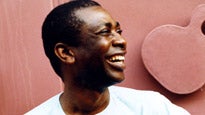
Youssou N'Dour isn't so remote a performer that he can only be heard on National Geographic's World Music Web site. The Senegal native has worked with Bruce Springsteen, Paul Simon, Neneh Cherry (on the haunting song "7 Seconds") and Wyclef Jean.

But he is probably best known for his work on Peter Gabriel's "In Your Eyes." It is at the end of the sadly tender song that N'Dour releases the power and dexterity of his tenor voice.

Experience the world music superstar when he performs Saturday at Hill Auditorium with his group the Super Étoile de Dakar.

Besides being a musician's musician, N'Dour is considered a statesman of sorts. This year, Time magazine recognized him on its "Time 100" list as someone who helps "transform the world."

In an online video interview ( www.nonesuch.com/youssou) N'Dour says he uses music to educate those who listen.

"I think music is a language, maybe the first language. I try to use it to deliver a message and sometimes people can get the message quicker than by newspaper or politician. I am not someone to think about dreams -- I talk about reality."

Ralph Valdez, curator of cultural programming at the Arab American National Museum, says N'Dour is an important African leader like that of the late musician and father of "Afrobeat" music Fela Kuti. "He inspires social activism, which has even more impact when coupled with music of such integrity."

Thursday, December 6, 2007 Ursula Watson / The Detroit News

Rhythm: Voice of the world: Youssou N 'Dour to perform at Union Theater

Youssou N 'Dour / Wisconsin Union Theater/ Thursday

Named by Time magazine this year as one of the world's 100 most influential people, African singer Youssou N 'Dour remains a vital -- and enteraining -- world-music voice who has collaborated with several notable artists, including Paul Simon, Peter Gabriel and Branford Marsalis.

At 48, N 'Dour is several years removed from those recordings, but he still ranks among the most prominent African musicians. Ever. His concert at the Wisconsin Union Theater Thursday may be one of Madison 's most memorable shows in 2007. N 'Dour 's tenor is able to handle joyous dance to religious-influened chants. He 's also an accomplished bandleader.

His rise to international stardom is fortunate and surprising. N 'Dour grew up in a poor area of Senegalese, but he developed into an experienced performer during his teens. Gabriel saw N 'Dour in the early 1980s and by 1986, he toured as Gabriel 's opening act.

Since 2002, N 'Dour has released three albums and earned a steady stream of accolades. His show is at 8 tonight. Tickets cost $34, $28 and $18. For ticket information, go to www.uniontheater.wisc.edu or call 262-2201.

Tom Alesia

World Music Central : Nusrat Fateh Ali Khan

Nusrat Fateh Ali Khan Shahen-Shah-e-Q_awwali (The Brightest Star in Qawwali) is a title reserved for the leading voice and spirit of qawwali, the devotional music of Sufi Islam. No other term better describes the late Qawwali master.

Born on October 13, 1948 in Lyallpur in the Punjab province of Pakistan, Nusrat Fateh Ali Khan made his first recording in 1973, beginning an astonishing recording career spanning over 20 years and 50 albums. As one of the Indian subcontinent's brightest talents, he incorporated elements of traditional classical khyal repertoire in his performance, producing his own unique style - and broadening the appeal of qawwali to listeners of all faiths.

Nusrat Fateh Ali Khan's father was also one of the great qawwals of his time. With the best of intentions, the father attempted to persuade his son to become a doctor instead of following the family's 500-year tradition of qawwali performance. But, even his father's wishes could not keep the young Nusrat from the exquisite art formas a child, he eavesdropped on his father's music classes to learn the fundamentals. It was only after his father's death, when Nusrat was 17, that he began to perform in public, joining his uncle's group and before long becoming one of the most popular qawwali singers in Pakistan.

Mesmerized by one of Nusrat's live performances, Peter Gabriel invited him to perform at WOMAD during the 1980s, bringing the beauty and hypnotic intensity of the qawwali master's gift to Western audiences for the first time. The response was overwhelming and resulted in a longstanding alliance between Nusrat and Peter Gabriel's Real World label.

ShahenN-Shah, his first recording for Real World, marked the beginning of Nusrat's growing influence and celebrity outside Pakistan. In attempts to make qawwali more accessible to Western ears, he recorded Mustt Mustt in collaboration with Canada's atmospheric composer/guitarist Michael Brook, replacing traditional songs with classical vocal exercises backed by Western rhythms. A-later remix of Mustt Mustt by Massive Attack led to a surprising club hit through Great Britain and the United States.

Over the next few years, Nusrat Fateh Ali Khan became an awe-inspiring and globally powerful world music force. His music has inspired some of this century's greatest filmmakers, including Martin Scorsese and Oliver Stone, and has been incorporated into soundtracks for such films as Dead Man Walking and The Last Temptation of Christ. Khan performed with music icons from all genres — including Peter Gabriel and Joan Osborne At the time of his death, he was due to record with Bjork and Luciano Pavarotti.

From archives in Nusrat's hometown of Lahore, Pakistan, Real World discovered studio recordings that were released for the very first time. The first of two high-quality archival releases came out with the title Dust to Gold. It presents the great innovator and bearer of tradition at the height of his powers.

The title Dust to Gold reflects Nusrat Fateh Ali Khan's philosophy of life, as he considered himself a pinch of dust from a holy place.

In 2002, Real World released Body and Soul, a recording made in Nusrat Fateh Ali Khan's hometown of Lahore shortly before his untimely death. The recording was retrieved from his family archive and much work was required to recreate the power of the original performance. The original master tapes were taken in hand by mixing engineer Stuart Bruce, who worked on them for many weeks at Real World Studios. The recorded masters were very inconsistent and it was difficult to assess the strenth of the material due to the random technical nature of the recordings. It was neecssary to re-balance the voice and instruments and correct the anomalies and distortion. The whole album was then remixed and remastered. Through this work, Real World was able to restore the energyof the original performance to enable the listener to get as close as possible to the full effect of Nusrat's singing.

07 décembre 2007

Long Way Down Compilation

New soundtrack for Ewan and Charley’s epic journey

Earlier this year, Ewan McGregor and Charley Boorman drove their bikes from John O'Groats to Capetown - visiting amazing places and meeting wonderful people along the way. This series, ‘Long Way Down’, is being broadcast on BBC2 on Sunday nights at 9pm - prime time slot for a prime series.

When they were planning this new journey across Africa, Ewan and Charley wanted the series to reflect the places they visited, and were delighted to get Peter Gabriel and Real World involved to provide music that perfectly fits the series and the compilation.

The result is 30 amazing tracks across two CDs, which all feature at some point in the TV show. The album is a mix of previously released tracks, some completely new, previously unavailable songs from Peter Gabriel, Dj's Sasha & BT, and from two new currently unsigned artists, Ben Onono and The Boxer Rebellion.

The first ‘Long Way Round’ TV show was shown on Sunday 28th October and the final episode will go out on Sunday 2nd December. The album ‘Long Way Round’ is released on DVD and double CD audio soundtrack on 3 December

Muizenberg longboarders at the 46664 concert

(...) The 46664 concert was on. Perfect. We could relax and move on to the second case of beer. A Muizenberg longboarder was on stage. He had a hearing aid in each ear and was strumming a guitar. "I've surfed with that dude," I said to Ted. "Nonsense," he snapped. "That's Peter Gabriel." I was shocked. "That's the ANC's chief whip in the city council?" Ted gave me the lazy eye. "The other Peter Gabriel." So it was. Between songs, the camera caught him drinking a cup of tea. The band sounded as if it were made up of people blowing on dog whistles. At one point, Pete stormed off stage. He was clearly unhappy with the sound. Ted said with all that tea he probably just needed to wee. Then he came back and played something that drove the crowd wild. Well, wildish. Okay, people clapped. Some simply stood and swayed. I would also sway if I had to smoke that awful Joburg majat. (...)

New Lanois album to download in high-quality format

Canadian musician and producer Daniel Lanois plans to offer the digital release of his new album, Here Is What Is, in high-quality WAV format. It will be one of the first downloads offered in CD-quality WAV format, according to Billboard.

Singer-songwriter and producer Daniel Lanois performs at the Canada For Asia tsunami relief in January 2005. The documentary film Here Is What Is follows him over the course of a year.

WAV has better audio quality than the more commonly used MP3 format, but results in a larger file that is slower to download.
Lanois, who has produced artists such as Bob Dylan, Peter Gabriel and U2, also is a songwriter and musician.

Here Is What Is features Lanois in collaboration with drummer Brian Blade and the Band keyboardist Garth Hudson. Lanois's 1989 album Acadie is No. 20 in Bob Mersereau's controversial book, The Top 100 Canadian Albums.

He is releasing the WAV download in December, in collaboration with independent record label RedFloorRecords.com, which Lanois backs. It will be out on CD from RedFloor in March, the same time the documentary film Here Is What Is will be released.

The film follows him over the course of a year as he works in the studio and tours from Toronto to Morocco, working frequently with longtime friend Brian Eno. It was first screened this September at the Toronto International Film Festival.

(Mike Cassese/Associated Press)

06 décembre 2007

Daniel Lanois New Album Due Digitally Dec. 15

Daniel Lanois made himself known in the 1980s by producing artists such as Bob Dylan, Peter Gabriel and U2. But now, several solo albums later, Lanois plans to make waves with Here Is What Is, his sixth solo work, which will be available for download exclusively via his Red Floor Records label site in December.

In a refreshing move (for folks who actually own a pair of ears and don’t believe that iTunes and other digital distribution services deliver a quality-sounding product), Here Is What Is is the first digital download release in high-resolution, CD-quality WAV format for $9.99, as opposed to lower-quality MP3 resolution, which usually costs the same price. The album will also be available in stores March 18, but online pre-orders will be delivered digitally Dec. 15.

The album was recorded in a variety of locations – Toronto, Los Angeles and Louisiana – and showcases a variety of Lanois’ musical abilities and sensibilities. The album also includes interludes from Brian Eno, taken from the film version of Here Is What Is, which debuted at this year’s Toronto Film Festival and will be available on DVD in March.(Fitting, as Lanois started his career decades ago as an apprentice of Eno.) It was directed by Adam Vollick, Adam Samuels and Lanois.

For more information on Daniel Lanois, visit his official website, and you can also see his entire catalog of solo records at the Red Floor site.

TRACK LISTING:
1. Chest Of Drawers
2. Where Will I Be
3. Here Is What Is
4. Not Fighting Anymore
5. Beauty
6. Blue Bus
7. Lovechild
8. Harry
9. Bells
10. This May Be The Last Time
11. Smoke #6
12. I Like That
13. Duo Glide
14. Bladesteel
15. Moondog
16. Sacred And Secular
17. Joy
18. Luna Samba

Roxana Hadadi, December 3, 2007
(Photo Credit: Adam Samuels)

Youssou N'Dour, Royce Hall

Band: N'Dour, El Hadji Faye, Assane Thiam, Papa Omar Ngom, Ablaye Lo, Moustapha Faye, Birame Dieng, Mamadou Mbaye, Habib Faye.

When, six songs into his 18-song set Saturday night, Senegalese superstar Youssou N'Dour asked to see some dancers, his audience took the invitation seriously. First a trickle, then a stream of (mostly) women -- including toddlers dragging their mothers -- ecstatically made their way down the aisles to the foot of the stage to writhe in ways that the human body was not designed to writhe. Soon the entire sold-out Royce Hall audience was on its feet.

From that moment, the show -- which was already pretty impressive -- turned from a simple concert to a celebration. The band's playing became looser, the grooves airier; the song structures less formal and more elastic. The one-chord vamps stretched out indefinitely, the harmonies changing as the two guitars, bass, keyboards, Assane Thiam's expressive talking drum and three percussionists shifted, like gears, into different musical patterns. increased speed so precipitously, it threatened to take off;"Bandiene" "Set" turned a corner, moving from sprightly to thunderous, with a slight change in the guitar line. It's a sound that reflects the title of his new Nonesuch album, "Rokku Mi Rokka (Give and Take)."

N'Dour's voice turned more urgent with the aud's enthusiastic reaction, wringing waves of emotion with a repeated "Senegal" at the end of "Immigrés" and breaking out a precise, aching soprano during "Birima." He can rally like a trumpet, cajole like a tenor sax and add the grave authority of a French horn. You don't have to speak Wolof to understand why he has been named one of Time Magazine's "100 Most Influential People."

He carries such conviction that the aud stayed on its feet even during a heartfelt speech -- read off a page -- recognizing World AIDS Day, and asking the aud to write representatives to help not only the battle against AIDS, but malaria. It was followed by the brooding prayer, "New Africa," its swelling keyboards reflecting the influence of Peter Gabriel. Other influences could be heard throughout the night -- Paul Simon (who collaborated with N'Dour on "Graceland") on "Baye Fall," and some North African arabesques on the love song "Letema," but N'Dour avoids the bland diplomacy of "world music." No matter what style he plays, his music remains identifiably his own.

(Royce Hall; 1800 seats; $60 top) Presented by UCLA Live. Reviewed Dec. 1, 2007.

By STEVEN MIRKIN

46664 message misses mark - but music is a hit

While the stalwarts of the anti-HIV battle had their targets firmly in their sights at Ellis Park on Saturday during the 46664 Concert, the 45 000 strong crowd were there for the music.

The mainly young audience were enthralled by acts like Ludacris, Razorlight, Freshlyground, Just Ginger and the Goo Goo Dolls.

But the age gap between today’s youth and the concert’s driving forces, Peter Gabriel and Annie Lennox, was apparent. Fans begged for more Ludacris and hardly listened to the safer sex messages aired between acts.

One fan reported that Peter Gabriel appeared visibly shocked at the audience’s indifference to his struggle song Biko, released before most of the concert goers were born.

Most fans felt they got more than their money’s worth from the ten hour, globally broadcast show in support of Nelson Mandela’s World Aids Day initiative, taking its title from his Robben Island prison number.

Acts gave way to Aids statistics and footage of orphanages and Aids projects. But the message was lost on some of the audience, who larked around with the free condoms raining down.

Commenting on the purpose of the 46664 campaign, Deputy President and SA National Aids Council head Phumzile Mlambo-Ngcuka said: “It’s about preventing the infections... caring for the people who are already sick. It’s about rolling out the treatment and ensuring we empower women who are at the frontline of the battle.”

GAYNOR NOYCE

World Aids Day concert

The World Aids Day concert took place in Johannesburg yesterday, 1st of December. Artists performing at the event included Annie Lennox, Peter Gabriel, Razorlight, Corinne Bailey Rae, Ludacris, Jamelia and the Goo Goo Dolls. The 46664 World Aids Day concert is the main event of World Aids Day and the fight against HIV/AIDS.

Fans of the performing artists at the World Aids Day concert can visit www.t5m.com to see original material from World Aids Day unavailable anywhere else. The site includes special coverage of the event, along with a backstage look at the concert, speeches and messages from performing artists and more information on World Aids Day.

Mandela hosts World Aids Day concert

Thousands of people joined Nelson Mandela at a World Aids Day event in South Africa.

Razorlight, Annie Lennox, Peter Gabriel and Rihanna were among more than 20 stars who took to the stage at the Ellis Park stadium in Johannesburg.

"It is still alarming that for every person who receives treatment there are four others that are newly infected" - Nelson Mandela

The event was organised by Mr Mandela's 46664 campaign to stand up against the scourge of Aids.

Under the guidance of the former apartheid prisoner, 46664 is a campaign to raise awareness of the global HIV/Aids pandemic.

It also aim to raise funds to support HIV/Aids projects throughout sub-Saharan Africa where the disease is rife.

"It is still alarming that for every person who receives treatment there are four others that are newly infected," Mr Mandela told the crowd.

"We are pleased to say that the 46664 prevention campaign is being stepped up and going from strength to strength."

05 décembre 2007

Peter Gabriel, Annie Lennox Play AIDS Benefit

Peter Gabriel, Annie Lennox, Corinne Bailey Rae and Razorlight are among the artists set to play the 46664 World Aids Day concert -- the fifth since the charity's foundation in 2002, which carries the prison number of former South African President Nelson Mandela -- on December 1, at Ellis Park in Johannesburg, South Africa. Ludacris, Goo Goo Dolls and Jamelia will also perform, as well as South African artists the Parlotones and Cassette, R&B trio Jamali, Johnny Clegg, Arno and Just Jinjer, among many others.

"The 46664 message is one that needs to be heard in every corner of our country, and indeed, the world," a spokesperson for the charity said. "These artists between them reach into every one of our communities -- upholding Mr. Mandela's message that HIV AIDS is not a local issue, but a universal one."

The entire event will be attended by Nelson Mandela and simulcast on the iClips Network. Click here for more information.

Posted Nov 30th 2007 12:00PM by Jessica Robertson

Tom Diakité : "Je ne suis pas un griot, mais un noble qui chante"

Originaire du Wassoulou, Tom Diakité fait partie des artistes maliens qui ont, à un moment donné, émerveillé le public, avant de s'éclipser comme une étoile filante. Dans sa tendre enfance, il n'avait jamais imaginé qu'il allait devenir chanteur, puiqu'issu d'une famille noble du Wassoulou. Il habite en France depuis fin 1985. Il est venu y rejoindre alors Ousmane Kouyaté, ancien guitariste des Ambassadeurs du Motel, rencontré à Abidjan, qui lui avait demandé de participer à son premier album solo, Be ni haminanko (1982).

La Côte d'Ivoire, c'est là que tout a vraiment commencé, affirme Tom Diakité, né en 1956, au sud du Mali. Par la suite, au fil du temps, la musique l'a envahi, lorsqu'il écoutait les griots venus rendre hommage à son père roi, ou bien en observant ses frères jouer du balafon, du djembé. Lorsque son géniteur le confie à une tante, à Abidjan, Tom Diakité met le pied sur le chemin qui le mènera jusqu'à aujourd'hui. Dans la capitale ivoirienne, Léon Keïta, un guitariste malien de passage, l'entend par hasard chanter. Il lui confie ses textes pour qu'il les interprète. "Quand ma tante a entendu ma voix à la radio, elle a mis le poste en miettes".

Le gamin a enfreint la règle. Fils de noble, il n'avait pas à chanter au vu et au su de tous. En France, Tom Diakité va, de ci de là, se mettre au service des uns et des autres (Johnny Halliday, les Gipsy Kings, Salif Keïta, Mory Kanté…) tout en préparant des maquettes. Premières investigations auprès des maisons de disques, premières désillusions. Le gaillard prend les choses avec philosophie. "Le monde est fait de problèmes, mais les problèmes font grandir les êtres humains. Quand on est triste aujourd'hui, cela n'empêche pas de sourire demain matin." Conscient de cet état de fait, il prend son courage à deux mains et fait des sacrifices, ce qui aboutit, en 1994, à "Prévention Sida", sur le label Salsa Center.

Le disque qui va contribuer à ce qu'on parle un peu plus de lui. C'est l'époque où il entame une collaboration avec Sotigui Kouyaté et entre par la musique dans le monde du théâtre et du cinéma. Après, il y aura la participation au projet discographique "Sarala", croisant jazz et musique mandingue et puis, surtout, l'aventure Tama, un trio formé avec le guitariste anglais Sam Mills et le percussionniste de Guinée- Bissau Djanuno Dabo (deux albums parus sur Real World, le label de Peter Gabriel). Et, cette année, Tom Diakité revient, après une longue absence, avec un nouvel album intitulé "Fala" l'orphelin. "Tout commence par une émotion", quand il plonge au cœur de ses souvenirs, Tom Diakité y trouve la raison du titre de l'album, qu'il présente aujourd'hui.

Un jour, se souvient-il, en vacances au Mali, pendant la saison des mangues, il a vu des enfants venir chez lui, le matin, pour lui proposer des fruits. Les interrogeant sur leur présence ici et non à l'école, à cette heure de la journée, il se rend compte que tous ces gosses n'ont pas droit aux livres et aux cahiers. En ville, il croise d'autres mômes qui mendient, accompagnant un parent non voyant. Bouleversé, il compose "Fala", en pensant aux enfants des rues. Il lance un appel. "C'est notre rôle en tant qu'artiste que de sensibiliser. Jusqu'au bout j'écrirai des chansons qui font enseignement", dit-il.

"Chanter pour les autres, participer à une aventure collective, c'est bien, écrire sa propre histoire, c'est encore mieux". Avec "Fala", Tom Diakité renaît une nouvelle fois. En s'accompagnant à la kora et au donzo n'goni, l'instrument des chasseurs au Mali, entouré de quelques amis au talent sûr, il impose à l'évidence sa différence.

29 novembre 2007

Powerful insight into iconic South African

MOVING TRIBUTE: The activist looms large at the Apartheid Museum Picture: KATHERINE MUICK-MERE

A historical exhibition can be boring if not handled well. But the Steve Biko exhibition at the Apartheid Museum is one of the most powerful Joburg has seen in a long time.

Steve Biko: Quest for a True Humanity is the first major exhibition to commemorate the 30th anniversary of the death of this father of black consciousness in South Africa. Five months in the planning, it is anything but dry.

Telling a story of unbelievable cruelty and resolute dignity, it is designed to make you understand Biko, cry for the loss this country suffered when he died, and celebrate the values he instilled in the youth.

Beginning with a massive panel containing a repeat design of Biko’s face, coloured in greys with touches of red, the show reflects a sexy icon evolved with indomitable dignity. Its story is horrendous and proud and begins long before Biko was born, on December 18 1946. It starts in the mid-19th century, when African intellectualism was mooted. Curator Emilia Potenza sensitively distils the ideas that shaped Biko’s thinking.

The exhibition continues through Biko’s life of rebellion and reflection on injustice, to its horrifying end and chilling aftermath. “It leaves me cold,” Jimmy Kruger, the then Minister of Police crassly declared shortly after Biko’s death on September 12 1977. Those responsible never told what happened; they appealed to the truth commission for amnesty but never apologised.

The exhibition concludes with colourful graphics: the faces of different people responding to Biko — from President Thabo Mbeki to musician Johnny Clegg, high school kids and US rapper Keith Murray.

“If you’re young and conscious,” Murray says, “sooner or later you’ll hear about Steve Biko.”

The exhibition is complemented by hand-picked quotes and beautiful photographs, and curator Potenza and designer Megan Futter have obviously invested a lot of care here.

Throughout, Biko’s earnest young face is omnipresent, often ghostlike, in the printed fabric panels. His voice and the sound of his name thread themselves through the show, filtering into your awareness of his passionate and pervading influence.

The exhibition, commissioned and funded by the National Department of Education and created in collaboration with the Steve Biko Foundation, features the only recorded interview with Biko, and Peter Gabriel’s Biko, considered among the most influential protest songs of the ’80s. Mantra-like, the repetition of Gabriel singing Biko’s name filters through the exhibition, which also pays moving tribute to the dozens of almost-forgotten freedom fighters who also died in detention.

German poet Rainer Maria Rilke famously offered advice to young poets: “No one can help you.” Similarly, Biko empowered black youth: “Black man, you are on your own.”

Christopher Till, director of the museum, says: ‘‘In this exhibition, we do not deify Biko. We aim to reflect on him as he was and place him in contemporary culture. Biko has become a popular youth icon, on a par with Che Guevara, but kids don’t know about Biko really.”

Steve Biko: Quest for a True Humanity is on until the end of June. Phone 011- 309-4700.

27 novembre 2007

Robert LePage is all about progress

Robert LePage is the director of San Francisco Opera’s upcoming premiere of Stravinsky’s “The Rake’s Progress.

Robert LePage, director of San Francisco Opera’s upcoming U.S. premiere of Stravinsky’s “The Rake’s Progress,” equates performance with play.

“I believe in playing,” says the acclaimed French Canadian director, actor, writer and founder of the multidisciplinary production company Ex Machina. “Actors bore me, but players are interesting.”

A hot commodity in the world of contemporary theater known for his innovative use of technology, LePage’s packed resume also includes film (“The Far Side of the Moon”), concerts (Peter Gabriel’s 1993 “Secret World” Tour), and even circus; he created Cirque du Soleil’s thrilling spectacle “KA,” permanently onstage in Las Vegas.

“That’s my thing. I always try to prepare a space for people to play,” LePage, “not yet 50,” says when asked what characterizes his varied body of work.

His unique style has been in demand for decades, going back to the 1980s, when many international opera houses were doing new productions of Wagner’s “Ring” cycle.

“I’ve been offered 10,000 ‘Rings,’” he says. “I’d never done opera before.”

His first opera, in 1993, was a successful Canadian Opera Company double bill of Bartok’s “Bluebeard’s Castle” and Schoenberg’s “Erwatung.”

Watch video clips from “The Rake’s Progress.”
Though still not devoted exclusively to opera, he calls it a big adventure. “It’s the great mother art,” a meeting point of different disciplines. LePage’s new interpretation of “The Rake’s Progress,” which has been produced in Brussels and Lyon, gives the story — about the decline of a fellow named Tom Rakewell due to decadent living — a 1950s Hollywood setting.

As a starting point for his direction, LePage points to the fact that Stravinsky, when he was composing in the 1940s, was looking ahead to writing opera for television. “He was an amazing antenna,” LePage says.

Like Stravinsky, LePage believes in progress. He says, “If one is in the theater, if you want it to evolve, you have to invite a lot of influences. You have to update.”

That attitude seems to be the secret to his success. He says, “I’m a free spirit. I used to be offered very specific things, but now I’m not hopping around, being commissioned. I’ve managed to do my own stuff.”

IF YOU GO The Rake's Progress Presented by San Francisco Opera
Where: War Memorial Opera House, 301 Van Ness Ave., San Francisco
When: 8 p.m. Nov. 23, Dec. 1, Dec. 4 and Dec. 7; 7:30 p.m. Nov. 28; 2 p.m. Dec. 9
Tickets: $15 to $275
Contact: (415) 864-3330 or www.sfopera.com

Family detective: Peter Gabriel

Nick Barratt's investigation into our hidden histories. This week: Peter Gabriel

Peter Gabriel was one of the founder members of the band Genesis, which celebrates its 40th birthday this year. Despite the rebellious image of the music scene in the late 1960s, the original members were public school boys from Charterhouse. Gabriel left the band in 1975 to launch a solo career, achieving his greatest success in the late 1980s with songs such as Sledgehammer. Today he takes a leading role in promoting world music through the WOMAD festival.

Who is he related to?

Peter Brian Gabriel was born on February 13, 1950, the son of Ralph Parton Gabriel and his wife of three years, Edith Irene Allen. His Gabriel forebears were fairly well known in the 19th century as politicians and businessmen in Streatham, south London, where a long-standing family business can be traced.

Census returns indicate they enjoyed a comfortable life, waited upon by numerous servants and educated at the finest schools. Peter's grandfather, Christopher Burton Gabriel, for example, also appears as a boarder at Charterhouse in 1891.

The family had a profitable timber business and one of the main characters to emerge is Peter's two-times great-grandfather, Christopher Trowell Gabriel, born in 1797. He was the son-in-law of the famous billiard-table maker, John Thurston, whose only daughter, Ruth, he married in 1833.

The business was clearly not without its ups and downs. Christopher's brother, Thomas, applied for bankruptcy in March, 1859, but Thomas was able to recover, to the extent that he became the Lord Mayor of London in 1866.

At his death in 1873, Christopher left an estate of just under £200,000, a vast sum for the period. His son, Thomas, received the estate in Ely, while his widow, Ruth, was given all household goods in the family mansion, Norfolk House. Christopher's religious beliefs are also made clear by his will, with various bequests made out to Wesleyan societies.

Further research reveals when and where the Gabriel fortune was first made. Christopher Gabriel senior, Christopher and Thomas's grandfather, founded the family business in 1770 as a craftsman making tools and chairs, before turning to the timber trade from 1812. Many inventories survive, showing how the business expanded in the late 18th century.

Other records of the Gabriel family were deposited at the Guildhall Library, London, where letters, accounts and documents stretching back to the 1620s can still be viewed.

Vibrant N'Dour enchants Kimmel

Senegalese superstar Youssou N'Dour, clad in white pants and shoes and a smart red-and-white striped African shirt, stood beaming at center stage, taking in the applause. He and his potent 10-piece band, Super Etoile de Dakar, had just delivered a satisfying set Tuesday night in their Kimmel Center debut, more than 70 minutes, showing why he is considered one of the world's greatest singers.

On display was his distinct tenor voice, a textural wonder, possessing a thick elastic tonality at bottom and rising up to the trademark keening wails that cascade down in perfectly controlled melisma. (Although he sings mostly in Wolof, Americans may be more familiar with this sound by recalling his soaring voice climaxing the 1986 international hit "In Your Eyes," by Peter Gabriel, an N'Dour enthusiast.)

Whether pinning held notes to the wall or sliding wherever with total control, the trim vocalist never oversang. He also gave the three-quarters-full house a taste of his stamina - after a quick break, N'Dour and company emerged to do another solid hour. Exuding the confidence of someone who began his career at age 12, the 48-year-old N'Dour repeatedly exhorted the compliant crowd to clap and dance, even coming into the aisles, to the particular delight of the West African ex-pats present in traditional garb.

The performance concluded with a lengthy onstage audience dance-off, likely the most erotic patron hip-shaking the Kimmel has seen. N'Dour showcased material from throughout his career, including his just-released Rokku Mi Rokka, an exploration of Malian sounds, and 2004's Grammy-winning Egypt, inspired by his Islamic faith. There were no covers, not even his mid-'80s Dakar-meets-Philly reading of the Spinners' "Rubberband Man" in mbalax - the percussive hybrid African genre he helped create - despite being just across Broad Street from Philadelphia International Records.

Sitting on a monitor, N'Dour began the second encore set with a gorgeous folk ballad. As guitarist Mamadou "Jimi" Mbaye worked up a beautiful solo, shifting from kora-like lines to bluesy inflections, fans came up front to snap photos of each other, the smiling star framed above them.

Posted on Thu, Nov. 22, 2007 By David R. Stampone For The Inquirer

25 novembre 2007

Theatrical visionary prophesied nine eleven

A leading theatre director foretold the destruction of the Twin Towers in a play which was due to be performed in New York but abandoned 10 days after the 2001 tragedy - according to a new book.

Dr Aleksandar Dundjerovic from The University of Manchester says the depiction of terrorists crashing a plane in Robert Lepage's 'Zulu Time' was an eerie coincidence - but typical of his visionary qualities. In 'The Theatricality of Robert Lepage' launched tomorrow, the Senior Lecturer in Theatre Performance explores the Canadian artist's creative process by putting his best known productions under the microscope.

Zulu Time was a collaboration with musician Peter Gabriel and due to tour the world following a 21 September premier at the enormous Roseland Ballroom in 2001. One of the scenes was to feature big-screen images showing news footage of plane crashes ending in a collision caused by terrorist hijackers.

Lepage is famous for using lavish stage sets which use huge television screens and other multimedia innovations. The artist - well-known for his shyness and cross dressing - spent $200 million - the biggest theatre budget in history - on a high profile production for the Montreal-based Cirque du Soleil.

He has wowed UK audiences since he exploded onto the scene in the 1990's, most notably with his solo performances The Far Side of The Moon in 2001 and The Anderson Project in 2006. However, he is also known for theatre aestheticism that is built on a shoe string budget working with unknown artists and actors.

Dr Dundjerovic said: "The depiction of terrorist atrocities in Zulu Time is an amazing coincidence. Unsurprisingly, the production was abandoned though it did resurface briefly at the Montreal International Festival in 2002- in an altered form. But it hasn't really seen the light of day as sensitivities are still so raw. I think it's unlikely we'll ever see it performed now. The episode is in a way typical of how Lepage works as he allows the audience to construct a story by giving them images and ideas.

"What begins as his feeling eventually becomes intensely pertinent. This quality is evident in other productions. For example in 1989 'Tectonic Plates' was set in Venice in a completely flooded stage where the characters were slowly drowning. It was about man's destructive interaction with the environment long before the issues of global warming hit the headlines. His work shows that theatre is absolutely capable of pointing to you towards what the future holds. After all, our future is based on our past. This explains why prediction and foresight are evident in Lepage's work in general and is one of the reasons why many people regard him as a visionary."

He added: "Since the 1980s, multimedia and new technologies have had a great impact on theatre, allowing performance to establish its own language of communication with the audience independent of the written text. He is one of the pioneers and main exponents of mixed-media performance and internationally renowned for his distinctive work. The book will give a bird's eye view of how this great theatre practitioner works."

19 Nov 2007

Torch in new hands

Successors to the throne: Rizwan (left) and Muazzam have successfully filled the void left by their celebrated uncle.

Rizwan and Muazzam Mujahid Ali Khan have fashioned a place for themselves in the crowded qawwali arena and share more than a lineage with their uncle, Nusrat Fateh Ali Khan.

Almost 10 years ago, a great deal of scepticism greeted the news that the heirs to the great, late Nusrat Fateh Ali Khan, could be found within the family itself – negating the need to squander time looking to anoint one from the existing qawwali performers. The tradition remains that the successor is chosen from the qawwali party and when Nusrat passed away just over a decade ago, the mantle passed to his pupil and nephew Rahat Fateh Ali Khan.

Rahat, the son of Nusrat’s younger brother Farrukh and second-in-command in the party before his demise four years ago, had been groomed to assume Nusrat’s place and is still seen as the legitimate soul-keeper of Nusrat’s legacy.

When Rahat finally presented his international release on Rick Rubin’s American Recordings label in 2001, the question was not only whether he could uphold Nusrat’s name but also if he could hold his own in a domain that was already filled with potential descendants – through blood lines or otherwise.

Nusrat’s fame has expanded beyond the confines of qawwali, the exceptionally compelling devotional music of the Sufis of the Indian subcontinent, and it was not only related to the popularisation of qawwali among Western audiences. Nusrat’s collaborations with the likes of Peter Gabriel, Michael Brook and Eddie Vedder broke new ground for a genre of music whose origins can be traced back to the eighth century.

It is his albums with Gabriel for his Real World imprint – divided into 10 releases of classic numbers and compositions and predominant fusion ventures with Brook – that remain Nusrat’s enduring main body of work outside his native Pakistan. After his passing, Real World released a single commemorative album (Body & Soul) made up of renditions from the vault of his previously unreleased recordings, while the tracks for their tribute release Star Rise, which featured interpretations from the Asian Underground dons, were all completed bar one when the news of his death arrived.

Real World declared that Body & Soul, out in 2001, would be its last album featuring Nusrat and it had no intention of raiding the Lahore recordings of the qawwali master to meet the demand for his music. By that year, his less heralded nephews, Rizwan and Muazzam Mujahid Ali Khan, had already established headway in the tussle to fill the colossal void left by Nusrat.

Rizwan possesses the astounding vocal range and pyrotechnics that Nusrat made his own and receives ample support from brother Muazzam. The accompanying musicians themselves display an amazing sense of timing in their play and tend to place their passion on the edge – the result, one can only surmise, of years of practice.

When the Rizwan-Muazzam Qawwali Group was introduced to Gabriel as the possible inheritor of Nusrat’s music in the late 1990s, the Real World proprietor only glimpsed – in consensus with millions of Nusratistas – the futility of striving to replace the irreplaceable.

That was until he was convinced to come down to the recording studio to see the Rizwan and Muazzam brothers performing in the flesh – an experience that moved him to sign them up.

Their debut under Real World in 1999, the four-track Sacrifice to Love, was a resounding success commercially and critically and regular gigs on the Womad circuit offer them the broader platform from which to make their transition from qawwali prospects to global marvel.

A lesser-known Real World release under the label’s limited edition series in 1998, Attish – The Hidden Fire, had actually preceded their first album and provided an enticing sample of their ability.

Delicately paced, packed with vocal intensities that burn with adequate glow and containing enough twists and hypnotics that held its listeners in enthralled attention, Attish – consisting of six numbers of absorbing fervour – was already deserving of its tour de force status before Sacrifice to Love came along to dismiss any vestiges of doubt over the siblings’ potential to hold up the high-flying qawwali banner that loomed large over the stages from Lahore to London under their late uncle.

Though Rizwan-Muazzam Qawwali Group’s 2001 follow-up to Sacrifice to Love, A Better Destiny, was less abrasive in its energy and vigour, it cleverly sought to place them in a versatile milieu. A Better Destiny refused to mine qawwali standards – and consciously stayed away from pieces that bore the heavy Nusrat hallmark – to independently forge the group’s character away from the constant comparisons with the qawwali great. The return to the root languages of qawwali was a deliberate step in this direction and endowed two standout entries – Chishti Balam in the Farsi language, and Qalander Shahhen Shah, in olden Hindi – with an iridescent quality.

Their third album, Day of Colours, was a virtual homage to Nusrat – which, unfortunately, had the effect of ruining the diligence and meticulous planning that went into their gradual introduction and vault into prominence. Despite this glitch, the Rizwan-Muazzam siblings are viewed as prescient choices in an attempt to step into Nusrat’s shadow and nothing would come close to appreciating their claims than to observe them perform in the flesh.

The Rizwan-Muazzam Qawwali Group will present a tribute to Nusrat Fateh Ali Khan in two performances at the Dewan Filharmonik Petronas tomorrow and Wednesday. Tickets for the shows, which commence at 8.30pm, are priced at RM25, RM55, RM75 and RM95. Call 03-20527007, or browse malaysianphilharmonic.com for details.

By NANTHA KUMAR

Scorsese - Documentariste musical.

Bercé par un environnement musical intense, varié et populaire, Martin Scorsese a systématiquement intégré la musique dans ses films comme un élément central et réfléchi. Les génériques de ces films témoignent ainsi d’une recherche cinématographique esthétique et musicale constante. Dans le désordre, on y retrouve Frank Warner, “chercheur” d’effets sonores pour Raging Bull, Sid Vicious, bassiste des Sex Pistols, qui torture le classique my way à la fin des Affranchis, Bernard Herrmann qui, par ses compositions, révèle , en partie, la personnalité de Travis Bickle dans Taxi Driver, Peter Gabriel pour une composition originale dans La dernière tentation du Christ ou encore Philip Glass pour Kundun

Plus récemment, le cinéaste s’est orienté vers le documentaire pour satisfaire son oreille avertie : D’abord en produisant une série sur les grands noms du Blues américain (il réalisa un des films de cette série) puis en nous livrant d’une part, un portrait de l’insaisissable et protéiforme Bob Dylan, No Direction Home et d’autre part, un documentaire sur les Rolling Stones, Shine a light.

Aujourd’hui, le cinéaste poursuit la thématique en préparant un documentaire sur le plus méconnu et le plus mystique des Beatles, George Harrison : “La musique de George Harrison et sa quête de sens spirituel possèdent encore aujourd’hui beaucoup de résonances et je vais m’atteler à les approfondir”. Appuyé par la veuve du musicien, Olivia, qui co-produira le film, Martin Scorsese devrait avoir accès à un important stock d’archives et d’inédits pour retracer la vie du musicien et du producteur, entre autres films, de La vie de Bryan des Monthy Pythons.

Articles : La musique chez Scorsese et Scorsese et la Musique


By Thomas Le Jouan | novembre 18, 2007