Articles review on the net, revue d'articles sur la toile


Inscription : feeds, flux :
(Atom) Gabriel Real World News

Affichage des articles dont le libellé est Realworld. Afficher tous les articles

22 décembre 2008

Lightmaker Manchester goes into administration, Peter Gabriel pulls Great Fridays out of the ashes

how-do.co.uk, Monday, 22 December 2008

How-Do has discovered that the Manchester office of leading new media agency Lightmaker has been placed in administration. However, in a stunning development rock legend and digital pioneer Peter Gabriel has effectively bought the firm’s assets out and funded the launch of phoenix company Great Fridays.

Lightmaker is one of the leading agency brands in the new media arena, but, according to insiders, has been struggling over recent months in the economic downturn, forcing it to close offices in Scotland, Boston, San Francisco and Melbourne. The Manchester outpost of the agency was a franchise outfit owned and operated by managing director Matt Farrar.

Farrar took the time to take How-Do through the demise of the firm, but was keen to emphasize that the new operation, although distinct from Lightmaker, would be retaining the same staff and building.

It’s basically business as usual, he stressed, but in highly unusual circumstances.


“The economy has been effecting everyone,” Farrar admitted. “As time was progressing we were getting more and more nervous about our ability to run the business as we would have liked. It became apparent that it was becoming harder to chase the funds that were owed to us for the inter-group work that we had been carrying out… and that made us uneasy about exactly what was going on. It got to the stage when even meeting wage demands was a struggle.”

Farrar told How-Do that this “came to a head” at the end of November when he was informed by HSBC that the firm’s funds had run dry and they would not provide the facility to cover the staff wages. This was, understandably, “a very difficult time” for the management team and led to the move to eventually put the firm into administration on 11 December.

However, during this time Farrar had engaged in conversations with certain clients and friends, many of whom apparently offered support and all of whom, according to him, praised the 20 strong team and noted that they “had something more to offer than just the Lightmaker brand itself.”


Cue the entrance of client Peter Gabriel and his firm Real World Holdings.

Lightmaker Manchester has been carrying out numerous projects for Real World and Farrar made clear that the business was keen to continue engaging with the team - seeing those projects through to their conclusion and exploiting the skills of the staff for new business opportunities.

This led Gabriel and his business partners to step in and purchase the firm out of administration, launching it under the new banner of Great Fridays, Great People (trading as Great Fridays).

“We’ve been very lucky,” Farrar acknowledged, “not only has Peter stepped in, but he and the Real World team are keen to make sure the business continues as normal, and we haven’t lost any members of staff at all.”

He would not reveal the shareholding structure of the new business at the time of writing, but noted that he had retained a stake in the firm and that Tiff Pike and Andy Wood from Real World would now be joining at board level positions.

In terms of clients Farrar opined that “first and foremost they will be looked after and we’ll be working with Lightmaker to ensure this” but added that eventually “clients will make up their own minds” about whom they chose to work with.

“For now we have plenty of work with Peter and the Real World brand,” he stressed.

Lightmaker Manchester has a history of working with a host of well-known brand names, including MTV, Morphy Richards and Habitat.

Earlier this year it launched the worldwide site for popular console game Guitar Hero as it moved onto the Nintendo DS platform.

A holding page for Great Fridays has now been set up at www.greatfridays.com

25 juillet 2008

Peter's July Update

on Full Moon Club :

Peter's doing the right thing and taking a month off from Full Moon updates in order to fully pursue his increased paternal responsibilities.

As you can see from our clip, time is flying past at Real World, so hopefully Peter will be back on Moon Club duty before you know it. We've grabbed a song- Ngadu Gwe from The Zawose Family's 'Small Things Fall From The Baobab Tree' CD to accompany the video and thank you for dropping by.

The Zawose Family are at The Edinburgh Festival this year: http://www.theworldfestival.com Along with Children of the Khmer, who can also be seen at

WOMAD Charlton Park this month: http://www.womad.org Where Peter will be giving a talk with Karl Wallinger about Big Blue Ball, a record that brings us back to The Zawose's as it features the late lamented Dr Hukwe Zawose on the track Forest: http://realworldrecords.com

24 juillet 2008

Treacherous trek led Lhamo to musical mountaintops

By Tony Montague, Straight.com, July 24, 2008


Yungchen Lhamo didn’t aspire to become a musician. When she was growing up in Tibet in the ’70s and ’80s the singer was more concerned with her Buddhist spiritual practice. But Lhamo’s grandmother knew that the young girl had an exceptionally beautiful voice—one that would sustain her through life, and further enrich the culture of her homeland.

“She said to me, ‘Yungchen, if you want to do something for people, you must sing—you have a gift,’ ” Lhamo says, on the line from New York City, where she now lives. “ She taught me some chants, some from her village. Most of them were prayers.”

Tibet’s indigenous culture has been under threat since 1950, when Chinese Communist armies invaded and occupied the Himalayan nation. For many years Tibetan Buddhism was suppressed. As a young woman, Lhamo decided to seek freedom, and in 1989 she joined a party of seven people who crossed the mountains to India—a journey of 1,600 kilometres through the most rugged terrain in the world.

“Tibetan people who flee are risking their lives,” Lhamo says. “It’s not easy. You pack a small bag, and you leave. And you do not know if you will ever return. In the West, when you go on a trek, you have different shoes and different things for the trip. We just left, which is very dangerous. Many have died on the mountains. Even today, they do. It’s really frightening. I didn’t have much sleep, and there was little food. There are people chasing you, and if they catch you, you spend many years in prison. At one point, we were robbed. There were so many difficulties to face. Some mountains have snow, some have rain. And if you fall over, you can fall to your death.”

Fortunately, Lhamo reached safety in India, where she went to see the Dalai Lama in Dharamsala. Inspired by the meeting, she resolved to develop her voice and her music, and to share the richness of her Tibetan Buddhist heritage with westerners. In 1993 she moved to Australia and made a debut album of her original songs, Tibetan Prayer.

Lhamo’s wonderfully serene and hauntingly soulful voice caught the ear of rock icon Peter Gabriel, who signed the singer to his Real World label. She’s released three CDs with that label, including her most recent album, 2006’s Ama, dedicated to her late mother. Though on her studio recordings Lhamo works with other musicians, in concert she usually sings solo. The songs are almost all original pieces by Lhamo, deeply rooted in traditional chants and music, in spare arrangements that feature light percussion and instruments such as cello, viola, synthesizer, and National steel guitar.

In concert, however, Lhamo usually performs solo. “The reason I sing a cappella is that, when I came from Tibet, I lost everything,” she explains. “The only thing that I kept is what is inside of me. Alone on-stage, accompanied by the orchestra of only a listening audience, is a pure, lovely experience. I will go on performing this way. I wish that people will get inspired and look at their own spiritual lives—and see that to make others happy you don’t need many things around you.”

Yungchen Lhamo plays the Mission Folk Music Festival in Fraser River Heritage Park this Saturday and Sunday (July 26 and 27).

10 juillet 2008

Contre la "world"

Véronique Mortaigne, LE MONDE


"Le rock a souvent montré qu'il était sourd aux autres musiques, c'est une honte", répète Damon Albarn. L'icône de la britpop des années 1990 n'est pas tendre avec ses pairs, et encore moins avec ceux qui ont trempé dans la world music, un "concept qui laisse croire que la Terre est plate, alors qu'à Honest Jon's nous la voulons ronde et fertile". Peter Gabriel, fondateur du festival Womad en 1987, puis du label RealWorld, en prend pour son grade : "Honest Jon's a une saveur radicalement différente des productions qui sortent des studios RealWorld. Là-bas, on ajoute des effets technologiques aux musiques du monde, on les triture, on les mélange. Donc on les tue, on les dénature. Cela devient de l'ambient music. Et puis, il faut se déplacer, ne pas attendre des démos depuis son chez-soi à Londres. Nous sommes allés en Algérie enregistrer le projet arabo-andalou El Gusto (présenté aux Nuits de Fourvière le 6 juillet), cela a duré trois jours, sur le vif, prenant la musique comme elle se joue, avec fraîcheur."

Plus déprimant encore, "scandaleux, criminel", fut le Live 8 organisé en juillet 2006 par Bob Geldof pour convaincre les dirigeants du G8 d'aider l'Afrique à sortir de la pauvreté. Parmi le millier d'artistes animant les concerts planétaires, il y avait une seule star africaine, le Sénégalais Youssou N'Dour, un ami et compagnon de luttes humanitaires de Bono, chanteur de U2. Damon Albarn n'avait pas décoléré, dénonçant en termes vifs "la volonté du Live 8 de montrer l'Afrique comme un continent fatigué, pauvre, en déclin. Ce qui est faux".

Depuis l'album Mali Music, publié en 2002, Damon Albarn attend que ça change. Mais pas les bras croisés. "Nous avons montré des possibles, j'ai une longue relation d'amitié avec ces musiciens, et j'ai du mal à penser que tout est encore compliqué."

02 juin 2008

Return To Forever CDs

Glide Magazine :

Return To Forever
is back. For those in the know, a happy shiver runs up your spine, and for the uninitiated there's a world of treats in store during their upcoming summer tour that kicks off May 29 at the Paramount Theater in Austin, TX.

This seminal '70s band used jazz as a launching pad for explorations into rock, Cubanismo, space music, flamenco and much more, all of it charged with crackling electricity and jaw dropping musicianship. Like Can and Traffic, RTF doesn't always get credit for exploding music's walls and creating the borderless atmosphere that made the jam scene possible. Their fearless, jubilant sonic revolt helped show several generations of players that one needn't adhere to what anyone says is the "correct way" of doing things. Sometimes it takes visionaries like Return To Forever to help clear the sleep from our eyes.

Outside of a brief reunion in 1983, Chick Corea (keys), Al Di Meola (guitar), Stanley Clarke (bass) and Lenny White (drums) haven't played together since 1977. Each has made an indelible mark on jazz (and a few other genres) in the intervening years but there's never been anything quite like the bubbling, irresistible, even volatile chemistry they shared together for a few short, ridiculously creative years.

"A lot of times you do things, whether or not they come out good or bad, and you don't get an opportunity to revisit them. Let's say you made a mistake and you say, 'Oh well, I gotta chalk that up.' Or you did something and you had a great time but it becomes memories. To get the opportunity to revisit those sorts of situations is kind of special," says White. "To go back and look at this music for a second time, in a new time and new space, is pretty special."

This summer Return To Forever; Chick Corea (keyboards), Stanley Clarke (bass), Lenny White (drums) and Al Di Meola (guitar), reunite for an unprecedented return to the concert stage after more than 25 years apart.

To commemorate the reunion, the band have personally selected and overseen the careful remixing and remastering of their groundbreaking repertoire with The Anthology, set for release May 27, 2008 on Concord Records.

The 2-CD set features 20 tracks that propelled the band into history and made them a titanic influence on an entire generation of players. The Anthology features tunes from their classic albums; Hymn of the Seventh Galaxy (1973), (1974), Where Have I Known You Beforethe Grammy-winning No Mystery (1975) and their top-selling gold record Romantic Warrior (1976).

The packaging of this definitive new collection is designed by Peter Gabriel's (Real World) Creative Director, Marc Bessant and includes never-before-seen photos of the band, individual recollections from each band member and a deeply honorific and entertaining narrative liner essay from Miles Davis reissue producer & Grammy-winner Bob Belden.

27 mai 2008

Joseph Arthur concert unique en France à Rouen !

27-05-08 - Découvert en 1995 par Peter Gabriel et 1er artiste US à être signé sur Real World, Joseph Arthur a construit sa réputation sur des lives uniques et des tournées qui n'en finissent plus.

Après être venu en décembre dernier avec ses Lonely Astronauts à Paris, il revient pour une unique date en France en 2008. Joseph Arthur donnera un concert exceptionnel à Rouen le 20 Juin prochain à la salle Emporium Galorium.

Pour plus de liberté, Joseph Arthur a créé son propre label, Lonely Astronaut, il offre ainsi des dizaines de morceaux inédits à ses fans via ses myspaces et ses blogs et va bientôt sortir son 10ème EP ('Foreign Girls' en juillet) et son 7e album 'Temporary People' (à paraître en septembre).

C'est entre deux tournées, une en Angleterre et l'autre en Amérique du Nord qu'il viendra jouer à Rouen spécialement pour ses fans.

08 mai 2008

Emmanuel Jal Joins All Star Mandela Bday Bash

Former child soldier turned hip-hop artist Emmanuel Jal has been invited to perform at the concert event, "46664 Concert Honoring Nelson Mandela at 90," which will play to a gathering of 46,664 friends and supporters at London's Hyde Park on June 27. The concert is one event in a three-day period of celebrations that will pay tribute to one of the world's most loved leaders, Nobel Peace Prize Laureate and icon of freedom, Nelson Mandela, who turns 90 later this year.

With Mr. Mandela in attendance, Jal will perform songs from his brand new album, "Warchild," due out in the U.S. on May 13. The 13 songs on "Warchild" are rooted in Jal's extraordinary life as a Sudanese child soldier. "Nelson Mandela is one of my biggest inspirations," said Jal. "It's a great honor for me to be given this chance to celebrate his birthday on the stage and then to attend his dinner birthday party. I cannot wait for the day."

Jal will join Royalty and politicians from both sides of the Atlantic, leading names from business, sports, film and entertainment - and some of the most successful musicians of the past twenty years. Queen + Paul Rodgers, Annie Lennox, Simple Minds, Leona Lewis, as well as South African and African artists such as Johnny Clegg, Sipho Mabuse, and the legendary Papa Wemba will perform at the concert. The concert will also feature numerous surprise appearances by major artists. In addition, President Bill Clinton, Prime Minister Gordon Brown, actor Will Smith, Oprah Winfrey, Robert de Niro and Forest Whitaker are among those who will attend some of the celebrations over the three-day period.

Emmanuel Jal, who doesn't know when he was born or exactly how old he is, learned how to fire a machine gun before he could ride a bike, and lives with the nightmares of the unspeakable things he had to do as a child soldier. When he was about 13, he, along with some 400 other "child soldiers," courageously deserted the rebel lines. Only sixteen made it to the relative freedom of a refugee camp. Jal was one of them.

Music is what kept him going after returning to "the real world." On "Warchild" (Sonic360/Fontana), Jal mixes hip hop with world music rhythms to tell his incredible story in songs like "Forced to Sin," "Many Rivers to Cross," "Baaki Wara," and the title track. A feature documentary on Jal's experience, also entitled "War Child," just won the 2008 Tribeca Film Festival Cadillac Audience Award, and will screen later this month at the Cannes Film Festival. In addition, Jal is writing his autobiography for St. Martin's Press. Over the past several years, Emmanuel has befriended artists like Peter Gabriel, Bono, Moby and Sir Bob Geldof who have helped him in countless ways, whether with his music or his Gua Africa foundation that helps educate former child soldiers.

For more information on the "46664 Concert Honoring Nelson Mandela at 90," log on to http://www.46664.com/

Le serveur web de Peter Gabriel volé du data center /Server theft knocks Peter Gabriel off the web

Informaticien.be : Entre dimanche soir et lundi matin, le site web de Peter Gabriel disparait de la toile. Pourquoi? Comment? Simple piratage ou maladresse d'un webmaster? Non, pire que cela, c'est le serveur qui a été dérobé. Vous avez bien lu, une personne s'est introduite dans le data center qui hébergeait le serveur de Peter Gabriel et est tout simplement parti avec le serveur sous le bras. Le serveur était hébergé chez Rednet LTD, une filiale de la société Opal Telecom qui est elle même filiale de Carphone Warehouse. La nouvelle a rapidement fait le tour de la toile mais un nouveau serveur a déjà été installé et les services proposés par le site sont petit à petit remis en place.

The Register : Peter Gabriel's online music empire is reduced to a holding page, following the theft of servers from his web host over the weekend. According to the web monitoring firm Netcraft, Gabriel's servers are hosted by Rednet Ltd, although that appears to be a defunct brand of a UK company called Opal Telecom, which in turn is a wholly owned subsidiary of Carphone Warehouse. But details are sketchy and as it's a public holiday in the UK, we'll fill in the gaps tomorrow. In the meantime here is the message posted at time of writing on the web-savvy musician's site, PeterGabriel.com.

Text on petergabriel.com: " We'll be back soon - apologies for the lack of service." Real World, Peter Gabriel and WOMAD web services are currently off-line. Our servers were stolen from our ISP's data centre on Sunday night - Monday morning. We are working on restoring normal service as soon as possible.

29 avril 2008


Big Blue Ball

http://bigblueball.realworldrecords.com/

Coming Soon on Real World Records

One week in the middle of summer this craziness exploded in our Real World Studios. We had this week of invited guests, people from all around the world, fed by music and a 24 hour café. It was a giant playpen, a bring your own studio party. There’d be a studio set up on the lawn, in the garage, in someone’s bedroom as well as the seven rooms we had available. We were curators of sorts of all this living mass. We had poets and songwriters there, people would come in and scribble things down, they’d hook up in the café. It was like a dating agency, then they’d disappear into the darkness and make noises – and we’d be there to record it.
Peter Gabriel, producer and performer

The first single 'Whole Thing' is available from iTunes in the USA.
Big Blue Ball - Whole Thing - Single - Whole Thing (feat. Francis Bebey, Alex Faku, Tim Finn, Peter Gabriel, Karl Wallinger, Andy White)

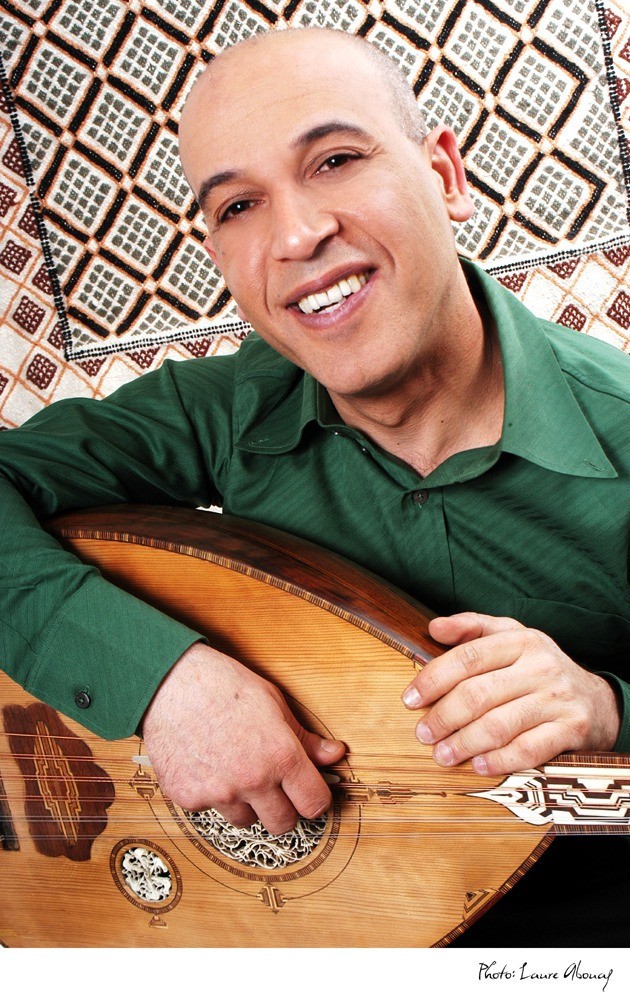
Rencontres autour du oud : Adel Salameh

Nous débutons ici une série de rencontres autour du oud, le « luth arabe ». La proposition est de s’entretenir avec des oudistes principalement, de différentes traditions et approches musicales, mais aussi avec d’autres personnes liées à l’instrument (fabricants, autres musiciens, etc). Au-delà de l’instrument, le but est d’explorer la richesse et la complexité des musiques arabes et leurs développements contemporains. Notre premier entretien a pour cadre les docks de Marseille, dans lesquels nous rencontrons Adel Salameh à l’occasion du salon Babelmed.

Votre dernier disque s’appelle Rissala. Ce mot a-t-il une signification précise ?


Adel Salameh Oui et c’est très important, ça veut dire « message », message de paix et d’espoir, pour nous les Palestiniens, mais aussi pour le rapprochement des individus, quels qu’ils soient. Ce disque est le résultat d’une collaboration arabe : moi-même au oud, Palestinien vivant en France, ma femme la chanteuse algérienne Naziha Azzouz, le Tunisien Ali Mnejja à l’accordéon, le violoniste marocain Mohamed Zeftari et l’Egyptien Adel Shams El Din au riq.

Vous parlez de message de paix et la presse vous donne souvent le titre d’ambassadeur de la culture arabe. Voilà qui rappelle, par exemple, la démarche de Marcel Khalife ou celle des Frères Joubran...

Chacun a sa propre démarche. Je suis engagé par la cause palestinienne car je suis né là-bas et ma famille y vit toujours. J’essaye d’y aller le plus souvent. Mais il y a une autre dimension, c’est celle de la collaboration entre artistes du monde et c’est vital pour les artistes palestiniens. Vous savez, les frontières sont fermées, mais la musique est là pour atteindre à l’international, pour créer l’ouverture. J’ai eu la chance de voyager au Japon, en Nouvelle-Zélande, aux États-Unis, en Europe. Transmettre des messages est un devoir pour moi, ainsi que de donner une image de la culture palestinienne. L’enjeu, c’est affirmer que le peuple palestinien existe, c’est fondamental. Pour moi, la résistance palestinienne à l’occupation n’est pas différente de la résistance française à l’occupation durant la Seconde Guerre mondiale.

À cette différence que cette occupation dure depuis soixante ans...

En effet. Nous voulons en vivre en paix dans notre pays, avec tout le monde, mais ça ne sera pas possible tant qu’on niera notre identité.

En concert, vous dites ce message uniquement avec la musique ou aussi avec des mots ?

Je laisse la musique parler. Avant tout, nous sommes des artistes engagés. Je ne peux pas oublier que je suis né à Nablouse et que j’ai grandi à Tulkarem. Je ne peux pas oublier ma famille ni la destruction de mon peuple. Je suis toujours face à ce monstre, mais je laisse la musique l’exprimer.

D’où votre carrière internationale, notamment dans les festivals Womad.

En effet, j’ai collaboré avec Peter Gabriel et Real World durant plus de dix ans. J’enregistre actuellement pour le label Enja, aux côtés de musiciens comme Rabih Abou-Khalil, Louis Sclavis, Renaud Garcia-Fons... C’est un excellent label distribué en France par Harmonia Mundi. (...)

13 avril 2008

Big Blue Ball, black and blue Vinyl 2 LP, CD

Originally, planned as a Peter Gabriel project, "Big Blue Ball", a Gabriel owned Real World Records release, has morphed into a collection of tracks featuring a worldwide mix of artists. It would be fair to say that the music is from “around the world” and defies characterization as "world music". The lead track, "The Whole Thing" featuring Francis Bebey, Alex Faku, Tim Finn, Peter Gabriel, Karl Wallinger, Andy White could have been included on the last Gabriel release UP” in terms of its theme and feel. “Everything Comes from You” is another outstanding track with an ethereal introduction that transitions into a chat infused Sinead O’Connor vocal supported by piano, guitar and bass drum. The album ends with the title track “Big Blue Ball” , an upbeat ballad sung by Karl Wallinger supported by Peter Gabriel and Manu Katché. Overall the record just works and after a few listens begins to reveal the notion that we and our musics are all interconnected on this big blue ball we call earth. The CD was mastered by Tony Cousins at Metroplis in London and the 2 LP vinyl editions were mastered and cut by Chris Bellman at Bernie Grundman Mastering in Hollywood, using Classic’s “ALL TUBE” cutting system. Packaged in Deluxe Gatefold Jacket.

Track Listing

"Whole Thing (Original Mix)" (featuring Francis Bebey, Alex Faku, Tim Finn, Peter Gabriel, Karl Wallinger, Andy White)

"Habibe" (featuring Natacha Atlas, Hossam Ramzy, Neil Sparkes)

"Shadow" (featuring Juan Cañizares, Papa Wemba)

"altus silva" (featuring Joseph Arthur, Ronan Browne, Deep Forest, James McNally, Iarla Ó Lionáird, Vernon Reid)

"Exit Through You" (featuring Joseph Arthur, Peter Gabriel, Karl Wallinger)

"Everything Comes From You" (featuring Richard Evans, Joji Hirota, Sevara Nazarkhan, Sinead O’Connor, Guo Yue)

"Burn You Up, Burn You Down" (featuring Billy Cobham, Peter Gabriel, The Holmes Brothers, Wendy Melvoin, Arona N’diaye, Jah Wobble)

"Forest" (featuring Levon Minassian, Arona N’Diaye, Vernon Reid, Hukwe Zawose)

"Rivers" (featuring Vernon Reid, Marta Sebestyen, Karl Wallinger)

"Jijy" (featuring Arona N’Diaye, Rossy, Jah Wobble)

"Big Blue Ball" (featuring Peter Gabriel, Manu Katché, Karl Wallinger)

THE MUSIC.COM

20 mars 2008

Free tickets for Martyn tribute

PA READERS have the chance to acquire free tickets to an exciting evening of music in Perth Concert Hall tonight. ‘Aye: An Affirmation of Martyn Bennett’ is a tribute to and celebration of the late, great musician, Martyn Bennett

Martyn, who died in 2005 aged 33, was a piper, fiddle player and creative genius who combined classical and jazz elements with Scottish traditional music and the beats of the 90s rave and dance scenes, creating powerful and memorable compositions.

Upon hearing Bennett’s final masterpiece ‘Grit’, revered folklorist Hamish Henderson commented “what brave, new music…”, an observation shared by members of Mr McFall’s Chamber. They play in Perth tonight as the opener to the eight-date Scottish tour ‘Aye: An Affirmation of Martyn Bennett’ which visits villages and venues across Scotland as part of the Scottish Arts Council’s Tune Up initiative.

An eclectic chamber ensemble, Mr McFall’s Chamber will perform a unique programme which highlights Martyn Bennett’s profound understanding and unique interpretation of Scottish folk music.

The band features a core string quartet from The Scottish Chamber Orchestra with piano, bass, drums and percussion. Formed in the mid-90s, the ensemble is well-known across Scotland, the UK and on the European festival circuit for their innovative mix of musical genres. They creatively programme the work of classical and contemporary composers alongside rock, tango, kletzmer, cartoon music and jazz.

A range of Martyn’s work including Cuillin Music (a composition for string quartet, percussion and small Scottish pipes) now features as part of the McFall’s varied body of live and recorded work, which in the past has included the likes of King Crimson, Frank Zappa, Ennio Morricone and contemporary composers such as Gavin Bryars and Dave Heath.

Mr McFall’s Chamber is joined by Scottish composer and multi-instrumentalist Fraser Fifield and percussionists Tom Bancroft and James Mackintosh. The set will include pieces by Fifield and composer Edward McGuire (both written exclusively for Mr McFall’s Chamber).

Commenting on the tour Ian Smith, head of music at the Scottish Arts Council, said: Martyn Bennett, whilst dying at a tragically young age, has left us with such an incredible legacy of great work, brilliantly encapsulated in his last album “Grit” for Peter Gabriel’s Real World label.

“This tour, featuring McFall’s Chamber, not only celebrates Martyn’s life and creative genius, but also takes that music to so many of Scotland’s communities, all of whom will identify with emotive and moving music performed by such fantastic musicians.”

Alison Anderson Mar 18 2008

24 février 2008

Tune Up’s tribute to late, great musician Martyn Bennett

The second Tune Up tour of 2008 will see the work of maverick Scottish musician and composer, the late and much-missed Martyn Bennett, celebrated in style, with performances from Mr McFall’s Chamber, Tom Bancroft, Frasier Fifield and James Mackintosh.

The eight-date Scottish tour ‘Aye: An Affirmation of Martyn Bennett’ opens in Perth Concert Hall on Tuesday, March 18, and will visit villages and venues across Scotland as part of the Scottish Arts Council’s Tune Up initiative.

Now in its fifth year, the initiative takes the highest quality music, from traditional to experimental, world music to cabaret, chamber music to pop and rock, to venues across Scotland, and has established itself as a significant international touring programme.
Bennett, who died in 2005 aged 33, was a piper, fiddle player and creative genius who combined classical and jazz elements with Scottish traditional music and the beats of the 90s rave and dance scenes, creating powerful and memorable compositions.

Upon hearing Bennett’s final masterpiece ‘Grit’, revered folklorist Hamish Henderson commented “what brave, new music…”, an observation shared by members of Mr McFall’s Chamber and reflected in their own, often experimental, repertoire.

An eclectic chamber ensemble, Mr McFall’s Chamber will perform a unique programme which highlights Martyn Bennett’s profound understanding and unique interpretation of Scottish folk music.

The band features a core string quartet from The Scottish Chamber Orchestra with piano, bass, drums and percussion. Formed in the mid-90s, the ensemble is well-known across Scotland, the UK and on the European festival circuit for their innovative mix of musical genres. They creatively programme the work of classical and contemporary composers alongside rock, tango, kletzmer, cartoon music and jazz.

A range of Martyn’s work including Cuillin Music (a composition for string quartet, percussion and small Scottish pipes) now features as part of the McFall’s varied body of live and recorded work, which in the past has included the likes of King Crimson, Frank Zappa, Ennio Morricone and contemporary composers such as Gavin Bryars and Dave Heath.

Mr McFall’s Chamber is joined by Scottish composer and multi-instrumentalist Fraser Fifield and percussionists Tom Bancroft and James Mackintosh. The set will include pieces by Fifield and composer Edward McGuire (both written exclusively for Mr McFall’s Chamber).

Commenting on the tour Ian Smith, head of music at the Scottish Arts Council, said: Martyn Bennett, whilst dying at a tragically young age, has left us with such an incredible legacy of great work, brilliantly encapsulated in his last album “Grit” for Peter Gabriel’s Real World label. This tour, featuring McFall’s Chamber, not only celebrates Martyn’s life and creative genius, but also takes that music to so many of Scotland’s communities, all of whom will identify with emotive and moving music performed by such fantastic musicians.”

(...)

Alison Anderson

08 décembre 2007

World Music Central : Nusrat Fateh Ali Khan

Nusrat Fateh Ali Khan Shahen-Shah-e-Q_awwali (The Brightest Star in Qawwali) is a title reserved for the leading voice and spirit of qawwali, the devotional music of Sufi Islam. No other term better describes the late Qawwali master.

Born on October 13, 1948 in Lyallpur in the Punjab province of Pakistan, Nusrat Fateh Ali Khan made his first recording in 1973, beginning an astonishing recording career spanning over 20 years and 50 albums. As one of the Indian subcontinent's brightest talents, he incorporated elements of traditional classical khyal repertoire in his performance, producing his own unique style - and broadening the appeal of qawwali to listeners of all faiths.

Nusrat Fateh Ali Khan's father was also one of the great qawwals of his time. With the best of intentions, the father attempted to persuade his son to become a doctor instead of following the family's 500-year tradition of qawwali performance. But, even his father's wishes could not keep the young Nusrat from the exquisite art formas a child, he eavesdropped on his father's music classes to learn the fundamentals. It was only after his father's death, when Nusrat was 17, that he began to perform in public, joining his uncle's group and before long becoming one of the most popular qawwali singers in Pakistan.

Mesmerized by one of Nusrat's live performances, Peter Gabriel invited him to perform at WOMAD during the 1980s, bringing the beauty and hypnotic intensity of the qawwali master's gift to Western audiences for the first time. The response was overwhelming and resulted in a longstanding alliance between Nusrat and Peter Gabriel's Real World label.

ShahenN-Shah, his first recording for Real World, marked the beginning of Nusrat's growing influence and celebrity outside Pakistan. In attempts to make qawwali more accessible to Western ears, he recorded Mustt Mustt in collaboration with Canada's atmospheric composer/guitarist Michael Brook, replacing traditional songs with classical vocal exercises backed by Western rhythms. A-later remix of Mustt Mustt by Massive Attack led to a surprising club hit through Great Britain and the United States.

Over the next few years, Nusrat Fateh Ali Khan became an awe-inspiring and globally powerful world music force. His music has inspired some of this century's greatest filmmakers, including Martin Scorsese and Oliver Stone, and has been incorporated into soundtracks for such films as Dead Man Walking and The Last Temptation of Christ. Khan performed with music icons from all genres — including Peter Gabriel and Joan Osborne At the time of his death, he was due to record with Bjork and Luciano Pavarotti.

From archives in Nusrat's hometown of Lahore, Pakistan, Real World discovered studio recordings that were released for the very first time. The first of two high-quality archival releases came out with the title Dust to Gold. It presents the great innovator and bearer of tradition at the height of his powers.

The title Dust to Gold reflects Nusrat Fateh Ali Khan's philosophy of life, as he considered himself a pinch of dust from a holy place.

In 2002, Real World released Body and Soul, a recording made in Nusrat Fateh Ali Khan's hometown of Lahore shortly before his untimely death. The recording was retrieved from his family archive and much work was required to recreate the power of the original performance. The original master tapes were taken in hand by mixing engineer Stuart Bruce, who worked on them for many weeks at Real World Studios. The recorded masters were very inconsistent and it was difficult to assess the strenth of the material due to the random technical nature of the recordings. It was neecssary to re-balance the voice and instruments and correct the anomalies and distortion. The whole album was then remixed and remastered. Through this work, Real World was able to restore the energyof the original performance to enable the listener to get as close as possible to the full effect of Nusrat's singing.

05 décembre 2007

Tom Diakité : "Je ne suis pas un griot, mais un noble qui chante"

Originaire du Wassoulou, Tom Diakité fait partie des artistes maliens qui ont, à un moment donné, émerveillé le public, avant de s'éclipser comme une étoile filante. Dans sa tendre enfance, il n'avait jamais imaginé qu'il allait devenir chanteur, puiqu'issu d'une famille noble du Wassoulou. Il habite en France depuis fin 1985. Il est venu y rejoindre alors Ousmane Kouyaté, ancien guitariste des Ambassadeurs du Motel, rencontré à Abidjan, qui lui avait demandé de participer à son premier album solo, Be ni haminanko (1982).

La Côte d'Ivoire, c'est là que tout a vraiment commencé, affirme Tom Diakité, né en 1956, au sud du Mali. Par la suite, au fil du temps, la musique l'a envahi, lorsqu'il écoutait les griots venus rendre hommage à son père roi, ou bien en observant ses frères jouer du balafon, du djembé. Lorsque son géniteur le confie à une tante, à Abidjan, Tom Diakité met le pied sur le chemin qui le mènera jusqu'à aujourd'hui. Dans la capitale ivoirienne, Léon Keïta, un guitariste malien de passage, l'entend par hasard chanter. Il lui confie ses textes pour qu'il les interprète. "Quand ma tante a entendu ma voix à la radio, elle a mis le poste en miettes".

Le gamin a enfreint la règle. Fils de noble, il n'avait pas à chanter au vu et au su de tous. En France, Tom Diakité va, de ci de là, se mettre au service des uns et des autres (Johnny Halliday, les Gipsy Kings, Salif Keïta, Mory Kanté…) tout en préparant des maquettes. Premières investigations auprès des maisons de disques, premières désillusions. Le gaillard prend les choses avec philosophie. "Le monde est fait de problèmes, mais les problèmes font grandir les êtres humains. Quand on est triste aujourd'hui, cela n'empêche pas de sourire demain matin." Conscient de cet état de fait, il prend son courage à deux mains et fait des sacrifices, ce qui aboutit, en 1994, à "Prévention Sida", sur le label Salsa Center.

Le disque qui va contribuer à ce qu'on parle un peu plus de lui. C'est l'époque où il entame une collaboration avec Sotigui Kouyaté et entre par la musique dans le monde du théâtre et du cinéma. Après, il y aura la participation au projet discographique "Sarala", croisant jazz et musique mandingue et puis, surtout, l'aventure Tama, un trio formé avec le guitariste anglais Sam Mills et le percussionniste de Guinée- Bissau Djanuno Dabo (deux albums parus sur Real World, le label de Peter Gabriel). Et, cette année, Tom Diakité revient, après une longue absence, avec un nouvel album intitulé "Fala" l'orphelin. "Tout commence par une émotion", quand il plonge au cœur de ses souvenirs, Tom Diakité y trouve la raison du titre de l'album, qu'il présente aujourd'hui.

Un jour, se souvient-il, en vacances au Mali, pendant la saison des mangues, il a vu des enfants venir chez lui, le matin, pour lui proposer des fruits. Les interrogeant sur leur présence ici et non à l'école, à cette heure de la journée, il se rend compte que tous ces gosses n'ont pas droit aux livres et aux cahiers. En ville, il croise d'autres mômes qui mendient, accompagnant un parent non voyant. Bouleversé, il compose "Fala", en pensant aux enfants des rues. Il lance un appel. "C'est notre rôle en tant qu'artiste que de sensibiliser. Jusqu'au bout j'écrirai des chansons qui font enseignement", dit-il.

"Chanter pour les autres, participer à une aventure collective, c'est bien, écrire sa propre histoire, c'est encore mieux". Avec "Fala", Tom Diakité renaît une nouvelle fois. En s'accompagnant à la kora et au donzo n'goni, l'instrument des chasseurs au Mali, entouré de quelques amis au talent sûr, il impose à l'évidence sa différence.

25 novembre 2007

Torch in new hands

Successors to the throne: Rizwan (left) and Muazzam have successfully filled the void left by their celebrated uncle.

Rizwan and Muazzam Mujahid Ali Khan have fashioned a place for themselves in the crowded qawwali arena and share more than a lineage with their uncle, Nusrat Fateh Ali Khan.

Almost 10 years ago, a great deal of scepticism greeted the news that the heirs to the great, late Nusrat Fateh Ali Khan, could be found within the family itself – negating the need to squander time looking to anoint one from the existing qawwali performers. The tradition remains that the successor is chosen from the qawwali party and when Nusrat passed away just over a decade ago, the mantle passed to his pupil and nephew Rahat Fateh Ali Khan.

Rahat, the son of Nusrat’s younger brother Farrukh and second-in-command in the party before his demise four years ago, had been groomed to assume Nusrat’s place and is still seen as the legitimate soul-keeper of Nusrat’s legacy.

When Rahat finally presented his international release on Rick Rubin’s American Recordings label in 2001, the question was not only whether he could uphold Nusrat’s name but also if he could hold his own in a domain that was already filled with potential descendants – through blood lines or otherwise.

Nusrat’s fame has expanded beyond the confines of qawwali, the exceptionally compelling devotional music of the Sufis of the Indian subcontinent, and it was not only related to the popularisation of qawwali among Western audiences. Nusrat’s collaborations with the likes of Peter Gabriel, Michael Brook and Eddie Vedder broke new ground for a genre of music whose origins can be traced back to the eighth century.

It is his albums with Gabriel for his Real World imprint – divided into 10 releases of classic numbers and compositions and predominant fusion ventures with Brook – that remain Nusrat’s enduring main body of work outside his native Pakistan. After his passing, Real World released a single commemorative album (Body & Soul) made up of renditions from the vault of his previously unreleased recordings, while the tracks for their tribute release Star Rise, which featured interpretations from the Asian Underground dons, were all completed bar one when the news of his death arrived.

Real World declared that Body & Soul, out in 2001, would be its last album featuring Nusrat and it had no intention of raiding the Lahore recordings of the qawwali master to meet the demand for his music. By that year, his less heralded nephews, Rizwan and Muazzam Mujahid Ali Khan, had already established headway in the tussle to fill the colossal void left by Nusrat.

Rizwan possesses the astounding vocal range and pyrotechnics that Nusrat made his own and receives ample support from brother Muazzam. The accompanying musicians themselves display an amazing sense of timing in their play and tend to place their passion on the edge – the result, one can only surmise, of years of practice.

When the Rizwan-Muazzam Qawwali Group was introduced to Gabriel as the possible inheritor of Nusrat’s music in the late 1990s, the Real World proprietor only glimpsed – in consensus with millions of Nusratistas – the futility of striving to replace the irreplaceable.

That was until he was convinced to come down to the recording studio to see the Rizwan and Muazzam brothers performing in the flesh – an experience that moved him to sign them up.

Their debut under Real World in 1999, the four-track Sacrifice to Love, was a resounding success commercially and critically and regular gigs on the Womad circuit offer them the broader platform from which to make their transition from qawwali prospects to global marvel.

A lesser-known Real World release under the label’s limited edition series in 1998, Attish – The Hidden Fire, had actually preceded their first album and provided an enticing sample of their ability.

Delicately paced, packed with vocal intensities that burn with adequate glow and containing enough twists and hypnotics that held its listeners in enthralled attention, Attish – consisting of six numbers of absorbing fervour – was already deserving of its tour de force status before Sacrifice to Love came along to dismiss any vestiges of doubt over the siblings’ potential to hold up the high-flying qawwali banner that loomed large over the stages from Lahore to London under their late uncle.

Though Rizwan-Muazzam Qawwali Group’s 2001 follow-up to Sacrifice to Love, A Better Destiny, was less abrasive in its energy and vigour, it cleverly sought to place them in a versatile milieu. A Better Destiny refused to mine qawwali standards – and consciously stayed away from pieces that bore the heavy Nusrat hallmark – to independently forge the group’s character away from the constant comparisons with the qawwali great. The return to the root languages of qawwali was a deliberate step in this direction and endowed two standout entries – Chishti Balam in the Farsi language, and Qalander Shahhen Shah, in olden Hindi – with an iridescent quality.

Their third album, Day of Colours, was a virtual homage to Nusrat – which, unfortunately, had the effect of ruining the diligence and meticulous planning that went into their gradual introduction and vault into prominence. Despite this glitch, the Rizwan-Muazzam siblings are viewed as prescient choices in an attempt to step into Nusrat’s shadow and nothing would come close to appreciating their claims than to observe them perform in the flesh.

The Rizwan-Muazzam Qawwali Group will present a tribute to Nusrat Fateh Ali Khan in two performances at the Dewan Filharmonik Petronas tomorrow and Wednesday. Tickets for the shows, which commence at 8.30pm, are priced at RM25, RM55, RM75 and RM95. Call 03-20527007, or browse malaysianphilharmonic.com for details.

By NANTHA KUMAR

24 novembre 2007

Mamani Kéïta, la nouvelle coqueluche de la musique malienne à Paris

Née à Bamako au Mali et élevée par sa grand-mère maternelle dans la plus pure tradition bambara, Mamani Kéïta n'a qu'une petite vingtaine d'années lorsqu'elle arrive en France, au tournant des années 90, mais déjà une belle réputation derrière elle, pour sa participation active à la scène artistique malienne, de la troupe de théâtre de Oulofobougou à l'orchestre Badema national du Mali.

Aussitôt accueillie par la communauté africaine de Paris, elle se fait rapidement remarquer en intégrant le groupe de choristes de Salif Keita et en participant à un certain nombre de projets novateurs et atypiques, jetant des ponts entre musique africaine et jazz avec Jeffrey Smith, Hank Jones et Cheikh Tidiane Seck. Invitée à intégrer la formation "Tama", menée par le guitariste anglais Sam Mills et le Malien Tom Diakité, elle participe à Londres à l'enregistrement du disque "Espace" paru sur le label de Peter Gabriel, Realworld. En 2005, elle enregistre quatre chansons inédites pour la bande originale du film "Kirikou et les bêtes sauvages", réalisée par Manu Dibango.

Mais c'est indéniablement l'album de world electro expérimental "Electro Bamako", conçu en collaboration avec le Français Marc Minelli, qui lui ouvre, en 2002, les portes d'une reconnaissance internationale, tant publique que critique. Il apparaît évident, aujourd'hui, qu'en intégrant sa voix inimitable à des contextes hybrides, mêlant rythmes jazz et sonorités électroniques, Mamani Kéita, sans jamais édulcorer sa tradition, ouvrait là d'inédites perspectives à la musique africaine contemporaine. Elle s'est battue comme pour se faire une place au soleil. C'est ainsi que sa rencontre avec Nicolas Repac, compositeur, guitariste et arrangeur (Arthur H, Michel Portal…) a accouché d'un disque magnifique "Yelema", qui allie à merveille instruments africains (balafon, tama, bougarabou, n'goni…) et sonorités modernes.

Les arrangements subtils du Toulousain magnifient la voix de la Malienne. Après la sortie de cet album, elle a fait un tour à Bamako, donnant deux spectacles au Centre culture français avec Nicolas Repac. Pendant son séjour, elle échangé avec bon nombre d'artistes de sa génération pour les encourager. Aujourd'hui, Mamani Keïta fait partie des artistes qui font bouger la musique malienne en Europe. Dans cet album, composé de douze titres, elle fait le chant, Nicolas Repac est à la guitare et aux arrangements; Patrick Goraguer à la batterie; Jérôme Goldet à la basse et Moriba Koïta au n'goni. Mamani Keïta chante son enfance, les difficultés de la vie et les problèmes auxquels les femmes sont confrontées dans leur foyer. Yelema est comme un hymne au changement de comportement pour les autorités, mais aussi pour les populations. Car aucun changement n'est possible sans elles.

Kassim TRAORE

02 novembre 2007

War/Dance

A Reel Progress Screening November 8, 2007, 7:00pm –9:30pm
Featured Panelists:
Andrea Nix Fine
, Director, War/Dance
Sean Fine
, Director, War/Dance
Michael Poffenberger
, Executive Director, Resolve Uganda
John Prendergast
, Co-Founder, The ENOUGH Project
Moderated by: Gayle Smith, Co-Founder, The ENOUGH Project


ENOUGH, Think Films, Shine Global, and the Center for American Progress are pleased to present War/Dance. Set in Northern Uganda, a country ravaged by more than two decades of civil war, War/Dance tells the story of Dominic, Rose, and Nancy, three children whose families have been torn apart, their homes destroyed, and who currently reside in a displaced persons camp in Patongo. When they are invited to compete in an annual music and dance festival, their historic journey to their nation's capital is also an opportunity to regain a part of their childhood and to taste victory for the first time in their lives.

Please join us for a provocative panel discussion and Q&A session immediately following the film. Location :E Street Cinema, 555 11th Street NW, Washington, DC 20004

(...)
Biographies

Andrea Nix Fine has produced, directed, and written films for National Geographic on the world's most remote cultures and scientific explorations, from Inuit hunting rituals in Greenland to Nile croc research in the swamps of Botswana. She was a key producer on "Songs From the Source," a documentary celebrating the musical roots of Peter Gabriel's Real World record label...

DPA supports Real World in Cambodia

Cambodia - DPA Microphones has donated a pair of 4091 omnidirectional instrument mics to Studio CLA in Phnom Penh. The studio, set up by US producer Scot Stafford in conjunction with the Cambodian Living Arts project, documents and records the repertoire and skills of Cambodia's master musicians for the next generation of musicians. The project is supported by Peter Gabriel's Real World organisation, which arranged the donation of audio equipment as well as sending experienced recording technicians to assist on key projects.

Real World became involved last year when Gabriel's studio and monitor engineer Richard Chappell visited Cambodia and met Kong Nay, one of Cambodia's few surviving master musicians. Kong Nay subsequently performed at last summer's WOMAD festival, followed by a UK tour organised, booked, promoted and engineered by Chappell to raise funds for the musicians' cause.

Chappell then returned to Cambodia to deliver the mics and other equipment to the studio. They were put to work recording music for a rock opera, Where Elephants Weep, which combines traditional Khmer music with Western styles to create the first-known contemporary Cambodian opera. The recordings are for a CD to support the opera when it opens in Phnom Penh next year.

The score, by Russian-trained Cambodian composer Sophy Him and co-producer Scot Stafford, draws on classical western, ancient Cambodian, and contemporary popular American music. Sophy Him worked together with an instrument designer to 'reinvent' some traditional Cambodian instruments, called a Gong thom chromatique and Roneat aik chromatique, which have both Cambodian and Western scales.

"These are twice the size of normal Cambodian instruments so it was great to have the DPA omnis, as they gave us a much larger pickup area due to their sensitivity," says Chappell. "We used them as the main recording mics for both instruments, the optimum position being as left and right overheads. The sound of the capsules is very open and uncoloured; a great way of representing something which has such a unique sound. When it came to recording the kick drum, I found that a single 4091 was a great addition. Sophy was very excited with the representation of his instruments, and with the help of DPA Microphones, Studio CLA is being brought right up to date."

Jim Evans

14 octobre 2007

The Holmes Brothers : Roots rock, blues and dash of gospel

For more than 25 years, guitarist Wendell Holmes, bassist Sherman Holmes and drummer Popsy Dixon -- Virginia natives known as The Holmes Brothers -- have been knocking out a part-blues, part-gospel, part-rock harmony-driven brand of American roots music.

The Holmes Brothers have shared the stage and studio with Joan Osborne, Willie Nelson, Odetta, Roseanne Cash and Levon Helm. But Peter Gabriel gets the nod as the one guy who gave the group its biggest boost.

"Peter Gabriel did a lot for us," Wendell Holmes said by phone from his Maryland home. "He gave us the opportunity to record with him and Van Morrison."

The 10th entry on The Holmes Brothers' discography is this year's "Saving Grace," an eclectic mix of originals and covers. Perhaps the coolest song is Wendell's own "Gasoline Drawers."

"Everybody likes that song," he said. "If you didn't know, you'd think it was a sleazy porn song. But it's a love song. It talks about loving someone so much that you'd run through hell with gasoline drawers on. Now that's real love."

Much of The Holmes Brothers' music has a good beat and is easy to dance to. But Wendell wants everyone to know what's at the heart of the music.

"A typical set list is a mix of blues, some country and always some gospel. . . . Gospel is always important, so look out guys -- you're going to get some gospel with the blues."