Articles review on the net, revue d'articles sur la toile


Inscription : feeds, flux :
(Atom) Gabriel Real World News

12 septembre 2007

Afrique du Sud: Steve Biko, reste la "Conscience noire" 30 ans après sa mort

JOHANNESBURG (AFP) — Steve Biko reste une figure populaire en Afrique du Sud, trente ans après sa mort dans les geôles du régime d'apartheid, même si les idées du père du "Mouvement de la Conscience noire" ne pèsent plus directement sur la scène politique.

"Dans la culture populaire, il est un puissant symbole d'espoir, une figure du changement", déclare son fils, Nkosinathi Biko, président de la Fondation Steve Biko.

Pour marquer les 30 ans de la disparition du militant anti-apartheid, la Fondation organise depuis juin une série d'évènements qui doivent culminer mercredi au Cap (sud-ouest) avec un discours du président Thabo Mbeki.

"Il nous a aidés à comprendre et à construire notre identité, et cela parle toujours aux jeunes Sud-Africains", poursuit Nkosinathi Biko, assurant que l'influence de son père reste réelle.

"Steve Biko est sur les T-shirts, dans des chansons, dans les journaux (...) Il attire toujours beaucoup de considération mais ses idées n'ont plus d'influence dans l'élaboration de la politique, ni au parlement", relativise Kopano Ratele, professeur à l'Université d'Afrique du Sud (Unisa).

Biko, selon lui, "est bien plus influent dans la culture populaire que dans la politique au sens strict."

Arrêté par la police du régime ségrégationniste le 18 août 1977, Steve Biko alors âgé de 30 ans, était retrouvé sans vie dans sa cellule le 12 septembre.

Dans un premier temps, le pouvoir a soutenu qu'il n'avait pas résisté à une grève de la faim mais des journalistes ont réussi à prouver que sa mort avait été provoquée par des traumatismes crâniens.

Interrogé, le ministre de la Justice de l'époque, Jimmy Kruger avait déclaré que la mort de Biko le laissait "froid". Indignée, la communauté internationale avait adopté pour la première fois des sanctions contre le régime d'apartheid.

L'écho international de cette mort tragique a fait de Steve Biko un héros de la lutte pour la libération. Les hommages se sont multipliés: films, livres, chansons. "Oh Biko, Biko... Yehla Moya, The man is dead..." (Oh Biko, Biko, esprits calmez-vous, l'homme est mort), chante le Britannique Peter Gabriel.

Trente ans plus tard, cette chanson fait toujours pleurer un autre héros de la lutte anti-apartheid, l'archevêque Desmond Tutu, qui s'est effondré quand Peter Gabriel l'a entonnée en juillet, pour le 89e anniversaire de Nelson Mandela.

"Ce morceau me touche beaucoup", confie Premesh Lalu, professeur à l'Université du Western Cap (UWC), qui estime indispensable de commémorer la mort de Steve Biko.

"Mais on doit tirer plus de ses idées", note-il. "Aujourd'hui on a tendance à mettre dans le même pot tous les opposants à l'apartheid et à oublier qu'il y avait des visions différentes".

Steve Biko s'était distingué en créant en 1969 le premier syndicat étudiant exclusivement noir, l'Organisation des Etudiants sud-africains (SASO). Contrairement aux autres mouvements de libération, la SASO refusait l'aide des libéraux blancs.

Pour Biko, la lutte devait commencer sur le terrain psychologique: "la Conscience Noire est la prise de conscience par l'homme noir de la nécessité de faire front commun avec ses frères contre l'oppression (...). Elle vise à communiquer à la communauté noire une nouvelle fierté", expliquait-il en 1971.

Treize ans après la chute de l'apartheid, ses idées restent "pertinentes", estime son fils. Pour lui, à cause du chômage et de la pauvreté, "les noirs courent toujours le risque d'être spectateurs d'un jeu auquel ils devraient participer".

Monstres de la mer: Une aventure préhistorique

v.f. de Sea Monsters: A Prehistoric Story


Date de sortie en salle : 03 octobre 2007
Genre :Documentaire
Durée : 0h40

Synopsis : La découverte d’un fossile inusité déclenche une enquête paléontologique passionnante! Faisant appel aux recherches effectuées aux quatre coins du globe, des scientifiques reconstruisent l’extraordinaire et terrible univers des océans de l’ère Crétacée : suivez Dolly, un de ces monstres des profondeurs, au cours des péripéties de son existence, recrées sur écran géant et en 3D. Un film de National Geographic et une musique originale composée par Peter Gabriel.

10 septembre 2007

30 years on Biko maintains his appeal

Former president Nelson Mandela adressed a gathering to celebrate National Heritage Day, on Robben Island, on 24 September 1997. The then-president is dwarfed by a mural of three leaders representing the three main streams of political consciousness in the country. From left to right: Nelson Mandela, leader of the African National Congress (ANC), prior to his 27-year period of imprisonment; Steve Biko, a leading figure in the Black Consciousness Movement (BCM), prior to his death in detention in the 70s; and Robert Sobukwe, head of the Pan-African Congress (PAC), prior to his imprisonment on Robben Island in the 60s.

Thirty years after dying in prison in apartheid South Africa, Steve Biko remains a historical icon, even if his "Black Consciousness Movement" no longer carries political weight. A fervent anti-apartheid and freedom activist, Biko's popularity in the new South Africa is rooted in culture, providing ideas for the shaping of the identity of young blacks rather than formal politics. "Steve Biko is on T-shirts, in music, in the newspapers," said Kopano Ratele, a researcher with the University of South Africa's Institute of Social and Health Sciences. "People who were teenagers or in their 20s in the 1970s still remember Biko with nostalgia and they credit him for giving them a sense of pride in themselves."

In 1971, Biko explained that Black Consciousness was the realisation that blacks should rally together against the cause of their oppression. "... It seeks to infuse the black community with a new-found pride in themselves, their efforts, their value systems, their culture, their religion and their outlook to life." To mark the 30th anniversary of his death on Wednesday, the Steve Biko Foundation has put on a series of events across the country since June which will culminate in a lecture by President Thabo Mbeki in Cape Town.

"In popular culture, he is a very powerful symbol of hope... an icon of change. He helped to articulate our understanding, our own identity that continues to resonate in young South Africans to this day,"
said Biko's son Nkosinathi, who manages the foundation. "His ideas have a real influence well beyond the political field, in cultural organisations, in research organisations and in churches..."

Ratele said if Biko were still alive he would be disappointed to see his ideas compromised by poverty and inequality still evident in South African society 13 years after the demise of apartheid. "If you are unemployed and poorly-paid and you see the rich blacks, of what use is your pride?" However the younger Biko feels his father's ideas are still relevant to black South Africans, and should be used by leaders to propel the country forward. "People who are entrusted (to) a position of power do not recognise the extent to which they can give direction to change in this country," he said. "In that extent his ideas are still relevant, there is a need to link consciousness of self to development programmes".

On 18 August 1977, 30-year-old Biko was arrested by police under the white minority apartheid government, and taken to a prison in the coastal city of Port Elizabeth. He was transferred to the capital Pretoria on 11 September, and was found dead in his cell the following day, becoming the 20th person to die in the prison in 18 months. While authorities said that he died after going on a hunger strike, South African newspapers did extensive investigations, revealing he had died from brain injuries.

At the time, justice minister Jimmy Kruger told Parliament: "The death of Biko left me cold." The explanations of Biko's death were not convincing to the international community who, for the first time, adopted sanctions against the apartheid regime. Biko's tragic death turned him into a liberation struggle hero, with his memory praised in flims, books and song. "You can blow out a candle/ But you can't blow out a fire/ Once the flames begin to catch/ The wind will blow it higher," sang British artist Peter Gabriel in his 1980 song about the activist.

Thirty years after Biko's death, the song moved another liberation hero, Nobel laureate Archbishop Desmond Tutu to tears, when Gabriel sang it during the July celebrations of former president Nelson Mandela's 89th birthday. Premesh Lalu, an associate professor at the University of Western Cape, said it was important to commemorate Biko's death, but not enough was being done with his legacy in modern South Africa. "I personally think there is much more to be said about Biko and done with Biko's thoughts."

Charlotte Plantive AFP

Black pride leader revived as fashion icon for South Africa's youth

JOHANNESBURG, South Africa: T-shirts bearing the image of Steve Biko, the symbol of black resistance worldwide who was killed by apartheid police, can be found for sale at flea market stalls and exclusive boutiques across South Africa. The question is whether the latest fashion is a sign the post-apartheid youth culture is embracing Biko's message of racial pride and African unity, or just crass commercialization of one of the most important figures in South African history. Biko, 30, died of a brain injury in a cell in Pretoria Central Prison on Sept. 12 1977, after being beaten and tortured by apartheid police. The 30th anniversary of his death was to be commemorated in South Africa this week with events that include a speech by President Thabo Mbeki.

At 22, Kenneth Mulaudzi was born after Biko's death, and was still a boy when apartheid ended in 1994. In a trendy Johannesburg store over the weekend, Mulaudzi eyed a US$28 T-shirt bearing Biko's image, the bearded face dominated by eyes under a wide brow. "It's not just a fashion statement. It is also a political statement," Mulaudzi said defiantly. "Young people are proud of him. He is a hero. He fought for us." Mulaudzi, an aspiring journalist with a stud in his chin, knew quite a bit about Biko, but hasn't read "I Write What I Like," Biko's seminal collection of essays.

He does have a poster of Biko in his home and can sing the lyrics to Haitian-American rapper Wyclef Jean's song "Diallo," which draws parallels between the 1999 shooting of an African immigrant by New York police and the murder of the South African activist. "I was surprised when I heard that song. It means Biko has gone far," Mulaudzi said, adding that he thinks it is the disturbing nature of the activist's death that affected so many. Biko's message of black pride appealed to many people in South Africa's townships. His death made him a martyr in the anti-apartheid movement and inspired films such as "Cry Freedom," starring Denzel Washington and British musician Peter Gabriel's anthem "Biko."

The end of white rule in 1994 saw Biko's appeal wane as South Africa's black majority reveled in new political and economic freedoms. The black consciousness movement in South Africa is in disarray and a recent wave of defections has decimated its main political party, the Pan African Congress. However, today there is a growing disenchantment among young people who see the country's leaders embroiled in scandal and a new black elite growing richer while most blacks find it harder and harder to keep up with inflation. Some observers see a stronger black consciousness message emerging in popular culture as young people develop their own sense of what it means to be African in today's world. A look around, Sowearto, the Afrochic store where Mulaudzi was browsing, supports that argument.

Dresses and tops celebrate singer Miriam Makeba as a "Great African" and carry the slogans of the black pride movement such as "The color of my skin is beautiful" and "Africa Must Unite." Jackie Radebe, 23, bought a Biko T-shirt after reading "I Write What I Like." He sees Biko as a selfless leader whose politics of brotherhood are still relevant to South Africa. "He had genuine compassion for the plight of the people, genuine concern about poverty, crime and loss of pride," Radebe said. While Biko would celebrate the "breakthroughs this young democracy has achieved," Radebe believes his hero would be disappointed in the country's leaders. "As far as morals, integrity and principles ... contemporary political leaders seem to be driven by money and self-interest," he says. Radebe hangs out at the African-focused Xarra Books in Johannesburg's Newtown Cultural Precinct.

June Josephs-Langa, managing director of the African-focused Xarra, says South Africa's younger generation are more assertive and "proudly African". The ones wearing Biko T-shirts may not all be like Radebe, but they are making a statement, she says. "In the same way many don't know much about Cuban politics, the revolutionary status of Che Guevara is someone they want to identify with, want to parade," she said.

But Johannesburg-based academic and cultural commentator Achille Mbembe, who is delivering a lecture in Biko's honor this week, doesn't see fashion as a fitting tribute to a man whose "death and life dramatically embodies the idea of freedom. I think South Africa could commemorate Biko's contribution to black emancipation in more powerful ways," he says.

Nkosinathi Biko, who was six when his father died, takes a more reconciliatory tone. He points to the tradition in the anti-apartheid movement of using T-shirts to spread political messages or pay tribute to fallen comrades. He also acknowledges the wealth of artistic material created in his father's name has been important in keeping the memory of Biko alive. "He is one of the attractive symbols of popular culture. Not just here but on the streets of New York, Brasilia and Liverpool, he is someone who resonates well," he says. However, as head of the Steve Biko Foundation, he is mindful of ensuring his father's name and image are not abused. The foundation has been running a nationwide commemorative program this year which includes a young writers competition whose sponsors include the Biko Foundation and the Xarra bookstore, films festivals and music concerts.

President Thabo Mbeki will also present the 8th annual Steve Biko Memorial Lecture on Wednesday in Cape Town. The speech will conclude an international conference examining Biko's politics and their role in South Africa today, touching on issues such as the transfer of land and black economic empowerment. Biko spoke of a time when Africans could stand proud and take their place in a society that transcended race and was based on equality. Quoting his father, Nkosinathi Biko says this "glittering prize" was still on "the distant horizon" for South Africa. Perhaps those young people wearing the hero's face on their chests will be inspired to find it.

The Associated Press

09 septembre 2007

Bassekou Kouyate & Ngoni Ba enthral audiences and critics across UK & Europe

Earlier this year Bassekou Kouyate & Ngoni Ba from Mali released their debut album 'Segu Blue' to exceptional critical acclaim. This summer they toured Europe for the first time and have no doubt established themselves as one of the most exciting live acts of the moment - and not only within the World Music genre. Amongst their many performances in Europe was the famous Roskilde Festival. Whilst performing at the La Mar de Musicas Festival in Spain, Senegalese superstar Youssou N'Dour joined them on stage. From El Pais, one of Spain's biggest newspapers:

"During Bassekou Kouyate's performance, Youssou N'Dour made a surprise appearance on stage, paying compliments to the Malian. He put the headphones of adiscman on Bassekou to remind him of a piece they hadrecorded together for Youssou's forthcoming album, andthen off they went with an impromptu version of thesong. It was one of those moments that no one canpredict, no promoter can guarantee and no festival canprogramme beforehand. Spontaneous. Unique.Unrepeatable. ... Bassekou plays the ngoni with thevirtuosity of a Jeff Beck or Jimi Hendrix."

In the UK they made their debut performance at Jamie Renton's Chilli Fried night at Darbucka on 11 July 2007 which The Guardian gave four stars in their review ("He gave an exhilarating display of what the ngoni can do.").This was followed by a gig in Brighton and an appearance at theLord

Mayor's Appeal Fiesta in London. Then, on24 July, the group played at a packed out Kemia Bar at MOMO's to a mainly industry crowd - this turned out to be one of the highlights of the tour. You can read the five star review from The Independent here

Their debut at the WOMAD Festival started with a headlining performance on the BBC Radio 3Stage on the Friday night. You can listen to their full set here

On the Saturday they performed again, this time in the Siam Tent. Charlie Gillett notes in his Sound of the World forum: "The Siam Tent hosted a fantastic performance by Bassekou Kouyate & Ngoni Ba - at times they brought to mind Scotty Moore and Bill Black, backing Elvis, and at other times they were closer to Muddy Waters or Magic Sam, Chicago blues at its most introverted." Praise also came from The Guardian ("Every good Womad has to have a great African newcomer, and Bassekou Kouyate proved once again that his extraordinary n'goni playing echoes anything from blues to jazz improvisation."),The Daily Telegraph ("Malian lute master Bassekou Kouyate and his group, Ngoni Ba, were belting out their densely percussive music to a clearly enchanted audience.") andFly.co.uk ("Like an ngoni junky I slipped in to see Bassekous set in the larger, Siam tent and if anything he topped the previous nights performance with more exceptional and deeply bluesy solos while his wife Amis voice cut through the air with a power not yet seen on record.") and many more.

Check out these images on the BBC Wiltshire website (use the 'next' button to view the 6 images of the group)

In between live shows they found time for various press interviews (there is a piece in the current issue of Echoes) as well as radio interviews on the African and French Service of BBC World Service and Open Air Radio (African Essence). Bassekou Kouyate & Ngoni Ba also recorded a live session for Charlie Gillett's World of Music programme which was broadcast on 24 August on the BBC World Service. You can listen again onlineuntil tomorrow, Friday, 31 August 2007 here

Charlie Gillett's annual 'Sound of the World' compilation album, released during Bassekou's time in the UK, features the group'strack 'Ngoni Fola' which was highlighted in several reviews such as The Guardian ("Then there's a reminder of the instrumental brilliance of Bassekou Kouyate, the African, newcomer of the year.") At the album launch party Bassekou Kouyate and his wife, the group's vocalist, Ami Sacko played an intimate set that showed a different side to the more rocking performances with the full band.

The next UK and European tour is currently being planned for November. UK dates include 4 November at Cargo in Londonand on 22 November at theNorwich Arts Centre. Full details to be announced soon.

In other related news, Dee Dee Bridgewater's latest album 'Red Earth' which features Bassekou Kouyate has just beennominated in the 'Best Jazz' category a the MOBO 2007 Awards. Bassekou Kouyate & Ngoni Ba's track 'Banani' which features Lobi Traore is included on the covermount CD of the current issue of Uncut celebrating 20 years of World Music. Bassekou's label, the Munich-based Out Here Records, has come 7th in the annual list of Top World Music Labels Award Winners, presented by WOMEX and the World Music Charts Europe (WMCE), whilst the album 'Segu Blue' has come 4th in their Top 15 World Music CDs of the Year.

For all UK press, radio, TV, online enquiries regarding Bassekou Kouyate & Ngoni Ba and Out Here Records please contact: Ilka Schlockermann (ilkamedia),PO Box 31876, London SE17 2ZB, UK T: +44 (0)79 3206 6624 | E: ilka@ilkamedia.com | Skype: ilkamedia http://www.ilkamedia.com | http://www.myspace.com/ilkamedia

Q & A with Storm Thorgerson

John Mackie's interview with album designer Storm Thorgerson, Sept. 5, 2007 at the Oh My Godard Gallery in Vancouver. Thorgerson's work will be displayed there until Sept. 30.

(....)

Sun: There's a Peter Gabriel album cover you did, the one that I think was just called Peter Gabriel...

Thorgerson: Yes, he was clever with his titles. The record company were furious. They kept saying 'Can you put your name on the front?' And he kept saying 'No.' He didn't even want his name on the front. Well...when Pink Floyd did Atom Heart Mother, which is a cow, there's no name on it. Nothing. The record company went berserk, absolutely berserk, with me. As if I were responsible. I mean I was in favour of it, I thought it was better not to have any name, it makes it more mysterious. And Pete Gabriel also wanted not to put any name on. So then he put the plainest name in he could, Peter Gabriel I. Peter Gabriel II. Great.

Sun: That was just a photo of him in a car...

Thorgerson: No no no, excuse me John. Maybe you are like the English Sun. This print which is here as well, looks great. It's not just a photo of him in a car, although he is in a car. But it's not just a photo. Well, to me it's not. Maybe to you it is. To me the car has been dotted with rain drops, and it's about the rain drops. This felt special to me. I agree, it's a simple thing. Some things are very complicated. Pink Floyd's Momentary Lapse of Reason is really complicated, 700 beds on a beach. That was a real nightmare to do.

Sun: You actually put 700 beds on a beach?

Thorgerson: Yeah. And they're Victorian, they're made of wrought iron and f-----g heavy.

Sun: Where did you get 700 Victorian beds?
Thorgerson: I don't know. I hired somebody to find them [chuckles]. So when we did Pete Gabriel, it's the other end, if you like, on the scale of complexity and difficulty. But to me it doesn't make any difference, it's still as much a design, contrived if you like, artful. Still trying to say and be something. It was trying to say something about Pete Gabriel. And I think he always liked it. He's been very friendly. Although I did three covers with him and he said that was enough. 'Nothing personal,' he said.

Sun: Is there anybody you want to do an album cover for?

Thorgerson: Oh yeah. Bob Dylan. I nearly worked with Bob Dylan recently, but it fell through. Not because of him, I think the manager was a bit conservative. We are a bit left field.

Sun: I've always wondered why hipgnosis was spelled hipgnosis [and is pronounced hypnosis].

Thorgerson: Now you're going to be educated. It was actually scrolled on our door by some passing narcotic person in the middle of the night. It was scratched on the door of our apartment, and it appealed to us. It's a nice word, but it was spelled on the door like that. So it was a mixture of 'hip,' which is new, and 'gnostic,' as is old. So it was old and new, a nice mixture, whilst being hypnotic, and therefore inducing trances. It felt like a really good name. In fact, I think it was a good name. I don't use it anymore, but I'm not unhappy with it.

John Mackie/Vancouver Sun

07 septembre 2007

Dive Into the Lost World of Marine Reptiles With 'Sea Monsters 3D: A Prehistoric Adventure'

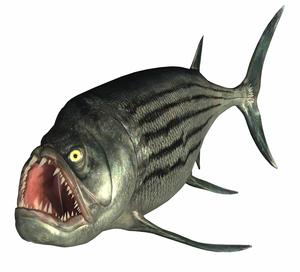
LOS ANGELES, CA -- (MARKET WIRE) -- 09/07/07 -- Extraordinary marine reptiles from the dinosaur age come to life on the giant screen with 3D technology in National Geographic's new film "Sea Monsters 3D: A Prehistoric Adventure," opening October 5, 2007 at the California Science Center IMAX Theater. From the giraffe-necked Styxosaurus and 20-foot "bulldog" fish Xiphactinus to the T-Rex of the ocean -- the 40-foot super-predator Tylosaurus -- these wondrous beasts defy imagination.

The film, narrated by Tony Award-winning actor Liev Schreiber with an original score by longtime musical collaborators Richard Evans, David Rhodes and Peter Gabriel, takes audiences on a remarkable journey into the relatively unexplored world of the "other dinosaurs," those reptiles that lived beneath the water. Funded in part through a grant from the National Science Foundation, the film delivers to the giant screen the fascinating science behind what we know, and a vision of history's grandest ocean creatures.

"This is the first giant-screen film about what lived in the water during the dinosaur age," said producer Lisa Truitt, president of National Geographic Giant Screen Films and Special Projects. "It is perfect subject matter for such an immersive format, one that allows these giants to literally swim off the screen and directly into the audience." (....)


Turn it on again ?

(....) Un livre de Genesis sortira bientôt, alors qu'il y aura un compact audio des meilleures prises des chansons de la tournée européenne et un DVD du spectacle de Rome. Pas mal de trucs, en fait, mais pas de nouveau matériel ni de retrouvailles avec Peter Gabriel pour The Lamb Lies Down on Broadway.

«Oui, j'ai vu The Musical Box faire le spectacle The Lamb Lies Down on Broadway, a admis Collins en parlant du groupe-hommage montréalais, mais on avait déjà discuté de la possibilité de la reprise de cette tournée avec Peter (Gabriel) et Steve (Hackett). Cette idée, elle a germé la première fois en 1997, à la parution d'un coffret de Genesis. On voulait faire quelque chose pour les 30 ans de The Lamb... et on en a reparlé à Glasgow en 2004.»

Agenda

La suite est connue. Gabriel ayant prétexté l'agenda d'un disque solo, Collins, Banks et Rutherford ont mis «cinq minutes pour décider à reprendre du service».

«Peut-être que quelques spectacles s'ajouteront, note Tony Banks, mais on ne s'est pas remis à l'écriture, et quant à une reprise de The Lamb..., il y a la nature indécise de Peter, mais il a toujours été comme ça.»

Pour sa part, Rutherford estime que la plus grande difficulté fut de «jouer les bonnes notes», mais il ne sait trop si la musique de Genesis «est encore pertinente». (....)

Philippe Rezzonico /Le Journal de Montréal

06 septembre 2007

England’s dreaming

A star-studded musical collaboration is bringing English folk into the 21st century.

In the unprepossessing surroundings of a converted corrugated-iron aircraft hangar in Wiltshire, a stellar group of musicians has assembled to reimagine what it is to be English. This is the first rehearsal for the Imagined Village, an ambitious project bringing together folk musicians including Eliza and Martin Carthy with established pop and rock acts - Paul Weller, Billy Bragg - and a flavour of multicultural England from Transglobal Underground, the British-Asian singer Sheila Chandra and the poet Benjamin Zephaniah.

Their aim is no less than to redefine our ideas about Englishness through their unique collaboration. "You shouldn't try to define Englishness, because it's personal," says Bragg. "The key to appreciating it is understanding how all these things come to be here at this particular time. Imagined Village is a snapshot of this, because it attempts to draw together some of the things that are part of the culture of England, in both a traditional and a contemporary sense."

The group are putting together an album that will be out this month, featuring ancient songs such as "John Barleycorn", "Tam Lyn", "Cold Hailey Rainy Night" and "Hard Times of Old England" given an Asian, dub, drum'n'bass, African and lushly orchestrated twist. It is an album that is restless in its affectionate exploration of the oral folk tradition. Such fusion projects always run the risk of going horribly wrong, but this is an enticing, intoxicating journey into England's past and future.

Musicians at the rehearsal include the cellist Barney Morse-Brown, the bass player Francis Hylton and the sitar player Sheema Mukherjee. Eliza and Martin Carthy are practising the album's opener - "'Ouses, 'ouses, 'ouses" - and "John Barleycorn" in one room, while the percussion section of Johnny Kalsi and Andy Gangadeen tackles complex backbeats, surrounded by cables and Mac laptops.

Chandra supplies accompaniment on "'Ouses . . ." and joint lead vocals on "Welcome Sailor", while Bragg offers a modern countryside-angst take on "Hard Times of Old England". Joining them later on in the week will be the celebrated English folkster Chris Wood, the Copper Family singers from Rottingdean in Sussex (John Copper provides the album's atmospheric opener, reminiscing about chalk downs and handing down oral traditions), the Dhol Foundation and the Gloworms, a new ceilidh squeezebox-and-fiddle trio who feature in a medley alongside their older counterparts Tiger Moth in "Kit Whites 1 and 2".

What they are trying to achieve in five days is ambitious, but even in a couple of hours Sheema Mukherjee, Martin Carthy and Morse-Brown seem to have mastered a unique instrumental version of "Scarborough Fair". They play it later as part of their set at the Womad music festival, accompanied by Billy Bragg, reading a paragraph or two from his book The Progressive Patriot - a "revisionist celebration of Englishness".

The project has been masterminded by Simon Emmerson, a DJ and producer best known for his work with the Afro-Celt Sound System and with African acts such as Baaba Maal and Manu Dibango. Emmerson was determined for traditional English music to assume its rightful place on the "world music" scene. "Until recently there weren't any English acts at Womad," he tells me when we sit down to a late lunch. "You would go to any world music festival and there would be music from all around the world - but not from England. Until five or six years ago there were English folk festivals in one corner and world music festivals in the other. I think Eliza [Carthy] broke that mould. She was the first one to say that we should be up there on the main stage, and it's now happening."

After a long career working with African musicians, he draws parallels between the two traditions. "The first vocal on the album is by John Copper, and in it he's referring back to his father and his father's father. He is evoking his family. In effect, they are the English equivalent of griots [the Malian musical dynasties] - they've kept the oral tradition going."

Bragg agrees. "What is English folk music if it isn't world music? The term itself is just a fancy name for a genre that often has its roots in tradition, which is what we're touching on here."

The ensemble will set out on an extensive UK tour in November. Unfortunately, Paul Weller is unlikely to appear, but his presence looms large on the album. He contributes to Tunng's "Death and the Maiden" and to "John Barleycorn" with Martin and Eliza Carthy. Another highlight of the album is Benjamin Zephaniah's bold reinterpretation of the old Scottish ballad "Tam Lyn". He turns an ancient story of phantasmagorical love involving a pregnant maiden and her bewitched changeling lover into a modern tale about a girl falling in love with an immigrant who's about to be deported: "There's no peace in my nation/I'm a war refugee/There are people in uniforms/Out to get me . . ./If you really do love me/Will you stay by my side?"

"I think Englishness is to do with mongrelness," the twice Mercury Prize-nominated Eliza Carthy tells me later. "This country has always been a nation of travellers. There have always been people here from other cultures, right down to the Vikings. I actually think that being English is living in a transient nation: people that live together and make this place their own. I know there are people here whose family was in the Domesday Book and all that kind of stuff, but my family are all gypsies. Gypsies and musicians - seven generations of musicians on Dad's side . . . on Mum's side no one knows, because they're all gypsies!"

Sheila Chandra is of Indian descent, and sang with the band Monsoon before forging a successful solo career. She believes she has been "completely absorbed into English culture", and disputes the idea that Englishness should involve inherited guilt. "Englishness isn't about Westminster. The people in Lancashire 150 years ago were being colonised by Westminster in exactly the same way as people in India were. So I think there's a ruling-class guilt that should be put in its correct place. I don't think there's anything wrong in celebrating English culture per se, as long as you're not using it to make a culturally superior stand against any other culture."

It is likely that the Imagined Village project will get a sniffy reception from some in the folk world. It is full of electronic manipulation, with a big sound that Eliza Carthy describes as "slightly Hollywood". But her father isn't worried about such negative reactions.

"Some folk musicians are scared of change," Martin says. "I think it's down to the fact that there is a real lack of confidence in this music, its resilience, and its ability to absorb anything. There's still this attitude that you must protect it, which comes from people like Cecil Sharp, who stated that 'this is a delicate flower, and if we don't take care of it now it will disappear'. Well, it's taking an awful long time."

Bragg sums up the Imagined Village experience when we discuss our Anglo-Saxon origins. "What sound could be more multicultural than Anglo-hyphen-Saxon? Tell me another nation in the world that's got a hyphen in their racial title. Even back to our earliest origins we've always been a mixed people, and we've always revelled in that mix."

"Imagined Village" is out on 10 September. A full UK tour starts in November. For more info log on to: http://imaginedvillage.com

Phil Meadley

Genesis reunion : Tour and DVD but no new music planned by band

TORONTO - The Turn It On Again Tour, Genesis' first North American tour in 15 years which starts Friday, was hatched in a Glasgow Holiday Inn four years ago.

Phil Collins told a media conference at Toronto's Air Canada Centre on Wednesday that he and the other four original members of Genesis -- Mike Rutherford, Tony Banks, Peter Gabriel and Steve Hackett -- assembled to discuss the possibility of doing a 30th-anniversary tour of the 1974 album, The Lamb Lies Down on Broadway.

Gabriel begged off at the time, however, saying he was finishing up a new solo album and preparing for a tour. "Here it is four years later and there's still no new album and no tour," Collins said. "We weren't surprised, actually. I think Peter would like to do it, but he just won't commit to it."

So a decision was made among Collins, Rutherford and Banks to revive the 1980s hit version of the band. There's nothing new in terms of recordings from the remaining trio, either, and nothing on the horizon, said Banks.

"There are no plans at this point to take this any further," said Banks. Collins added: "We're doing it simply because we want to. We won't make any money on the European tour and probably won't make anything in North America. (...)

SSL, TuneCore.com, Eventful Offer Special Promotion

Solid State Logic announces a partnership with TuneCore.com (a delivery and distribution service and portfolio company of Guitar Center) and online events site Eventful to send up to five bandmembers on a one-week, all-expense-paid trip to England to record at Peter Gabriel’s Real World Studios. Real World has hosted sessions for artists such as The Cure, Bonnie Raitt, Super Furry Animals, Beth Orton, Goldfrapp, Deep Purple, Robbie Williams, Paul Oakenfold and Sigur Ros.

The number of individual “Demands” received at Eventful.com will determine the winner. This grand prize includes studio time, airfare, ground transportation, food, lodging, an engineer and assistant, and unlimited access and complete lockout of Real World's "Big Room” for five days. (Approximate value: $25,000.)

“The Big Room” is renowned for its 72-channel SSL XL9000 K Series analog console, its large selection of vintage gear, and its varied array of outboard equipment in a room that is famous for its view of the flowing mill pond. Real World's team brings a wealth of experience, passion and commitment to help musicians realize the full potential of the studio.

To enter, bands will register as a Performer on Eventful (www.eventful.com/tunecore) and opt-in to participate in the competition. Then they need only encourage their fans to “Demand” at Eventful that they win. The unsigned band with the most Eventful “Demands” at the end of the day, October 31, 2007 (Eastern Standard Time) wins the grand prize.

Bands with the second and third highest Eventful “Demands” each win a Solid State Logic Duende DSP processing engine. The Top 10 bands with the highest “Demands” each receive one album, with an unlimited number of songs (not to exceed 74 minutes), placed for free into all digital stores they choose to which TuneCore delivers, including the first year's maintenance and storage.

Complete details about the promotion can be found at: www.tunecore.com/realworld. For more information on Solid State Logic, visit www.solid-state-logic.com.

05 septembre 2007

Dan Lanois studio work filmed

Daniel Lanois, who has worked with many of the heavyweights of popular music, is the subject of the moody-but-informative documentary Here Is What Is, a behind-the scenes-look at the producer at work in his and other studios. (GREG HENKENHAF/SUN MEDIA)

For years, people have asked Canadian uber-producer Daniel Lanois exactly how he works in the studio.

The interest has been high given his impressive client roster over the past three decades includes U2, Bob Dylan, Willie Nelson, Peter Gabriel, Robbie Robertson and Emmylou Harris, to mention a few.

So the 55-year-old Hull-born, Hamilton-raised Lanois finally got around to making a movie about the experience, Here Is What Is, which debuts Sunday night at the Toronto International Film Festival.

That world premiere of the moody-but-informative black-and-white documentary will be followed by two Lanois performances at The Great Hall in Toronto on Sept. 10 and 11.

"It's okay to give away secrets, especially if they're technological or systematic," said Lanois, while strumming an electric guitar near a studio board recently in his massive, 5,000-square-foot downtown Toronto studio. "And the thing that always belongs to you really is your heart and soul and your driving force and everyone is unique in that special way. So passing on a technique -- always happy to do it -- even if they use that technique they'll get a different result because they are a different person."

Lanois
was filmed by co-director-editor and Canfield, Ont., native Adam Vollick, while working on his next solo record with the likes of The Band's Garth Hudson and longtime collaborator Brian Blade on drums.

The new disc likely will be called Here Is What Is -- based on the Jamaican proverb "don't look to tomorrow, look to right now," explained Lanois -- and released next March, although it's currently without a distributor, as is the film.

"I met Adam Vollick through my brother Bob," said Lanois, who was first shot by the young photographer when he got his honorary PhD in Hamilton.

"I thought he had a good eye and a twinkle in the eye. I always like to work with up-and-coming young people if they have an appetite for good work, so it was nice to have him on board."

Lanois is also seen working in Morocco with fellow producer Brian Eno and U2 on the Irish band's next record and with Sinead O'Connor in Dublin on a song for the new film The Water Horse. There's also snippets of archival footage of sessions with Aaron Neville, Willie Nelson and Emmylou Harris.

"A friend of mine said there was not a lot of footage of me working and that it might be nice if there was an opportunity to see that at this point," explained Lanois of why he decided to film himself so intensively at this point in his career.

"And so rather than dwelling too much on the past we decided to just film over the course of the year, kind of the current creative process, just to see what we would get."

By JANE STEVENSON -- Sun Media

Sanctuary to distribute through we7.com


The Sanctuary record label has signed up with Peter Gabriel's downloads service We7.com, which means Morrissey, the Charlatans and the full Trojan back catalogue will be on offer. The service differs to other downloads services because it grafts targetted ads onto tracks - hence claiming to be the first legal, free music downloads service of its kind. Tracks are DRM-free and users get the option to buy the track without ads after a while. (we7.com)

04 septembre 2007

GABRIEL SCORES PREHISTORIC SEA MONSTER MOVIE

Click for the PETER GABRIEL Gallery

Veteran rocker PETER GABRIEL has offered his musical skills to a new movie about ancient sea creatures by composing the picture's musical score. The former Genesis frontman has scored new National Geographic 3D film Sea Monsters: A Prehistoric Adventure. Gabriel has previously been behind soundtracks for Martin Scorsese's The Last Temptation of Christ, Phillip Noyce's 'Rabbit-Proof Fence' and has provided tracks for Babe: Pig In The City and Natural Born Killers. Sea Monsters: A Prehistoric Adventure is slated to open at IMAX cinemas in the U.K. from 20 October (07).

01 septembre 2007

WOMAD issues an apology

Organisers of the Womad festival have been forced to apologise to festival-goers amid complaints over poor management. The event, held last month, was marred by torrential rain and freak weather conditions. The report was prepared by organisers in response to a series of allegations posted on the Internet about parking, staff and general management of the site.

A spokesperson for the festival said: "As organisers, we deeply regret the difficulties our customers experienced at the festival. We are disappointed that people feel that not enough was being done when our crew were working 20 hours each day to keep the festival going.Once there are thousands of people on the festival site, how we manage it changes, with public safety being the priority. At its peak, there were 40 tractors on the site pulling both customers and traders to safety. We are disappointed that valued fans and customers believe that in some way we deceived people about the conditions on the site - we did not."

More than 60 people have posted comments on the festival website under the discussion heading, Womad Rip Off'. One customer, known only as Michelles, said: "The site was not family and disabled friendly - it was more like a battle zone. What an awful weekend - I have been going to Womad for 13 years and it was a disgrace to treat loyal festival-goers this way."

Legendary Armenian duduk virtuoso in Turkey for peace

“We have lived together for so long; we don't need a mediator. We are able to resolve our problems if we want to. The time has come to set fighting aside. We should raise the next generations with brotherhood not with enmity. “Identity and sense of belonging are futile. When I blow into the duduk, I feel a heavenly joy of love, peace, serenity and fraternity running through my cells. Politics and borders are far from my magical world.”

World famous 'duduk' virtuoso from Armenia, Djivan Gasparyan, is giving a concert with Turkish saz player and vocalist Yavuz Bingöl in Istanbul today in honor of International Day of Peace. "My instrument is the voice of peace; I came here to lend a breath for the brotherhood of two nations," says Gasparyan, stressing that the trauma between Turks and Armenians would be overcome through tolerance and understanding.

Gasparyan and Bingöl will play in the Open Air Theatre in Harbiye. Gasparyan aims to reinforce peace and brotherhood between the two countries as he emphasizes how wrong it is to feed young generations with hostility. Following his Istanbul concert, Gasparyan will meet his fans in Ankara tomorrow evening at MEB Şura Hall.

Bingöl says this concert will be an unforgetable experience for him. The Turkish musician said he was deeply upset by the developments that followed the murder of Turkish-Armenian journalist Hrant Dink. "We will be hand in hand with Gasparyan against racism, borders and wars."

Living between Los Angeles and the Armenian capital of Yerevan Gasparyan is happy to be in Istanbul for the World Peace Day. Despite his hectic schedule, the world famous artist did not turn down Bingöl's offer to play a concert together. Problems can be overcome at the negotiation table, not with fighting or war, Gasparyan says. "We have lived together for centuries; we don't need a mediator. We are able to resolve our problems if we want to." Gasparyan emphasizes that interference from outside only deepens the problems between the two nations, yet he has hopes for the future. Bingöl doesn't speak Armenian and Gasparyan doesn't know Turkish, but Gasparyan says, "Art doesn't need a translator. Notes and melodies will help us to communicate."

From time to time, the origin of folkloric songs causes controversy between Armenians and Turks, says the artist. “This is unnecessary,” he adds. "We have lived together for centuries. It is difficult to decide the origin of an anonymous piece." He says that they will provide the lyrics to the anonymous "Sarı Gelin" folk song both in Armenian and Turkish. "This folk song is claimed by Azeris and Iranians as much as Turks and Armenians. We should put discussions aside and concentrate on the feeling this song gives us inside."

'Politics and borders are far from my magical world'

Gasparyan's geniology dates back to the Eastern city of Muş in Turkey. His father named Gasparyan after the famous Armenian artist "Aiuğ Djivan". Today, Gasparyan is 79. But he began to blow the duduk at six. Influenced by a movie he watched when he was a child, he began selling empty bottles in order to buy a duduk for himself. This double reed woodwind instrument's Armenian name is "zsiranapoh", a 3,000-year-old traditional Armenian instrument. It is ideally made from the wood of apricot tree.

Gasparyan shares an experience he had with one of his many fans. During the Soviet period, before a concert in Russia an old woman came to see Gasparyan with a book in her hand. She said that she didn't have money and wanted to give her book in exchange for a concert ticket. Gasparyan didn't accept her book and found a seat for her in the hall. He had been named best-known artist among the Soviet republics at the time. A Gasparyan concert held in Stalin's honor remains a vivid memory.

Gasparyan met British producer Brian Eno in 1989 and says it was a turning point in his life. After the meeting, Gasparyan worked with many famous artists and won admiration the world over. He gave concerts in almost every country,. Despite being 79, Gasparyan is still busy with recitals. “Identity and sense of belonging are futile. When I blow into the duduk, I feel a heavenly joy of love, peace, serenity and fraternity running through my cells. Politics and borders are far from my magical world.”

In honor of Gasparyan's 62nd anniversary in performing arts, a special night will be held in Los Angeles on Sept. 20. Many important names of politics and art circles are expected to join this special event to honor a lifetime of musical accomplishment. BOX Who is Djivan Gasparyan? Djivan Gasparyan, born 1928 in Solag, Armenia, is a world-renowned musician and composer. He plays the duduk, an Armenian double reed woodwind instrument related to the orchestral oboe. Djivan Gasparyan is known to be the master of Duduk. He has won four world-wide gold Medal UNESCO competitions (1959, 1962, 1973, and 1980). In 1973, he became the first musician to receive the honorary title of People's Artist of Armenia. A professor at the Yerevan Conservatory, he has instructed and nurtured many performers to professional levels of performance in duduk. In 2002, he received the WOMEX (World Music Expo) lifetime achievement award. He has toured the world several times with a small ensemble playing Armenian folk music.He has collaborated with many artists, such as Hossein Alizadeh, Sting, Erkan Oğur, Michael Brook, Peter Gabriel, Brian May, Lionel Richie, Derek Sherinian, Ludovico Einaudi, Boris Grebenshchikov, Hans Zimmer and Andreas Vollenweider. Djivan Gasparyan and Hossein Alizadeh were jointly nominated for a 2007 Grammy award for their 2006 collaboration album Endless Vision.

What is duduk?

The duduk is a traditional woodwind instrument of Armenian origins. This English word is often used generically for a family of ethnic instruments including the doudouk, literally "apricot horn" in Armenia, the düdük in Turkey, the duduki in Georgia, the balaban in Iran and Azerbaijan, the duduka or dudka in Russia and Ukraine, duduk in Serbia, and the daduk in Bulgaria. The English word has been asserted as derived from the Russian word "dudka", or from the Turkish word "düdük".

Discography : The United Nations Education, Scientific and Culture Organization (UNESCO) granted Mr. Gasparyan with four gold medals due to his service to world's culture. Gasparyan also made the musics of 39 Holywood films such as “Call for Sin,” “Gladiator,” and “Ronin”.

I Will Not Be Sad in This World (All Saints, 1989) Moon Shines at Night (All Saints) Ask Me No Questions (1996) Apricots From Eden (1996) The Crow, soundtrack Black Rock, with Michael Brook (1998) Djivan Gasparyan Quartet (Libra Music 1998) The Siege, soundtrack (1998) Eden Roc (Ludovico Einaudi, 1999) Heavenly Duduk (Network 1999) Cosmopoly, as guest of Andreas Vollenweider (EDEL records, SLG records (USA/Canada) Armenian Fantasies (2000) Gladiator, soundtrack Fuad, with Erkan Ogur (Traditional Turkish & Armenian songs) (2001) Blood of the Snake, Derek Sherinian (2006) (Gaspayran appears on the track "Prelude To Battle") RockPaperScissors, Michael Brook (2006)(Gaspayran appears on track "Pasadena part two")

30 août 2007

Nat Geo’s Sea Monsters Attacks IMAX

National Geographic's new large-format film, Sea Monsters: A Prehistoric Adventure, will premiere worldwide in IMAX venues and other specialty theaters on Friday, Oct. 5. The movie employs 3D animation to bring extraordinary marine reptiles of the dinosaur age to the really big screen in both stereoscopic 3D and and standard 2D formats.

Narrated by actor Liev Schreiber (The Omen, The Manchurian Candidate), Sea Monsters offers an original score by Richard Evans, David Rhodes and Peter Gabriel as it takes audiences on a journey into the relatively unexplored world of massive reptiles that lived beneath the water during Cretaceous period. Funded in part through a grant from the National Science Foundation, the film follows a family of Dolichorhynchops, known informally as "Dollies," as they traverse ancient waters populated with saber-toothed fish, prehistoric sharks and giant squids. The cast of characters also includes animated representations of the giraffe-necked Styxosaurus, the 20-foot "bulldog" fish Xiphactinus and the 40-foot super-predator Tylosaurus, known as the T-Rex of the ocean.

Distributed by National Geographic, Sea Monsters: A Prehistoric Adventure will be supported by companion books for both adults and young readers in standard, 3D and pop-up formats. A video game licensed by Destination Software Incorporated will be released to coincide with the worldwide premiere of the film and will be available for Sony PlayStation 2, Nintendo DS and Wii systems. An additional line of Sea Monsters licensed products, including plush toys, puzzles and apparel, will be available at www.nationalgeographic.com/store.

29 août 2007

August's Full Moon Club Update

Peter talks about the end of The Warm Up Tour, WOMAD,
The Imagined Village and Sevara in this month's video update.

Youssou n'Dour : nouvelle date de concert à Paris

29-08-07 - Déjà programmé dans le cadre du Festival d'Ile de France en septembre, Youssou n’Dour sera de retour début novembre pour un concert au Bataclan. L'occasion d'entendre en live les chansons de son nouvel album à paraître en septembre.

Après Myriam Makeba, Manu Dibango et Mory Kante, le Sénégalais Youssou n’Dour est un des grands musiciens Africain à avoir réussi le cross over. L’inventeur du Mbalax accèda à la notoriété internationale en collaborant avec Peter Gabriel, en participant à la tournée d’Amnesty Internationale (1988) et en chantant en duo avec Neneh Cherry "7 Seconds". Mais "L’Enfant chéri de la Médina" est toujours resté ancré dans son pays, créant un studio d’enregistrement à Dakar et un label pour produire et diffuser des artistes africains sur leur continent.

Information et réservation

27 août 2007

Daniel Lanois finally gives us what we want

102.1 The Edge presents Daniel Lanois with Brian Blade and Friends live in concert Monday September 10 and Tuesday September 11, 2007 at The Great Hall, Toronto, Ontario, 1087 Queen Street West

Toronto - 102.1 the Edge is proud to present Daniel Lanois with Brian Blade, September 10 and 11 at the Great Hall located on Queen Street West in Toronto, Ontario. The concerts coincide with the premiere of Lanois’ debut film, Here Is What Is, at the Toronto International Film Festival that same week.

The concerts will feature songs from Daniel’s film and his up and coming solo album. Lanois will be joined on stage by drummer Brian Blade. Other musical guests will be announced in the coming days.

About Here Is What Is

Here Is What Is is a sonic, filmic, journey to unique and captivating places from the last year and a half of Lanois’ life. The camera work is classic, uninterrupted and deadly committed. The film opens with a magical performance on the piano by Canada's national treasure, Garth Hudson.

The film includes moments of Lanois philosophizing with his old friend Brian Eno during an exotic visit to Morocco, where the Eno Lanois production team has been working with Irish friends, U2. Lanois also travels to the birthplace of the groove - the Deep South, Shreveport, Louisiana and sits in with Brian Blade at the Zion Baptist Church where a roaring rendition of This May Be The Last Time is delivered by Brian's father, Brady Blade Sr.

Lanois' psychedelic past continues to haunt him throughout the film as the hyper-realism of the in-studio documentation is contrasted by moments of wild fantasia. The heart dedicated to verite is also hungry for the unknown. Lanois also invites us into his studio to look over his shoulder at a mix being performed live, while he explains his moves and the musical reasons for making them. He explains how he stumbled into being a record producer, naively, through his love of music.

Here Is What Is is arguably the best rock-n-roll film of 2007 with guest appearances by Garth Hudson, Brian Blade, Eno, U2, Willie Nelson, Emmylou Harris, Aaron Neville, Billy Bob Thornton and Sinead O'Connor.

A full festival schedule will be announced on August 28, 2007. For more information on how to purchase tickets please call (416) 968-FILM or 1-877-968-FILM or visit www.tiff07.ca.

About Daniel Lanois

This first time film maker originally from Quebec is finally responding to what people have been asking him to do for thirty years, which is to show the creative process of his work in the recording studio. Mr. Lanois, one of Canada's musical exports is the recipient of ten Grammy awards and five Juno awards.

In a quiet way, he has helped to catapult the careers of many of our favourite artists to high artistic commercial places including U2: The Joshua Tree, The Unforgettable Fire, Achtung Baby, How To Dismantle An Atomic Bomb, All That You Can't Leave Behind, Bob Dylan: Oh Mercy, Time Out of Mind, Peter Gabriel: So, Us, Birdie, Neville Brothers: Yellow Moon, Brian Eno: Apollo, Music For Films II, On Land, The Pearl, Plateaux Of Mirror, Luscious Jackson: Fever In Fever Out, Emmylou Harris: Wrecking Ball, Willie Nelson: Teatro, Scott Weiland: 12 Bar Blues, Slingblade (Soundtrack), Daniel Lanois: Acadie, Beauty of Wynona, Shine, Rockets, Belladonna and Robbie Robertson: Robbie Robertson.

Technology is easy to measure but heart and soul is not. Lanois has ridden the constant wave of change and finds himself right back where he started embracing passion and people. What drives people is what interests Lanois; he doesn't like to talk about it because it might then disappear.

Tickets will be available at all Ticketmaster outlets or by calling (416) 870-8000 or online at ticketmaster.ca beginning Tuesday August 28 at 10 a.m. Tickets will also be available at the door on show day only (subject to availability).


By Social Decoder, SooToday.com, Monday, August 27, 2007