Articles review on the net, revue d'articles sur la toile


Inscription : feeds, flux :
(Atom) Gabriel Real World News

12 janvier 2007

Joseph Arthur : Nuclear Daydream

After being in the music scene for a decade with the help of Peter Gabriel and his label, Real World Records, Joseph Arthur has produced a disc of complex pop. It's the first album on his own label [Lonely Astronaut Records]. Arthur plays most of the instruments, pressing his seal into his signature sound. Equal parts modern electronic and bare acoustic, Nuclear Daydream

spans the pop and folk genres.

Arthur fuses gritty, acoustic guitar with synth and looping techniques to create multilayered compositions. One mood drifts into another with a dark edge. His use of theremin in "Electrical Storm" brings a sense of magic and infinity to the fold. Beginning with soft guitar and vocals, the song subtly fleshes out into an otherworldly, existentialist lullaby. Standout track "You Are Free" exhibits how the exceptional can be found in simple things, where Arthur's basic harmonies and lyrics haunt your ears well after the song ends.

While he channels other artists like Beck [on "Too Much to Hide"], U2, and the rhythmic swagger of Blur's "Coffee and TV" [on "Enough to Get Away"], Arthur also offers an original voice. On Daydream Arthur opts for diversity in his songwriting formula. He's not afraid to explore finer, soft sounds as well as heavy, thick tones. He embraces his falsetto just as openly as his natural baritone, and he keeps the instrumentation to a minimum. He does not feel a need to overfill everything, adding just the right amount of harmonica accents and simple drumbeats. What stands out is Arthur's versatile songwriting ability that ranges from the effervescent, Christian rock of "Don't Tell Your Eyes" to co-dependent love ballad "Woman."

11 janvier 2007

Come My Love, Listen To This...


Never mind that recent run-in with the vocoder on Love Cannot Bear. If you want to hear some real expression and soul coming from the direction of Robert’s vocal chords then cop your lugs around this one courtesy of Biff Uranus Blumfumgagne. Ah, Robert Fripp – the Benny Hill years. And of course it’s not Ernie wailing in the background but Peter Gabriel circa PG1 / 2 as far as I can tell. I asked the old goat about this one and the best I could get from him was “sounds like a man from Dorset reading words to a solemn song!” It’s a pity we hadn’t got our mits on this one last year as this would have been in my top ten records of 2006.

(merci à Alain11)

10 janvier 2007

Le Spectrum de Montreal, une salle mythique

Le Spectrum souffle 25 chandelles cette année. Si la salle continue d'exister, comme le souhaite Spectra, il reste que l'esprit et la chaleur du 318, Sainte-Catherine, son bar et ses murs étoilés, ce lieu ni trop grand ni trop petit, pourront difficilement être reproduits ailleurs.

Au coeur des spectacles intérieurs du Festival international de jazz et des FrancoFolies de Montréal, la salle de 900 places, ou 1200 avec des spectateurs debout, a vécu toute l'évolution de la scène musicale contemporaine, du rock aux musiques du monde, en passant par le jazz, bien sûr, la chanson et de nombreux autres événements reliés à la musique et à l'humour.

Existant auparavant sous le nom Club Montréal, la salle avait accueilli au début des années 80 un quatuor de débutants répondant au nom de U2 Acquise par Spectra en 1982, la salle a connu des heures de gloire. Dès 1983, même s'il remplissait déjà des stades,The Police est allé y enregistrer pour la télévision.

Le grand Peter Gabriel a choisi le Spectrum dans les années 90 pour répéter son spectacle Secret World devant nul autre que le metteur en scène Robert Lepage...

McKennitt’s worldly tapestry

Imagine the music that might emanate from an Arabian harem tent. Seductive, silky and hypnotic. Now imagine that tent is somewhere in the north moors of Glasgow, Scotland. Now imagine Peter Gabriel is the DJ for this otherworldly affair. At this point, you’d have a pretty good taste of Loreena McKennitt’s beautiful new CD titled “An Ancient Muse.”

McKennitt is a champion for the world music set in the much the same way as Enigma or Enya, but what separates her from the pack is the unique instrumentation that’s employed on every track. There’s no synth patches or keyboard trickery with McKennitt’s music. Everything is played on an eclectic assembly of instruments that’s as diverse as the worlds they come from. Tabla, bouzouki, nyckelharpa, and hurdy gurdy all make appearances somewhere in the mix. Even if the names are unfamiliar, the soundscape is still thoroughly enjoyable.

The CD begins in the normal fashion for McKennitt, with a wordless voice that stretches out across the audio spectrum. Through the album’s centerpiece, “Beneath a Phrygian Sky,” the Canadian songstress delivers the swirling stories that sound as if they were thousands of years old. And they probably are.

Loreena McKennitt’s greatest achievement remains 1997’s hugely successful “Book of Secrets” with its inescapable “Mummer’s Dance,” and nothing here rises quite to that level. But “An Ancient Muse” takes a similar journey with the choral effects of “The English Lady and the Knight” and Celtic ballads like “Penelope’s Song.”

Listening to this CD is like circling the globe without leaving your front door. From the cultures of the Himalayas to the romantic mysticism of old England, there’s no new roads to be traveled for Loreena McKennitt on “An Ancient Muse.” But the world is a big place and there’s no shortage of influences for this unique talent. http://www.quinlanroad.com

Randy Crawford and Joe Sample interpretation of Peter Gabriel's "Lovetown"

Randy Crawford and Joe Sample Are Feeling Good About New CD

February Release on PRA Records Marks Reunion of Vocalist and Pianist More Than 30 Years After 'Street Life' CD Launched Worldwide 'Literally' with December NASA Mission

On Tuesday, February 20, 2007 PRA Records will release Feeling Good, a new album from Randy Crawford and Joe Sample. This Tommy LiPuma-produced CD marks a return collaboration between vocalist Crawford and pianist Sample who first worked together more than 30 years ago...

...The lasting mastery of Sample's piano playing skill is evident through each of the album's 13 songs. From their interpretation of Peter Gabriel's "Lovetown" to the Latin-flavored "Rio De Janeiro Blue," to a modernly funky but also softened reading of "See Line Woman," Sample's work on the keys surrounds, highlights, and compliments Crawford's voice exquisitely. Some of the other covers chosen for this album include a seductive take on Billie Holiday's "Tell Me More and More and Then Some," a breezy run through "Everybody's Talking," the tune made famous by Harry Nilsson and the film Midnight Cowboy, and a heartfelt version of "When I Need You," written by Albert Hammond and Carol Bayer Sager. A special sentimental choice is "Last Night at Danceland," a song written by Sample and originally recorded by Crawford in 1980...

Autographed Fairlight Goes For $100,000

CMI signed by 44 well-known artists raises money for WITNESS

We brought you news of the forthcoming auction in December and now we can tell you the vintage Fairlight CMI keyboard, signed by 44 artists, received a winning bid of $100,000 US at the WITNESS Focus For Change Benefit Dinner and Concert in New York City on December 11, 2006. Proceeds from the winning bid will be dedicated to WITNESS, an independent non-profit organization dedicated to empowering individuals to use video technology to expose human rights violations around the world.

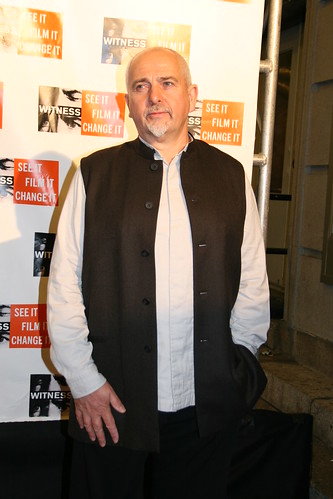
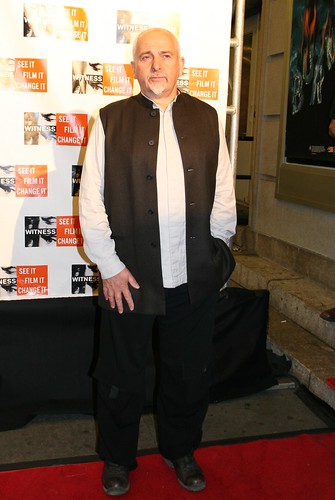
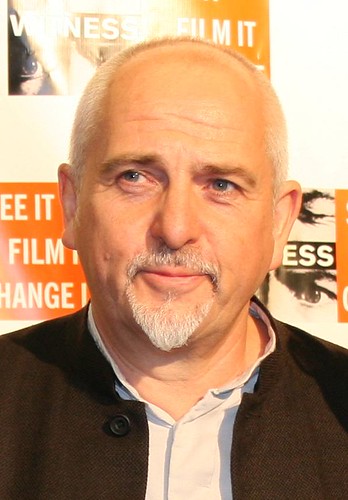
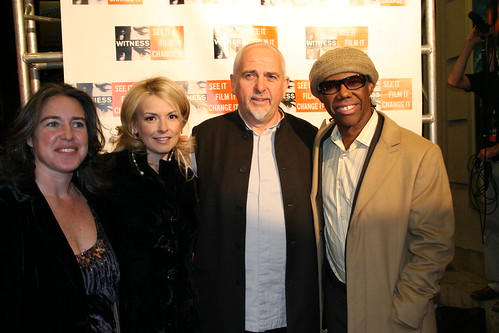
The WITNESS Focus For Change Benefit Dinner and Concert was held at the Hammerstein Ballroom in New York City and was co-hosted by WITNESS founder Peter Gabriel and actor Gael Garcia Bernal. The event featured performances by Paul Simon, Angelique Kidjo, and Kate Pierson and Fred Schneider of the B-52’s.

The Fairlight CMI Keyboard was autographed by 44 artists who brought the instrument to prominence in the 1980s, including David Bowie, Bono, Stevie Wonder, Herbie Hancock, Elvis Costello, Annie Lennox, Steve Winwood, Mark Knopfler and Sir George Martin. The Fairlight CMI was the world’s first digital sampler and featured other radical advances for the time, including a light pen interface and menu-driven GUI. It was used in numerous hits from the 1980s, including “Sledgehammer” by Peter Gabriel, “Thriller” by Michael Jackson, and “Rocket” by Herbie Hancock.

John Lancken, CEO of Fairlight had this to say, “The generosity of 44 Fairlight users to sign the CMI keyboard speaks to the importance of bringing human rights violations to the surface. It is an honor to have played an integral role in raising money for the WITNESS cause and Fairlight is proud that the CMI keyboard not only symbolizes a pivotal era in the history of rock and roll, but has now taken on an even greater significance.”

Gillian Caldwell, Director of WITNESS added, “As an organization focused on the use of technology to bring about worldwide change, WITNESS applauds the remarkable steps Fairlight has taken to support our cause through its own technological innovations. The impact of the Fairlight CMI on the music industry, and the recognition of that impact by the world’s most influential musicians, has translated into a major donation towards the fight to end human rights abuses.”

About WITNESS:
WITNESS www.witness.org uses the power of video to open the eyes of the world to human rights abuses. By partnering with local organizations around the globe, WITNESS empowers human rights defenders to use video as a tool to shine a light on those most affected by human rights violations, and to transform personal stories of abuse into powerful tools of justice.

Since its founding in 1992, WITNESS has partnered with groups in more than 60 countries, bringing often unseen images, untold stories and seldom heard voices to the attention of key decision makers, the media, and the general public -- prompting grassroots activism, political engagement, and lasting change.

About Fairlight:
Headquartered in Sydney, Australia Fairlight designs and manufactures media creation tools including digital audio recording, editing and mixing systems for standard and high definition audio post, broadcast and music production applications.

More information:


07 janvier 2007

Graham Nash : Helpfully hoping still

Graham Nash is as passionate about political and social activism as he was when he met his musical soulmates, David Crosby and Stephen Stills, in 1968...

Graham Nash : "There are a lot of people doing good work - Peter Gabriel giving people cameras to document human rights abuses."

more here : [plus ici ] : http://www.news.com.au/heraldsun/story/0,,21015816-5006024,00.html


05 janvier 2007

Sophe Lux Q&A

Lead singer/songwriter Gwynneth Haynes shares her answers to our questions.

January 5, 2007 - For all intents and purposes the moniker Sophe Lux is singer/songwriter Gwynneth Haynes sonic alter ego.

Porland based Haynes released the first Sophe Lux album, Plastic Apple, in 2002. Aiding her on the songs were Larry Crane, John Moen, and Mike Clarke.

By 2004, however, Haynes had joined forces with another crew of musicians and Sophe Lux became a bona fide band consisting of Erika Miller on bass, Kelly Goodwin on accordion and keyboards, Scott Appleman on drums, and Twayn Williams on guitars and lap steel.

This configuration recorded the second Sophe Lux album, Waking The Mystics, which will be released on February 27 2007 on Zarathustra Records.

We recently caught up with Haynes and dished out our (hopefully) insightful questions to her in an attempt to illicit equally insightful answers (needless to say, Haynes did not disappoint)...

...IGN Music: Do you perchance recall the first concert you ever went to?

Gwynneth Haynes: Joni Mitchell.

IGN Music: Keeping up the flashback angle, do you remember the first album you ever bought? If so, what format was it on (CD, vinyl, cassette or 8-track)?

Gwynneth Haynes: Peter Gabriel: The album with "No Self Control" on it.

IGN Music: What is your favorite album and why?

Gwynneth Haynes: The Dreaming by Kate Bush. Because it is creative genius in form. A revelation. A stunning creative opus.

IGN Music: Can you name a musician that you've always wanted to work with but haven't yet?

Gwynneth Haynes: Brian Eno. Because he is brilliant and one of my all time favorite musicians and one of my favorite producers.

Sophe Lux music on Myspace

WOMADelaide Brings The World To SA

The fifteenth WOMADelaide Festival brings exciting performers from all corners of the globe.

Beginning as a world music festival pioneered by Peter Gabriel, the World Of Music, Arts & Dance continued to find a following in South Australia's capital. In 2006 over 75,000 fans came together over the three days, almost half making the trip from interstate. Now Adelaide hosts the fifteenth staging of the holistic festival, which embraces the joyous sounds and sights of all cultures.

WOMADelaide 2007 will be held from March 9 to 11 at Adelaide's Botanic Park. They'll be running six stages for music and dance performances from global artists, as well as workshops from 35 groups from 20 countries. Also included are a KidsZone, arts and street theatre, international cuisine and educational stalls.

Performers include: Bollywood legend Asha Bhosle with the awe-inspiring Kronos Quartet, roots-reggae sensation Blue King Brown, Afrobeat progeny Femi Kuti and The Positive Force, New Caledonian kaneka percussionist Celenod, the cinematic French/Argentine sounds of The Gotan Project, Latin Grammy winner Lila Downs, innovative Celtic folkies Lunasa, mali's "Golden Voice of Africa" Salif Keita and so much more.

02 janvier 2007

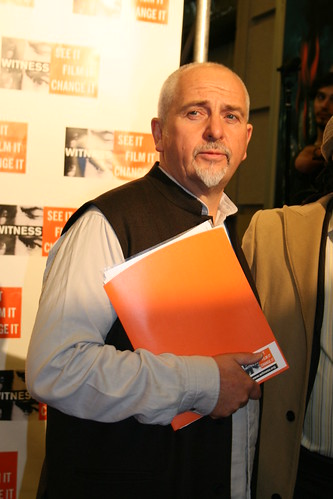
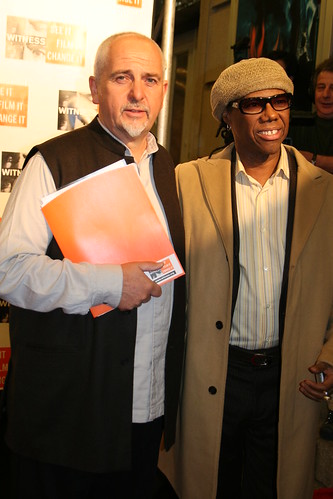
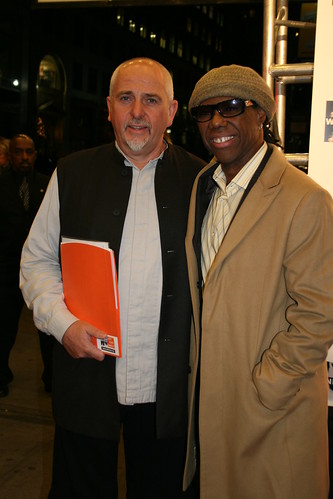
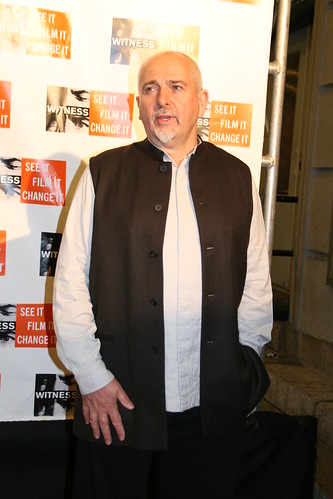
2nd Annual Witness Gala & Dinner @ Hammerstein Ballroom, NYC (Peter Gabriel)

Nice family snapshot from Witness

Thanks Arlene for the links


29 décembre 2006

Did T.C. Conroy count Gabriel among its customers?

December 29, 2006 -- I think I might be the only person in Manhat tan who doesn't have a therapist, or three. It's not that I don't have problems - but generally, they are nothing that can't be solved with a dirty martini or a frenetic '80s-inspired dance around my apartment. I belong to the Charlotte York School of Therapy - "My parents," she once said on an episode of "Sex and the City," "believed that all emotional issues could be worked out through a good game of tennis."

So when I got the opportunity to spend a few sessions with T.C. Conroy, a Hollywood life coach, I was skeptical, yet intrigued. With the New Year approaching, it seemed like a good time to get a handle on some of my issues. Namely, that I am a huge control freak who can't just calm down/relax/save money/get to the gym on a regular basis.

On what would she coach me? I wasn't really sure, but her title sounded agreeably sporty. I pictured us in a team huddle. She could shout instructions to me, and I'd head off down the field to accomplish my goals.

The difference between a therapist and a life coach is that the latter does not focus on the past and the roots of your emotions; instead, she or he focuses on the future. It's also not a replacement for therapy - some people have both a therapist and a life coach.

"Your coach is not your mom, significant other or best friend," explains Conroy's publicist, Thomas Onorato. "A life coach's only agenda is to support you by providing a caring ear, being your best cheerleader or giving you a good swift kick in the pants when you need it."

Fair enough. But before I had my first session with Conroy - who counts Guns N' Roses, Peter Gabriel ( NDR: attention ! voir le commentaire ci-dessous /caution! look at the comment below ) see theand the Rolling Stones among her clients - I wanted to get an idea of what I was getting myself into. I turned to Google. And as it turns out, T.C. is totally hot; rock-star chic with flat-ironed black hair and a ruby-studded platinum tooth. She is also the ex-wife of Dave Gahan of Depeche Mode...

By MACKENZIE DAWSON/ New York Post

26 décembre 2006

Yungchen Lhamo biography and interview on World Music Central

Yungchen Lhamo was born near Lhasa, Tibet at a time when the isolated ‘forbidden kingdom’ was caught in the ravages of the Chinese Cultural Revolution. Her once wealthy family was punished and forced to endure desperate poverty.

In 1989, she escaped from Tibet with a small group of friends to find refuge in India. Despite her perilous journey, she survived, encouraged by her profound determination to meet the Dalai Lama, considered to be the living Buddha. She made the pilgrimage to Dharamsala, the place of exile of the Tibetan spiritual leader, where she succeeded in meeting him and receiving his blessing. It was then that she decided to communicate her ideal “to contribute actively to make things better” through her voice.

She emigrated to Australia in 1993, where she had to overcome several obstacles: being a woman, singing Tibetan spiritual songs a capella, not speaking English… But the public was amazed by the purity of her voice and by the power of her stage presence and in 1995 she received the Australian Record Industry Award (ARIA) for the best world music album with Tibetan Prayer. It was the beginning of international acclaim. In 1996, she released her first international album Tibet Tibet (Real World) and toured the world.

1997 was a breakthrough year for Yungchen Lhamo. Following the release Tibet Tibet, the singer traveled the world, garnering accolades for her spellbinding a cappella performances and raising awareness for the struggle of the Tibetan people living under an oppressive Chinese regime.

"I am determined to make a path as a solo performer," she says. "My childhood was one of such despair and poverty. Part of the Chinese rationale for the occupation of Tibet is that the Tibetan people are backward and inferior. By forging a path for Tibetan artists, I am showing what we really can do if we have freedom."

Yungchen Lhamo's stately appearance in Tibetan robes and mala prayer beads, her harrowing tale of childhood deprivation and flight to His Holiness the Dalai Lama's compound in Dharmsala, India, have made her a de facto ambassador of Tibet and Tibetan Buddhism wherever she travels. But she is a woman and an artist, not just an emblem for a cause.

Yungchen's voice is very special. It is no wonder that a Lama named her "Goddess Of Song," which is the literal meaning of Yungchen Lhamo in the Tibetan language. In its long sustained notes, her voice evokes wind and mountain heights in its intricate melismas, the language of birds. Preternaturally expressive, her a cappella voice is stirring in full band context: richly complemented by guitars, violin, even the Finnish kantele, and subtle loops and electronics. The result is as utterly contemporary as the first modern Tibetan musical artist has every right to be.

"Traveling over the past years, I met so many musicians who wanted to work with me," Lhamo says. "I was reluctant at first, because I really love performing a cappella." But wary of her vocal gifts being sampled onto trance dance tracks, she decided to jump in, to explore, grow, and change. She met noted European producer Hector Zazou (Bjork, John Cale, Suzanne Vega, Huun-Huur-Tu) at Laurie Anderson's Meltdown Festival and was immediately interested. "He's a good man," Lhamo states, "and that makes a big difference to me." Encouraged by Real World founder Peter Gabriel, Lhamo set to work with Zazou at Real World studios in England.

"Singing a cappella is very difficult," Lhamo explains. "You feel totally responsible for everything the audience feels. Every sound is created by yourself." Recording with Zazou gave her the opportunity to focus her interpretive energy with other musicians. "It was very enjoyable," she says. "The years of singing a cappella have made me strong."

That strength is witnessed in Coming Home's songs, all written by Yungchen and based on Tibetan melodies, songs which share the trance qualities of Buddhist prayer and yet take off on graceful flights of their own. Each is steeped in metaphor, layered in spiritual, political, and familial symbols.

Heart and Dream are songs for Yungchen's son, who attends a Tibetan school in Dharmsala, separated from his traveling mother for much of the year. For Yungchen, who received very little secular education in Tibet, separation is a necessary sadness. "It's not just a school for Tibetan culture, it's a school for freedom of thought. In Tibet, children only learn about China. I myself never learned anything about the world from books, but I -have-been fortunate and have learned, from traveling, about countries I didn't even know were there."

Sky, a song Yungchen sings in English, addresses the faltering of confidence with the realization that all things are possible. The song grew from a teaching given to Yungchen Lhamo from the Lama Kirti Tsenshab Rinpoche in New York. "When I was young I was sent to work very early, and had no opportunity to imagine what was possible in life. I was speaking to Lama Rinpoche about how daunting it was to be doing what I am doing coming from such a disadvantaged background. He told me that the Buddha Jetsun Drolma attained Enlightenment as a woman, so I shouldn't think that I lack the potential to accomplish anything. In Asian cultures, women still often have lower expectations than men."

Perhaps the most striking track on Coming Home is the aptly titled Defiance. Backed by a squall of distorted guitar and the gravelly overtone drone of Tuvan throat singing, Lhamo's voice poignantly enacts "the sound of my heart breaking but refusing to be broken." The song was written for a lifelong friend of Yungchen's who died not long after settling (for a time) in Sydney, Australia. Although her friend didn't die at the hands of the Chinese like so many Tibetans, it is easy to hear in Lhamo's spirit-wracking plaint the stirring reference to the cultural genocide in her homeland.

"It is a political song," she says. "Before the Chinese, Tibet had a social order that, while not perfect, was a society that cared for its own. The Chinese came and injected qualities into that order: forced labor, anti-spirituality, and the idea of cultural inferiority. The problem is beyond those who publicly resist and are tortured and killed. People's everyday lives are destroyed." The friend, whose picture she carries with her, was one of those lives.

And yet it's rare and remarkable for a Tibetan artist to convey such strident emotion over the crisis in her homeland. "It's not anger," she says, "but hurt. You can believe in non-violence but you can still be hurt. Many Tibetans are angrywe are hurt. We have seen our parents, our grandparents, tortured and killed. But we have a way of looking at the world where anger cannot be our motivation. The idea is not to act on that negative emotion, but to find another path."

One might find her faith's doctrines of non-attachment to the material world and devotion to the realm of the spirit incongruous in the life of a world-renowned vocalist. But according to Yungchen, "It actually makes it easier. There are basic understandings of life that come from the teachings of Tibetan Buddhism that make it easy to not get so distressed when things go wrong and not have an ego explosion when things go well."

While proud of her new record, she acknowledges that there will be voices who prefer the "purity" of her a cappella work. "You can't control how people will respond," she says, "so I can't worry about it. I don't live isolated. I'm part of the modern world, and that means growing, experimenting. I think people will want to hear what I can do.

"I feel very lucky to be able to do this, even though it makes for a very difficult lifestyle, always traveling but never reaching home. But I love singing with the motivation of inspiring people."

Lending her beautiful voice and expansive vision to the world, Yungchen Lhamo is fulfilling the destiny set before her. "In Buddhism, the ideal is to be of use, to actively contribute to things being better," she says. "It's very easy to sit isolated and talk about love and compassion, but to inject that into your work - that's spiritual practice."

Her status as an international star has been confirmed by performing twice at New York’s Carnegie Hall (alongside Michael Stipe, Sheryl Crow and Philip Glass) and at the Lilith Fair, also in the USA.

She is recognized not only for her singing talent but also for her fight for the Tibetan people living under Chinese repression and she was the first Tibetan woman to be named in Marie Claire’s ‘Women Who Changed Our World’ series. Yungchen Lhamo is without doubt the most well known Tibetan performing artist today.

Interview:


Interview with Tibetan Singer Yungchen Lhamo

"What was the first big lesson you learned about the music industry?"

"The first big experience I had was in 1995, when I first signed with Peter Gabriel. This opened my eyes to the nature of the music industry..."

23 décembre 2006

Peter Gabriel at CBC news

We sit down in New York this week with the legendary singer/songwriter/technology buff Peter Gabriel to talk about Witness, the organization he founded in 1992. The group was the first effort to use an emerging technology - the videocamera - as a tool in the fight to expose human rights abuses. Since that time, Witness has worked with dozens of small, local groups around the world - in places like Burma, the Congo, and Mexico - training them and helping them edit their footage. The resulting films are put in front of the world's decision-makers, the UN, the U.S. congress and the newly formed International Criminal Court. And now Gabriel wants to expand the organization, again getting out in front of the newest technological innovation - uploading video on the internet. As an artist, Gabriel has always been a thinker and poet, and he explains how he came to be involved in human rights issues, and what difference a group like Witness can make.

Visit the Witness web site

22 décembre 2006

Peter Gabriel est toujours plus qu'un ex Genesis

Pendant que ses anciens copains (à l'exclusion de Steve Hackett ) annoncent une reformation qui pue beaucoup le business, il regarde vers l'avenir comme toujours.

Même sur le front des nouvelles technologies : de sorte que, après avoir fondé en 1999 la plate-forme de distribution digitale Od2, qui finit aujourd'hui dans les mains de Nokia, il s'embarque dans une aventure analogue.

Toujours avec son associé Charles Grimsdale il lance un software, The Filter, destiné à faciliter aux consommateurs la recherche en Réseau de morceaux correspondants à leurs goûts et achetables sous forme de téléchargement.

tous les deux ont créé un fond financiers, Eden (le nom évoquera quelque chose au fan de Gabriel...), et ont confié la direction de l'entreprise à Blair Schoof, un vétéran de la musique digitale qui peut se prevaloir de son expérience auprés BMG, d'AOL et de MusicNet.


Le service, qui est déjà en phase de test expérimental, repose sur un software gratuit disponible sur le site de la societé, www.thefilter.com

Une fois déchargé, le plug-in ouvre une fenêtre dans la base de données digitale de référence (iTunes ou Windows Media) et demande à l'utilisateur de sélectionner dans sa librarie digitale la chanson appréciée ;

il crée automatiquement un playlist de morceaux analogues dans le style et dans l'ambiance , et avec un click, l'usager peut décider de l'acquérir sur iTunes ou sur un autre digitalstore.

la technologie (Exabre) a été développée par des techniciens qui travaillaient avec Od2 , le système conserve en mémoire les habitudes d'achat et les associations musicales dont les internautes ont fait usage pendant ces sept dernières années pour acheter de la musique dans les magasins qui utilisaient les services de la societé (Msn Microsoft, Tiscali, Mtv, Coca-Cola etc).

"La première vague de la révolution digitale a concerné la liberté de choix, la possibilité de rendre tout accessible à tous, partout et à n'importe quel moment" a expliqué Gabriel. "Je crois que la seconde vague concernera par contre, dans quelque mode que ce soit, la liberté du choix. Cela traitera le fait de pouvoir filtrer et de se focaliser, de sorte que cela puisse nous se procurer en majeure partie ce que vraiment nous voulons, ce qui nous excite, nous amuse et nous surprend".

Viktoria Tolstoy - 'Pictures Of Me'

...Tolstoy’s third album for the label features five originals written by her musical collaborators and eight songs from quality contemporary writers ranging from Paul Simon, Van Morrison and Peter Gabriel to Stevie Wonder, Prince and Seal...

...Tolstoy gets flirtatious on "Kiss That Frog" one of Peter Gabriel’s sexual metaphor songs in the mould of the better-known "Sledgehammer". For one of British rock’s premier intellectuals Gabriel is a dirty old bugger sometimes. I put it down to all that communal masturbation after lights out in the dorm at Charterhouse....

17 décembre 2006

BBC Wiltshire - Interview with Peter Gabriel

Listen to our interview with the legendary singer-songwriter and ex-Genesis frontman who now lives in Wiltshire.

It was a rare honour recently when BBC Radio Wiltshire were granted an exclusive interview with the musical legend that is Peter Gabriel. The ex-Genesis frontman and highly successful solo artist - famous for songs such as 'Solsbury Hill' and 'Sledgehammer' - now lives in Box in Wiltshire where he also runs Real World studios. He founded the recording complex in the late-1980s in order to promote World music.

Womad : BBC Radio Wiltshire's Ashley Heath spoke to Peter and found out about his plans for the 2007 WOMAD festival now that the event is to be held in Wiltshire for the first time at Charlton Park near Malmesbury. He also spoke of his love for the county he has adopted as his home, as well as reflected on his lengthy musical career.

Genesis Reunion : Ashley also found out why he declined the offer to join his ex-band mates in the Genesis reunion tour due to take place next year.

Click below to listen to the 20min interview in streaming Real Audio.

audio Interview with Peter Gabriel >

Audio and Video links on this page require Realplayer

16 décembre 2006

Season of Fear

Hollywood, music stars call for UN action against Myanmar


The Associated Press, Friday, December 15, 2006, BANGKOK, Thailand

Hollywood and music stars, including Tim Robbins and Kate Pierson of The B-52s, have called on the United Nations to pass its first-ever resolution on Myanmar where a brutal offensive against ethnic minority people is continuing, a press release received Saturday said.

The appeal was delivered in a letter sent to the office of the U.N. secretary general Friday after a gathering in New York City earlier in the week by nearly 500 activists to highlight the humanitarian crisis in Myanmar, also known as Burma, the private human rights group WITNESS said.

"It is past time for the issue of Burma to be addressed by the UN's most powerful body, the Security Council. In eastern Burma, over 3,000 villages have been destroyed, forcibly abandoned or forcibly relocated in the past 10 years," the letter said, urging the resolution be passed before the end of the year.

The United States, which persistently condemns Myanmar for its human rights abuses, is circulating a draft resolution that it plans to introduce before the council to press the country's military government to change policies that constitute a threat to international peace and security.

Celebrities signing the letters included Oscar winner Robbins, British rock musician Peter Gabriel, Mexican actor Gael Garcia Bernal, Nile Rodgers of Chic, Angélique Kidjo and Suzanne Vega.

Human rights groups say government troops have torched villages, killed innocent civilians, raped women and herded villagers into military-controlled zones in an ongoing offensive against the Karen ethnic minority in eastern Myanmar. The government, which denies committing any atrocities, is waging a nearly year-long offensive to suppress a Karen insurgency that first erupted in the late 1940s.

The Thailand Burma Border Consortium, the main aid agency caring for tens of thousands of refugees along the Thai-Myanmar frontier, estimates that this year alone violence forced 82,000 people to leave their homes. Since 1996, more than 3,000 villages have been destroyed or abandoned in eastern Myanmar and more than 1 million people displaced, according to its most recent report. Major uprooting and abuses have also occurred in other ethnic minority areas such as Shan State.

The United States and other countries have also urged the junta to free all political prisoners including pro-democracy leader Aung San Suu Kyi, who remains under house arrest in Yangon. But Washington faces an uphill struggle in getting the council to take tough action against Myanmar. China strongly opposed putting the country on the agenda as did Russia, and both are veto-wielding members of the Security Council. The junta took power in 1988 after crushing the democracy movement led by Nobel prize-winning Suu Kyi. In 1990, it refused to hand over power when Suu Kyi's party won a landslide election victory.

13 décembre 2006

Peter Gabriel on TEDTalks

Musician and activist Peter Gabriel explains the personal motivation behind his work with human-rights organization Witness, which gives video cameras to ordinary citizens to document human-rights abuses, so the perpetrators may be brought to justice. He shares stories of citizen journalists in action, and poses the question: if injustice happens and a camera is there to capture it, can it be ignored? Gabriel first took the musical stage by storm with the band Genesis, but has enjoyed a successful solo career with hits like "In Your Eyes." In 1989 he founded the Real World label for global music and the Real World Studios in Bath, England. In 1992 he co-founded Witness.(Recorded February 2006 in Monterey, CA. Duration: 14:50)

Download this talk: Audio (MP3) | Video (MP4)

09 décembre 2006

BBC shows best teen beats

Fans of TV talent shows would have been familiar with the format - an act performs, the judges debate the merits of that performance, the presenter asks them how they feel - and ultimately, one of them is awarded the winner.

But the final of The Next Big Thing - the BBC's global search for the best young musical talent - was different in a couple of ways. Firstly, all the acts were aged under 18. Secondly, they were all really rather good.

In this case, selecting the eventual winner would be legendary producer William Orbit, Rough Trade founder Jeff Travis, African star Angelique Kidjo and Dirty Pretty Things drummer Gary Powell, with former Genesis frontman Peter Gabriel also giving his input.

And so to the acts. Brazilian six-piece combo Sweet Cherry Fury began the night with their jaunty, raucous take on boredom in exams, Cold Blonde Body. Having flown 20 hours from Sao Paulo - and lost their luggage en route - they were determined not to let a minor technical hitch that had delayed the start of the gig put them off.

Lyrical flow

Impressively, performing live at the BBC's famous Maida Vale studios in front of industry icons seemed to inspire them rather than make them nervous - something, on the most part, in common with all the performers on the night. They threw themselves into their songs with both intensity and passion. As Vardy, the lead singer of British three-piece rock group Skagz put it, "we're having the time our lives."

There was an intense performance from Malawian rap act NiC, a duo who volleyed words back and forth like Sampras and Ivanisevic in their prime, deciding not to bother with those fancy passing shots and just belting the ball at each other. Their angry - if interestingly anti-materialistic - rap stems from their frustration at attempting to break into the music industry in Africa. Judge Gary Powell was particularly impressed by what he described as their "lyrical flow", saying they could be understood better "than acts in the charts earning millions".

NiC would eventually finish second, a place shared with British duo Stefan and Mya - whose much more light-hearted song, My Dunks, is about a fashion victim and his girlfriend, who feels she is always second-best to her man's trainers.Their bickering couple style drew high praise from the judges. "I'd say you're like Lily Allen, but you're much better than that," said Powell.

But everyone brought something different to the final, despite - or perhaps because of - their widely diverse backgrounds, sounds, and themes. Refugee Malikinke delivered a multi-language plea to African men to think before they sleep around; US multi-member group MLK performed an eight-word, two-minute celebration of Martin Luther King; while the Skagz thrashed out their up-tempo rock song about singer Vardy "getting attacked in the mining village of Whitwell".

Winner

As soon as she stepped behind the microphone, however, the star quality of the act who go on to win shone through. Armenian performer Silva not only sang, she also really performed, coupling her smooth vocal with some well-honed dance moves. The 17-year-old's tango-based song I Like - written by her sister and produced by her brother - would not have sounded out of place on any hit-centred radio station. But, with a little polish, the same could have been said for most of the other acts too. None were noticeably weak - a benefit, perhaps, of having a panel of music industry experts give their input into choosing the final seven.

The four judges admitted they had expected the standard to be "much lower", and were visibly impressed. As they deliberated and the groups awaited the result, the genuine camaraderie that had grown between the acts - they had stayed together in the same hotel since arriving in London earlier in the week, and cheered each others' performances - was clear to see. They all stood huddled together, nervously chatting to each other, offering congratulatory handshakes and hugs whenever one of them was mentioned by name by the judges.

When the result was announced, the cheers and applause were such that any one of them could have been cheering their own win as much as Silva's. Silva herself was utterly overwhelmed by the experience, and accepted the trophy with tears in her eyes. Asked if she was happy to have won, she could manage only one word: "Yes."