Articles review on the net, revue d'articles sur la toile


Inscription : feeds, flux :
(Atom) Gabriel Real World News

24 février 2007

Barnyard Music from the motion picture

Track listing:
1. Mud - North Mississippi Allstars 2:30
2. Hittin' The Hay - North Mississippi Allstars Featuring Les Claypool 2:23
3. Down On The Farm (They All Ask For You) - Kevin James And North Mississippi Allstars 1:12
4. I Won't Back Down - Sam Elliott 2:12
5. 2StepN - North Mississippi Allstars 2:46
6. Hillbilly Holla - North Mississippi Allstars 3:26
7. Kick It - The Bo Keys 2:33
8. Father, Son - Peter Gabriel 4:56
9. Freedom Is A Voice - Bobby McFerrin and Russell Ferrante 4:17
10. Popsickle - Starlight Mints 3:02
11. Wild And Free - Rednex 3:37
12. Boombastic - Shaggy 4:06

23 février 2007

Roar of the wild

Thomas Mapfumo and his band blend native sounds with political lyrics about Zimbabwe

Thomas Mapfumo is known as "the Lion of Zimbabwe." During a 30-year-plus career, he's grown into a towering figure in both his embattled country and world music in general. Yet he and his immediate family live in the comparatively meek surroundings of Eugene, Ore., driven into exile for the man's defiant stance against the southern African government.

A member of the Shona tribe, Mapfumo and his band the Blacks Unlimited make infectious dance music known as "chimurenga," blending politically charged lyrics with some of the sweetest melodies around. Their sound is based on the native mbira, or thumb piano, with hints of gospel and reggae.

Mapfumo and company return to Hawaii after many years for a Friday night concert at Leeward Community College.

His country, previously under British rule, gained independence when nationalist Robert Mugabe was elected president in 1980. At the beginning of his career, Mapfumo and his "struggle music" were totally behind this movement of self-determination.

But now Mugabe's government treats Mapfumo as a pariah, as the musician has expressed public disappointment in what has become Mugabe's tyrannical rule. In fact, "Kuwarira Mukati," from Mapfumo's most recent album, "Rise Up," tells his people to topple Mugabe by any means necessary.

"Even though I believe people should pick up arms, at least they should stand up and speak up for themselves," Mapfumo explained. "There, they're the ones who are suffering, and if they don't say something, their suffering will go on. Zimbabwe will always be my home. That man (Mugabe) is not going to be there forever and ever, so I have no problem waiting. I'd like to go back there to live."

It shoulf come as no surprise that Mapfumo and his family live in exile. His music is banned from Zimbabwean state radio, although the Lion can still be heard in private homes, record bars and flea markets, and remains popular with his people.

Despite a real danger to his life and family, Mapfumo does return for concerts, the last time in 2003. He's considering another trip back this Christmas, to check on his sisters and his aging mother.

"It's not like I'm going to be arrested," he said. "I'm a famous man, and people, they are afraid to do anything to me. But what I am afraid of are street thugs, who don't care about me and are paid to do jobs against individuals."

When Mapfumo went into exile, his lead guitarist, Gilbert Zvamaida, and mbira player, Chakaipa Mhembere, followed him to Oregon. He hopes they will accompany him to Zimbabwe for a summer concert tour in '08.

His current band includes American musicians such as bassist Matt Gordon. "He's so good that, even when I see my old bass guitarist, I don't mention Matt to him. Matt just knows how to play this kind of music. It proves that music all over the world has no boundaries. It works as long as we all understand one another."

The group has just finished a CD to be titled "Exile," and Mapfumo says he's happy that his deal with Calabash Music makes his music available for download. And as with the album "Rise Up," "Exile" may also be available soon through Peter Gabriel's Real World Records label.

Mapfumo said he's not too concerned that audiences worldwide love his music more for its melody and rhythm than for its politics. "If people heard about me, read about me, know about me through my bio, even if I don't explain what a song means in concert, I don't worry, because most of the audience knows what I stand for."

By Gary C.W. Chun
gchun@starbulletin.com

22 février 2007

Womad New Zealand 2007 CD Released

Music lovers can enjoy a preview of what's in store at WOMAD New Zealand 2007 on the specially created Sounds of the Planet: WOMAD New Zealand 2007 compilation CD.

The CD was released by Shock Records NZ through Border Music on Monday 12 February and features 16 tracks from some of the fantastic worldwide performers set to take to the stages at WOMAD New Zealand 2007 at New Plymouth's Brooklands Park and TSB Bowl from March 16-18.

The CD truly is a world music journey, beginning in Mali with a track from "the Golden Voice of Africa" Salif Keita, followed by sensational French/Swiss/Argentine tango act Gotan Project.

Next up is Kronos Quartet and Afrobeat superstar Femi Kuti from Nigeria, with tracks from New Caledonia's traditional Kanak performers Celenod, and the legendary Mahotella Queens from South Africa.

New Zealand's own Don McGlashan contributes a track, before the stunning sounds of Portugese fado singer Mariza, and Mexico's Lila Downs. Next up is Australia's Augie March, Chinese bamboo flautist Guo Yue and another Australian act, Lior.

The festival's incredible world tour continues - off to Israel for Yasmin Levy, and to Tuva for Huun Huur Tu, before coming back to New Zealand with a track from dDub and finishing with Indonesia's SambaSunda.

The Sounds of the Planet: WOMAD New Zealand 2007 compilation CD is distributed by Shock Records NZ through Border Music and is available now from all good music stores.

Three day tickets for WOMAD New Zealand 2007 have sold out, however Sunday evening tickets are available from Ticketek at www.ticketek.co.nz. Sunday night tickets are valid for entry from 6pm and performances include the All Star Gala (led by Bill Cobham), Yasmin Levy, Don McGlashan, Guo Yue, Mariza, Mahotella Queens, Lila Downs, Wai and Mr Scruff.

Rencontre musicale afro-nomade à Royaumont

Baagal Safrea (1). Ainsi s'intitule la création du grand koraïste malien Ballaké Sissoko et du groupe mauritanien Diddal Jaalal. Initiée par la fondation de Royaumont, en France, ce projet ambitieux est l'occasion de découvrir l'un des groupes les plus prometteurs de la scène mauritanienne...

...Une des raisons, sans doute, qui a poussé Ballaké Sissoko à jouer le jeu d'une telle rencontre est l'idée qu'il faut « développer ce travail entre Africains, et pas toujours passer par des musiciens européens ». Un clin d'œil qui rappelle que ce type d'initiative, souvent établi sur la seule base d'un rapport Nord-Sud, a parfois servi à redonner une aura à des artistes venus du Nord auprès de leur public de cœur.

Paul Simon
, Peter Gabriel ou Joe Zawinul ont parfois éclipsé, malgré eux, affirme-t-on ici ou là, leurs collaborateurs africains au box-office. Sur les projets de la fondation de Royaumont, la logique du dialogue semble respectée. Mieux ! Cette institution réputée pour la qualité de ses projets a eu la bonne idée de prolonger l'idée du dialogue Sud-Sud. Elle a permis à Sissoko, sans qui le projet n'aurait sans doute pas vu le jour tout de suite, d'apporter son expérience internationale, à travers le principe des résidences, aux complices de Bâ Djibril. Ces derniers sont moins aguerris et moins rompus aux questionnements liés à l'élargissement d'un public.

Il s'agit, ici, de leur première sortie internationale. Autrement, ils en sont encore à négocier avec les parents de deux de leurs chanteuses, de jeunes adolescentes, pour qu'elles puissent faire carrière dans le monde de la musique. C'est ainsi que Ballaké Sissoko « tend la main à ses voisins oubliés, confie Frédéric Duval de la fondation Royaumont., En grand frère de cœur, il entraîne avec tact Diddal Jaalal dans les régions où ils ne savaient pas qu'ils iraient, alliages de vielles et de voix, ritournelles et ostinatos sur lesquels la kora jaillit en fusées automatiques ou se fait grave et rêveuse »...

1. Après avoir été présentée en octobre et novembre dernier en France, cette création tournera à nouveau en 2007. Pour plus de renseignements, voir www.royaumont.com et sa Saison musicale


This Day in Music for February 22, 2007


1968
- Genesis releases its first single, ``The Silent Sun.`` Peter Gabriel and Tony Banks later say they wrote the song in the style of the Bee Gees to impress producer and Bee Gees fan Jonathan King.

Daby Touré: «Je ne revendique aucune identité»


Audio: Kebaluso

Audio: Bale

Audio: Setal

ONEX – La voix magique de Daby Touré résonnera ce soir à la salle communale d’Onex. Après le succès de «Diam», son premier album, cet Africain qui se définit comme un «enfant du monde» revient avec «Stereo Spirit», sorti début février. Interview.

– Vous avez fait la première partie des concerts de Peter Gabriel durant sa tournée européenne en 2004 durant deux mois. Comment ça s’est passé?
– C’était grandiose et émouvant! C’était aussi très instructif pour moi. On mangeait ensemble et on discutait. Je lui ai demandé si c’était vrai qu’il allait jouer à Bercy, et si c’était possible d’avoir des places. Quelques mois plus tard, j’apprenais que je faisais la première partie de sa tournée et que moi-même j’allais joué à Bercy!

– Etes-vous déjà venu chanter en Suisse?
– Oui, mais, là, je sens qu’il faut que je revienne. J’étais à Genève et au Paléo Festival avec Peter Gabriel. D’ailleurs je vais peut-être revenir au Paléo cet été!

– Comment trouvez-vous le public suisse?
– Superpublic à tous les égards! J’ai eu la chance de faire la Grande Scène au Paléo, mais aussi des petites scènes dans ma tournée. Dans les deux cas, le public était très répondant et très enthousiaste. Je garde un bon souvenir.

– Vous avez eu un parcours de vie très mouvementé: divorce de vos parents, déménagements perpétuels... Quels sont les événements que l’on retrouve dans vos chansons?
– Je raconte l’histoire des gens, de personnes que je connais ou mon histoire à moi. Je parle aussi de l’homme, de l’environnement dans lequel on vit, de la misère, de la souffrance. Tout tourne autour de l’homme, et les thèmes sont parfois graves, parfois joyeux mais toujours optimistes!

– Quelle est votre philosophie de vie?
– La vie, c’est beaucoup de souffrances, une continuelle épreuve. On doit s’assumer en tant qu’adulte dans cette société, et, ça, c’est déjà une galère. J’ai décidé il y a très longtemps de ne pas rentrer dans ce système. C’est la musique qui me fait vivre. Je ne sais pas trop quoi penser de tout ça: certains meurent de faim et d’autres gens riches sont malheureux, il y a quelque chose de louche! Heureusement, il y a toujours des gens incroyables qui vous redonnent espoir!

– Vous avez grandi en Afrique et vous habitez depuis des années à Paris. Vous considérez-vous plutôt comme Africain, Français ou Européen?
– Je me considère comme terrien! J’ai grandi en Mauritanie. Mon père s’est retrouvé seul, alors j’ai été placé chez une tante, puis chez un oncle. J’ai passé de foyer en foyer... A 18 ans je suis parti à Paris. J’ai toujours bougé et, du coup, j’ai découvert de nouvelles cultures, je parle plusieurs langues. Je suis un enfant du monde. Il a fallu sans cesse me réadapter et avoir beaucoup de souplesse. Je me sens partout chez moi. Je ne revendique aucune identité que ce soit.

– Quelles anecdotes pouvez-vous nous raconter au sujet de la réalisation de votre album?
– (Rires.) C’est difficile qu’il y en ait, vu que j’étais seul à le faire! Ce que je peux dire, c’est que je rentrais à Paris après un mois de tournée aux Etats-Unis et que, le lendemain, je partais pour un mois d’enregistrement en studio à Londres! J’ai tout enchaîné et j’étais crevé comme il fallait! J’ai dû puiser au fond de moi-même. J’ai eu de la chance car la fatigue ne s’est pas ressentie dans l’enregistrement. Puis la course a continué fin octobre avec le mixage de l’album à Paris. J’ai travaillé avec Bob Coke, le producteur du premier album de Ben Harper.

– Toute la réalisation a été très rapide alors?
– Oui, l’enregistrement a duré un mois et le mixage un mois, donc à peu près deux mois en tout. On devrait parfois avoir plus de temps pour faire les choses, mais on n’a pas toujours le choix…

– Pourquoi avoir choisi de chanter en dialectes soninké, pular, wolof, et pas en français?
– Déjà, ce ne sont pas des dialectes, mais des langues à part entière, et elles sont très musicales. Je ne suis pas en mesure de chanter en français. Je l’ai appris à l’école, certes, mais le chanter, c’est un autre exercice. Je ne le fais pas par respect. J’ai d’ailleurs dû chercher un label en Angleterre à cause de cela.

– D’où vient le nom de «Stereo Spirit»?
– Justement de ma double culture. Je suis à l’aise à Paris, à New York, en Mauritanie. Donc je trouvais que le terme «stereo» sonnait moderne et définissait bien ma mentalité.

Caroline Goldschmid

Daby Touré : Une musique sobre et envoûtante

Daby Touré vernit son album à Onex. Une musique sobre et envoûtante

Concert - Chants de Mauritanie et pop électronique, «Stereo Spirit» intègre les styles et les langues d’Afrique.

Aujourd'hui Daby Touré porte des dreadlocks, joue de la guitare et fait figure d'étoile montante. Sa voie a toujours semblé toute tracée sur la vaste carte de la folk africaine.

Fils d'Hamidou, neveu de Sixu et d'Ismahel, les trois inoubliables musiciens des Touré Kunda, Daby est ce qu'il convient de nommer un enfant de la balle. Mais à Nouakchott, il y a un peu plus d'une trentaine d'années, qu'est-ce que cela pouvait bien signifier?

La saga de sa famille a sans doute permis à Daby Touré de mettre le pied à l'étrier. Voyager entre la Mauritanie, la Casamance (Sénégal) et le Mali, venir en France, s'inspirer du rock des banlieues parisiennes, du jazz. Pour le reste, le musicien a tout repris à zéro. Tout réinventer. Car en Afrique comme ailleurs, lorsque l'on marche sur les traces de ses ancêtres, il faut savoir se faire un prénom.

Aujourd'hui la musique de Daby Touré se nourrit des terres ocre d'Afrique. Elle synthétise aussi les multiples influences qui ont nourri le jeune musicien au fil de ses pérégrinations. Bob Marley, Police ou Weather Report figurent en tête du carnet de route. Peter Gabriel aussi bien sûr. L'ex chanteur des Genesis a formé son oreille de guitariste et chanteur doué et inventif. Plus tard, bien plus tard, le même Peter Gabriel lui offrira de jouer en ouverture de son concert. C'était l'été dernier. Une bouffée qui propulse le Franco-Mauritanien sur les grandes scènes européennes.

Daby Touré aime les voyages. Sa route le ramène régulièrement aux sources. De ses origines africaines, il tire une musique douce, ciselée, envoûtante. A la veille de l'enregistrement de son premier album Diam (Paix en français) sorti en 2004, certains producteurs bien intentionnés lui suggèrent d'opter pour le français.

«Pourquoi?» se demande Daby Touré. Il revendique la musicalité des langues vernaculaires parlées dans son fief africain. Il compose et chante en wolof, soninké, pular, français ou en anglais. L'album est un petit bijou, salué comme tel par une critique ne craignant pas de le faire figurer parmi «les grands songwriters africains modernes, dans la lignée des Lokua Kanza, Geoffrey Oryema ou Rokia Traoré».

Daby Touré vient de sortir son second album Stereo Spirit, enregistré en Angleterre. Il en signe musique, paroles, arrangements. Douze chansons qui confirment son talent. La route est belle. Il chante l'amour, la paix et l'espoir qu'il nourrit de voir un jour les différentes communautés de son pays vivre en paix. Il chante donc dans toutes les langues. Une étoile est née à Nouakchott.

Chantal Savioz


20 février 2007

L’Afrique au cœur du Zoulou blanc

En jetant un coup d’œil à l’itinéraire de tournée de Johnny Clegg, on s’étonnait que la capitale ait été exclue de la série de spectacles que le « Zoulou blanc » offre ces jours-ci en Ontario et au Québec. La raison de cette absence nous a été révélée hier par l’un de ses accompagnateurs qui, à l’autre bout du fil, a confirmé nos espoirs : « Nous serons au Festival d’été le 10 juillet. »

À n’en pas douter, l’annonce de la présence de Johnny Clegg dans la programmation du 40e Festival d’été s’avérera de la musique aux oreilles de milliers de mélomanes qui se rappellent avec bonheur la prestation du Sud-Africain au parc de la Francophonie, en 1993.

« Vous avez bien entendu ? » s’est assuré auprès du Soleil hier celui qui a souvent été comparé à Peter Gabriel. Très très bien, M. Clegg. Merci !

Conservant un souvenir plutôt frisquet de la capitale — « Je me souviens d’une visite en décembre où il faisait tellement froid ! » —, l’auteur-compositeur relate toutefois avec plaisir son premier contact avec le public québécois, au Festival international de jazz de Montréal (FIJM) de 1988.

« Le spectacle avait été phénoménal. L’un des meilleurs que j’ai donnés à ce jour. Ça ne s’oublie pas. Et puis, les spectacles, c’est comme l’amour. On se souvient toujours de sa première fois ! » a-t-il laissé entendre, un large sourire dans la voix.

Faisant l’objet d’un regain de popularité insoupçonné dans la province, à la suite d’une mémorable prestation au FIJM de 2004, Johnny Clegg profite de cette lancée pour venir présenter chez nous les pièces de One Life (2006), un disque où il demeure fidèle à sa fusion de pop, de rock et de rythmes africains caractéristique.

« L’un des aspects positifs de la musique du monde, c’est qu’elle n’est pas encarcanée dans un seule genre. Elle offre donc un vaste champ de possibilités et suppose une plus grande longévité. Aimant toutes les musiques, du raï au rock en passant par la pop, le hip-hop et les musiques indiennes, ça me va parfaitement ! La musique, c’est de la musique. Je n’ai jamais fait de croisade en faveur d’un seul genre. Je considère la musique, de façon globale, comme un moyen de communication. »

Et cet outil, Johnny Clegg en a fait largement usage au fil des ans. D’abord pour dénoncer le régime d’apartheid qui sévissait dans son pays et ensuite pour traiter de plusieurs préoccupations à teneur sociale comme la tolérance ou le sort des enfants soldats du Sierra Leone, une cause qui a inspiré une chanson sur One Life.

« J’écris des chansons qui touchent des sujets qui m’intéressent ou m’affectent. La situation du Zimbabwe du Nord en est une. Celle des enfants soldats en est une autre. Quant à la pièce Faut pas baisser les bras (en français), elle parle de la nécessité de se battre pour maintenir les droits politiques acquis. »

L’artiste cite l’exemple inquiétant de son pays où, en septembre, le gouvernement a étudié la possibilité d’un projet de loi qui aurait mené à l’autocensure des médias.

« Il y a deux constantes dans mon écriture, les thèmes du pouvoir et, probablement parce que je viens d’un pays qui a longtemps été divisé, celui du passage de la fragmentation à la complétion. »
Anthropologue de formation qui s’intéresse à des questions souvent difficiles, Johnny Clegg affirme néanmoins aborder la vie avec un certain optimiste, voire parfois un certain humour.

« Je touche souvent à des sujets sérieux, mais je le fais aussi avec une certaine ironie, ce qui relève de l’humour. Au même titre que le théâtre grec classique. Je pense que si on est toujours trop sérieux dans la vie, on passe parfois à côté de ce qui est important. »

19 février 2007

Mission impossible

It's nine hours long, it took five years to make - and there's no script. Robert Lepage explains the chaos of his new project to Lyn Gardner, The Guardian

'Chaos," says theatre director Robert Lepage with a zen-like smile that makes him look like a small, round Buddha, "is a good thing. People think that it is negative, but in fact chaos can be very fertile." Which is just as well because it is already Wednesday afternoon and his show, Lipsynch, opens tonight with a script nowhere near finished and a couple of characters not yet created. What script there is appears to be on crumpled bits of paper in people's pockets. You might expect cast, crew and director to be running around in a frenzy, but everyone looks remarkably relaxed. That's because Lipsynch, at Northern Stage in Newcastle, is no ordinary show.

A meditation on the nature of voice, it is the latest work by Robert Lepage, whose dazzling shows, including Far Side of the Moon, the Andersen Project and The Dragon's Trilogy, have captivated audiences around the world with their mixture of storytelling and stunning imagery. Perhaps more than any other director, Lepage has found a truly distinctive voice, and he believes that for all of us the voice is "the DNA of the soul, the unexplainable source of our being".

None the less, it seems an unexpected subject for a man whose work has been concerned more with what we see than what we hear. In a Lepage show, an ironing board can become a rocket, and a washing machine door a goldfish bowl, the moon, a clock, even a brain scanner.

No wonder people talk of Lepage as a theatrical conjuror. Peter Gabriel once said Lepage makes theatre for people who don't like theatre. He also makes it for those of us who do. What is certainly the case is that Lepage's shows are never finished until the final curtain call at the final performance.

In the case of Lipsynch, that probably means sometime next decade. Newcastle audiences spending up to £28 a ticket will not be getting a finished show, but they will get the unique opportunity to see and help shape a four-and-a-half-hour work-in-progress that, when it premieres at the Barbican in September 2008, will have become a nine-hour piece featuring the interlinking stories of nine people and many, many characters spanning 70 years from 1945 to 2015.

Part of the excitement for Newcastle audiences is knowing that if you return to the show on Friday, it could be different from the performance you saw on Monday. What you think about the show can also be the impetus for those changes. Such is Lepage's eagerness for feedback that when the company did a workshop performance in Canada, those who failed to respond were warned they would not be invited back.

"I don't think about rehearsing a show," explains Lepage. "We just play. People bring in objects and ideas and we play around with them and improvise, and we wait and see what happens. Over a period of time, the show gradually reveals itself to us."

Actor John Cobb puts it another way: "Going out on stage and knowing that you're going to be there for four-and-a-half hours with very little script is very scary. But it is only in the act of doing it that we discover the show - and that's genuinely thrilling."

Lepage and Cobb make the process sound almost mystical. In fact, it involves a huge amount of time (this project has been five years in the making), hard work, shared intimacy and trust on the part of the actors who must be prepared to risk all. Lepage argues that his collaborative approach takes the emphasis away from the director and gives responsibility back to the actors. "Often, particularly towards the end of the process, I think of myself less as a theatre director and more as someone who just directs the traffic. My job is to move the ideas and bits of the show into the places where they work best. Sometimes my job is also to say, 'No.'"

His methods go against the grain of most British theatre practice, which finds it more convenient to create plays within four weeks using a nailed-down script and set. Britain has seen several Lepage shows, but having one made here is an eye-opener, as Northern Stage's artistic director Erica Whyman says: "We can learn a lot from watching Robert work. I know that seeing the risks he's prepared to take is going to make me a braver director."

In the meantime, she is worried that by the time the after-show talk has finished on Thursday, the last bus will have gone and the audience could be stranded. The show could run long past its alloted time. At a public workshop in Canada last year, one of the crew called a halt after midnight. "We had so much material that we could have gone on all night, so we decided to just stop so everyone could go home and get some sleep," says Lepage.

The collaborative nature of the project makes it out of the ordinary, too. It is a co-production between Lepage's company Ex-Machina, one of the world's best known and best-resourced companies, and Théâtre Sans Frontières, a tiny Hexham-based company founded 15 years ago by Cobb and Sarah Kemp, which tours the UK and abroad, often in schools producing plays in their original language.

"Of course we can't be equals in terms of finance," says Kemp, "but we can be equal as theatre-makers. Robert is the director, but he is a director who is on stage with us all the time. We're all on the same level."

Lepage also thinks he may be getting the most out of the partnership, not least the opportunity to create work away from a capital city, and Newcastle reminds him very much of his home city of Quebec. "When I made a show in Montreal, I had eight weeks of rehearsal and I spent four of those talking to the press," he says. "Here in Newcastle, I can get on with the job. We simply couldn't do that in London. It's just too expensive, too pressured and too big. Making art in big cities is often frustrating and difficult. It's why artists are drawn to smaller places. Think of Pina Bausch, who made her base in Wuppertal. Not Frankfurt. Not Hamburg. Wuppertal! There is another reason to come to Newcastle. In a big city like London, audiences have seen everything. Here they have been exposed to less, but they are very open and interested. That makes us very open, too, and aware that although we want to be experimental, we also have to invite the audience into the story we are trying to tell, and help them understand it. If they come out saying, 'What was that all about?' then we know that we still have a lot more work to do".

18 février 2007

Angelique Kidjo sings with Alicia Keys, Peter Gabriel, Ziggy Marley...

On May 1st, Razor & Tie and Starbucks Entertainment will co-release Djin Djin (pronounced “gin gin”), the new album by international music star and UNICEF goodwill ambassador Angelique Kidjo. Produced by the legendary Tony Visconti (David Bowie, Morrissey, T. Rex), Djin Djin finds the Benin-born Kidjo partnering with such luminaries as Josh Groban, Alicia Keys, Peter Gabriel, Carlos Santana, Joss Stone and Ziggy Marley to create an album which is truly global in scope. Other special guests on the album include Amadou and Mariam and Branford Marsalis. The CD will be available simultaneously at Starbucks Company-operated locations in the U.S. and Canada as well as traditional retail.

Inspired by the traditions and culture of Kidjo’s native Benin in West Africa, the title of the album refers to the sound of the bell that greets the beginning of a new day for Africa. Similar to Kidjo’s recent works, Djin Djin finds Angelique singing in her native languages as well as in English and French. As a child, Kidjo was mesmerized by an iconic album cover of Jimi Hendrix, which led her to follow the African roots of music from the United States, Brazil and the Carribean. The results were the Grammy-nominated trilogy of albums, Oremi, Black Ivory Soul and Oyaya. On Djin Djin, Angelique returns to her Beninese roots, building an album around the most traditional rhythms from her country. With the help of accomplished West African musicians, she recorded Djin Djin at Jimi Hendrix’s Electric Lady Studio in New York City.

One of the album’s stand-out tracks is a cover of Sade’s moving “Pearls”, a duet between Kidjo and Josh Groban that includes the signature guitar work of Carlos Santana. Groban was so impressed by Kidjo that he asked her to be the sole support for his entire upcoming North American tour. Of Kidjo, Groban stated, “I have been a fan of Angelique’s for many years now. Her voice, her spirit, the way she connects is awe-inspiring and I’m so honored to have collaborated with her. She also has a wicked sense of humor and I am positive our time together on tour will be a blast.” The trek kicks off on February 17th in Verona, NY at Turning Stone Events Center.

Angelique Kidjo began performing in the Beninese port village of Cotonou. The political turmoil in her country led her to pursue her career in Paris. There, Kidjo’s striking voice and stage presence, and her fluency in multiple cultures and languages won her respect from her peers and expanded her following across national borders. It also earned her access to activists who sensed humanitarian passion in the words of her songs, resulting in her long-term dedication to global charity work. Kidjo has traveled far, mesmerizing audiences on countless stages, speaking out on behalf of the children in her capacity as a UNICEF goodwill ambassador.

For information on the Josh Groban/Angelique Kidjo North American Tour, please go to the Global Rhythm Live Music section of our website.

Angelique Kidjo will be featured on the cover of Global Rhythm's May issue.

Music Biz Is Dead

Entertainment Reporter, Andrea Nemetz with The Chronical Herald of Halifax, Nova Scotia reports:

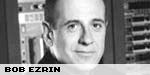
Legendary music producer Bob Ezrin says the much talked about imminent demise of the record business is already here.
"People are not going to the record store and are not paying for downloads," says the man who discovered Alice Cooper, produced Pink Floyd's The Wall, as well as records for David Bowie, Peter Gabriel, KISS, and countless other bands.

Ezrin’s speech to a standing-room-only crowd of performers, songwriters and industry personnel at the Delta Halifax on Saturday afternoon was peppered with humour, frank words on the state of the industry.


He said that people in the music business can’t simply find new ways to do old things. "The old things are gone. In the next couple of weeks, maybe months, there will be a bloodbath at the major record companies. We’re not at the tipping point, we’re on the other side."


He said the goal of having a hit record is a bad goal. "Maybe one person in this room will have a hit record. The days of hit records are over," he said. "It’s about being something real. . . people need to change their goals in order to survive as entertainers."
At the end of the day, it’s about live performance, he said. "You’ve got to play. What no one can steal is your direct relationship with the audience, you can’t duplicate that love affair."

Read the entire article click here.

16 février 2007

Misty In Roots à Massy

Le reggae roots n’est pas l’apanage des jamaïquains, même si la concurrence est rude !!!

La tribu rasta londonienne de Misty in Roots nous le prouve depuis prés de 30 ans. Fers de lance de la scène roots britannique avec Steel Pulse et Aswad, le groupe s’est formé en 1974. En pleine révolution punk, ils vont prendre part activement au mouvement Rock Against Racism qui mélangera pour la première fois en Angleterre musiciens noirs et blancs sur scène.

Apôtres d’une musique consciente, stigmatisant les problèmes sociaux de l’Angleterre tatchérienne (émeutes raciales de Brixton, désindustrialisation, chômage, etc.), ils vont enchainer albums (toujours indépendants), tournées et voyages en Afrique. Quelques uns de leurs chefs d’œuvres datent de cette période du début des années 80, lorsque leur reggae roots puissant, rehaussé de vibrations textuelles sans compromission les placent définitivement au centre de l’échiquier reggae international. Leur dernier album est sorti en 2002 chez Real World (le label de Peter Gabriel) et leurs prestations scéniques sont toujours autant des épopées mystiques et politiques, des hymnes au reggae conscient et engagé.

En première partie, le combo yvelinois de Danakil nous livrera sa version du roots & conscious reggae.

15 février 2007

Interview de TONY LEVIN

TIRER LEVIN TANT QU’IL EST BON

Qui est exactement TONY LEVIN, bassiste indécrottable de PETER GABRIEL ( on dit : cheville ouvrière), membre à temps partiel de KING CRIMSON, patron de son propre groupe (qui vient de sortir son deuxième cd : RESONATOR), et sideman sur au moins 54,49 % des albums parus depuis 1970 ? Nous ne lui avons pas posé la question. Il est de bonne humeur, mais méticuleusement diplomate....Interviou de TONY LEVIN

Le retour du zoulou blanc

photo: Claude Gassian

Johnny Clegg: "La musique est mon lien essentiel au monde."

L'attachant Johnny Clegg arrive à Ottawa avec six musiciens pour hâter la fin de l'hiver. Joint par téléphone à Johannesburg (Afrique du Sud), où il réside, Jonathan "Johnny" Clegg est d'une bonne humeur contagieuse, malgré le marathon téléphonique auquel il se livre.

Le capital de sympathie dont il bénéficie ici ferait rougir de jalousie la diamantaire sud-africaine De Beers. Les réactions entendues à droite et à gauche à l'annonce de sa venue sont très favorables, même s'il ne tourne pas fréquemment à la radio. Bien qu'il ait franchi la cinquantaine depuis peu, Johnny Clegg est reconnu pour offrir des performances qualifiées pour le moins d'énergiques, dans lesquelles la danse a toujours eu une place de choix. Il met d'ailleurs la touche finale à un documentaire sur son parcours, intitulé The Last Dance of a White Zulu, prévu pour le mois de mai prochain, via son site Web.

Comme s'il n'y avait pas déjà assez de sa chaude musique pour justifier l'intérêt qu'on lui porte, Clegg a déjà été statufié par le chanteur Renaud sur son album Putain de camion en 1998. La chanson Jonathan, en forme de panégyrique, avait fini de l'installer au panthéon des héros africains, à cause de sa lutte contre l'apartheid. "Je me suis toujours défini plus comme un activiste culturel que politique, mais il faut savoir qu'à cette époque, ce qui était culturel était aussi politique, et chanter en anglais et en zoulou dans une même chanson vous assurait de ne pas passer à la radio."

"J'ai rencontré Renaud pour la première fois en 1986, alors qu'il était venu en Afrique du Sud
pour une émission intitulée Les Enfants du rock, et nous avons gardé contact depuis." C'est d'ailleurs le chanteur français qui agit à titre de producteur exécutif pour One Life, son nouvel et 18e album en près de 30 ans de carrière, album qui a pu bénéficier de l'expertise des ingénieurs des studios Real World de Peter Gabriel. Sur le plan musical, on y retrouve encore ce mélange de rock et de musique africaine qui le caractérise si bien, mais aussi enrichi de sonorités latines ou reggae.

On évoque avec lui diverses anecdotes, comme la fois où l'on a tenté de lui voler sa voiture alors qu'il était dedans -avec sa mère de surcroît! - et il éclate de rire. "C'est l'Afrique, Monsieur!" lance-t-il spontanément. "L'Afrique, oui, c'est la guerre et le sida, mais c'est aussi un continent qui change rapidement." À preuve, l'exemple qu'il nous donne de la compagnie African Sky, dans laquelle il a investi il y a quelques années, et qui travaille à récupérer les composantes des cellulaires et ordinateurs pour en recycler les métaux.

Mais si les affaires vont bien, quelle est la raison qui le pousse à continuer à tourner? "Vous savez, la musique est mon lien essentiel au monde."

Le 21 février à 20h Au Théâtre Centrepointe d'Ottawa

Erich Langlois

Paula Cole finds her voice again

Paula Cole went from backing up Peter Gabriel to overnight sensation with “Where Have All the Cowboys Gone” and “I Don’t Want to Wait” from “Dawson’s Creek”

Then in 2000 she just went away. She dropped out of the business and only now is starting to try again. She’s scheduled to perform Friday at her alma mater, Berklee College of Music in Boston. A new album, “Courage” is due in June.

Q. So. Where have you been?

A. I moved to L.A. in 2000 and lived there until February of 2005, when I moved back to New York City. They were my quiet years, my domestic years. Sky (Cole’s daughter) was born in 2001, and I found a house with a big yard. We had dogs and cats and a settled-down life.

You abandoned your career. Why, and why then?

It had been building for a while. Some of the things that I’d wished for were happening, and that was such a blessing, and yet there was so much more to life. I really wanted a child. I’d been out in the world too long. It was like being in the sun, it blanches your skin. I just needed to stop, to punctuate it with a big period.

What brought you back?

(Producer and manager) Bobby Colomby, who I first met in 1994, got word from my former manager that I needed a friend. So he e-mailed me and asked how I was. I said, “I’m fine. I’m a mom. I don’t think I’m going to be in the music business. I don’t know what’s happening.” I had done him a favor in 1997, singing on an album by an unknown artist he was working with, and he wanted to repay the favor. He believed in me, profoundly, and I learned to trust him. He brought fun to music and life again. I feel incredibly blessed to be taken under his wing.

Is the music, and the process of making music, different this time around?

Writing before was a hermetic process. I was a kind of Type A, controlling person, and that comes from a lot of fear. Writing my songs by myself in a silent room felt safe. Now I’m writing with other people. I have to show up and come up with ideas and be detached enough to be criticized. It’s healthy. And it makes the work better to not be so precious about it.

This is your first headlining concert in seven years. Are you nervous?

Sure, I have some anxiety about it. But I know that once I’m a couple songs deep into the show it’ll be like riding a bike. It has to be. God, it better be.

Joan Anderman, Boston Globe

Why Birds Sing At Real World

Why Birds Sing takes its inspiration from a book of the same name by David Rothenberg - the American musician and philosopher, who puts forward the theory that birds not only sing for courtship and territorial reasons, but also for pleasure. This Endemol documentary, transmitting sometime in March 2007 on BBC4, follows David around - equipped with clarinet and flute - meeting scientists, ornithologists, poets, eccentrics and of course, musicians, including Laurie Anderson, Beth Orton, Jarvis Cocker and Juana Molina. This extraordinary journey climaxed with a recording session in the Big Room at Real World Studios with producer/composers Simon Emmerson and Richard Evans, Kate St John and the Guillemots all collaborating with the real bird samples to create an undeniably funky dance groove. (2006-12-30)

Jarvis, Guillemots, Peter Gabriel in BBC Bird Doc

We may know why the caged bird sings, but what about its undomesticated sibling, chirping its little heart out on the power line outside your window? Author/naturalist/esteemed jazz clarinetist David Rothenberg set out to discover just what inspires these feathered friends to burst into song in his 2005 book Why Birds Sing, concluding humankind's avian neighbors sing not just for practical purposes (mating, communication, etc.), but for one of the same reasons we do: pleasure.

Um, like, that's cute and all, but what's a book? We want Rothenberg's ideas distilled into a riveting, uncomplicated television documentary! With music! And famous people! And thanks to the BBC, that's just what we'll get. According to The Guardian, BBC Four will soon premiere Why Birds Sing, an 80-minute documentary inspired by Rothenberg's ideas and packed with guest spots from Jarvis Cocker, Beth Orton, Laurie Anderson, and Peter Gabriel.

The Cheetah Television-produced film was created in part at Gabriel's Real World Studios and concludes with an all-encompassing musical collaboration featuring Gabriel, Guillemots, Afro-Celt Sound System founder Simon Emmerson, composer Richard Evans, and Van Morrison bandmate Kate St John using "real bird samples to create an undeniably funky dance groove." We are not making that quote up: it's on Real World Studios' website

14 février 2007

Rock duo are set to get the bird

Jarvis Cocker and Peter Gabriel are spreading their wings to help make a BBC documentary on birdsong. The rock stars will perform on Why Birds Sing, an 80-minute film based on musician and philosopher David Rothenberg’s book. Also taking part in the BBC4 production are Beth Orton, Laurie Anderson and the aptly named Guillemots.

It will culminate in a unique musical composition combining human music and birdsong featuring Gabriel, the Guillemots and musician Simon Emmerson and the vocal talents of a stonechat, butcher bird, hoopoe, woodpecker and an eider duck. Sara Ramsden of makers Cheetah Television said: “Only on BBC4 can you see a man in his underpants pretending to be a song thrush while revealing the latest neuroscientific discovery of what’s really going on in a bird’s brain.”

Paula Cole returns after seven-year absence

Cole play: Local pop star returns after seven-year absence


When Rockport native Paula Cole stopped performing in 2000 she was a pop star with a major label contract. At first she needed to take a break from the hectic career that followed her winning Grammy’s Best New Artist award in 1997. But the birth of her asthmatic daughter, Sky, required healing of another kind.

Now the Berklee College of Music graduate -- who will give her first performance in seven years on Friday at Berklee Performance Center -- is starting all over again."I stopped touring because I’d been running on a giant hamster wheel since flying to Germany in 1993 to sing with Peter Gabriel" Cole, 38, said from her home in Manhattan. "That was before my first disc, ’Harbinger,’ even came out."From there it just didn’t stop. The residual atrophy on my personal life took its toll, and my enthusiasm felt increasingly inauthentic. I stand by the three discs I made, though. I’m very proud of those."

Newly married and free of the pressures of touring, Cole attempted a follow-up to her 1999 CD, "Amen." When her record label, Warner Bros., reacted to the results with indifference, she shelved the project. They, in turn, dropped her. As it turned out, Cole was freed up just in time for the birth of her daughter Sky, now 5. The child’s severe asthma required a vigilant regimen of medication and emergency room visits. "Sky struggled for years," Cole said, "and I stopped writing all together. I needed that time just to be a mom. The fact that I was able to do so -- that my previous success kept us afloat -- is a blessing."

Now in the throes of a divorce that she declines to discuss, Cole sees her music as a source of energy. "I’ve missed performing and I’m coming back with a renewed sense of gratitude," she said. "I need to use my voice. It’s a responsibility and it’s healing. I thought about pursuing something else; I even looked into the business major curriculum at UCLA. But it’s obvious to me that music is what I’m meant for."

Once Cole decided to return to music, she first signed with Columbia, but, she said, "I got lost in the ongoing label mergers." Now she has a deal with the revived Decca label and is preparing for the release of a new CD, tentatively titled "Courage," which she describes as more diverse and gentler than previous efforts. It comes out in June. In July, Cole will kick off her national Lessons in Life tour. But first comes this weekend’s homecoming performance.

"Nowadays I look at the business side of this with a healthy Buddhist sense of detachment," Cole said, with a laugh. "Having survived my midlife crisis, I can now recommend it to everyone as an excellent tool to help you get around all of life’s BS. "For me it’s a spiritual full circle. I feel the need to come back to my community for strength and, of course, to say thank you."

By Christopher John Treacy/ Music
Wednesday, February 14, 2007

13 février 2007

Jarvis Cocker to star in bird documentary

He will help investigate why birds sing. Jarvis Cocker is set to feature in a new BBC documentary which will investigate why birds sing. 'Why Birds Sing' is based on the book of the same name by musician and philosopher David Rothenberg, who argues that birds sing for sheer joy of it. As well as Cocker, the film will feature Peter Gabriel, Beth Orton and Laurie Anderson. The show will culminate in a "unique musical composition combining human music with birdsong".

This will feature Gabriel, Guillemots and founder of the Afro-Celt Sound System, Simon Emmerson. The 80-minute show will premiere on BBC4, though a transmission date has yet to be announced, reports The Guardian. Meanwhile Jarvis Cocker will play a Shockwaves NME Awards Show on Saturday (February 17) at London's Astoria.