Articles review on the net, revue d'articles sur la toile


Inscription : feeds, flux :
(Atom) Gabriel Real World News

28 juin 2007

Osama the Hero

Osama the Hero is a disturbing examination of modern society.


Xavier Samuel plays the naive 17-year-old Gary

Genre :Theatre
Location: Carlton Courthouse
Address: 349 Drummond St, Carlton
Date: 21 June 2007 to 7 July 2007
Phone Bookings: (03) 9347 6142

When 17-year-old Gary chooses to do his school hero presentation on Osama bin Laden, he probably should be ready for some sort of reaction. There has been a spate of fire bombings on his local housing estate, and Gary - with his alternative views and knack of being in the wrong place at the wrong time - fits the bill of scapegoat to a tee.

What he cannot foresee is that a bunch of dysfunctional vigilantes will smash his face in with a hammer. The lack of proof is neither here nor there, as one of his torturers points out, "with terrorists you don't need evidence". And so the hammer blows rain down, like so many nails in the coffin of social tolerance and respect.

Osama the Hero, by British playwright Dennis Kelly, is a disturbing examination of modern society, where the vacuity and breakdown of social values breeds a climate of immorality and fear - and as Peter Gabriel noted, fear is the mother of violence.

Dennis Kelly's 2005 play received its Australian premiere last year at the Old Fitzroy in Sydney in a fine production by new company The Rabble, and is now being presented by La Mama.

The Carlton Courthouse theatre space has been transformed by Kate Davis' all-white design, which ramps up the metaphors of purity and innocence, then brings them crashing down as the floors are stained with blood and mired with guilt. Director Syd Brisbane keeps the pace bouncing along with nervous comedic energy in the first part - making the audience all the more vulnerable to the sickening violence that follows.

Xavier Samuel is an effectively naive Gary, Thomas Wright brings a speed-tinged mania to Francis, and Hannah Norris manages to invoke the image of Abu Ghraib guard Lynndie England in her portrayal of Louise, the ringleader in Gary's torture. Kevin Hopkins is very good as the 50-year-old Mark, acting out a fantasy relationship with teenage Mandy, sassily played by Jessie Beck.

The final section is a little cliched in structure but the monologues are still affecting, including Louise watching decapitation videos and Mark distracting himself with cooking tips. Never has salmon teriyaki seemed so unappetising.

Angélique Kidjo : femme de feu

Lauréate du prix Antonio Carlos Jobim, la Béninoise Angélique Kidjo est une battante dont le feu et l'opiniâtreté sont aujourd'hui récompensés par le 28 e Festival International de jazz de Montréal. Cette escale au Spectrum à l'aube du méga happening musical (jeudi, 18h) est l'occasion de célébrer cette artiste de culture panafricaine qui s'est toujours appliquée à intégrer la pop mondiale moderne à son riche patrimoine.

En Occident cette boule d'énergie est devenue l'une des figures les plus connues de ce genre pluriel qu'on nomme «musiques du monde». Elle ne cesse de ratisser le monde et conquérir de nouveaux auditoires. Car Angélique Kidjo, pour l'avoir interviewé à plusieurs reprises, est une authentique conquérante. En Afrique? Selon ses dires, elle fait les plus grandes salles lorsqu'elle ne remplit pas les stades.

«Ça fait peur même! Les policiers qui y font régner l'ordre me demandent les autographes. Faites votre boulot, je leur dis. Oui, on le fera, mais signez d'abord, qu'ils répondent! (rires) Lorsque je rentre chez moi, au Bénin, je ne me repose jamais. J'ai la pression! Il m'a déjà fallu me disputer avec des gardes du corps prêtés par le gouvernement pour qu'ils ne soient pas armés à mes côtés! Récemment, j'ai chanté dans plusieurs pays d'Afrique de l'Est. Lorsque je suis en Afrique, je m'efforce aussi d'y rencontrer les jeunes afin d'en saisir les sensibilités.»

Djin Djin, son plus récent album réalisé par l'éminent Tony Visconti, rassemble des pointures telles Carlos Santana, Peter Gabriel, le tandem malien Amadou et Mariam, la jeune chanteuse soul Josh Stone, le reggaeman Ziggy Marley (fils émérite de feu Bob) ou même le saxophoniste vedette Branford Marsalis. Joli réseau de contacts!

Carlos Santana, guitar hero s'il en est, n'en est pas à sa première collaboration avec la Béninoise qui réside en France depuis les années 80 - mère de famille, elle est mariée avec le bassiste Jean Hébrail. «J'avais connu Carlos alors que j'enregistrais sur Island. Chris Blackwell (le propriétaire du label) lui avait donné un de mes disques après quoi il m'avait offert de faire ses premières parties.»

Angélique Kidjo, par ailleurs, avait fait la connaissance de Peter Gabriel à l'époque de son merveilleux album So. «J'avais assisté à son spectacle au Zénith de Paris, il m'avait ensuite suggéré de monter sur scène avec lui pour entonner Shaking The Tree. Il y a un an et demi, j'étais en pleine écriture, je lui ai proposé un duo. Il m'a répondu que la chanson devait d'abord l'inspirer. Alors je lui ai fait plusieurs suggestions et il a choisi Salala Et Salala, vous vous en doutez bien, s'avère la meilleure chanson de Djin Djin...

Notre ubiquiste a aussi trouvé le moyen d'attirer Ziggy Marley dans sa toile!

«Sa mère (Rita Marley) et lui m'ont approché pour les 60 ans de l'anniversaire de son père (feu Bob), nous sommes allés ensemble en Éthiopie. Je l'avais préalablement connu quand j'avais enregistré Oyaya! à Los Angeles; il était en train d'enregistrer à côté de moi alors que j'étais en train de faire un ska à la latino. Toi tu es folle! m'avait-il dit alors. C'est comme ça qu'on est devenus potes.»
On comprendra le pouvoir attractif d'Angélique Kidjo, qu'elle exercera une fois de plus aujourd'hui. Le prix Jobim devrait sûrement constituer une motivation supplémentaire en ce sens: «Ça me fait grand plaisir que les gens du métier reconnaissent mon travail car je l'ai accompli en tentant d'expliquer au monde l'universalité de la musique. Ce prix-là me mène à croire que le message a réussi à passer.»

Youssou Ndour candidat pour diriger le gouvernement africain

Dakar, 27 juin (APS) - La star sénégalaise Youssou Ndour a fait part, mercredi soir à Dakar, de sa candidature pour diriger le prochain gouvernement africain, qui sera au menu des débats du prochain sommet de l’Union africaine, prévu du 1er au 2 juillet prochain à Accra (Ghana).

’Loin de toute politique politicienne, je déclare solennellement que je serai candidat pour diriger le prochain gouvernement africain’’, a dit Youssou Ndour lors de la clôture, au campus de l’université de Dakar, de la première partie de la tournée de promotion de ‘’Alsaama Day’’, sa nouvelle production.

’’J’en ai les capacités et suis conscient’’ des enjeux liés cette question, a-t-il ajouté sous un tonnerre d’applaudissements de ses nombreux fans, en présence notamment de l’international sénégalais de Bolton, Elhadj Diouf.

Youssou Ndour a été récemment classé par le magazine américain Time parmi les 100 personnalités les plus influentes du monde. A travers cette liste le magazine dit vouloir honorer ‘’les hommes et femmes dont le pouvoir, le talent ou l’exemple moral sont en train de transformer notre monde’’.

Premier sénégalais à figurer dans cette liste des personnalités les plus influentes du monde, Youssou Ndour a participé à ce titre à la dernière rencontre du G8 qui s’est tenue en Allemagne, dans la foulée de sa distinction à lui remise par Time.

Star incontestable au Sénégal, Youssou Ndour est également connu à travers le monde pour avoir partagé la scène mondiale avec des artistes aussi prestigieux que Peter Gabriel, Neneh Cherry, Axelle Red ou encore Wyclef Jean (ex-Fugees).

Ambassadeur de bonne volonté du Fonds des Nations unies pour l’enfance (Unicef) et du Bureau international du travail (BIT), Youssou Ndour s’affirme par ailleurs de plus en plus comme un entrepreneur culturel.

Il a à son actif plusieurs structures dont la maison de production ‘’Jololi’’, le studio ‘’Xippi’’, et le groupe de presse ‘’Futurs Médias’’.

23 juin 2007

Clean-up begins after rain brings flooding chaos

A massive thunderstorm that struck the Dublin area between 3pm and 4pm resulted in flash flooding, lightning strikes and leaky roofs in some parts of south Dublin. The Dublin airport weather station recorded 9mm of rain falling within the hour. Up to 20mm of rain was reported to have struck parts of Rathfarnham, leading to heavy congestion as roads were either impassable or down to one lane due to flooding.

Flooding was also reported around Blanchardstown, Castleknock and Lucan, as well as around the Strawberry Beds and Chapelizod. Some residents found themselves knee-deep in water around Rathfarnham after a tributary of the Dodder River burst its banks during the deluge. Parts of the M50 and the N7 were also flooded leading to traffic chaos and long tailbacks. Firefighters were kept busy as they were dispatched all over the city early yesterday evening to pump out houses inundated with rainwater.

There were no reports of any serious flooding, but pressure on the drainage system lifted manhole covers in numerous flashpoints around Dublin. A row of artisan cottages on Mount Brown in Inchicore was also flooded. The storm also led to a brief power outage in the Citywest and Tallaght areas after lightning struck a 110,000 volt ESB substation, but electricity was restored within 10 minutes and there were no serious problems elsewhere, according to the ESB.

The rain, however, did not dampen the spirits of 10,000 music fans who bore the brunt of the deluge at Marlay Park which hosted a concert by Peter Gabriel and Aussie rockers Crowded House whose hit 'Weather With You' whipped them into a soaked but happy frenzy, according to organisers.

Mudbaths and mudfights were also the order of the day for 140,000 festival-goers at Glastonbury in Somerset, England, despite the efforts of organisers to improve the drainage system. The deluge has become almost an annual event at the festival which experienced massive washouts in 1997, 1998 and 2005.

Racing enthusiasts were also ducking for cover at Ascot as the skies opened and drenched the largely well-heeled crowd, thanks to a low pressure system over much of the UK, Ireland and Wales bringing with it hot, humid weather. But the picture was much brighter for anyone living outside Leinster and parts of Munster yesterday. Most of the rest of the country experienced dry, sunny and relatively balmy conditions with notable exceptions in parts of counties Tipperary and Waterford. The soggy conditions are set to continue for much of the country today.

Tomorrow will see showers return with a vengeance and there may well be a repeat of yesterday's heavy thunderstorms, while Monday may seem more like a day in October with cool, windy and showery conditions, according at Aidan McNulty of Met Eireann. "Next week will seem more like late autumn but we still have July and August, so just because it's bad now doesn't mean the summer is over," he said

Allison Bray

22 juin 2007

WOMAD announces more acts

WOMAD, which is moving to a new site at Charlton Park, near Malmesbury in Wiltshire this year for its 25th anniversary, and is happening from Friday 27th to Sunday 29th July, has announced more acts.

The newbies confirmed are Asian Dub Foundation, Charlie Winston, Christopher of the Wolves, DJ Andy Smith, Dulsori, Guo Yue, Jewels Vass, Miles Hunt and Erica Nockalls, Mor Karbasi, N'Faly Kouyaté, Niki Stevens, Russ Jones, The Silk String Quartet, and Trilok Gurtu.

WOMAD has over 70 world-class artists from 40 countries performing over the festival weekend, including The Blind Boys Of Alabama playing a special Thursday night concert. Also playing over the three days of the festival: Peter Gabriel, Baaba Maal, Toots and the Maytals, Isaac Hayes, Seckou Keita Quartet, Taj Mahal, Ben Taylor, Chambao, Tinariwen, Candi Staton, Clube Do Balanço, Calexico, Dhol Foundation, DJ Shantel, Steel Pulse, Seth Lakeman, and more!

2007 is also a very special year for WOMAD, as festival co-founder Peter Gabriel will be headlining Friday night as the event celebrates 25 years by returning to the West Country after 17 years at Reading. To commemorate this milestone WOMAD will be releasing a three CD box set that will bring together some of the many highlights from the past quarter-century. The release will also include a 96-page book and is due out at the end of July to coincide with the festival.

WOMAD Charlton Park will feature seven stages and workshop areas, including a children's village, many more activities and festival features, all in the idyllic environment of Charlton's open lawns and rolling fields.

Tickets are on sale, priced at £120. Camping from Friday to Monday is included in the ticket price - if you wish to camp on the Thursday there's an extra charge of £10. Click here to buy.

Gabriel is a better father the second time around

British singer Peter Gabriel insists he's a better father to his children as an older parent - and is prepared to sideline his career for fatherhood. The former Genesis frontman has a son, Isaac, five, with his second wife Meadbh, as well as two grown daughters, Anna, 32, and Melanie, 30 from his first marriage. But Gabriel admits things have changed since the birth of his youngest child. He says, "I have a different perspective as a 57-year-old. I hope I give up more time to it. I know what my priorities should be. Tomorrow, Isaac is trying a day at this new school in London and I will be late for rehearsals to take him in. I wouldn't have done that the first time round."

World Music Day: The sounds of the planet

Let’s cut through the chase. The term World Music, no matter how much it has caught on today among the cognoscenti of Delhi University and beyond, was a marketing invention by the music industry in the 1980s to describe traditional music of any culture. Which means that it includes Celtic music from Irish band Lunasa and Chhebi music from Moroccan group Lemchaheb to the baul songs of Madan Bairagi from Bengal and the qawwali of the Sabri Brothers from Pakistan.

World Music is basically the kind of music that does not fall into the multitude of categories that is mainstream in the West. If other kinds of music across the world — and the accompanying instruments and styles of playing and singing — came under the spotlight, it was because of Western musicians, whether in classical music or pop or rock, bringing them closer to Western ears, introducing Western listeners to different kinds of sensibilities.

In other words, World Music has come to mean any kind of music that can’t be easily fitted into the categories that have been around for decades in record shops in the West.

Anything that’s not on the charts

One of the earliest Western musicians to inject an overtly ‘Other’ sound into their music was 19th-20th century classical composer Maurice Ravel, whose one-movement orchestral piece, Bolero, brought the Spanish dance and musical form into the mainstream.

Sure, there had been other ‘mainstream’ composers who had been influences by different sounds from across the world.

Mozart’s opera, The Abduction from the Seraglio, for instance, is his take on contemporary Turkish music. In his Violin Concerto No. 5 in A major, sometimes called the ‘Turkish Concerto’, he repeats this eastern influence that arouses the curiosity of listeners in this ‘other kind of music’. Not too dissimilar, if you think about it, from musicians in a different century presenting their audiences with sounds that intrigue and delight them.

Take Brian Jones, former member of the Rolling Stones, who is not only acknowledged as the first Western musician to introduce the sitar in a pop song (Paint It, Black in 1966, a full year before George Harrison played the Indian instrument in Within You Without Out), but also the man who produced arguably the first World Music album: Brian Jones Presents: The Pipes of Pan at Jajouka in 1971 showcasing the music from the Moroccan mountain town of Jajouka.
Our other sounds, their other sounds

But even if the term World Music — and its classification — is a Western invention, today, it has come to mean anything that is (or at least sounds) indigenous. ‘Folk’, ‘roots’ and ‘ethnic’ music just has a new name — and has a new set of listeners who give it the attention that it lacked when it was confined to a localised few.

Whether it’s Andean pan pipe music or steel drums in Jamaica or Brazil, or closer home, baul, bhatiali, bhangra, gajan, tappa, kirtan, langa, manganiar, more people are listening to these disparate sounds under the rubric of World Music.

Whether Nusrat Fateh Ali Khan’s qawwali is closer to Pearl Jam’s heavy R&B rock than it is to Paban Das Baul’s songs or whether Kailesh Kher’s sufi has closer sonic similarities to Robert Plant’s solo albums than the latter has to Led Zeppelin are questions that no longer bother us World Musicwallas.

But it is as a niche musical category that World Music is having its Golden Age today. It’s been 25 years since Fête de la Musique (literally Festival of Music) was initiated in France in 1982 marking June 21 as International World Music Day.

It’s another matter that the predecessors of Daler and Nusrat, Purna Das and Tejan Bai had been playing their stuff much before the likes of Paul Simon and Peter Gabriel ‘discovered’ then. If America wasn’t the world leader of music consumerism, would country star Garth Brooks been a World Music artiste? Think about it.

Ding! Dong!

Angélique Kidjo: "Djinn Djinn, c'est la cloche de l'église qui sonne et qui commence la journée. Comme un wake up call adressé aux Africains et aux Africaines pour qu'ils se sortent de leurs querelles ou de leur léthargie."

Angélique Kidjo pourra brandir le trophée Antonio Carlos Jobim qui la consacre, ici, comme un voix majeure dans le concert des musiques du monde.

C'est bien la faute à Kidjo si je me suis retrouvé sur la scène du Spectrum, il y a 12 ans, à danser avec un éminent collègue par une soirée littéralement torride! Mais que voulez-vous? Elle est comme ça. Une fille énergique qui ne tolère ni l'apathie ni l'indifférence. Et qui défend sa musique et ses mots comme pas une...

Chaque fois qu'elle nous visite, la chanteuse béninoise amène un projet et un groupe différents. Déjà Logozo, Fifa et Oremi étaient des albums quasi thématiques avec, chacun, son esthétique propre, puis Black Ivory Soul célébrait la rencontre entre Ouidah et Bahia et la douloureuse réminiscence de la traite des Noirs; enfin, Oyaya!, tout chaloupé, mettait l'accent sur les rythmes afro-cubains. Bref, une production boulimique, avec des périodes diverses, à l'image d'une artiste engagée et toujours en mouvement. Elle a chanté Hendrix et Gershwin en langue fon; aujourd'hui, c'est Maurice Ravel. Le Boléro devient Lonlon, un hymne à l'amour monumental, en langue mina, qui clôt ce nouveau disque intitulé Djinn Djinn! Titre qu'un journaliste américain se hasarde à traduire par "saisir le jour" dans un dialecte imaginaire. "Pas du tout!", rétorque Angélique avec sa répartie habituelle. "Djinn Djinn, c'est la cloche de l'église qui sonne et qui commence la journée. Un signal, comme un wake up call adressé aux Africains et aux Africaines pour qu'ils se sortent de leurs querelles ou de leur léthargie. Il y a tellement à construire. Prenons nos responsabilités! Le temps perdu ne peut se rattraper..."

Angélique parle toujours avec cette même détermination. Elle a la drive et le leadership et, pour emballer le tout, un ricanement fracassant. Déboutée récemment par la multinationale Sony-BMG, Angélique se rabat aussitôt sur l'étiquette indépendante Razor & Tie et complète son disque le plus luxueux par sa simple brochette d'invités: Alicia Keys, Brandford Marsalis, Peter Gabriel, Stephen Marley, Amadou & Mariam, Joss Stone et Carlos Santana... "Mon but était surtout de mettre en studio les percussions traditionnelles du Bénin, ce qui n'avait jamais été fait correctement avant. Il a fallu l'émergence du Gangwe Brass Band. Le tout à été fait à New York, et beaucoup mieux qu'à l'époque de Fifa, lorsque j'avais été là-bas pour enregistrer avec des musiciens qui n'avaient jamais travaillé en studio".

Au FIJM, Kidjo nous arrive avec une formation compacte sans fioriture, sans synthés inutiles, mais avec deux guitares et deux percussionnistes à l'avant-plan. De quoi faire un impact immédiat avec son afro-funk mâtiné de rock. Dix-sept ans après le choc frontal de Parakou, la plus internationale des artistes africaines aurait-elle fait le tour? "Je ne boucle jamais la boucle!" jette-t-elle en promettant d'en donner et d'en faire encore plus.

Le 28 juin à 18 h Au Spectrum de Montreal

17 juin 2007

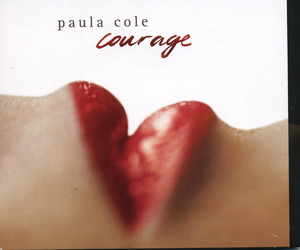
Paula Cole sounds earnest and goopy on comeback album

COURAGE/ Paula Cole/ Decca

"Please forgive me all my seriousness/My so-called spirituality,'' Paula Cole sings on Courage, her first new album since 1999. "I'm just a mess.''

Cole has always teetered between high-mindedness and insecurity, and that hasn't changed on Courage. Neither has her voice, rich and tremulous with more than a touch of Joni Mitchell. And neither has her fondness for plush pop.

Lonely Town, with Herbie Hancock on piano, aims for the delicacy of a jazz standard. Love Light climbs like a Peter Gabriel song, with its anthem-tinged melody underpinned by a plucked Moroccan lute. Its lyrics begin with a bird thinking its reflection is its perfect mate; it dies crashing into a windowpane.

Cole made three albums in the 1990s and won the 1997 Grammy Award as best new artist after her plaintive hit Where Have All the Cowboys Gone? She completed an album after her 1999 release, Amen, but it was rejected by her label, and Cole largely dropped out of the music business, occasionally releasing songs on her Web site. She has been raising her daughter, Sky.

The songs on Courage trace a storyline from a bitter breakup -- "I stop talking and fade to bleak/Feeling insignificant, atrophied and weak'' -- to a new start: "I wanna stop the conversation/I wanna kiss you.'' While many of them were written with seasoned studio musicians, they sound heartfelt. But as the self-help bromides pile up and the arrangements thicken, all the seriousness gets mighty goopy.

Inspiration is key, says songwriter

World music singer/songwriter Angelique Kidjo said inspiration is the most important ingredient for creating good, lasting art.

Angelique Kidjo is performing Friday at the Utah Arts Festival.

"The first thing that needs to happen when you write music is to be inspired," Kidjo said by phone from New York. "You can't write music to please anybody. And don't compromise. That's what I learned when I was singing with my mother's theater troupe as a child. If inspiration comes, you can't get me out of the studio. But let me tell you once I write a piece of music, it isn't mine anymore. It becomes everyone's."

Kidjo, who will headline Friday's Utah Arts Festival performances, began her singing career at age 6 in Africa. "My mother had a theater troupe and they would come to my house to rehearse. When I came home from school, I would hear all this singing. And found that I was right in the middle of it. Everybody looked so happy doing what they were doing and I wanted to mimic them. So I did. One day my mother saw me mimicking their movements and trying to sing along and she asked me, 'Do you want to do this, too?' I told her I did and I became a part of the troupe."

Kidjo learned a lot of lessons while under her mother's professional direction. "One thing I learned was to make sure you enjoy what you are doing. If you can't feel like you can give 180 percent on stage, don't bother. You will be wasting your time, and you will waste your audience's time."

When Kidjo decided to embark on her own career, she knew she would have plenty of challenges to overcome. "One that I still face is trying to get people to see that I am an artist first and an African second. There are many people who still don't give African artists the recognition they deserve. They think we belong in a museum. And when someone like me tries to expand the boundaries of art, they don't accept us. Let me tell you, that there are many good artists in Africa. We need to be recognized. We are not monkeys in a tree. We are artists."

Earlier this year, Kidjo released her 11th album, "Djin Djin." The title is the sound a bell makes that welcomes the day in Africa. She recorded songs with Alicia Keys, Branford Marsalis, Joss Stone, Peter Gabriel, Carlos Santana, Ziggy Marley and Josh Groban, to name a few.

"Recording with those other artists is my way of reaching out to the world and calling for unity," said Kidjo who has been awarded the Prix Afrique en Creation in 1992, theDanish Music Award for Best Female Singer in 1995 and the Kora Music Awards for Best African Female Artist in 1997.

"I wrote songs, without having certain singers in mind, and just let them choose which ones they liked," she said. "It was a good thing that no two artists liked the same song. I would have been in trouble. Just you try to say no to Peter Gabriel."

After Kidjo performs at the Utah Arts Festival, she will take a jaunt up to Canada to receive another music award. "It has been announced that I am to be awarded the Antonio Carlos Jobim Award on June 28. I am the first woman to receive it. And to me, it's a big deal."

The Jobim Award honors world-music artists who influence crossover music and jazz, said Kidjo. "The award is the epitome of what I've been trying to do all my life."

15 juin 2007

Peter Gabriel and themusic.com are proud to annonce...

Peter Gabriel and the Encore Series team at TheMusic.com have joined forces again to create THE PETER GABRIEL ENCORE SERIES 2007. Each show of the Peter Gabriel’s The Warm Up Tour will be recorded LIVE OFF THE SOUNDBOARD, mixed by Peter’s ‘Front of House’ Engineer, Ben Finlay, and pressed into high-quality manufactured 2-CD sets (not CD-Rs). Shows can be purchased separately, or for the ultimate fan, can be purchased as a complete set (all 22 shows) in either our Collectors Edition Box Set or Deluxe Limited Edition numbered Road Case.


For those unable to attend one of the concerts on this tour, the Encore Series offers a chance for you to experience Peter Gabriel from home, and for those of you that do see a show, an opportunity to relive the experience again and again...

As a special bonus, we are offering Full Moon Members a 10% discount on all Peter Gabriel Encore Series items (2007 Peter Gabriel Road Case not included). Please click here to sign-up with the Full Moon Club.

Items available from this Encore Series:
* Deluxe Numbered Road Case
(Europe)
* Collector's Boxes
(Europe)
* 2CD Sets
(Europe)
* Related Peter Gabriel items from the Groove Shop

Catherine Bell massage therapist of PG ?

With an extensive military career spanning nine years as fiery Marine Corps attorney Lt. Col. Sarah ("Mac") MacKenzie on "JAG" (1996-05), it seemed only natural that Catherine Bell would be approached by the producers of the television series "Army Wives."...

...The daughter of an English architect and an Iranian-born nurse was born in London, but raised in Los Angeles from the age of 2 with her mother and grandparents in the wake of her parents' divorce. Bell is fluent in Farsi because of the Iranian household, but attended a local Catholic school where she was taught by nuns. A very bright student, she matriculated to the University of California Los Angeles with every intention of becoming a biomedical engineer or studying medicine.

Bored, the beautiful Bell dropped out of school a year or so later and was immediately snapped up as a print and catalog model on the Los Angeles scene. A four-month modeling assignment in Japan opened her eyes to a strange new culture where she was frequently groped on Tokyo streets by short men. She was "very homesick," and was angry and fast enough to turn on unknown assailants with punches to the nose and elbows to the ribs.

Tired of long runways and hot photo studios, the 5-foot-10-inch Bell soon turned her attention to acting by enrolling in classes taught by heavyweight teacher Milton Katselas at The Beverly Hills Playhouse.

Eventually self-employed as a massage therapist (singer Peter Gabriel was among her clients) while auditioning for parts, she finally made her professional debut with one line on "Sugar and Spice" (1990) - a tasteless little sitcom with the 30-second shelf life.

Over the years she has played a number of aggressive military women, including her role in the feature film "Men of War" (1994) with Trevor Goddard - a strange Englishman passing himself off as an Australian in the U.S. who wound up playing Bell's off-and-on love interest Mic Brumby on "JAG" a year later.

"We had amoebic dysentery at the same time while shooting in Thailand and became friends," Bell said about her first meeting with Goddard.

Goddard - who lived a lie, claiming among other things to have been a professional boxer - died of an accidental drug overdose in June 2006. In the throes of a divorce, he left two young sons behind.

The announcement of his death, according to Bell, "was horrible. I was very shocked, very surprised - I think we all were. What a wonderful, sweet human being. I just adored him. But I knew he liked to party ...."

14 juin 2007

Record At Real World For Free

mi7.com launch competition to win 3 days of recording at Peter Gabriel's Real World Studios

mi7.com, one of the fastest-growing communities on the internet has announced a new music contest in conjunction with Peter Gabriel's world-famous Real World Studios. MI7 is offering one lucky artist or band the chance to record in this legendary world-famous studio.

Musicians throughout the world can enter the contest for free by simply creating a profile at mi7.com, upload some songs, and let the other members vote on them. The artist judged most deserving of the chance to record at Real World will be flown to London, chauffeur-driven to the beautiful English countryside of Wiltshire, and enjoy three days to record their music in the Big Room of Peter Gabriel's Real World Studios with a world-class producer - all expenses paid.

Per Larsen, CEO of MI7 told us, "At MI7 we've always believed in giving musicians the best tools they need to make their music. We're now taking it to the next level and giving them free access to one of the most legendary recording studios in the world. We're proud to be able to offer this once-in-a-lifetime opportunity for a great new band to live their dream!"

Real World Studios was founded by Peter Gabriel and is one of the finest studios in the world. The Big Room is why Real World is justifiably famous. It offers space and versatility on a grand scale for live recording and tracking. Equipped with a 72 channel SSL 9000 XL K series console together with a varied array of outboard equipment (including a large selection of vintage Neve modules), it offers the potential for truly state of the art recording and mixing.

About MI7

MI7 is a pan-European and Japanese partnership company staffed by professionals with many years of experience in all areas of the media industry. Representing a new concept in the distribution of media and music production products, MI7 brings competence, passion and results to both its customers and the industry. Plus, a bit of spice! Working in close cooperation with a selected range of manufacturers, MI7 has an extensive customer base that includes both media professionals and enthusiasts. In addition to offering distribution and customer service, MI7 also provides answers and solutions that make it easier for the customer to focus on what is really important, namely the creative flow.

Pricing and Availability:

The Real World Studios contest is now accepting songs and will run through October 31, 2007. As an added bonus, all entries submitted before June 30, 2007 will automatically be entered in a random drawing to win one of the world-class microphones available at Real World Studios, the SE Electronics Gemini. No purchase necessary. Official contest rules and details can be found at community.mi7.com/contests

More information: www.mi7.com

13 juin 2007

Rock Stars on Wheels

Maybe you’re familiar with Peter Gabriel. He was lead singer for the band Genesis from 1967-1975, preceding Phil Collins. He has been successful as a solo artist in the 1980s as well, with hits like “Sledgehammer,” “Shock the Monkey” and others. Apparently Gabriel also enjoys an occasional bike ride. Check out this YouTube video where he grabs a folding bike and cruises around and around a spinning circular stage while performing Solsbury Hill at a recent concert. No word on if he sings like that when he’s just pedaling around the neighborhood back home. Watch the video

Paula Cole's 'Courage'

New album is her first offering in 7 years


Paula Cole has a rich, resonant voice that seeps inside you, lending a feeling of warmth, intimacy and strength. She's also gifted with a finely tuned, grown-up compositional skill, creating anthemic pop and breezy jazz-tinged songs that likewise express our innermost feelings of romantic longing, disillusionment, resilience and triumph.

That's where Cole took us in the 1990s with her hits "Where Have All the Cowboys Gone" and "I Don't Want to Wait" (the theme from "Dawson's Creek"). And it's how she'll be bonding with listeners anew with "Courage," (Decca, A), the artist's first album in seven years.

Somewhat autobiographical, this album fills in the gaps of Cole's seven-year absence from the "hamster wheel" of the music industry. During the period she faced up to career rejection, gave birth to a daughter, broke up with the girl's father and delved deeply into meditation.

There's more than a hint of philosophical/spiritual awakening in object lessons like "Lovelight," which is evocative of her early collaborations with Peter Gabriel.

Also telling the tale quite well, are the bossa-nova-flavored "Hard to Be Soft" and the pop-rocking "14," which delves into the concerns of a woman conditioned to repress her emotions. But there's light at the end of the tunnel with songs like the reggae-tuned "Safe in Your Arms" and Cole's take-charge "I Wanna Kiss You.

12 juin 2007

John Tesh wants to create an experience

The U.S. pianist and composer is playing Centennial Hall tomorrow night.

It's John Tesh the pianist, composer and Peter Gabriel fan who is at Centennial Hall tomorrow night. "I've tried everything," says Tesh, who has a hit syndicated radio show, gold records, Emmys and PBS-TV specials in his resume. The U.S. entertainer plays Centennial Hall tomorrow at 7 p.m. The concert benefits the Autism Canada Foundation and Tesh's performance is part of a tour helping support his new album/DVD A Passionate Life (Warner).

"I really want to create an experience. That's why I love Peter Gabriel . . . and Cirque du Soleil," Tesh says from his California home.

Guest performers on the bill include London Mayor Anne Marie DeCicco-Best and husband Tim Best, who may sing a June Carter-Johnny Cash duet. They were originally going to be part of a charity event to support Autism Canada at the invitation of its president, Dave Patchell-Evans of London. After the London duo accepted, that event became tied to the Tesh concert. Others on the bill include the London-based Canadian Celtic Choir, London singer Jim Chapman and London harpist Jennifer White.

Even with these and other London guests performing in the first half of the concert, Tesh may not have the elaborate stagecraft of Gabriel, the British rocker and activist, or the Montreal-based Cirque.

But he says he shares with them a belief a performance can be a transforming spectacle. Tesh encourages fans to reflect and make decisions about their own lives based on what they hear and feel at a Tesh concert. A response like "I'm not doing what God made me for" is fully appropriate, he says. "When you get that right, everything falls into place."

Perhaps surprisingly to some of their other fans, Tesh covers music by British rockers Sting and Phil Collins on A Passionate Life. "Sting's into music. It's a musician's concert . . . when you see Peter Gabriel, he's crazy," says the only British classic rock fan from North Carolina to have completed a 10-year stint -- 1986 to May 30, 1996 -- as co-host of TV's Entertainment Tonight.

The TV show gave Tesh the chance to meet some of the rock musicians he already admired, including Gabriel, but he had become a fan of such bands as Jethro Tull, Yes and Emerson, Lake & Palmer in the 1970s. Maybe it's not such a leap from the Tesh's memories of Yes star Rick Wakeman "playing six keyboards all at one time" to the lush textures and piano touches on A Passionate Life. Maybe.

Tesh's touring band includes a dancer/choreographer and a bass player who has worked with Stratford's Loreena McKennitt. Dance will play its part in the next Tesh special on PBS-TV which will blend hip-hop styles and ballet. "The point is that when you think hip hop, you think John Tesh," he jokes.

At this stage of his career, Tesh is perhaps better known as a radio star than a hip-hop dance expert. Intelligence For Your Life -- The John Tesh Radio Show is broadcast in the London market on 97.5 EZ Rock weeknights at 6 p.m. The show is billed as being packed with "real-life knowledge, random intelligence and expert advice," all surrounded by music.

Birth of 'world music' tag revisited

Twenty years ago this month, a group of industry professionals representing a handful of specialist independent labels met in a small, nondescript room above a run-down London pub to discuss how to promote, market and sell music from outside the Anglo-American pop axis to a Western audience. Over warm English beer and a few desultory-looking plates of sandwiches, they spent a night coming up with the blueprint for a campaign that was to dramatically transform the way such records were retailed - and a new term to describe them. That term was "world music". Twenty years later, the pub is an upscale fish restaurant and world music as a genre has grown to generate such multi-million selling acts as the Buena Vista Social Club, Cesaria Evora, Ladysmith Black Mambazo and Manu Chao. Yet it was not always so.

What's in a name

"What we now call 'world music' has always existed,"
said Charlie Gillett, founder of the ongoing Oval Records, and a renowned author, music historian and broadcaster. "But in 1987 there wasn't an identifiable section to browse through in record stores. Before the term was created, people simply didn't know where to look for these records."Oval Records was one of nine labels represented at that historic meeting on June 29, 1987, at the Empress of Russia pub in London's St John Street. Also present were Globestyle, Crammed, Hannibal, Rogue, Sterns, Triple Earth, WOMAD and World Circuit.

A number of other labels including Earthworks, Discs 'Afrique, Cooking Vinyl and Topic Records were unable to attend but pledged support. The meeting was convened by Roger Armstrong, the affable Irish-born director of London-based Ace Records, where he still presides in 2007. A highly respected record company man who had tasted mainstream success in the 1970s when his Chiswick Records label enjoyed hits with acts like the Damned and Sniff 'n' the Tears, he had moved into what was about to become known as world music when he co-founded Globestyle as a specialist subsidiary of Ace in 1985.

"Some of us were in awe of Roger because he was one of the few people present who had actually sold records in serious quantities," recalls Amanda Jones, then with the fledgling WOMAD Records and now label manager at Real World. Armstrong's mailed invitation described the gathering as an "international pop label meeting" and set out an agenda including "identifying the target audience," "how to deal with retail" and - most significant - "adoption of a campaign/media title."

In harmony

Shortly after 7pm on that warm Thursday evening, Armstrong opened the meeting with a fluent account of the importance of creating a generic name for music by international acts, in order to give it a focus and identity at the point of sale. There was little, if any, disagreement. "Everybody thought it was a good idea because it was clear that there was something happening if we could just get the door open," recalls Joe Boyd, founder of Hannibal Records and now an author and broadcaster.

According to Armstrong, other names under consideration included "world beat," "tropical," "ethnic," "roots" and "international pop." After an hour, he called for a show of hands, when "world music" garnered more votes than the rival suggestions combined. According to Iain Scott, then director of Triple Earth Records and now a label manager with compilation specialist Union Square, the initial aim was not to create anything as grand as a new genre. "The objective was simply to target more efficiently those who might buy music from outside their own culture, whether from Africa, South Asia or Latin America," he said.

Thomas Brooman, director of the WOMAD festival for the last 25 years but who at the meeting represented WOMAD Records (which in 1989 was to become the Real World label), shares a similar recollection. "We knew there was a grassroots audience for our music, but the roadblock was distribution," he said. "What we needed was a banner to rally behind. But in a brand-conscious world, we accidentally created a genre." Oddly, nobody present remembers who formally proposed the term "world music."

According to Ian Anderson, editor of monthly specialist magazine fRoots, who at the time was running Rogue Records, it was one of several terms that had been floating around for a number of years. So why was it adopted over the other names? "It seemed to include the most and omit the least," he said.

Ben Mandelson, co-founder of Globestyle Records, who kept minutes of the meeting and is now a producer and musician, agrees. "World music was the most vague and inoffensive term on offer." Mandelson and many others recall a strong spirit of cooperation. Anderson's persuasive advocacy of teamwork resulted in all of the labels involved agreeing to pool resources to fund a combined marketing push around the newly adopted term.

Mixed reaction

A few days after the meeting, a joint press release announced: "It was agreed that the term WORLD MUSIC would be used by all labels present to offer a new and unifying category for shop racking, press releases, publicity handouts and 'file under ...' suggestions. This means that you no longer have to worry about where to put those new Yemenite pop, Bulgarian choir, Zairian soukous or Gambian kora records."

The campaign had its early critics. "There were a lot of negative responses flying around," Boyd said. Two weeks after the initial meeting, a second gathering was held to consider reaction. "There was opposition from some quarters," Gillett said. "The Bhundu Boys, who were on Cooking Vinyl and selling a lot of records, were getting (placed) in the mainstream pop/rock section and definitely didn't want to be in a world music box. But fears that we were creating a ghetto were pretty swiftly dispelled."

Indeed, such resentments were ultimately doused by the campaign's success, although its initial aims were modest in the extreme. "Le Mystere des Voix Bulgares and Ladysmith Black Mambazo had maybe sold 100,000 by then," Boyd said. "But mostly we were trying to get sales up from the hundreds into the thousands. To go from that to World Circuit selling 7 million copies of Buena Vista Social Club was something nobody foresaw."

Set against the sophisticated marketing techniques of today, the 1987 campaign perhaps appears naive. Yet arguably it was the campaign's very simplicity that made it so effective. "It generated a climate of interest so that by 1989 Peter Gabriel could take the idea of a world music label to Virgin Records for a distribution deal," Jones said. "They could see the potential of the artists we had like Nusrat Fateh Ali Khan. In fact, it was Virgin who suggested naming the label Real World."

11 juin 2007

La culture africaine s’exporte dans le monde entier

Musique, arts plastiques, littérature : l’Afrique commence à faire connaitre sa vitalité artistique.

De Rokia Traoré à Youssou N’Dour, en passant par Amadou et Mariam ou Alpha Blondy, on ne compte plus les chanteurs africains qui ont réussi à séduire l’Occident. Leur audience n’est plus confinée à un petit cercle d’amateurs de musique africaine. Le dernier album d’Amadou et Mariam est l’une des plus fortes ventes d’album en France pour l’année 2004. Ces artistes maliens ont d’ailleurs été honorés lors des dernières Victoires de la musique.

Souvent, les artistes africains sont devenus des ambassadeurs du continent noir, à l’instar de Youssou N’Dour, qui a récemment organisé un grand concert à Dakar afin de réunir des fonds pour lutter contre le paludisme. Vivant toujours en Afrique, des artistes comme Youssou N’Dour investissent dans l’économie locale. Cet artiste sénégalais possède un quotidien, L’Observateur, une radio, RFM, un studio d’enregistrement et une salle de concert à Dakar, qui permettent l’émergence de jeunes talents.

“Nous avons prouvé que les Africains pouvaient aussi réussir dans le domaine de la culture, et pas simplement dans le sport !” s’enthousiasme la Malienne Rokia Traoré, fière de constater que, dans les autres domaines artistiques, les Africains se font une place au soleil.

Dans le sillage du sculpteur sénégalais Ousmane Sow, d’autres artistes contemporains africains se font un nom, comme en témoigne le succès de l’exposition Africa Remix, présentée au centre Pompidou à Paris (du 25 mai au 8 août 2005) après avoir rencontré un vif succès en Allemagne et en Grande-Bretagne.

Dans le sillage du cinéaste sénégalais Ousmane Sembène, qui a reçu le prix Un certain regard lors du Festival de Cannes 2004 pour le film Mooladé, les réalisateurs africains sont davantage reconnus. Au Nigeria, notamment, l’industrie cinématographique se développe si vite qu’elle a été surnommée “Nollywood”, et produit chaque année des centaines de longs-métrages. L’arrivée du numérique permet de produire des films à moindre coût et redonne une chance au cinéma africain.

Dans le domaine de la littérature aussi, le continent noir commence à faire entendre sa voix. Depuis le prix Nobel obtenu par l’écrivain nigérian Wole Soyinka, en 1986, d’autres auteurs africains se sont imposés, notamment son compatriote Ben Okri, qui a obtenu le Booker Prize, le plus prestigieux prix littéraire britannique. Le Sud-Africain John Maxwell Coetzee, lui-même lauréat du Booker Prize à deux reprises, a été couronné par le Nobel en 2003.

A l’image de Gallimard, qui a récemment créé une collection dédiée aux artistes africains, les plus prestigieux éditeurs font désormais davantage cas des œuvres africaines. Et contribuent ainsi à changer l’image du continent oublié.

10 juin 2007

Free Peter Gabriel CD in next week's Mail on Sunday

Next week The Mail on Sunday gives readers a unique 14-track Peter Gabriel CD.

Here the pop legend tells how becoming a father again at 52 helped him overcome depression and rediscover his creativity. The transition from angst-ridden young rock star to genteel middle age is never an easy one – but Peter Gabriel has found his own unique means of coping.

"I grew a beard," he says, rubbing one hand automatically over his balding scalp. "It doesn't grow on top any more, so I felt I needed it. It feels comfortable, being older, grey, a bit overweight. I think in my 30s and 40s I was much more concerned about how I looked. There are not many great things about getting older but one is caring less what other people think."

It is hard to imagine Gabriel ever cared what anyone else thought of him. This, after all, is the man who refused to title any of his first four solo albums, labelling them all Peter Gabriel, using the same typeface but different cover art. Over a career spanning four decades, he has developed a reputation for striking out on his own with brilliant – if occasionally surreal – results. As lead vocalist and founder of the progressive rock group Genesis, he became part of one of the 30 highest-selling bands of all time. As a solo artist, he has released 11 albums, organised human rights concerts for Nelson Mandela and founded the hugely successful WOMAD world music festival which celebrates its 25th anniversary next month.

Next week The Mail on Sunday will be giving away an exclusive Peter Gabriel album to every reader. The CD contains 14 of his greatest hits, complete with unique cover art, all approved by the man himself. At the height of his fame, he always appeared uneasy in the limelight. And he admits: "Fame is a fun place to live in at the weekend but it’s not somewhere you’d want to spend your life."

Indeed, today, aged 57, he is an almost unrecognisable picture of Zen-like calm and mellowed middle-age.We meet for lunch in a small dining room in the sprawling complex of his Real World music studios set in a large mill house near Box in rural Wiltshire, where he is preparing for his forthcoming UK tour. He wears an oversize denim shirt and jeans, and resembles nothing quite so much as an avuncular geography teacher on a field-trip. He eats frugally – a small portion of macaroni cheese, a rocket salad and a slice of carrot cake. "I shouldn’t really," he says with a guilty twinkle, "but I'm going to."

He now hardly listens to music for pleasure, preferring the soothing tones of Radio 4. This new-found ease with the simple life, combined with his neatly brushed white goatee and disarmingly blue eyes, lends him an almost monastic air. It is an impression heightened by the way he answers questions – deliberately and with a tendency to give profound philosophical insights about the most straightforward things.

When I ask if he's happy, he replies like a Buddhist sage. "To be consciously alive is maybe more meaningful," he says with an enigmatic smile."You only know the richness of colour in contrast. Happiness, I think, is a false goal. I think contentment is a better one." And he seems at last to have achieved contentment. He and his second wife, Maebh, 36, split their time between Wiltshire and a large house in Notting Hill, West London. They have a five-year-old son, Isaac, who is Gabriel’s third child – he has two grown-up daughters from his previous marriage, Anna, 32, a documentary film-maker, and Melanie, 30, who works in music production at Real World.

"I absolutely love being a dad," he says. "I have a different perspective as a 57-year-old. I hope I give up more time to it. I know what my priorities should be. Tomorrow, Isaac is trying a day at this new school in London and I will be late for rehearsals to take him in. I wouldn’t have done that the first time round. I think I know now what a joy it is and how fleeting it is because they’ve left home before you can blink." It is a matter of particular pride that Isaac was also able to recognise his father’s voice on songs from the age of two. "Yes," says Gabriel, "he would say "Daddy" or "Dada" when he heard me. I had to proof-read a new book on Genesis over the weekend and I thought I’d test him on all the photos to see if he could spot me. He did but he just couldn’t work out why I had long hair."

Born in 1950 on a farm near Woking, Surrey, Gabriel had a happy childhood like Isaac’s – one filled with animals, country walks, golf and piano lessons. At 13, he was sent to Charterhouse, where the rigorous discipline and corporal punishment came as a shock. "For me, it wasn't a happy time," he says. I think it was more like Tom Brown's schooldays back then. I've never gone back. When we were there we were ruled by fear and, as a sensitive little kid, it was pretty scary. I wasn't good academically or at sport, so it was not a place in which I flourished in." His salvation came in the form of music. "Initially I was a drummer and Keith Moon was my idol," he says. I was very enthusiastic but not very good, so I became a songwriter as that seemed to be a good way in. And that was how Genesis came about really, it was a songwriting co-operative."

He founded Genesis aged 17 in 1967 along with four like-minded school-mates – Mike Rutherford, Tony Banks, Anthony Phillips and Chris Stewart. The band went straight from the cloistered atmosphere of an English public school to almost instant fame. Gabriel was equally precocious in his private life. Having met Jill Moore at a party when she was 14 and he was 16, he married her in 1970 when he was 20. "We grew up together, sometimes in a painful way," he says.

"We were doing our learning inside our marriage. Initially, I was difficult to live with when I was in the group. There wasn’t much room for a personal life outside of it. It was all-consuming." By 1975, just after the birth of his first daughter, Gabriel had reached breaking point. He announced that he was leaving the band."One of the reasons I left was when we had our first baby [Anna] she was in an incubator for two weeks," he says.

"We were recording [the album] The Lamb Lies Down On Broadway and, for me, there was no question about where I should be. One was an issue of life and death, the other an album. The band didn’t appreciate why I was not turning up to the studio, why my heart wasn't in it. At that stage, apart from Phil Collins, none of the others had kids. I think they would understand it better now."

Gabriel went on to forge a successful solo career, both as a musician and a technological innovator. His 1986 smash hit, Sledgehammer, was accompanied by a video featuring a shot of Gabriel's own head turning into plasticine and a series of dancing vegetables. "And a dancing cheese," he says when I remind him of it, as if ignoring the cheese would undermine the artistic integrity of the visual whole.

But professional success came at a personal cost. His marriage to Jill ended after almost 20 years amid infidelities on both sides. Gabriel went on to have relationships with the American actress Rosanna Arquette, who moved to England to be with him, and Sinead O’Connor, the Irish singer, who apparently attempted suicide after their break-up. Gabriel himself struggled with depression through his 40s and had several years of therapy. "The break-up of my marriage was the most major grieving I've done in my life," he says. Both my parents are still in pretty good health – my dad’s 95 and my mum's 86 – so that was really the only experience I’ve had of terrible grief."

Three years ago, he married Maebh Flynn, a music technician turned film-maker who used to work with him in the studio. She is 21 years his junior but he insists the age gap is inconsequential. "Inside I’ve always felt, I think, about 17, and I have felt that from the age of seven."

Does he think that he is a nicer person now, having made it through all the personal chaos? There is a long pause. "I think I’ve been pretty good at empathy," he says carefully. "I think sometimes I feel things too much for my own good. I can get irritated and grumpy on occasion, as befits a man of my age, but I think I’m understanding."

It comes as something of a surprise to find Peter Gabriel enjoying his new role as a benign curmudgeon. He seems almost relieved to have left behind his life as a tortured creative artist. "Occasionally you see these bruised, narcissistic egos that fill up a lot of the entertainment business and you think how sad not to be able to think beyond yourself," he says. For sure, I had some of those elements. You do not end up seeking attention unless you feel you need it at some level."With a final philosophic shake of the head, he wipes up the crumbs from his carrot cake in a paper napkin and potters off to continue rehearsals. A less narcissistic rock legend would, one suspects, be hard to find.

09 juin 2007

more acts added to WOMAD plus licence granted for the new site

WOMAD, which is moving to a new site at Charlton Park, near Malmesbury in Wiltshire this year for the 25th WOMAD, and happening from Friday 27th to Sunday 29th July has announced more acts.

Newly confirmed in alphabetical order are BC & JC, Bobby Friction and Nihal, Andy Smith, Antibalas (Afrobeat Orchestra), Daby Touré, Dr Jyotsna Srikanth, Ensemble Shanbehzadeh, Frédéric Galliano and Kuduro Sound System, Jamie Catto, Jaune Toujours, Jones and Barnard, Le Trio Joubran, Los Excéntricos, Lou Rhodes, Massukos, Mr Scruff, Muntu Valdo, Physical Jerks, Reem Kelani, Steinski, Te Matarae I Orehu, The Black Eagles, The Imagined Village (with Billy Bragg), The Real Tuesday Weld, and Vieux Farka Touré.

The new Charlton Park site has now had a licence granted for the festival, with conditions including that only one of the five public bars will be open until 4am, that Charlton House would not be floodlit and that the event would not exceed reasonable noise levels. WOMAD's Chris Smith told North Wiltshire & Kennet's Gazette and Herald that people become concerned about festivals but that WOMAD was a family event and one promoting cultural awareness. He said: "In the 25 years this event has been going we have had no significant incidents on site and are not expecting this year to be any different."

WOMAD has over 70 world-class artists from 40 countries performing over the festival weekend, including The Blind Boys Of Alabama playing a special Thursday night concert, plus playing over the three days of the festival proper: Peter Gabriel, Baaba Maal, Toots and the Maytals, Isaac Hayes, Seckou Keita Quartet, Taj Mahal, Ben Taylor, Chambao, Tinariwen, Candi Staton, Clube Do Balanço, Calexico, Dhol Foundation, DJ Shantel, Steel Pulse, Seth Lakeman, and more - click here for all the details to-date.

WOMAD Charlton Park will feature seven stages and workshop areas, including a children's village, many more activities and festival features, all in the idyllic environment of Charlton's open lawns and rolling fields.

Tickets are on sale, priced at £120. Camping from Friday to Monday is included in the ticket price - if you wish to camp on the Thursday there's an extra charge of £10. Click here to buy.