Articles review on the net, revue d'articles sur la toile


Inscription : feeds, flux :
(Atom) Gabriel Real World News

07 septembre 2007

Dive Into the Lost World of Marine Reptiles With 'Sea Monsters 3D: A Prehistoric Adventure'

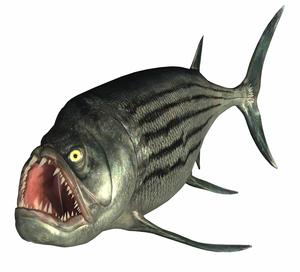
LOS ANGELES, CA -- (MARKET WIRE) -- 09/07/07 -- Extraordinary marine reptiles from the dinosaur age come to life on the giant screen with 3D technology in National Geographic's new film "Sea Monsters 3D: A Prehistoric Adventure," opening October 5, 2007 at the California Science Center IMAX Theater. From the giraffe-necked Styxosaurus and 20-foot "bulldog" fish Xiphactinus to the T-Rex of the ocean -- the 40-foot super-predator Tylosaurus -- these wondrous beasts defy imagination.

The film, narrated by Tony Award-winning actor Liev Schreiber with an original score by longtime musical collaborators Richard Evans, David Rhodes and Peter Gabriel, takes audiences on a remarkable journey into the relatively unexplored world of the "other dinosaurs," those reptiles that lived beneath the water. Funded in part through a grant from the National Science Foundation, the film delivers to the giant screen the fascinating science behind what we know, and a vision of history's grandest ocean creatures.

"This is the first giant-screen film about what lived in the water during the dinosaur age," said producer Lisa Truitt, president of National Geographic Giant Screen Films and Special Projects. "It is perfect subject matter for such an immersive format, one that allows these giants to literally swim off the screen and directly into the audience." (....)


Turn it on again ?

(....) Un livre de Genesis sortira bientôt, alors qu'il y aura un compact audio des meilleures prises des chansons de la tournée européenne et un DVD du spectacle de Rome. Pas mal de trucs, en fait, mais pas de nouveau matériel ni de retrouvailles avec Peter Gabriel pour The Lamb Lies Down on Broadway.

«Oui, j'ai vu The Musical Box faire le spectacle The Lamb Lies Down on Broadway, a admis Collins en parlant du groupe-hommage montréalais, mais on avait déjà discuté de la possibilité de la reprise de cette tournée avec Peter (Gabriel) et Steve (Hackett). Cette idée, elle a germé la première fois en 1997, à la parution d'un coffret de Genesis. On voulait faire quelque chose pour les 30 ans de The Lamb... et on en a reparlé à Glasgow en 2004.»

Agenda

La suite est connue. Gabriel ayant prétexté l'agenda d'un disque solo, Collins, Banks et Rutherford ont mis «cinq minutes pour décider à reprendre du service».

«Peut-être que quelques spectacles s'ajouteront, note Tony Banks, mais on ne s'est pas remis à l'écriture, et quant à une reprise de The Lamb..., il y a la nature indécise de Peter, mais il a toujours été comme ça.»

Pour sa part, Rutherford estime que la plus grande difficulté fut de «jouer les bonnes notes», mais il ne sait trop si la musique de Genesis «est encore pertinente». (....)

Philippe Rezzonico /Le Journal de Montréal

06 septembre 2007

England’s dreaming

A star-studded musical collaboration is bringing English folk into the 21st century.

In the unprepossessing surroundings of a converted corrugated-iron aircraft hangar in Wiltshire, a stellar group of musicians has assembled to reimagine what it is to be English. This is the first rehearsal for the Imagined Village, an ambitious project bringing together folk musicians including Eliza and Martin Carthy with established pop and rock acts - Paul Weller, Billy Bragg - and a flavour of multicultural England from Transglobal Underground, the British-Asian singer Sheila Chandra and the poet Benjamin Zephaniah.

Their aim is no less than to redefine our ideas about Englishness through their unique collaboration. "You shouldn't try to define Englishness, because it's personal," says Bragg. "The key to appreciating it is understanding how all these things come to be here at this particular time. Imagined Village is a snapshot of this, because it attempts to draw together some of the things that are part of the culture of England, in both a traditional and a contemporary sense."

The group are putting together an album that will be out this month, featuring ancient songs such as "John Barleycorn", "Tam Lyn", "Cold Hailey Rainy Night" and "Hard Times of Old England" given an Asian, dub, drum'n'bass, African and lushly orchestrated twist. It is an album that is restless in its affectionate exploration of the oral folk tradition. Such fusion projects always run the risk of going horribly wrong, but this is an enticing, intoxicating journey into England's past and future.

Musicians at the rehearsal include the cellist Barney Morse-Brown, the bass player Francis Hylton and the sitar player Sheema Mukherjee. Eliza and Martin Carthy are practising the album's opener - "'Ouses, 'ouses, 'ouses" - and "John Barleycorn" in one room, while the percussion section of Johnny Kalsi and Andy Gangadeen tackles complex backbeats, surrounded by cables and Mac laptops.

Chandra supplies accompaniment on "'Ouses . . ." and joint lead vocals on "Welcome Sailor", while Bragg offers a modern countryside-angst take on "Hard Times of Old England". Joining them later on in the week will be the celebrated English folkster Chris Wood, the Copper Family singers from Rottingdean in Sussex (John Copper provides the album's atmospheric opener, reminiscing about chalk downs and handing down oral traditions), the Dhol Foundation and the Gloworms, a new ceilidh squeezebox-and-fiddle trio who feature in a medley alongside their older counterparts Tiger Moth in "Kit Whites 1 and 2".

What they are trying to achieve in five days is ambitious, but even in a couple of hours Sheema Mukherjee, Martin Carthy and Morse-Brown seem to have mastered a unique instrumental version of "Scarborough Fair". They play it later as part of their set at the Womad music festival, accompanied by Billy Bragg, reading a paragraph or two from his book The Progressive Patriot - a "revisionist celebration of Englishness".

The project has been masterminded by Simon Emmerson, a DJ and producer best known for his work with the Afro-Celt Sound System and with African acts such as Baaba Maal and Manu Dibango. Emmerson was determined for traditional English music to assume its rightful place on the "world music" scene. "Until recently there weren't any English acts at Womad," he tells me when we sit down to a late lunch. "You would go to any world music festival and there would be music from all around the world - but not from England. Until five or six years ago there were English folk festivals in one corner and world music festivals in the other. I think Eliza [Carthy] broke that mould. She was the first one to say that we should be up there on the main stage, and it's now happening."

After a long career working with African musicians, he draws parallels between the two traditions. "The first vocal on the album is by John Copper, and in it he's referring back to his father and his father's father. He is evoking his family. In effect, they are the English equivalent of griots [the Malian musical dynasties] - they've kept the oral tradition going."

Bragg agrees. "What is English folk music if it isn't world music? The term itself is just a fancy name for a genre that often has its roots in tradition, which is what we're touching on here."

The ensemble will set out on an extensive UK tour in November. Unfortunately, Paul Weller is unlikely to appear, but his presence looms large on the album. He contributes to Tunng's "Death and the Maiden" and to "John Barleycorn" with Martin and Eliza Carthy. Another highlight of the album is Benjamin Zephaniah's bold reinterpretation of the old Scottish ballad "Tam Lyn". He turns an ancient story of phantasmagorical love involving a pregnant maiden and her bewitched changeling lover into a modern tale about a girl falling in love with an immigrant who's about to be deported: "There's no peace in my nation/I'm a war refugee/There are people in uniforms/Out to get me . . ./If you really do love me/Will you stay by my side?"

"I think Englishness is to do with mongrelness," the twice Mercury Prize-nominated Eliza Carthy tells me later. "This country has always been a nation of travellers. There have always been people here from other cultures, right down to the Vikings. I actually think that being English is living in a transient nation: people that live together and make this place their own. I know there are people here whose family was in the Domesday Book and all that kind of stuff, but my family are all gypsies. Gypsies and musicians - seven generations of musicians on Dad's side . . . on Mum's side no one knows, because they're all gypsies!"

Sheila Chandra is of Indian descent, and sang with the band Monsoon before forging a successful solo career. She believes she has been "completely absorbed into English culture", and disputes the idea that Englishness should involve inherited guilt. "Englishness isn't about Westminster. The people in Lancashire 150 years ago were being colonised by Westminster in exactly the same way as people in India were. So I think there's a ruling-class guilt that should be put in its correct place. I don't think there's anything wrong in celebrating English culture per se, as long as you're not using it to make a culturally superior stand against any other culture."

It is likely that the Imagined Village project will get a sniffy reception from some in the folk world. It is full of electronic manipulation, with a big sound that Eliza Carthy describes as "slightly Hollywood". But her father isn't worried about such negative reactions.

"Some folk musicians are scared of change," Martin says. "I think it's down to the fact that there is a real lack of confidence in this music, its resilience, and its ability to absorb anything. There's still this attitude that you must protect it, which comes from people like Cecil Sharp, who stated that 'this is a delicate flower, and if we don't take care of it now it will disappear'. Well, it's taking an awful long time."

Bragg sums up the Imagined Village experience when we discuss our Anglo-Saxon origins. "What sound could be more multicultural than Anglo-hyphen-Saxon? Tell me another nation in the world that's got a hyphen in their racial title. Even back to our earliest origins we've always been a mixed people, and we've always revelled in that mix."

"Imagined Village" is out on 10 September. A full UK tour starts in November. For more info log on to: http://imaginedvillage.com

Phil Meadley

Genesis reunion : Tour and DVD but no new music planned by band

TORONTO - The Turn It On Again Tour, Genesis' first North American tour in 15 years which starts Friday, was hatched in a Glasgow Holiday Inn four years ago.

Phil Collins told a media conference at Toronto's Air Canada Centre on Wednesday that he and the other four original members of Genesis -- Mike Rutherford, Tony Banks, Peter Gabriel and Steve Hackett -- assembled to discuss the possibility of doing a 30th-anniversary tour of the 1974 album, The Lamb Lies Down on Broadway.

Gabriel begged off at the time, however, saying he was finishing up a new solo album and preparing for a tour. "Here it is four years later and there's still no new album and no tour," Collins said. "We weren't surprised, actually. I think Peter would like to do it, but he just won't commit to it."

So a decision was made among Collins, Rutherford and Banks to revive the 1980s hit version of the band. There's nothing new in terms of recordings from the remaining trio, either, and nothing on the horizon, said Banks.

"There are no plans at this point to take this any further," said Banks. Collins added: "We're doing it simply because we want to. We won't make any money on the European tour and probably won't make anything in North America. (...)

SSL, TuneCore.com, Eventful Offer Special Promotion

Solid State Logic announces a partnership with TuneCore.com (a delivery and distribution service and portfolio company of Guitar Center) and online events site Eventful to send up to five bandmembers on a one-week, all-expense-paid trip to England to record at Peter Gabriel’s Real World Studios. Real World has hosted sessions for artists such as The Cure, Bonnie Raitt, Super Furry Animals, Beth Orton, Goldfrapp, Deep Purple, Robbie Williams, Paul Oakenfold and Sigur Ros.

The number of individual “Demands” received at Eventful.com will determine the winner. This grand prize includes studio time, airfare, ground transportation, food, lodging, an engineer and assistant, and unlimited access and complete lockout of Real World's "Big Room” for five days. (Approximate value: $25,000.)

“The Big Room” is renowned for its 72-channel SSL XL9000 K Series analog console, its large selection of vintage gear, and its varied array of outboard equipment in a room that is famous for its view of the flowing mill pond. Real World's team brings a wealth of experience, passion and commitment to help musicians realize the full potential of the studio.

To enter, bands will register as a Performer on Eventful (www.eventful.com/tunecore) and opt-in to participate in the competition. Then they need only encourage their fans to “Demand” at Eventful that they win. The unsigned band with the most Eventful “Demands” at the end of the day, October 31, 2007 (Eastern Standard Time) wins the grand prize.

Bands with the second and third highest Eventful “Demands” each win a Solid State Logic Duende DSP processing engine. The Top 10 bands with the highest “Demands” each receive one album, with an unlimited number of songs (not to exceed 74 minutes), placed for free into all digital stores they choose to which TuneCore delivers, including the first year's maintenance and storage.

Complete details about the promotion can be found at: www.tunecore.com/realworld. For more information on Solid State Logic, visit www.solid-state-logic.com.

05 septembre 2007

Dan Lanois studio work filmed

Daniel Lanois, who has worked with many of the heavyweights of popular music, is the subject of the moody-but-informative documentary Here Is What Is, a behind-the scenes-look at the producer at work in his and other studios. (GREG HENKENHAF/SUN MEDIA)

For years, people have asked Canadian uber-producer Daniel Lanois exactly how he works in the studio.

The interest has been high given his impressive client roster over the past three decades includes U2, Bob Dylan, Willie Nelson, Peter Gabriel, Robbie Robertson and Emmylou Harris, to mention a few.

So the 55-year-old Hull-born, Hamilton-raised Lanois finally got around to making a movie about the experience, Here Is What Is, which debuts Sunday night at the Toronto International Film Festival.

That world premiere of the moody-but-informative black-and-white documentary will be followed by two Lanois performances at The Great Hall in Toronto on Sept. 10 and 11.

"It's okay to give away secrets, especially if they're technological or systematic," said Lanois, while strumming an electric guitar near a studio board recently in his massive, 5,000-square-foot downtown Toronto studio. "And the thing that always belongs to you really is your heart and soul and your driving force and everyone is unique in that special way. So passing on a technique -- always happy to do it -- even if they use that technique they'll get a different result because they are a different person."

Lanois
was filmed by co-director-editor and Canfield, Ont., native Adam Vollick, while working on his next solo record with the likes of The Band's Garth Hudson and longtime collaborator Brian Blade on drums.

The new disc likely will be called Here Is What Is -- based on the Jamaican proverb "don't look to tomorrow, look to right now," explained Lanois -- and released next March, although it's currently without a distributor, as is the film.

"I met Adam Vollick through my brother Bob," said Lanois, who was first shot by the young photographer when he got his honorary PhD in Hamilton.

"I thought he had a good eye and a twinkle in the eye. I always like to work with up-and-coming young people if they have an appetite for good work, so it was nice to have him on board."

Lanois is also seen working in Morocco with fellow producer Brian Eno and U2 on the Irish band's next record and with Sinead O'Connor in Dublin on a song for the new film The Water Horse. There's also snippets of archival footage of sessions with Aaron Neville, Willie Nelson and Emmylou Harris.

"A friend of mine said there was not a lot of footage of me working and that it might be nice if there was an opportunity to see that at this point," explained Lanois of why he decided to film himself so intensively at this point in his career.

"And so rather than dwelling too much on the past we decided to just film over the course of the year, kind of the current creative process, just to see what we would get."

By JANE STEVENSON -- Sun Media

Sanctuary to distribute through we7.com


The Sanctuary record label has signed up with Peter Gabriel's downloads service We7.com, which means Morrissey, the Charlatans and the full Trojan back catalogue will be on offer. The service differs to other downloads services because it grafts targetted ads onto tracks - hence claiming to be the first legal, free music downloads service of its kind. Tracks are DRM-free and users get the option to buy the track without ads after a while. (we7.com)

04 septembre 2007

GABRIEL SCORES PREHISTORIC SEA MONSTER MOVIE

Click for the PETER GABRIEL Gallery

Veteran rocker PETER GABRIEL has offered his musical skills to a new movie about ancient sea creatures by composing the picture's musical score. The former Genesis frontman has scored new National Geographic 3D film Sea Monsters: A Prehistoric Adventure. Gabriel has previously been behind soundtracks for Martin Scorsese's The Last Temptation of Christ, Phillip Noyce's 'Rabbit-Proof Fence' and has provided tracks for Babe: Pig In The City and Natural Born Killers. Sea Monsters: A Prehistoric Adventure is slated to open at IMAX cinemas in the U.K. from 20 October (07).

01 septembre 2007

WOMAD issues an apology

Organisers of the Womad festival have been forced to apologise to festival-goers amid complaints over poor management. The event, held last month, was marred by torrential rain and freak weather conditions. The report was prepared by organisers in response to a series of allegations posted on the Internet about parking, staff and general management of the site.

A spokesperson for the festival said: "As organisers, we deeply regret the difficulties our customers experienced at the festival. We are disappointed that people feel that not enough was being done when our crew were working 20 hours each day to keep the festival going.Once there are thousands of people on the festival site, how we manage it changes, with public safety being the priority. At its peak, there were 40 tractors on the site pulling both customers and traders to safety. We are disappointed that valued fans and customers believe that in some way we deceived people about the conditions on the site - we did not."

More than 60 people have posted comments on the festival website under the discussion heading, Womad Rip Off'. One customer, known only as Michelles, said: "The site was not family and disabled friendly - it was more like a battle zone. What an awful weekend - I have been going to Womad for 13 years and it was a disgrace to treat loyal festival-goers this way."

Legendary Armenian duduk virtuoso in Turkey for peace

“We have lived together for so long; we don't need a mediator. We are able to resolve our problems if we want to. The time has come to set fighting aside. We should raise the next generations with brotherhood not with enmity. “Identity and sense of belonging are futile. When I blow into the duduk, I feel a heavenly joy of love, peace, serenity and fraternity running through my cells. Politics and borders are far from my magical world.”

World famous 'duduk' virtuoso from Armenia, Djivan Gasparyan, is giving a concert with Turkish saz player and vocalist Yavuz Bingöl in Istanbul today in honor of International Day of Peace. "My instrument is the voice of peace; I came here to lend a breath for the brotherhood of two nations," says Gasparyan, stressing that the trauma between Turks and Armenians would be overcome through tolerance and understanding.

Gasparyan and Bingöl will play in the Open Air Theatre in Harbiye. Gasparyan aims to reinforce peace and brotherhood between the two countries as he emphasizes how wrong it is to feed young generations with hostility. Following his Istanbul concert, Gasparyan will meet his fans in Ankara tomorrow evening at MEB Şura Hall.

Bingöl says this concert will be an unforgetable experience for him. The Turkish musician said he was deeply upset by the developments that followed the murder of Turkish-Armenian journalist Hrant Dink. "We will be hand in hand with Gasparyan against racism, borders and wars."

Living between Los Angeles and the Armenian capital of Yerevan Gasparyan is happy to be in Istanbul for the World Peace Day. Despite his hectic schedule, the world famous artist did not turn down Bingöl's offer to play a concert together. Problems can be overcome at the negotiation table, not with fighting or war, Gasparyan says. "We have lived together for centuries; we don't need a mediator. We are able to resolve our problems if we want to." Gasparyan emphasizes that interference from outside only deepens the problems between the two nations, yet he has hopes for the future. Bingöl doesn't speak Armenian and Gasparyan doesn't know Turkish, but Gasparyan says, "Art doesn't need a translator. Notes and melodies will help us to communicate."

From time to time, the origin of folkloric songs causes controversy between Armenians and Turks, says the artist. “This is unnecessary,” he adds. "We have lived together for centuries. It is difficult to decide the origin of an anonymous piece." He says that they will provide the lyrics to the anonymous "Sarı Gelin" folk song both in Armenian and Turkish. "This folk song is claimed by Azeris and Iranians as much as Turks and Armenians. We should put discussions aside and concentrate on the feeling this song gives us inside."

'Politics and borders are far from my magical world'

Gasparyan's geniology dates back to the Eastern city of Muş in Turkey. His father named Gasparyan after the famous Armenian artist "Aiuğ Djivan". Today, Gasparyan is 79. But he began to blow the duduk at six. Influenced by a movie he watched when he was a child, he began selling empty bottles in order to buy a duduk for himself. This double reed woodwind instrument's Armenian name is "zsiranapoh", a 3,000-year-old traditional Armenian instrument. It is ideally made from the wood of apricot tree.

Gasparyan shares an experience he had with one of his many fans. During the Soviet period, before a concert in Russia an old woman came to see Gasparyan with a book in her hand. She said that she didn't have money and wanted to give her book in exchange for a concert ticket. Gasparyan didn't accept her book and found a seat for her in the hall. He had been named best-known artist among the Soviet republics at the time. A Gasparyan concert held in Stalin's honor remains a vivid memory.

Gasparyan met British producer Brian Eno in 1989 and says it was a turning point in his life. After the meeting, Gasparyan worked with many famous artists and won admiration the world over. He gave concerts in almost every country,. Despite being 79, Gasparyan is still busy with recitals. “Identity and sense of belonging are futile. When I blow into the duduk, I feel a heavenly joy of love, peace, serenity and fraternity running through my cells. Politics and borders are far from my magical world.”

In honor of Gasparyan's 62nd anniversary in performing arts, a special night will be held in Los Angeles on Sept. 20. Many important names of politics and art circles are expected to join this special event to honor a lifetime of musical accomplishment. BOX Who is Djivan Gasparyan? Djivan Gasparyan, born 1928 in Solag, Armenia, is a world-renowned musician and composer. He plays the duduk, an Armenian double reed woodwind instrument related to the orchestral oboe. Djivan Gasparyan is known to be the master of Duduk. He has won four world-wide gold Medal UNESCO competitions (1959, 1962, 1973, and 1980). In 1973, he became the first musician to receive the honorary title of People's Artist of Armenia. A professor at the Yerevan Conservatory, he has instructed and nurtured many performers to professional levels of performance in duduk. In 2002, he received the WOMEX (World Music Expo) lifetime achievement award. He has toured the world several times with a small ensemble playing Armenian folk music.He has collaborated with many artists, such as Hossein Alizadeh, Sting, Erkan Oğur, Michael Brook, Peter Gabriel, Brian May, Lionel Richie, Derek Sherinian, Ludovico Einaudi, Boris Grebenshchikov, Hans Zimmer and Andreas Vollenweider. Djivan Gasparyan and Hossein Alizadeh were jointly nominated for a 2007 Grammy award for their 2006 collaboration album Endless Vision.

What is duduk?

The duduk is a traditional woodwind instrument of Armenian origins. This English word is often used generically for a family of ethnic instruments including the doudouk, literally "apricot horn" in Armenia, the düdük in Turkey, the duduki in Georgia, the balaban in Iran and Azerbaijan, the duduka or dudka in Russia and Ukraine, duduk in Serbia, and the daduk in Bulgaria. The English word has been asserted as derived from the Russian word "dudka", or from the Turkish word "düdük".

Discography : The United Nations Education, Scientific and Culture Organization (UNESCO) granted Mr. Gasparyan with four gold medals due to his service to world's culture. Gasparyan also made the musics of 39 Holywood films such as “Call for Sin,” “Gladiator,” and “Ronin”.

I Will Not Be Sad in This World (All Saints, 1989) Moon Shines at Night (All Saints) Ask Me No Questions (1996) Apricots From Eden (1996) The Crow, soundtrack Black Rock, with Michael Brook (1998) Djivan Gasparyan Quartet (Libra Music 1998) The Siege, soundtrack (1998) Eden Roc (Ludovico Einaudi, 1999) Heavenly Duduk (Network 1999) Cosmopoly, as guest of Andreas Vollenweider (EDEL records, SLG records (USA/Canada) Armenian Fantasies (2000) Gladiator, soundtrack Fuad, with Erkan Ogur (Traditional Turkish & Armenian songs) (2001) Blood of the Snake, Derek Sherinian (2006) (Gaspayran appears on the track "Prelude To Battle") RockPaperScissors, Michael Brook (2006)(Gaspayran appears on track "Pasadena part two")

30 août 2007

Nat Geo’s Sea Monsters Attacks IMAX

National Geographic's new large-format film, Sea Monsters: A Prehistoric Adventure, will premiere worldwide in IMAX venues and other specialty theaters on Friday, Oct. 5. The movie employs 3D animation to bring extraordinary marine reptiles of the dinosaur age to the really big screen in both stereoscopic 3D and and standard 2D formats.

Narrated by actor Liev Schreiber (The Omen, The Manchurian Candidate), Sea Monsters offers an original score by Richard Evans, David Rhodes and Peter Gabriel as it takes audiences on a journey into the relatively unexplored world of massive reptiles that lived beneath the water during Cretaceous period. Funded in part through a grant from the National Science Foundation, the film follows a family of Dolichorhynchops, known informally as "Dollies," as they traverse ancient waters populated with saber-toothed fish, prehistoric sharks and giant squids. The cast of characters also includes animated representations of the giraffe-necked Styxosaurus, the 20-foot "bulldog" fish Xiphactinus and the 40-foot super-predator Tylosaurus, known as the T-Rex of the ocean.

Distributed by National Geographic, Sea Monsters: A Prehistoric Adventure will be supported by companion books for both adults and young readers in standard, 3D and pop-up formats. A video game licensed by Destination Software Incorporated will be released to coincide with the worldwide premiere of the film and will be available for Sony PlayStation 2, Nintendo DS and Wii systems. An additional line of Sea Monsters licensed products, including plush toys, puzzles and apparel, will be available at www.nationalgeographic.com/store.

29 août 2007

August's Full Moon Club Update

Peter talks about the end of The Warm Up Tour, WOMAD,
The Imagined Village and Sevara in this month's video update.

Youssou n'Dour : nouvelle date de concert à Paris

29-08-07 - Déjà programmé dans le cadre du Festival d'Ile de France en septembre, Youssou n’Dour sera de retour début novembre pour un concert au Bataclan. L'occasion d'entendre en live les chansons de son nouvel album à paraître en septembre.

Après Myriam Makeba, Manu Dibango et Mory Kante, le Sénégalais Youssou n’Dour est un des grands musiciens Africain à avoir réussi le cross over. L’inventeur du Mbalax accèda à la notoriété internationale en collaborant avec Peter Gabriel, en participant à la tournée d’Amnesty Internationale (1988) et en chantant en duo avec Neneh Cherry "7 Seconds". Mais "L’Enfant chéri de la Médina" est toujours resté ancré dans son pays, créant un studio d’enregistrement à Dakar et un label pour produire et diffuser des artistes africains sur leur continent.

Information et réservation

27 août 2007

Daniel Lanois finally gives us what we want

102.1 The Edge presents Daniel Lanois with Brian Blade and Friends live in concert Monday September 10 and Tuesday September 11, 2007 at The Great Hall, Toronto, Ontario, 1087 Queen Street West

Toronto - 102.1 the Edge is proud to present Daniel Lanois with Brian Blade, September 10 and 11 at the Great Hall located on Queen Street West in Toronto, Ontario. The concerts coincide with the premiere of Lanois’ debut film, Here Is What Is, at the Toronto International Film Festival that same week.

The concerts will feature songs from Daniel’s film and his up and coming solo album. Lanois will be joined on stage by drummer Brian Blade. Other musical guests will be announced in the coming days.

About Here Is What Is

Here Is What Is is a sonic, filmic, journey to unique and captivating places from the last year and a half of Lanois’ life. The camera work is classic, uninterrupted and deadly committed. The film opens with a magical performance on the piano by Canada's national treasure, Garth Hudson.

The film includes moments of Lanois philosophizing with his old friend Brian Eno during an exotic visit to Morocco, where the Eno Lanois production team has been working with Irish friends, U2. Lanois also travels to the birthplace of the groove - the Deep South, Shreveport, Louisiana and sits in with Brian Blade at the Zion Baptist Church where a roaring rendition of This May Be The Last Time is delivered by Brian's father, Brady Blade Sr.

Lanois' psychedelic past continues to haunt him throughout the film as the hyper-realism of the in-studio documentation is contrasted by moments of wild fantasia. The heart dedicated to verite is also hungry for the unknown. Lanois also invites us into his studio to look over his shoulder at a mix being performed live, while he explains his moves and the musical reasons for making them. He explains how he stumbled into being a record producer, naively, through his love of music.

Here Is What Is is arguably the best rock-n-roll film of 2007 with guest appearances by Garth Hudson, Brian Blade, Eno, U2, Willie Nelson, Emmylou Harris, Aaron Neville, Billy Bob Thornton and Sinead O'Connor.

A full festival schedule will be announced on August 28, 2007. For more information on how to purchase tickets please call (416) 968-FILM or 1-877-968-FILM or visit www.tiff07.ca.

About Daniel Lanois

This first time film maker originally from Quebec is finally responding to what people have been asking him to do for thirty years, which is to show the creative process of his work in the recording studio. Mr. Lanois, one of Canada's musical exports is the recipient of ten Grammy awards and five Juno awards.

In a quiet way, he has helped to catapult the careers of many of our favourite artists to high artistic commercial places including U2: The Joshua Tree, The Unforgettable Fire, Achtung Baby, How To Dismantle An Atomic Bomb, All That You Can't Leave Behind, Bob Dylan: Oh Mercy, Time Out of Mind, Peter Gabriel: So, Us, Birdie, Neville Brothers: Yellow Moon, Brian Eno: Apollo, Music For Films II, On Land, The Pearl, Plateaux Of Mirror, Luscious Jackson: Fever In Fever Out, Emmylou Harris: Wrecking Ball, Willie Nelson: Teatro, Scott Weiland: 12 Bar Blues, Slingblade (Soundtrack), Daniel Lanois: Acadie, Beauty of Wynona, Shine, Rockets, Belladonna and Robbie Robertson: Robbie Robertson.

Technology is easy to measure but heart and soul is not. Lanois has ridden the constant wave of change and finds himself right back where he started embracing passion and people. What drives people is what interests Lanois; he doesn't like to talk about it because it might then disappear.

Tickets will be available at all Ticketmaster outlets or by calling (416) 870-8000 or online at ticketmaster.ca beginning Tuesday August 28 at 10 a.m. Tickets will also be available at the door on show day only (subject to availability).


By Social Decoder, SooToday.com, Monday, August 27, 2007

Youssou N'Dour, musicien surdoué et militant

Elégant, affable, efficace, le chanteur sénégalais Youssou N'Dour, 48 ans, figure au palmarès des cent personnalités les plus influentes de la planète publié chaque printemps par le Time Magazine. "J'ai vu Youssou être l'objet d'une attente croissante et devenir sans effort un leader africain de premier plan. Il a imaginé avant tout le monde de lancer des campagnes pour l'élargissement des nouvelles technologies, il s'est engagé dans un combat contre le paludisme, a milité à l'Unicef. Il est pour moi une source d'inspiration, pas seulement comme artiste, mais comme individu", écrivait le chanteur Peter Gabriel pour présenter dans l'hebdomadaire américain du 14 mai celui qu'il découvrit à Dakar en 1984. Youssou N'Dour, qui a commencé sa carrière musicale à l'âge de 14 ans, y était déjà célèbre et adulé.

Youssou N'Dour, musulman de confrérie mouride, est un chanteur populaire, un gamin à la voix d'or né dans la médina de Dakar, il gère des affaires et s'implique dans l'humanitaire, mais pas seulement. De timide et introverti qu'il était en dehors de la scène à ses débuts, il est aujourd'hui devenu le porte-parole d'une Afrique urbaine et économiquement consciente.

Ainsi, début juin, il était au G8 d'Heiligendamm, près de Rostock, en Allemagne, avec ses amis Bono (chanteur de U2) et Richard Branson (fondateur de Virgin). Du voyage également, Sir Bob Geldof, promoteur du Live Aid en 1985 contre la famine en Ethiopie, puis du "Live 8" en 2005, série de shows télévisés planétaires montés pour exiger des puissants l'abolition de la dette des pays les plus pauvres. Youssou N'Dour avait alors été le seul chanteur africain à figurer dans les concerts "nobles" de Paris ou de Londres.

Les présidents présents à Rostock, dont Nicolas Sarkozy pour la France, n'ont pas manqué de se laisser photographier aux côtés de ces stars du show-biz, une aristocratie à laquelle, bizarrement, Youssou N'Dour appartient. "You", en effet, vit, travaille à Dakar. Il aurait pu toute sa vie vendre un nombre de disques proportionnel à la connaissance mondiale du wolof.

Mais le musicien surdoué a su décupler ses forces de vente par un incontestable talent, et par un gracieux système d'alliances : duo de charme avec Neneh Cherry (7 Seconds, standard absolu), appui confraternel du cinéaste américain Spike Lee, puis flirts avec la musique arabe, notamment dans Egypt, hymne à l'islam tolérant enregistré au Caire, et récompensé en 2005 par un Grammy Award américain, malgré le choc irakien, alors que, en 2003, il avait annulé sa tournée américaine en signe de protestation. Le voici acteur, rejouant la tragédie de la traite négrière dans le rôle de l'esclave-poète Olaudah Equiano pour Amazing Grace, du Britannique Michael Apted, à sortir prochainement.

Nouvelle cause : le Darfour. Le 6 juillet, en ouverture du festival de jazz de Montreux, il organise une marche en bordure du lac Léman, au côté du rapporteur spécial de l'ONU Jean Ziegler. "Pourquoi Montreux ?", lui demanda la plate-forme d'informations suisse Swissinfo. "Pour moi, le contraste entre Montreux - avec ses belles voitures et ses gens arborant des airs de fête - et le Darfour, avec 200 000 morts et plus de 2 millions de réfugiés, montre que ce monde est déséquilibré. C'est choquant, c'est vrai, mais cela pousse surtout à réfléchir. Le Darfour pose un problème à la fois ethnique, religieux et politique, qui a trait au terrorisme et à l'islam." Je veux, nous disait-il en juin à Paris, emmener au Darfour des artistes et des intellectuels africains.

La rumeur voudrait que Youssou N'Dour soit mûr pour entrer en politique : il serait candidat à la députation, à la mairie de Dakar, à la présidence de la République du Sénégal, à celle de l'Union africaine... Mais, invité en mai à la grande "party" qui réunissait les cent personnalités de l'année retenues par Time Magazine, il en revient sceptique, chamboulé et gêné : "On a l'impression que, dans ces milieux-là, on peut décider du sort du monde."

A Dakar, pourtant, la polémique va bon train : sous le baobab Youssou, aucune herbe ne repousserait. Il serait l'ami des présidents, intime d'Abdou Diouf, puis d'Abdoulaye Wade, toujours du côté du manche. Youssou N'Dour possède un studio d'enregistrement, Xippi, un label de disques, Jojoli, une boîte de nuit, le Thiossane, deux fondations humanitaires. Il a créé Joko, un réseau d'accès à Internet pour les plus démunis. Il possède une radio, Radio Futur Medias, un journal, L'Observateur (60 000 exemplaires par jour), regroupés au sein du groupe Futur Medias, qui emploie 104 personnes. Il a des projets de télévision, parce que "les Africains doivent créer leurs médias".

Son récent divorce à l'amiable d'avec sa première femme, Mamy Camara, a alimenté les gazettes, autant que le procès en diffamation que lui a intenté Karim Wade, le fils du président, après la révélation, dans L'Observateur, d'un trafic de devises de plusieurs millions de dollars l'impliquant. Youssou N'Dour avait soutenu sans réserve ses journalistes. "Les médias, c'est difficile, commente le directeur de la publication, on dit toujours : c'est Youssou qui dit que... Mais non, je découvre le journal chaque matin, c'est un challenge."

Ce patron de presse inhabituel insiste : "Les Africains ne sont pas forcément bien informés. En 1985, quand je demandais à ma mère ce qu'était l'apartheid, elle ne savait pas. Alors, j'ai écrit la chanson Nelson Mandela. Aujourd'hui, j'ai des amis qui me demandent qui est le président du Darfour ! Nous devons obtenir de vraies informations et les mettre en commun avec les peuples du continent." Dès 1985 (pour exiger la libération de Mandela), les concerts ont été la première arme de ce père de sept enfants. Au printemps 2005, avec l'organisation internationale Roll Back Malaria (RBM), il organise l'Africa Live à Dakar, contre le paludisme, avec, en octobre, retrouvailles à Genève pour le 60e anniversaire des Nations unies avec Peter Gabriel, Tiken Jah Fakoli, Stephan Eicher, Gilberto Gil et Kofi Annan.

"Il fallait prendre cette maladie au sérieux. En pleine crise de paludisme, les Sénégalais disaient, avec une grande légèreté : je suis un peu "sibirou". Aujourd'hui, le discours a changé. On sait qu'il y a près de 3 millions de morts du paludisme par an. Je m'étais fixé un seuil de 3 milliards de dollars pour lutter contre cette maladie et notamment acheter des moustiquaires." Il dit avoir réuni 1,4 milliard.

Véronique Mortaigne LE MONDE 27.08.07

26 août 2007

Music, His Dargah

A decade after his death, the qawwal's fame is conquering continents ...

Nusrat Fateh Ali Khan sang these lines for A.R. Rahman’s album, Vande Mataram, dedicated to India in its 50th year of Independence. But all the outpourings of love from millions of fans worldwide couldn’t heal the legendary qawwal’s own terminally ill body. Ten years ago, as India celebrated its golden jubilee, 48-year-old Nusrat battled for his life in a London hospital. He lost the battle on August 16, one day after India’s Independence day, and two days after his native Pakistan’s.

However, death has only strengthened the intoxicating power of Nusrat’s music. A decade after he passed away, he is the subcontinent’s most internationally famous singer, with a huge fan following and a long chain of imitators. He is in the Guinness Book of Records for having recorded a staggering 125 albums. And, according to the US National Public Radio website, he has sold more albums than Elvis Presley. The singer’s legacy lives on through his nephews Rahat Fateh Ali Khan, Rizwan and Muazzam (following in Nusrat’s footsteps, the latter two have collaborated with British musician Peter Gabriel), and his students Salman Ahmad and Naeem Abbas Rufi. Salman went on to found the popular Pakistani rock group, Junoon. Indian Sufi singers Kailash Kher, Hans Raj Hans and Rabbi Shergill all claim Nusrat as their inspiration. Kailash, who is sometimes dubbed Chhota Nusrat, has been approached to sing with Eddie Vedder at a tribute concert for Nusrat.

The currency of Sufi music—partly a felt thing,and partly fashion—and Bollywood’s recent fondness for qawwalis, seen in Maqbool, Haasil, Corporate and Pyar Ke Side Effects, can also be traced back to Nusrat’s magic. India first got to know him by proxy when Bollywood made cheesy rip-offs—his Dam Mast Mast for Tu cheez badi hai mast, and then Mere Piya Ghar Aaye. Recalls Hans: "Ustadji was happy even when he was being plagiarised. He used to say that this means the message is spreading." It is not just the subcontinent where the qawaal is fondly remembered—or even appropriated. Nusrat, who toured the world during his lifetime, continues to be reinvented in the West as well. On the 10th anniversary of his death, there are heartwarming tributes for him from unlikely quarters—for example Gaudi, the famous London-based dub and reggae artist; and the Brooklyn Qawwali Party in New York, a group formed by percussionist Brook Martinez in 2004.

"I’ve been hooked to Nusrat’s music since the 1980s," Gaudi told Outlook. "Many UK fans of Nusrat and of qawwali don’t speak or understand the language of his lyrics. Yet they are moved—by the sheer power and range of his voice." In a just-released album called Dub Qawwali, Gaudi has mixed Khan’s vocals from the early ’70s—tracks that have rarely been heard before—with Jamaican dub beats. The title track, Baithe Baithe Kaise Kaise Rog Lagaye, is scintillating. Martinez’s Brooklyn Qawwali Party comprises jazz musicians who play Nusrat’s music on saxophone, trombone and trumpets. Their music grabs you with its beautiful interplay of instruments. As Martinez recalled in an interview with Outlook, Nusrat himself used to say that his music was very close to jazz, in the sense that it was based on improvisation.

Indeed, improvisation was one of Nusrat’s greatest strengths, and one of the reasons why his music lives on. He was rooted in tradition but always ready to extend its boundaries. As Junoon’s Salman Ahmed told Outlook, "He inspired me to see with the heart and think beyond borders...." Nusrat’s first innovation was to dramatically reinforce the Hindustani classical element in the often rough-and-ready aesthetics of qawwali. During his concerts, audiences would join in as he and his group began the customary chanting. But then, the singer would first baffle them and later send them into a trance by breaking off into a sargam interlude at a breathtakingly fast tempo.

Nusrat sang the poetry of Khusro, Bulle Shah and Iqbal, but always added his own touches. He would sing in Persian, Urdu, Punjabi and Awadhi in the same song. His voice would rise to a crescendo, the movements of his hands matching the beats. He was like a man possessed when singing. Dildar Hussain, who played the tabla in his group, remembers Nusrat’s total immersion in his music by describing his performance at Rishi Kapoor’s wedding in 1979. "We started at ten in the night," he recalls, "and finished at seven in the morning. He sang Halka Halka Suroor for two-and-a-half hours at a stretch." Hussain recalls another night in Colchester, England, in the early ’80s, when they were slated to perform for half an hour and went on, on popular demand, for six hours. "It was cold, it was raining, but all the white people—entranced—wanted him to go on," he said.

Nusrat
did not just bring the qawwali out of the dargah and put it on the world map, he also opened it up to Western influences by collaborating with musicians like Gabriel, Michael Brook and Vedder. However, his openness also earned him flak. In his ’98 film, Nusrat Has Left The Building...But When? (the title echoes the phrase "Elvis has left the building", always announced after an Elvis show), Pakistani filmmaker Farjad Nabi implies Nusrat’s talent had got diluted towards the end. Says Farjad: "Nusrat had been singing for decades before Peter Gabriel discovered him. The sudden recognition and money must have affected him. I felt deeply disappointed at the change."

It isn’t hard to see why the purists prefer the simple arrangement of harmoniums and tablas dominated by Nusrat’s indomitable lung power over his singing along with the techno instruments of the West. Yet, when you hear the jazz musicians, Senegalese jembe and the dub beats jamming with his voice, you also know he wasn’t just a musician but a veritable ambassador of love and music. Nusrat has not yet left the building.

Amit Ranjan on Nusrat Fateh Ali Khan

25 août 2007

Peter Gabriel Finds A Way to Avoid Record Companies: Go Where the Money Is

A boutique investment firm in London has found an unlikely new business idea: releasing comeback albums for artists that major labels may not longer be lusting after. Today’s Wall Street Journal profiles venture capitalists Ingenious Media PLC, which has so far invested between $400,000 and $2 million per album to finance fifteen records by acts like UB40, the Prodigy and Peter Gabriel (who invested his own money in the fund).

The arrangement works like this: Once Ingenious gets tipped off to artists who are label-less but looking to release music, the firm ponies up for production, marketing and distribution costs. Profits from each record cover Ingenious’ investment. If the record makes money beyond that, the bounty is shared by the firm and the artist. So it’s just like a record label! Almost …

Ingenious specializes in “heritage” artists (rockers over forty) who may no longer flourish in the major labels’ record, promote, repeat mode. So instead, Ingenious sells bands directly to the people who will support them: longtime fans. From the bands’ perspective, Ingenious is like the least pushy label on earth — they don’t show up at the studio or weigh in on the single, and in an era of record-industry decline where everyone from Madonna to Joni Mitchell is searching for alternative ways to get their music out, these financiers could potentially work their way up to the level of a Starbucks or Live Nation.

Elizabeth Goodman

Gaudi: Dub Qawwali's architect

Italian electronic producer talks about taking on the catalog of the late Nusrat Fateh Ali Khan, one of the world's most popular and revered artists.

Nusrat Fateh Ali Khan's popularity in the West might be limited to collaborations with Eddie Vedder and Peter Gabriel, but his catalog wasn't something that Italian producer Gaudi took on lightly.

Granted permission by the revered Pakistani icon's label to remix his catalog and full access with which to do so, Gaudi treaded lightly but still managed to take his epic, spiritual songs in a new direction, giving them an extra bounce by setting the vocals to dub and reggae beats.

Reached at his home in London, Gaudi spoke to MP3.com about his first discovery of Ali Khan's music, diving headfirst into a body of work that is unparalleled in Eastern music, and the possibility of taking the music on tour...

Audio : Gaudi and Nustrat Fateh Ali Khan - "Bethe Bethe Kese Kese"

(....)

I'm curious when you first discovered him, his music. Was it a long time ago, like, in the '80s or something?

Exactly, yeah. It was early '80s. I was passionate about reggae music and world music, and had quite a collection of reggae vinyl and I wanted to explore world music. But back in the early '80s or late '70s, it wasn't that easy, especially for me. I used to live in Italy. So it was very difficult to find the artists and discovering the other side of the globe, musically speaking.

And I came across Nusrat. Obviously I didn't speak any Punjab or Urdu but the message that came across from his voice, what he delivered, it was something that completely changed my life, incredible, because sometimes you don't necessarily need to understand the words. The global message came across so purely. I decided to study and get deeper and deeper and understand the meaning of Qawwali music and this is it. And now it's 2007 and I did what I did.

Yeah. Now, it sounds like when you first heard him sing, what struck you most was that kind of underlying or overt theme of peace, love, and spirituality. It came across regardless of the language barrier and that kind of thing.

Precisely. Yeah.

OK.

For me that was, I don't know, it was pure love in the form of music.

Right. So how long has this concept been in your head that you wanted to bring this forward?

Well the concept of crossing musical boundaries has always been my direction. The first experiment that I did in crossing boundaries and using world music with dub and reggae was back in 1987 with a release called Ethnotechno. I've done 11 albums so far, all world music crossing with reggae music.

Two years ago, the Pakistani label Rehmat Gramophone, which was Nusrat's label, asked me to write new music around Nusrat Fateh Ali Khan vocals, and I was honored obviously.

Right.

I accepted it and Dub Qawwali is the result.

Absolutely. Now that was about two years ago. Have you been working on the project pretty intensely for that whole time? I can imagine, given the content of what he sings about and your love for it, that it could be a pretty emotional, heavy experience.

It was really, really difficult and very emotional for me because it wasn't an artist, it wasn't a singer, it was something different. It was a messenger, it was someone who had managed to expand Asian music all over the world. He managed to bring his culture of Sufism and Qawwali music to the world thanks to Peter Gabriel and some others, and that is an incredible success along the lines of Robert Nesta Marley did. Marley is another icon that was a spiritual being in that he was gifted like Nusrat in delivering extremely simple messages but so deep and in a way that was accessible for everybody, my mom, my grandma, my son, everybody in the world, Chinese, Africans, everything.

Accessible without losing that deep meaning where you kind of get everything at the same time. You get the deep meaning and the spirituality but you also get music that's easy to sink your teeth into and that kind of thing.

Exactly. And for me that's the biggest result that you can achieve with music, when it's not simply a pleasant tool, it becomes a serious delivering tool, with a message and content. That's, for me, the power of music. And that's what, in my little vision, I try to do. Fusing genres and crossing boundaries for me is not just experimenting and see what's going on.

Now part of that process was you taking some songs that were upwards of 20 to 30 minutes long and tweaking them, cutting them down to four- to seven-minute songs. What was the process like of which sections of his songs to focus on? Obviously you wanted to focus most heavily on the vocal sections.

Yes.

But even still you had so much to choose from. How did you go through that process?

Well, it was a really difficult process, technically speaking. When I received the original studio reels from 1968 from Pakistan, it was a very unusual format, very, very old and there's not any studio around that kept that recording machine system. So I had to find a studio to transpose it in a digital format for me to visualize the .wav form. Nothing was written on paper, no music was at all. So we found a little microscopic studio in Scotland and we sent the reel and they sent it back to us.

Yeah, it's very bizarre. And then when I opened it, we had 24 songs all split in separate parts, vocals, a cappella, plus the sitar, the sarangi, the tabla. And I had goose bumps for two years, for the duration of my work. And when you hear these beautiful raggas, like, 25 minutes long or 35 minutes long, so beautifully crafted and uplifting, full of love and energy, I felt like something like, "I don't want to shorten it. I can't." It's like taking a painting and--

Cutting it in half.

Exactly. So I decided just to take a different approach, like, reinterpreting, in 2007, with my modern technology and my vision, keeping the full respect and integrity of the source for the original Nusrat songs. I started putting together what phonetically was right for me, with the help of a Pakistani translator, helping me with syllables and syntax and keeping the same flow and the same meaning.

Right, to make sure that your manipulations of the lyrics and the vocals didn't somehow change the meaning or the interpretation of the meaning and that kind of thing.

Yes, spot on. Precisely.

OK.

Also I didn't want to touch Nusrat Fateh Ali Khan's vocals by stretching them out or cutting them, I just wanted to keep the full vocals without any modification or digital transformation.

Interesting. Well you should be pretty proud of the result.

Thank you.

So I know you often tour as a DJ, but will you be taking this record on the road in more of a live setting?

I'm preparing the Dub Qawwali Live for 2008. And I want to do it with real musicians using my dub equipment on stage so I can do my live dub and obviously Nusrat can't be with us and I'm not going to replace him with a singer. I think I'm going to have all the full musicians with me and the only recording is Nusrat, which I will dub it live, with visuals, obviously, of him when he was alive.

(....)

By Jim Welte Conducted August 23, 2007, 02:13 PM
24 août 2007

Venture Capital, Rockin' to the Oldies

As Music Industry Sales Sag, A London Bank Steps In To Fund Veteran Performers

LONDON -- Past-their-prime rock bands are used to being ignored by record labels and mocked by the music press. But, in Britain, they've found a new groupie: venture capital.

A boutique London investment bank, Ingenious Media PLC, is financing comeback albums. Last month, it signed UB40, a reggae band that had a No. 1 hit in 1988 with the song "Red Red Wine." Other artists working on CDs for Ingenious include veteran rocker Peter Gabriel, and the techno punk band the Prodigy.

(....)

Ingenious was founded in 1998 by theater producer Andrew Lloyd Webber's accountant, Patrick McKenna, a former partner at accounting firm Deloitte & Touche. One of Mr. McKenna's early clients at Deloitte was English singer Peter Gabriel. The two men became friends, and Mr. Gabriel invested some of his own money in the Ingenious music venture-capital funds.

The two men agreed Ingenious would invest in Mr. Gabriel's next album, and in January, Ingenious paid $2 million for a 24.95% stake in Mr. Gabriel's 14th album, scheduled to be released next year. The deal gives Mr. Gabriel control over promotion and distribution of the still-untitled album in North America. Elsewhere, Mr. Gabriel is still signed to the Virgin record label.

Ingenious doesn't ask its rock stars to act like rock stars, something that appeals to the 57-year-old Mr. Gabriel, says Mike Large, chief operating officer of Peter Gabriel's management company, Real World Holdings Ltd. Musicians of Mr. Gabriel's age and experience are "not hungry for the circus of publicity, touring and autograph signing," he says."We know we have a great fan base who will buy the record if you tell them it's out there," Mr. Large says.

Dave Goldberg, a music entrepreneur at Benchmark Capital, a U.S. venture-capital investor, says it's too early to say if Ingenious's approach will take off in the U.S. "But we are going to see more and more of these different ways of creating financing for bands," he says.

Write to Aaron O. Patrick at aaron.patrick@wsj.com

23 août 2007

Sheila Chandra : A different voice

For boundary-breaking music, Sheila Chandra remains a genre pioneer like no other. Her set is one of the major highlights of Womad Singapore 2007 this weekend.

Sheila Chandra became the first Asian artiste in England to attain Top 10 success via Ever So Lonely in 1982. The song drove the album,

Third Eye, to over 250,000-unit sales worldwide but the inability of recording company Phonogram to capitalise on the musical direction of Monsoon, the band Sheila formed in her teens, led to her leaving the group.

It marked her move out as a musician of fiery independence.

As a solo artiste, she devoted herself to exploring the drones and tones across a dominant Anglo-Indian template, which eventually led to the critically-lauded trilogy under the Real World label. Weaving My Ancestors’ Voices (1992), The Zen Kiss (1994) and ABoneCroneDrone (1996) remain the yardstick for aspiring non-conventional vocalists and the reference point for the possibilities held by the human voice.

In this exclusive email interview, Sheila, 42, recalls the early years that shaped her music and philosophy.

You stepped into the spotlight when you were 16 and then “retired” at the ripe old age of 20. This tendency to take long sabbaticals in between the production of your albums is a pattern that repeats itself throughout your career. Are there any reasons behind your proclivity to appear and disappear from public view?

My reason for “retiring” at 20 was that I had made five albums in three years and I really needed to stop and take stock, to give myself some time to do the wider vocal research I wanted. Sadly, my recent “sabbatical” from recording is due to the fact that I don’t have enough vocal stamina to write following the standard that I wish.

I’d love to record a new album but it will have to wait. Having said that, yes, I do think sabbaticals are essential to staying on the cutting edge of your own creative path. I need time to train and grow if I am to stay happy and engaged with what I do.

Eight years ago, I became aware that I was suffering from serious stage fright. I have spent much of the intervening time overcoming it to the point where I love being on stage. It was necessary for me to do that in a low-profile way that felt “safe” and un-pressured to me. So the time has been invaluable.

After being catapulted into the limelight at such a young age, you have steadily built up a portfolio not as only a singer but also an artiste. Did you recognise that distinction during your nascent years or was it discovered along the way?

After Monsoon disbanded in 1982, I was very aware of the distinction between being a singer and being an artiste, in the sense of knowing how much more responsibility that entailed. The set-up for my early albums on Indipop was very much designed to facilitate the learning process I’d set myself in order to shoulder those responsibilities. Steve Coe, my then-writing partner, and the founder member of Monsoon, grew up with The Beatles and prog-rock.

Although I didn’t necessarily get on with the music he’d loved as a teenager, he did inspire me with the stories of how those bands managed the business around them and their creative processes.

You have to remember I was still a teenager. I was 17. I was far too busy and excited about singing to rebel by dropping out. My rebellion went into my music. To my knowledge, I was the only full time artiste in “Asian Fusion” in the 1980s. There was no one to learn from and I was serious about exploring the form as well as I could.

The voice is arguably the most versatile and powerful music instrument and you have achieved wonders with yours through your Real World releases. How did this fascination with vocal experiments come about?

I was always fascinated by the voice. (It is) ubiquitous and taken for granted. It is the only instrument connected directly to your blood supply and subject to all those chemical processes in the body that make you feel emotion.

It is the only instrument which belongs to every musical culture and which has remained the same in its construction across continents and history. There is an almost cellular memory and instinct in all of us, if we will let it surface, in how our various means of expressing emotion through the voice all connect. The really concrete element to my obsession with voice, however, is how fantastic it feels physically to sing when you can do it well. It is addictive.

Once you can do it, you just want to keep going!

There is a notion that you exist on the fringes of what we conveniently term “world music” – an outer space that is not inhabited by boundaries. How difficult was it to achieve this?

It is both easy and difficult. You must be prepared to express your passion for what truly interests you musically, regardless of how weird and out of step it is and regardless of how it relates to the way you sounded on your last album (especially if that album was successful).

You must be prepared to abort a project if it turns out to be structurally “shaky”. And you must curb your wish to sound “trendy” like everyone else, or to take a successful pre-existing formula from someone else. You must also give up your need to be understood or applauded, or to fit in. Do all that and it is really easy to sound “different.”

Sheila Chandra has a one-night gig at Womad Singapore 2007 (Aug 24-26) during the festival opener tomorrow. For details and packages, browse (womadsingapore.com). Venue: Fort Canning Park. Asian Dub Foundation, Youssou N’Dour, Daara J, Mahotella Queens, Shooglenifty and more will perform.