Articles review on the net, revue d'articles sur la toile


Inscription : feeds, flux :
(Atom) Gabriel Real World News

03 mai 2008

Peter Gabriel makes his peace with MP3 - and launches a site that second-guesses your taste

Back in 2003, we ran an interview with Peter Gabriel in PC World's sister publication >>FFWD, in which the singer, best known for his solo effort So, railed against "the mediocrity of MP3" saying, "I feel sad about is the acceptance of MP3 as the standard, particularly for young people".

The ex-Genesis front man was not anti-technology by any means; it's just that he preferred uncompressed, full-blooded discs to the quality compromises inherent in compressed downloads. To wit, his interview was to push a Super Audio CD (SACD) remix of his back-catalogue, and his enthusiasm for that higher-resolution disc format. SACD went no where, and personally I didn't miss it. The format did offer a fuller range of sound, but most of it at frequencies that only dogs and teenagers can hear. Nor did I particularly take to SACD's (or DVD-Audio's) 5.1 gimmicky surround sound capability. After all, you don't stand in the middle of a band during concert; you sit out front.

I was reminded of Gabriel's comments when I recently downloaded Bob Dylan's "Like a Rolling Stone" from iTunes. I was inspired by the TV series The Seven Ages of Rock (just winding down on Prime) which carried an interview with Rolling Stone's David Fricke, enthusing about the thwack! of snare drum that introduces Dylan's signature tune. I downloaded the track, then heard a tinny "phssst" as it started to play on my iPod. Yup, mediocre.

Anyhow, Gabriel has now apparantly got over his aural objections to digital downloads. With others investers, he's poured $US5 milllion into thefilter.com, a new search engine-cum-service that learns your music preferences, then suggests tracks you might like from its catalogue of 5 million songs.

In its first iteration, The Filter "learned" about your taste through a combination of saving your searches through its search engine (which otherwise looks pretty much like Google or any other), plus a downloadable app that sifted through your iTunes or Windows Media Player playlists. This month, Gabriel and co. are extending The Filter to cover TV and movies too, and the musician sees them as complemenatry with the services musical AI. He reckons that if The Filter knows what movies you like, then it can make a reasonable stab at what music appeals - and vice versa.

It's a good theory, but on their blog, The Filter's developers admit "things on the site are a bit slow, sometimes ugly and certainly buggy" as it struggles to emerge from beta to a live public launch scheduled this month. I agree. It's often taken me two or three attempts to log-in as various bizzaro error message are spat out by The Filter's home page. But once you're in, it's now looking pretty slick and user-friendly.

Entering Gabriel himself as an artist, I found The Filter quite free-ranging, suggesting tracks from everyone from Beth Orton to Hawkwind, The Police and, horrors, James Blunt

There are easier way to discover what people with similar taste are buying, such as the "people who bought this also bought XYZ" lists that Amazon.com and others offer. And The Filter's constant requests for you to rate artists (and TV programmes and movies) using a sliding bar can become onerous. But you do get more options, such as to only recommend artists from a particular time, or close or far thematically from your favourite. It makes for a fun browse.

/ PCworld New Zealand

Tom Diakité le 31 mai

Dans l'Agenda des actions africaines en région parisienne de mai 2008

Samedi 31 mai à 21h30 - Chanson World avec Tom Diakité, de souche royale. Tom Diakité est originaire du sud du Mali. A la fois chanteur, compositeur, et multi instrumentiste, ses qualités d’artiste polyvalent lui valent de riches collaborations dont Salif Keïta, Chico, Sushela Raman, Kanté Manfi la, Almade Noche, Mory Kanté, les Gipsy King . Après deux albums sous le label Real World de Peter Gabriel (Nostalgie et Espace) pour son groupe Tama, Tom nous revient avec un nouvel opus, dans son univers multiple.

Chanter pour les autres, participer à une aventure collective, c’est bien, écrire sa propre histoire, c’est encore mieux. Avec « Fala », Tom Diakité renaît une nouvelle fois. En s’accompagnant à la kora et au donzo n’goni, l’instrument des chasseurs au Mali, entouré de quelques amis au talent sûr, il impose à l’évidence sa différence.

Tarif: 7€ - http://www.myspace.com/tomdiakite-
Rens. L’ADEAC/L’entrepôt, 7/9, rue Francis de Pressensé, Paris 14è -
Rens. 01 45 40 64 74 , 01 45 40 07 50
musique@lentrepot.fr
www.lentrepot.fr

I Can End Deportation - ICED

On Petergabriel.com :

Through contacts at Witness we've been asked to point people at ICED.

ICED is a free 3D downloadable game about U.S. immigration law - step inside the shoes of one of five immigrant youth to the USA and try and become a citizen.

29 avril 2008


Big Blue Ball

http://bigblueball.realworldrecords.com/

Coming Soon on Real World Records

One week in the middle of summer this craziness exploded in our Real World Studios. We had this week of invited guests, people from all around the world, fed by music and a 24 hour café. It was a giant playpen, a bring your own studio party. There’d be a studio set up on the lawn, in the garage, in someone’s bedroom as well as the seven rooms we had available. We were curators of sorts of all this living mass. We had poets and songwriters there, people would come in and scribble things down, they’d hook up in the café. It was like a dating agency, then they’d disappear into the darkness and make noises – and we’d be there to record it.
Peter Gabriel, producer and performer

The first single 'Whole Thing' is available from iTunes in the USA.
Big Blue Ball - Whole Thing - Single - Whole Thing (feat. Francis Bebey, Alex Faku, Tim Finn, Peter Gabriel, Karl Wallinger, Andy White)

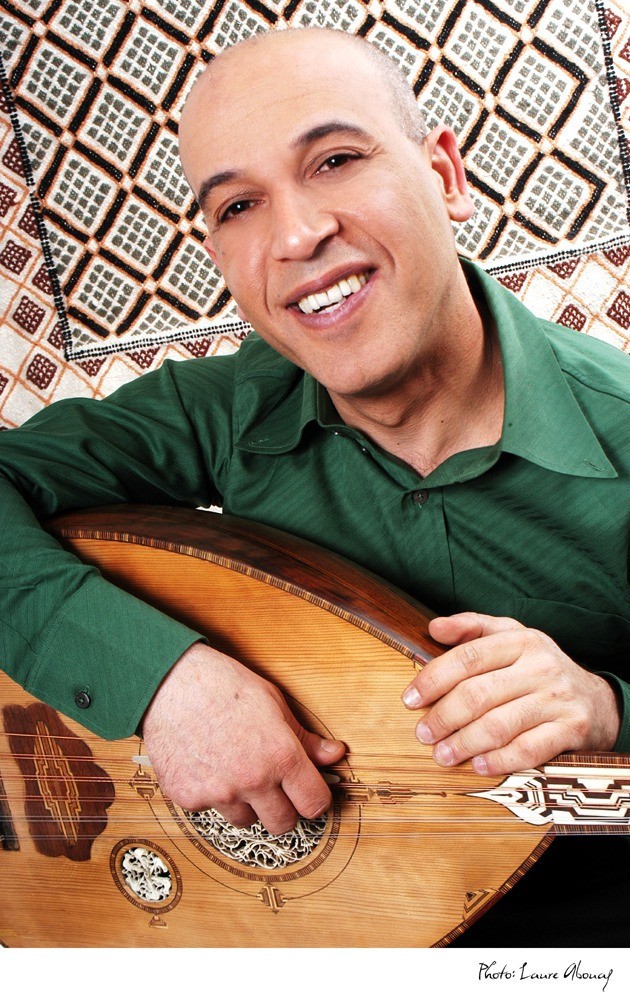
Rencontres autour du oud : Adel Salameh

Nous débutons ici une série de rencontres autour du oud, le « luth arabe ». La proposition est de s’entretenir avec des oudistes principalement, de différentes traditions et approches musicales, mais aussi avec d’autres personnes liées à l’instrument (fabricants, autres musiciens, etc). Au-delà de l’instrument, le but est d’explorer la richesse et la complexité des musiques arabes et leurs développements contemporains. Notre premier entretien a pour cadre les docks de Marseille, dans lesquels nous rencontrons Adel Salameh à l’occasion du salon Babelmed.

Votre dernier disque s’appelle Rissala. Ce mot a-t-il une signification précise ?


Adel Salameh Oui et c’est très important, ça veut dire « message », message de paix et d’espoir, pour nous les Palestiniens, mais aussi pour le rapprochement des individus, quels qu’ils soient. Ce disque est le résultat d’une collaboration arabe : moi-même au oud, Palestinien vivant en France, ma femme la chanteuse algérienne Naziha Azzouz, le Tunisien Ali Mnejja à l’accordéon, le violoniste marocain Mohamed Zeftari et l’Egyptien Adel Shams El Din au riq.

Vous parlez de message de paix et la presse vous donne souvent le titre d’ambassadeur de la culture arabe. Voilà qui rappelle, par exemple, la démarche de Marcel Khalife ou celle des Frères Joubran...

Chacun a sa propre démarche. Je suis engagé par la cause palestinienne car je suis né là-bas et ma famille y vit toujours. J’essaye d’y aller le plus souvent. Mais il y a une autre dimension, c’est celle de la collaboration entre artistes du monde et c’est vital pour les artistes palestiniens. Vous savez, les frontières sont fermées, mais la musique est là pour atteindre à l’international, pour créer l’ouverture. J’ai eu la chance de voyager au Japon, en Nouvelle-Zélande, aux États-Unis, en Europe. Transmettre des messages est un devoir pour moi, ainsi que de donner une image de la culture palestinienne. L’enjeu, c’est affirmer que le peuple palestinien existe, c’est fondamental. Pour moi, la résistance palestinienne à l’occupation n’est pas différente de la résistance française à l’occupation durant la Seconde Guerre mondiale.

À cette différence que cette occupation dure depuis soixante ans...

En effet. Nous voulons en vivre en paix dans notre pays, avec tout le monde, mais ça ne sera pas possible tant qu’on niera notre identité.

En concert, vous dites ce message uniquement avec la musique ou aussi avec des mots ?

Je laisse la musique parler. Avant tout, nous sommes des artistes engagés. Je ne peux pas oublier que je suis né à Nablouse et que j’ai grandi à Tulkarem. Je ne peux pas oublier ma famille ni la destruction de mon peuple. Je suis toujours face à ce monstre, mais je laisse la musique l’exprimer.

D’où votre carrière internationale, notamment dans les festivals Womad.

En effet, j’ai collaboré avec Peter Gabriel et Real World durant plus de dix ans. J’enregistre actuellement pour le label Enja, aux côtés de musiciens comme Rabih Abou-Khalil, Louis Sclavis, Renaud Garcia-Fons... C’est un excellent label distribué en France par Harmonia Mundi. (...)

28 avril 2008

We7 Adds Sony/BMG Tracks to Free U.K. Music Service

We7, a Peter Gabriel-backed online music service that launched about a year ago, will offer 500,000 songs from Sony/BMG for free streaming on its site. Along with indie labels and bands who have licensed their songs, this brings the total number of tracks available on the free music service to around 750,000.

However, as we just confirmed with a We7 spokeswoman, the company's license is currently limited to the United Kingdom. None of these new tracks are currently available stateside, but if Sony/BMG likes the way the service works in overseas, that could change within a few months.

All songs on We7 can be streamed for free with a 10-second ad in front of them. Some tracks (but not Sony/BMG's) can also be downloaded in the MP3 format for free with an ad appended to the beginning of the song or for a fee -- $1.40 in today's weak dollar.

Steve Purdham, co-founder and CEO of We7, said his company lets people pay for free music with their time. "To date, music fans have really only had two choices to get the music how they want it -- buy or steal," he said. "Today we're changing that by putting the fans and artists first to deliver a fresh new alternative. Simply fans get the music they want and now have the choice of paying with their money or paying with a small amount of their time. So everybody is happy."

We're not happy yet because, as mentioned above, the new Sony/BMG content is not available to U.S. users. Assuming Sony/BMG's experiment goes well and the other labels sign on to a U.S. version of the service, We7 could could become a DRM-free alternative to SpiralFrog.

27 avril 2008

San Lazaro

Billed as “the tightest Latin outfit to come from Australia so far” San Lazaro certainly lived up to its reputation. This is a hybrid group of some eight different nationalities, all based in Melbourne, coming together to make a wonderful mish-mash of reggae and hip hop-ish music on a distinctly latin base. Or in their own words, an “unrestricted melting pot of urban latin funk”.

“I could be 26 again!”, my gyrating wife enthused as the visceral sound and enthusiasm of these ten musicians enwrapped us and made it virtually impossible to keep still.

Complex and hypnotic rhythms abound, together with polished unanimity and apparent exuberance in performance, and Adelaide welcomed them back from WOMAD with enthusiasm. A song called Justicia (Justice) was a nice link with Anzac day, because, it was explained, we are involved in a war that the Anzac spirit is not all about.

This band has fortitude and drive, and an infectious musicianship which shows through in spite of the volume. Spain has a lot to be thanked for in giving the world these invigorating rhythms. This band has mastered and adapted them well through its marvellous mix of cultures. We could do with more of it in this country.

BUT - and this is a real concern - what possesses any band to set its volume at a level only marginally below the pain threshold? When it is deemed necessary to mike even the congas - certainly not the gentlest of the battery of percussion featured - and when the strident trumpet has to be blown directly into the microphone, then surely everything is too bloody loud! San Lazaro is not alone in this modern aberration, but it shares the culpability for the impending hearing loss of present and coming generations.

So it was not just with the fine music ringing in their ears that the audience left with - it was blending with their jangling and battered auditory nerves, together with the excitement of music that would have been even more enjoyable several notches softer. I’m sure St Lazarus, the Patron Saint of healing, would approve.

San Lazaro

Venue: Piano Bar, Adelaide Festival Centre
When: Friday 25 April, from 8pm
Cost: All tickets $20
Bookings: BASS on 131 246 or online at www.bass.net.au

Laurie Anderson's new show Homeland raises ideas

For an artist impatient with black-and-white thinking, Laurie Anderson certainly knows a lot about badgers

If Laurie Anderson didn’t already exist, some New York novelist would have to invent her. Artist, musician, singer, storyteller,intellectual, inventor and one-time pop star, she lives with a real-life rock god – Lou Reed – and works from an almost parodically perfect loft in the TriBeCa area of Manhattan. She’s four decades of downtown art scene in a lullaby voice.

At her front door, the yellowed, typewritten nametag “Anderson” gives a clue that she’s been here since 1975, when the area was mangy and the apartment lacked water, electricity or even a roof. Now there are chichi art galleries and a 24-hour pet grooming parlour around the block. Inside, it’s all ergonomic furniture, framed photographs on the walls – there’s one of Reed, another of Lolabelle, her rat terrier – and well-drilled filing cabinets and bookcases.

Trying to break the ice, I compliment Anderson on her bookcases – after all, shelves are what separate us from the beasts. She looks at me steadily, her big eyes glowing under her trademark spiky hair. “Badgers,” she replies. I’m sorry? “Badgers,” she says again. “They have shelves too.”

Anderson studied medicine and then sculpture before her performance career took off, and decades later she remains the eternal student. Steady in tone, wide of eye, she is fascinating because she is fascinated. You may or may not be seduced by the stripped-back staging of her new show, Homeland, when it comes to the Barbican this week. You may or may not fall for her undulent performing voice – slightly heightened from her everyday cadences – or for the manicured electronica of her music. But as she speaks and sings and speak-sings about the images that burrow their way into our brain, from Aristophanes to underwear models, from presidents to terrorists, there’s no denying she’s an American determined to look beyond her own backyard.

Homeland is a different caper to her previous shows, though. The journalistic Happiness (2003) saw her telling stories, from behind her keyboard, about working at McDonald’s, about how she broke her back when she was 11. The End of the Moon (2005) covered her stint as Nasa’s artist in residence. This time there’s no reportage, just new songs. And while her impatience with black-and-white thinking is a theme bubbling under, she’s raising ideas rather than investigating them. “I don’t really have a message,” she shrugs, “and if I had one I wouldn’t try to force it on people. I hate it when people do that, hate it.”

Anderson grew up in a small town outside Chicago before going to New York in 1967 because it looked to her like it would be the centre of the world. “I got to college and it was turmoil,” she says. “It was fantastic. A wonderful time to be a kid.”

Within two years she was performing her first symphony – on car horns. A few years after that, she was performing performance art pieces such as Duets on Ice – in which she played her violin while standing in ice skates on a block of ice. The performance ended when the ice melted. Hey, only in New York. Was downtown in the Seventies really the boho playground it has been painted?

“It really was,” she coos. “The city back then, it was dark, dirty, exciting, you could eat, drink, dance and smoke in the same place. No longer possible! And I was just part of this whole wonderful arts scene where people helped each other. There were no stakes then. Nobody did art to make money. Rent was low, we had the run of lower Manhattan, we were conscious that we were making a scene. Then in the Eighties what happened was, like jazz musicians before us, we went where the work was. Which was Europe.”

And in Europe Anderson became – briefly, bizarrely – a pop star. Her seven-minute single O Superman reached No 2 in Britain in 1981. Sounding both electronic and maternal, like a voicemail message from robot heaven, its success surprised everyone. “Somebody called and said ‘You’re in the charts in England’,” she says. “I didn’t even know what the charts were.”

Her success was too freakish to turn her head. “When you get something that you didn’t work for, and you don’t really know what it is anyway, then you have a very different attitude than if you’ve been scrabbling for it. Plus I was, and still am, a snob. Pop culture is not of interest to me, except as a source of material. I tend to think the more that people like something, the worse it is.”

She continued touring and recording for the next two decades. But she barely troubled the mainstream again, save for co-writing a song on Peter Gabriel’s squillion-selling album So (This is the Picture), and playing now and then with Reed, whom she moved in with in 1995. She has never scrambled for success, she says.

Being from a family that had money, I knew that money wasn’t going to solve anything,” she says. “People with money weren’t happier, they weren’t having a better time, they weren’t laughing more. It was the biggest advantage I was given as a kid. You don’t have to scramble and get rich, you don’t have to do that.

“I have two younger brothers who are identical twins. They are really happy, they live together, they have matching cars, matching birds. They are not married. Just live with each other. We have a ‘don’t ask, don’t tell’ policy in our family: ‘Go ahead, you have never had girlfriends, go ahead, you don’t see us asking us, do you?’ They are happy. They are great conversationalists. It makes you think, what do you want in life, what are you really doing this for? The money mill, the fame mill, they grind people out. There’s a quote from Balzac, ‘Fame is the sunshine of the dead.’ And that about sums it up.”

But, like it or not, Anderson is pretty rich and fairly famous. She shares a home with Reed a few blocks north, returning to her loft when he’s on tour. Does she ever feel that other people envy her and Reed’s lives? “I try not to look in the world in those ways,” she says carefully, “I really do. I don’t mean to retreat from things, I like to be part of things, but I try not to be part of other people’s negative scenarios.” She pauses, then giggles. “That sounds a very self-help way to put it, doesn’t it? Very Oprah.”

Still, if you did want to steal someone’s artistic life, you’d do well to make it Anderson’s. She’s still gleeful about the time she and her band jammed with some Tuvan throat singers recently: “Just these downtown New York cats and these Mongolian nomads! Beautiful. Wow. Fantastic.” She refers, in passing, to the talks she’s giving, including one for the Smithsonian Institute on Warhol, and one for the Museum of Modern Art on “can you collect performance art?” (“Nooo!”). She’s working on an installation for a new museum of Jewish Thought in San Francisco, which involves beaming some spoken Hebrew direct into people’s heads: she discovered the technology that makes that possible, hypersonics, on a fact-finding trip to the Massachussetts Institute of Technology. Next year, she’ll finally turn Homeland into her first album since 2001.

She’s 61 and still fearsomely cool, daddio – or, in her own words from one of the new songs, “a self-motivated spy who lives by the river”. But with this life, how much self-motivating does she need to get up in the morning? Does she have a routine, is she disciplined? “I just love learning stuff,” she says, “that’s my only discipline. And it doesn’t feel like work, it really doesn’t – I’ve managed to make my hobbies my work.” One of her art projects was walking around California with her dog. “Yeah, stretching it, I know! But, you know, why not? I don’t think we’re here to suffer.”

“My dream,” she says, “is that one day everyone would be an artist. We’d all learn how to pay attention. And no one would have to work any more.” Does she recommend it? “I do,” she says, her wide eyes twinkling. “It’s total fun. It’s just a blast!”

Homeland, Barbican Theatre, London EC2 (020-7638 8891 www.barbican.org.uk), Wed-May 3, then Norwich Theatre Royal (01603 766400), May 5, 2008

26 avril 2008

Sa Dingding, the Asian Bjork

Sa Dingding carries a torch for Chinese pop – and politics. Is the Asian Björk compromised by her views on the Tibet issue?

Wandering towards a window overlooking the congested road beneath the west London offices of her record company, China’s most in-demand musical property lets slip a quiet summation of her experiences to date: “I didn’t expect all this. I like the life I have now. But if I was back living with the sheep and cows in the grasslands, I would still be happy.” It has been a long journey from the steppes for Sa Dingding, who was raised in Inner Mongolia, and there can have been few weeks as odd as her second visit to Britain.

We had first met nine months earlier. She was an unknown who had recorded Alive, an album that mixes traditional Chinese melodies and Buddhist mantras with electronic instruments, and was trying to drum up enough interest in the West to convince her label to release it here. I was the only journalist sufficiently intrigued to want to talk to her. A lot has happened since then, perhaps the most pivotal thing being that she was nominated for a Radio 3 world-music award. Returning to London this month to appear at the awards ceremony, she found her five-day schedule filled with 40 interviews.

Unnervingly good-looking, with her long hair tied in a topknot, Dingding exudes the assured air of a pop star who refuses to be caught off duty, who views Kylie as a part-timer. If she is not quite as exquisitely dressed in person as she is in her portraits, her interview ensemble is an explosion in a new-age boutique: pompom earrings the size of tennis balls, chunky bracelets, a sheer top that leaves her left arm uncovered, kitten-heeled purple suede boots and a skirt that incorporates Tibetan prayer flags. And therein lie several reasons why she is the centre of a media whirlwind. The media love a photogenic woman, especially one who comes with the baggage of a topical hot potato.

Alongside her small entourage, she arrived in London the same weekend as the Olympic torch; she saw out her jet lag watching the news and struggling to comprehend what she was witnessing. In a quote that appeared in a British newspaper and was reprinted around the planet, the singer said: “I am Chinese, so I definitely support our government policy on this issue.” As she comes from a country that has claimed sovereignty over Tibet for centuries, it is fair to say Dingding’s perspective differs from that of the Dalai Lama. She is not alone: 10 days after our interview, I was caught up in a silent protest on Parliament Square, as Chinese students attacked the British media for distorting reports of Tibetan issues. On Monday afternoon, when she arrived for a record-signing session at the Piccadilly Circus HMV, a Newsnight team was close behind, perhaps hoping for a punch-up.

Had the fact people wanted to ask questions about Tibet surprised her? “No. People see me standing for Chinese culture, and it does not matter if this means Mongolian, Han, Tibetan or any other. They are all part of Chinese culture. So, if people are curious about one part I am glad to answer their questions and tell them what it is about.” She has no time for the view that what is happening in Tibet is an occupation, and does not see herself as appropriating Tibetan traditions when they are all part of Chinese culture. A successful 24-year-old singer is unlikely to want to end her career by denouncing her government, of course – even one who has just been informed that the Glastonbury festival is no longer interested in booking her because she is too controversial. One wonders whether Jay-Z was interrogated about his thoughts on Iraq before being handed that headlining slot.

“I think there is a lack of communication between people in the West and East,” Dingding continues. “I am a musician, and most of my time is spent making music, but what I want to do is help people to communicate. I’ve been to London twice and the people have been very friendly, very interested in me because I am Chinese. I grew up there and I love it. I love the culture of my country. My job is not to talk politics, but to introduce this culture to people from the West.”

Still storm clouds gathered about her. On the Tuesday, the discussion boards of the folk- and world-music magazine FRoots featured calls for a protest at the Radio 3 awards, while comments suggested that these came from the Free Tibet organisation. The pressure group, however, said it had never heard of her and had no desire to personalise the issue. The Olympic torch was a legitimate target, an individual musician was not. By Wednesday, Dingding at last felt free to sit down and talk about herself and her music.

Born in the Chinese region of Inner Mongolia in 1983, the daughter of a Mongolian mother and Han father, she grew up a nomad, dividing her time between a small house on the grasslands, where her grand-parents kept sheep, and the town, where they would spend winter. “It wasn’t a hard life,” she says. “There was enough milk and I had plenty of time to play. It was like heaven there. It taught me a lot about music and freedom.” When she was six, she joined her parents, travelling around eastern China until they arrived in Beijing in 2001.

After coming second in a television talent show, she recorded a debut album she now dismisses as “childish”, as she had little say in the material or production. Taking control of her career, she began recording demo versions of mantras, Tibetan chants, Sanskrit poetry and what, at first, appear to be Chinese folk songs, but are actually sung in a self-created “language”.

For Oldster by Xilin River, I was thinking about the way my grandmother talked to me when I was a baby,” she explains. There is a way we speak that breaks how we are bound by language, sharing emotions without understanding words. I’ve travelled around China, to Japan and Europe, yet the self-created words mean the same everywhere. We all understand the emotion.” She also made up words for the song Lagu Lagu, but for a very different reason, and it goes some way to explaining her attitude towards the appropriation of other cultures. The Lagu are an ethnic minority in Yunnan province, whose Himalayan roots are betrayed in their Tibetan-Burmese speech.

“I thought it would be cheating if I sang in their language,” Dingding says. “Most people in China don’t know the Lagu exist, because there are so few of them, but I wanted to promote them and ask people to understand their way of life. I was moved by their spirit, but I couldn’t use their songs.”

It seems to have worked. Picked up by the Universal conglomerate after a scout overheard her demos in the studio, Alive (known in China as The Life of 10,000 Things) has sold 2m copies in her homeland. But is there a market for it in the West? If we can enjoy Crouching Tiger, Hidden Dragon and indulge the musical eccentricities of Björk, shouldn’t there be a place on our shelves for a Chinese pioneer who becomes agitated only when asked about the state of pop music in China? For a second, Dingding’s distaste is written across her face.

“There are not enough good new stars growing up, certainly not making good music,” she says. “There is a generation gap, and the old stars are much better than the young. China is open right now. People can easily hear western music. So, we are looking to find our own way in music, and I hope the young musicians will be more brave. Perhaps this Radio 3 nomination will encourage them. I am just the start, and now more Chinese will get the chance to be heard.”

We meet again 24 hours later at the Radio 3 ceremony, when Dingding (now wearing a completely OTT red and gold creation) picks up the award in the Asia/Pacific category. She makes a speech in which she declares her pride in being Chinese and in being able to represent Chinese culture on the world stage. I later hear it described as “nationalistic” and “career suicide”. In the current climate, such interpretations could be all too accurate.

On Friday morning, the phones start ringing at her record-company office. Three times as many albums are requested by record shops than had been shipped in the previous nine months. She is confirmed for an Albert Hall Prom and the Womad festival, in July. Can she fit in concerts in Ireland, Hungary, Spain and Algeria, where a 50,000-strong Chinese population, Africa’s largest, would love to see her?

Dingding is not around to hear this, however. She has already left for promotional duties in Germany and France, before returning to China to plan her live shows, which will feature her band, dancers and kung-fu artists. Career suicide? The grasslands, it seems, must wait.

Listen to Sa Dingding at timesonline.co.uk/music

Mady DRAME, manager de Youssou NDOUR : ‘J’ai connu des hauts et des bas avec Youssou Ndour’

Youssou Ndour l’appelle ‘l’homme de Bercy’, parce que c’est lui qui est au commencement et à la fin de l’organisation du Grand bal dans l’enceinte de la mythique salle parisienne. Trois jours après Bercy (8 avril 2008), nous avons demandé à Mady Dramé, manager du roi du Mbalax, de faire un bilan financier de la manifestation qu’il vient d’organiser. Mais n’ayant pas encore fini de faire les comptes, il a préféré parler de comptes équilibrés d’autant plus que l’objectif n’est pas de faire des bénéfices. Invité à parler de ses relations avec son patron, le manager confie qu’ils ont connu des ‘hauts et des bas’. Plus de hauts que de bas, ajoutera-t-il. Pour couper court aux suspicions que pourrait cacher cette phrase, Mady Dramé précise qu’il s’agit plutôt des difficultés nées des premiers investissements engagés par Youssou Ndour. Les banques ne voulant pas financer les projets, le roi du Mbalax était obligé de mettre la main à la poche. Ce qui grevait ses finances. Autre révélation passée sous le nez des journalistes, c’est la présence de Rama Yade dans la tribune officielle de Bercy. (...)

Wal Fadjri : Combien de personnes sont venues de Dakar ?

Mady Dramé : Nous avons eu près de 200 personnes réparties dans plusieurs hôtels. Bercy a la particularité de drainer du monde. Je vous ai parlé des provinces où nous avons fait la promotion de l’évènement. Mais il y a aussi des fan’s clubs qui y montent des caravanes. (…). Vous voyez l’engouement que cela crée ! Il y a beaucoup de choses derrière Bercy. J’y reviendrai un jour dans une émission spéciale. Les gens ne voient, peut-être, que l’aspect artistique qui est très fort. J’avoue, en tant qu’organisateur de cet évènement, que cette année, c’est le meilleur Bercy. D’ailleurs, chaque édition est meilleure que la précédente. Tant mieux ! Nous avons eu un spectacle extraordinaire, un répertoire qui a été là. On a eu la participation des officiels venant du Sénégal : les représentants de la mairie, des sénateurs. C’est à l’honneur de notre pays.

Il ne faut pas oublier aussi que j’ai eu l’honneur d’accueillir discrètement - nous n’avions pas voulu que vous, les journalistes, vous soyiez au courant avant - notre compatriote Rama Yade (secrétaire d’Etat français aux Droits de l’homme, Ndlr). Elle était au premier rang des officiels avec Benetton. Elle est venue avec son mari. Il y avait également M. Benetton qui est une personnalité extraordinaire. Il se déplace rarement pour assister à des concerts. Il nous a honorés de sa présence. J’ai traité ce dossier pendant deux mois. Il fallait faire des repérages pour savoir où il fallait l’installer parce qu’il avait une délégation de 150 personnes au départ, avant d’en rajouter 50 autres personnes. Ce sont des gens, représentant Benetton, qui viennent de partout : ce sont des Italiens, des gens qui viennent des Etats-Unis, etc. Benetton était là avec son épouse.

Wal Fadjri : Comment Rama Yade a-t-elle réagi à la fin de la soirée ?

Mady Dramé : Après l’avoir installée, cinq à six morceaux avant la fin, je suis venu les rejoindre. Et elle était très satisfaite avec son mari. Auparavant, elle avait fait un aller-retour très rapide avec son mari entre Dakar et Paris. Et elle est revenue aussitôt pour assister à Bercy. Cela nous va droit au cœur parce que, comme nous l’avons dit, aussi au bien Sénégal qu’à l’extérieur, l’aspect politique ne nous intéresse pas. Le fait que des personnes viennent se joindre à nous pour vivre cet évènement, est très important pour nous. Nous remercions tous ces officiels. Je n’ai pas cité tout le monde. Nous remercions également tous les journalistes qui portent l’évènement à un niveau extraordinaire. Je profite de cette interview pour dire que M. Peter Gabriel voulait faire une surprise énorme à Youssou Ndour. Il est venu à Paris, malheureusement, il n’a pu joindre personne. C’est ainsi qu’il a raté Bercy. C’est regrettable ! Ç’aurait été un évènement de plus comme surprise à Bercy. Le lendemain, il est venu à l’hôtel et Youssou Ndour lui a rendu un grand hommage.

Wal Fadjri : N’avez-vous pas eu de difficultés à inviter Rama Yade ?

Pas du tout ! C’est une Sénégalaise, une Africaine. C’est Rama Yade, la Sénégalaise, l’Africaine qui était là, simple. Je l’ai accueillie à la porte sans escorte ni rien. Franchement, j’étais très ému par rapport à cette modestie, cette simplicité, cette volonté pour montrer qu’elle venait en tant que Sénégalaise nous accompagner dans cette manifestation. (...)


Laurie Anderson et Lou Reed se marie

A 66 ans, Lou Reed a fini par épouser la chanteuse Laurie Anderson avec laquelle il vivait depuis 13 ans déjà. Le mariage avait été tenu secret jusqu'à la récente cérémonie.

Le leader du Velvet Underground s'est donc marié avec Laurie Anderson le 12 avril dernier lors d'un cérémonie privée qui s'est déroulée au Colorado. Ce n'est qu'il y a quelques jours alors qu'une autre cérémonie a eu lieu à New York, ville où vit Lou Reed que l'annonce officielle a été faite. Anderson et Reed vivait déjà ensemble depuis 1995.

Laurie a collaboré à l'album "The Raven" sorti en 2003. Née le 5 juin 1947, Laurie débute en 1981 avec le single "O Superman (For Massenet)" qui déboule dans les charts grâce à John Peel. Elle a aussi collaboré avec Jean-Michel Jarre pour les albums "Zoolook" sorti en 1984 et "Metamorphose" sorti en 2000. Elle a aussi travaillé avec David Sylvian, Peter Gabriel et Brian Eno.

Lou Reed sera le 16 juillet prochain au Palais des Beaux-Arts de Bruxelles. Il y jouera l'entièreté de l'album "Berlin" sorti en 1973.

25 avril 2008

Organisers defend Womad sister event

The organisers of a new world music festival at a site in the Adelaide Hills believe their neighbours will eventually warm to the plan.

Womad Earth Station is planned as a sister event to Womadelaide and would be held every October from 2010 at a site in Ashbourne, south of Meadows.

Some residents oppose plans to build a new road and a bridge at the site. Womadelaide director Ian Scobie says more information will be provided in a meeting at the Ashbourne Hall tonight.

"I think when people understand that we're not about transplanting a scale of event like Womadelaide with its eight stages to this new site, it is about creating a new, smaller much more intimate festival that's based about ideas of the environment, then I think a lot of people's concerns will probably evaporate," he said. "We're not putting on an event that will have many stages with amplified music - that's not the nature of this new festival and that's a key message that we're trying to get across."

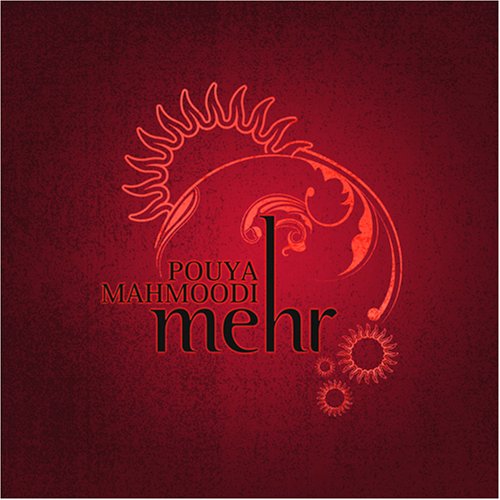
Pouya Mahmoodi

Mehr (Faryaad)


Recorded in Kuala Lumpur, mixed in Switzerland, and featuring a cast of Iranian musicians, singer-guitarist Pouya Mahmoodi’s first solo CD is a truly cosmopolitan undertaking—and that’s both a blessing and something of a curse.

Mehr is being billed as a groundbreaking Persian-rock fusion, but that’s a mild overstatement; it’s more like deracinated soft rock mixed with influences from all over the map. At times a ’60s influence bubbles to the surface: the string-sweetened “Si Pareh” updates the Moody Blues, while the flute-laced “Dingomaro” does the same for Traffic. Hints of Bollywood filter through on “Raz O Niaz”, “Bamdad” aims for Peter Gabriel–style drama, and “Me Va To” slinks along to an Ali Farka Touré–approved desert-blues beat.

Overall, the music is glossy and accomplished—perhaps a bit too polished, in fact—although that’s undercut by Mahmoodi’s understated singing (which, by the way, is all in Farsi). This 33-year-old musician shines, however, on the electric guitar. As a soloist, he mixes birth-of-the-cool octave lines with fluttering quartertone bends in the traditional Persian style, and he has a lovely, fluid sound on his instrument. He could stand to cut loose a little more, but that will likely come with time—and this is certainly a confidence-building debut.

http://www.myspace.com/faryaad

By Alexander Varty

Le tambour major à la fête de l'huma

Le percussionniste sénégalais Doudou Ndiaye Rose sera la vedette de la prochaine fête du quotidien français L’Humanité prévue, les 12 et 13 septembre au parc de Courneuve (près de Paris), rapporte l’hebdomadaire Jeune Afrique dans son dernier numéro.

Les organisateurs de la manifestation annuelle du journal communiste vont rendre hommage au grand tambour-major qui fête cette année ses cinquante ans de scène, indique l’hebdomadaire panafricaine.

Un grand concert est prévu au Zénith ou au Cirque d’hiver, à l’initiative du chanteur français Jacques Hegelin, précise la même source.

Doudou Ndiaye Rose va fêter, du 26 au 29 avril, ses 50 ans de carrière. Des batteuses rwandaises qu’il a formées participeront aux manifestations. Agé de 78ans, le tambour major a été désigné trésor humain vivant par l’Unesco en 2000. Il a eu à travailler avec plusieurs chanteurs de renommée.

Doudou Ndiaye Rose a côtoyé le rock (avec les Rolling Stones, Peter Gabriel), le jazz (Miles Davis, Dizzy Gillespie), la chanson française (Higelin, Lavilliers, Jonasz), la musique bretonne (Bagad Men HaTa) et la musique symphonique avec l’orchestre de Basse-Normandie.

Le percussionniste sénégalais avait participé en 1989, avec son groupe, à la célébration du bicentenaire de la Révolution française sur les Champs-Élysées.

Peter's April Update

Peter's back in the studio after some electric times in Sardinia and an eventful trip to California which included Global Philanthropy, Google's Larry Brilliant, The Filter, an encounter with a Lightsabre at Skywalker Ranch, and inspired recollections of an astronaut's floating hot-tub. You can catch tales of his travels and find him blending Brttany Spears with Dr Dre, all in the month's Full Moon Club video update.

Background on this month's content can be found at:

http://www.pixar.com
http://www.skysound.com
http://www.philanthropyforum.org
http://www.theelders.org
http://www.nytimes.com
http://www.google.org
http://www.rollingstone.com
http://www.thefilter.com

add you cover song suggestions at http://www.petergabriel.com

23 avril 2008

Peter Gabriel at Dreamforce Europe

Salesforce.com Announces Dreamforce Europe - Largest Ever European Software - as-a- Service Event. Dreamforce Europe - The European On-Demand Event of the Year! London 7th-8th May 2008

Musician and philanthropist Peter Gabriel, easyGroup CEO Stelios Haji-Ioannou and Wikipedia Founder Jimmy Wales will join salesforce.com CEO Marc Benioff at salesforce.com's first European user and developer conference

LONDON, April 23 /PRNewswire-FirstCall/ -- Salesforce.com , the market and technology leader in Software-as-a-Service (SaaS) and Platform-as-a-Service, today announced that its first-ever Dreamforce Europe user and developer conference will take place at the Barbican Centre, London, England on May 7 - 8, 2008. Special guests Peter Gabriel, easyGroup CEO Stelios Haji-Ioannou and Wikipedia founder Jimmy Wales will join salesforce.com CEO Marc Benioff on stage at the industry's largest European Software-as-a-Service event.

Additionally, executives from Accenture, AAA Soliditet AB, AON Corporation, CODA, Cognos, Dell Corporation Ltd, Deloitte, Google, Misys International Banking Systems and many others will participate in keynotes and sessions on collaboration, community, innovation and customer success. The Dreamforce Expo will feature the largest gathering of the European SaaS industry under one roof -- dozens of companies will demonstrate on-demand business applications for use with Salesforce CRM applications and the Force.com Platform. (...)


22 avril 2008

Angélique Kidjo au Festival d'été

Les amateurs de rythmes ensoleillés seront choyés le samedi 5 juillet. La pétillante chanteuse béninoise Angélique Kidjo se produira à la place D'Youville à l'occasion du 41e Festival d'été.

Lauréate du prix Grammy du meilleur album de musique du monde (contemporain) pour Djin Djin, un disque qui comporte des collaborations avec Peter Gabriel, Carlos Santana, Josh Groban, Alicia Keys, Joss Stone et Ziggy Marley, elle promet d'en mettre plein les yeux, les oreilles et les coeurs.

Également reconnue pour son travail caritatif auprès des femmes africaines, Angélique Kidjo profitera de sa présence chez nous pour parler de son engagement au sein de plusieurs organismes dont l'Unicef, Oxfam et sa propre fondation, Batonga.

Pour plus d'information sur le Festival d'été, visiter le www.infofestival.com. Pour en savoir davantage sur Angélique Kidjo, consulter le www.kidjo.com.

Kathleen Lavoie /Le Soleil

21 avril 2008

Sting's Drummer and Jan Gabarek's Saxophone to Impress Local Jazz Fans

Jan Gabarek's saxophone and Manu Katche's drums are about to fascinate local jazz fans in Sofia's National Palace of Culture (NDK) on May 15, informed from teh Standart News.


The drummer skills of Manu Katche, French drummer from African descent, made Sting's most successful albums ‘Nothing Like the Sun' and ‘Soul Cages' so amazing.

The Standart news share that whenever Peter Gabriel decides to mix pop music with ethno he faced the following success thanks to Manu.

On the other hand live performance of Jan Gabarek has been the dream for generations of Bulgarian jazz fans.
Author: international.news.bg

Peter Gabriel filtre vos musiques

Quand Peter Gabriel lance son projet de site de recommandation culturel communautaire, ça s’appelle The Filter. Musique et vidéos, les internautes vont pouvoir conseiller et mettre en avant les créations qui leur plaise. Mot d’ordre de The Filter : découverte !

Un filtre intelligent ?

Peter Gabriel lance donc ce que l’on peut qualifier de site de recommandation, The Filter, destiné à mettre en avant de la musique et des vidéos. Ce site souhaite “filtrer” (d’où son nom) pour vous l’univers du divertissement. Selon vos goûts, le site pourra vous orienter vers de nouveaux artistes. De fait, The Filter se présente un peu comme un Last.fm ouvert aussi à la vidéo.

Le projet est en partenariat avec We7, un site de musique en ligne dans lequel Peter Gabriel est également partie prenante.

Les méthodes utilisées par le site pour filtrer vos gouts concernent l’écoute, la navigation et l’historique des classements. Plus le site a des informations sur vous, comme vos achats ou votre historique sur iTunes par exemple, et plus sa sélection sera affinée. Ceci est rendu possible par l’installation d’une simple extension sur votre ordinateur.

En bêta privée, il est encore difficile de juger ce nouveau service qui n’a d’ailleurs pas encore mis en ligne tous ses outils. Une ouverture officielle au grand public est prévue d’ici l’été.

Découvrir The Filter

Par David Bénard

Marne: une création de Robert Lepage

Robert Lepage en septembre 2007 à Thessalonique, en Grèce, où il a reçu le Prix Europe 2007 pour le théâtre - AFP/Sakis Mitrolidis

La nouvelle oeuvre théâtrale du touche-à-tout canadien, "Le Dragon bleu", est créée mardi à Châlons-en-Champagne. C'est La Comète, scène nationale de Châlons-en-Champagne, qui accueille ce nouveau spectacle du 22 au 24 avril.

Acclamé dans le monde entier, Robert Lepage, 50 ans, homme de théâtre visuel, d'image animée, de multimédia, d'opéra et de rock, joue lui-même dans sa pièce, en compagnie de Marie Michaud. Le spectacle tournera ensuite dans le monde.

"Le Dragon Bleu" est la suite d'un triptyque, "La Trilogie des dragons", dont les premiers volets furent créés en 1985. L'intégralité, présentée deux ans plus tard, a contribué à imposer Robert Lepage sur la scène internationale.

Le personnage qu'il incarne, Pierre Lamontagne, travaille comme galeriste à Shanghaï, où il côtoie l'avant-garde des arts plastiques. "La Chine est beaucoup plus incarnée dans 'Le Dragon Bleu' et dépeinte selon un point de vue contemporain. De plus, 'La Trilogie des dragons' avait un aspect très expérimental. Cette fois, la manière est plus cinématographique", a expliqué l'artiste québécois à l'AFP le 19 avril.

Si l'artiste canadien, Prix Europe pour le théâtre 2007, se garde bien de "faire du cinéma au théâtre", son univers pluridisciplinaire, mouvant, mêlant théâtre et vidéo, technologies multimédia et effets spéciaux de lumières, images et sons, assume ses liens avec les codes du septième art et de la télévision. "Aujourd'hui, avec les vidéo-clips, on raconte aux jeunes des histoires de façon déconstruite, et les gens connaissent les règles narratives du cinéma, donc pourquoi ne pas essayer d'intégrer ça à notre travail ? Très souvent, le public, surtout le plus jeune, arrive à la fin de la pièce avant que nous y soyons nous-mêmes rendus. Il faut donc créer un langage théâtral où l'on peut au moins suivre le public."

"Il y a un nouveau public qui est en phase avec notre travail. On en est très fier car on se dit que même si l'expérience n'est pas toujours réussie du point de vue du contenu, la forme aura aidé à amener au théâtre un public qui n'y serait jamais allé", ajoute l'artiste.

A la Caserne Dalhousie, à Québec, laboratoire de sa compagnie Ex Machina, Robert Lepage aime mener de front différents projets, souvent sur plusieurs années, pour leur permettre de "se décanter". Il multiplie les formats et les disciplines (solos, formes légères comme "Le Dragon Bleu", fresque épique comme "Lipsynch", après la scénographie des tournées 1993 et 2002 de Peter Gabriel et le spectacle du Cirque du Soleil à Las Vegas).

Toutefois, Robert Lepage estime avoir "un peu abandonné le cinéma" après avoir réalisé plusieurs films. "Le cinéma est une réalité très difficile au Canada maintenant. Il faut répondre aux règles de l'industrie, il n'y a plus vraiment d'argent pour les films d'auteur."

En revanche, l'art lyrique occupe de plus en plus de place dans ses activités. A partir de 2010-2011, Robert Lepage présentera une nouvelle "Tétralogie" de Wagner au Metropolitan Opera de New York. "Cela fait déjà au moins deux ans qu'on est en recherche pour ce 'Ring': il fallait trouver le concept qui allait tenir le coup sur quatre productions et pendant seize heures", s'amuse l'homme de théâtre.

Le site web de Robert Lepage