Articles review on the net, revue d'articles sur la toile


Inscription : feeds, flux :
(Atom) Gabriel Real World News

24 novembre 2007

Mamani Kéïta, la nouvelle coqueluche de la musique malienne à Paris
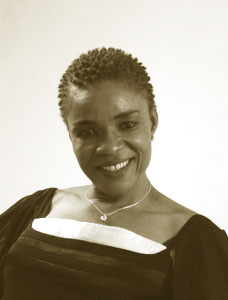
Née à Bamako au Mali et élevée par sa grand-mère maternelle dans la plus pure tradition bambara, Mamani Kéïta n'a qu'une petite vingtaine d'années lorsqu'elle arrive en France, au tournant des années 90, mais déjà une belle réputation derrière elle, pour sa participation active à la scène artistique malienne, de la troupe de théâtre de Oulofobougou à l'orchestre Badema national du Mali.

Aussitôt accueillie par la communauté africaine de Paris, elle se fait rapidement remarquer en intégrant le groupe de choristes de Salif Keita et en participant à un certain nombre de projets novateurs et atypiques, jetant des ponts entre musique africaine et jazz avec Jeffrey Smith, Hank Jones et Cheikh Tidiane Seck. Invitée à intégrer la formation "Tama", menée par le guitariste anglais Sam Mills et le Malien Tom Diakité, elle participe à Londres à l'enregistrement du disque "Espace" paru sur le label de Peter Gabriel, Realworld. En 2005, elle enregistre quatre chansons inédites pour la bande originale du film "Kirikou et les bêtes sauvages", réalisée par Manu Dibango.

Mais c'est indéniablement l'album de world electro expérimental "Electro Bamako", conçu en collaboration avec le Français Marc Minelli, qui lui ouvre, en 2002, les portes d'une reconnaissance internationale, tant publique que critique. Il apparaît évident, aujourd'hui, qu'en intégrant sa voix inimitable à des contextes hybrides, mêlant rythmes jazz et sonorités électroniques, Mamani Kéita, sans jamais édulcorer sa tradition, ouvrait là d'inédites perspectives à la musique africaine contemporaine. Elle s'est battue comme pour se faire une place au soleil. C'est ainsi que sa rencontre avec Nicolas Repac, compositeur, guitariste et arrangeur (Arthur H, Michel Portal…) a accouché d'un disque magnifique "Yelema", qui allie à merveille instruments africains (balafon, tama, bougarabou, n'goni…) et sonorités modernes.

Les arrangements subtils du Toulousain magnifient la voix de la Malienne. Après la sortie de cet album, elle a fait un tour à Bamako, donnant deux spectacles au Centre culture français avec Nicolas Repac. Pendant son séjour, elle échangé avec bon nombre d'artistes de sa génération pour les encourager. Aujourd'hui, Mamani Keïta fait partie des artistes qui font bouger la musique malienne en Europe. Dans cet album, composé de douze titres, elle fait le chant, Nicolas Repac est à la guitare et aux arrangements; Patrick Goraguer à la batterie; Jérôme Goldet à la basse et Moriba Koïta au n'goni. Mamani Keïta chante son enfance, les difficultés de la vie et les problèmes auxquels les femmes sont confrontées dans leur foyer. Yelema est comme un hymne au changement de comportement pour les autorités, mais aussi pour les populations. Car aucun changement n'est possible sans elles.

Kassim TRAORE

17 novembre 2007

making mischief is such fun for young theatre goers

Children of all ages will be making merry at Nottingham Playhouse later this month as the theatre hosts a night of sheer Mischief. It's a new dance show specially created for young people. Children's theatre specialists Theatre-Rites and rising choreographer Arthur Pita have combined their talents to make Mischief, a mix of dance moves with visual art, clowning, puppetry, music and song. The show is described as "bursting with energy, creative play and magical silliness" and is aimed at children aged between three and 12 and their families.

After travelling the country and gaining rave reviews, including five stars in The Times, Mischief concludes its tour at Nottingham Playhouse on Thursday with a child-friendly start time of 7pm. In the show, the cast inhabits a rainbow world of weird shapes and forms in which visual artist Sophia Clist has transformed simple materials like foam into jaunty characters and mythological creatures; dark forests and magic caves; and much more besides. Feats of theatre and puppetry are interspersed with dancing and forays into the audience.

Composer and musician Charlie Winston accompanies the dancing with all manner of music, songs and sound effects live on stage. The support act on Peter Gabriel's tour earlier this year, Winston is an outstanding one-man band in his own right and marries sound to the visuals in engaging fashion. Mischief is the brainchild of Sadler's Wells and innovative producers Dance Touring Partnership. For both, this is the first commission specially created for children and families where contemporary dance is firmly at the heart of the theatrical experience.

Tickets are £12 (£10 concessions). Family ticket are £36 (two adults and two children). To book, call the box office on 0115 941 9419 or visit www.nottinghamplayhouse.co.uk

16 novembre 2007

First acts for WOMAD 2008

The first acts have been announced for world music festival WOMAD, which takes place at Charlton Park, near Malmesbury in Wiltshire, from 25-27 July.

They are Michael Brook with special guests including Djivan Gasparyan (USA/Armenia), Altai Kai (Altai Republic, Inner Mongolia), Bedouin Jerry Can Band (Egypt), Kid Creole and the Coconuts (USA/Haiti), David D'Or (Israel), Dhoad Gypsies of Rajasthan (India), Dulsori (South Korea), Ernest Ranglin (Jamaica), Toumani Diabate (Mali), and Andy Palacio and Garifuna Collective featuring Umalali (Belize).

'Early-bird' tickets have just gone on sale, priced £115, but if you went to last year's mud fest you can get a further reduced ticket for £100. Disabled festival goers can also buy a £100 ticket which lets their carer in for free. Buy HERE.

WOMAD have also released a statement explaining some of last year's problems HERE.

Expect many more acts and entertainment to be announced over the coming weeks and months.

* Event Information
* WOMAD 2008

Senegalese Pop Star Youssou N’Dour Debuts at the Kimmel Center Performing Afro-Pop in Philadelphia November 20

"Youssou N’Dour is now one of the best loved voices in the world." —Peter Gabriel

"The finest example yet of the meeting of African and Western music: wholesome, urgent and thoughtful" —The London Guardian

Senegalese pop star Youssou N’Dour and the Super Étoile de Dakar elevate Afro-Cuban world rhythms to a new level at the Kimmel Center’s Verizon Hall on Tuesday, November 20, 2007. Hailed as "the West African Sinatra" by New York Newsday and one of the 100 Most Influential People in Time Magazine (2007), Youssou N’Dour has crossed mbalax—Senegal’s indigenous percussion, griot singing, and Afro-Cuban arrangements—with other musical cultures throughout the world. A cultural ambassador of West Africa, Youssou N’Dour illustrates a fusion between world and pop music at its best. His collaborations include Peter Gabriel, Sting and Wyclef Jean (Joko release, 2000), among other contemporary rock musicians; his band has toured throughout Africa, Europe and the Far East for over twenty years, recently reaching notoriety in North America. His latest 2007 release of Rokku Mi Rokka (Give and Take) shows Youssou N’Dour staying true to his roots, as it reveals the evolutionary indiosyncratic edginess of Senegalese pop music.

This concert is the sixth concert in the World & Pop Series scheduled for the Kimmel Center Presents 2007/2008 season. The next concert in the series will be the Mazowsze performance at the Kimmel Center on Saturday, November 24, 2007 at 3pm. (...)

"...The one African moving inexorably toward the world-pop fusion everyone else theorizes about..." (Robert Christgau, The Village Voice)

Youssou N’Dour has successfully conveyed the intercontinental appeal of mbalax, capturing the attention and affection of a diverse, multi-ethnic, genuinely international audience beyond Senegal. One commentator has said N’Dour’s music "encourages you to think globally while dancing locally." A blend of indigenous Senegalese dance rhythms, traditional griot percussion and praise-singing with Afro-Cuban flavors, mbalax has flourished in West Africa since the 1950’s and 1960’s. Modernized in the mid-1970’s mbalax began to evolve into more complex indigenous Senegalese dance rhythms, melodic guitar and saxophone solos, talking-drum soliloquies and Sufi-inspired Muslim religious chant.

N’Dour began his career as a teenager playing gigs in the parking lots of clubs in Dakar, Senegal’s cosmopolitan city. His distinct voice earned him live amateur-hour slots on national radio. Early in his career, N’Dour delivered performances that made mbalax famous, filtering in pop and rock influences, while staying true to its storytelling roots. Critically acclaimed albums include Set (1990), Eyes Open, (1992) and The Guide (1994). The 1990 album, Set, was one of the top world music albums of all time on Billboard; His lyrical music that year also greatly influenced young Senegalese people to create an urban ecological movement known as "Set-Setaal" (Be Clean), that involved the cleaning, painting and refurbishing of ghetto neighborhood homes and improvement of water-supply and sanitary conditions—all without governmental assistance.

"If any Third World performer has a real shot at the sort of universal popularity last enjoyed by Bob Marley, it’s Youssou, a singer with a voice so extraordinary that the history of Africa seems locked inside it." —Rolling Stone magazine

(...)

KIMMEL CENTER PRESENTS SPONSORED BY CITI

Tuesday, November 20, 2007 | 8pm
Verizon Hall
World & Pop Series

Youssou N’Dour
and the Super Étoile de Dakar

FREE AT THE KIMMEL:

Tuesday, November 20, 2007 | 6:30pm and Post-show
Commonwealth Plaza
ACANA Showcase
Arrive early for the Youssou N'Dour concert for a showcase of the best African musicians in the region, featuring Princess Fatu Gayflor. And stay late for a post-show dance party! Presented in conjunction with the African Cultural Alliance of North America.

15 novembre 2007

Martin Scorsese, Youssou N'Dour Join International Arts Initiative

At a star-studded gala last night at Lincoln Center hosted by CEO Patrick Heiniger, Rolex announced the six master artists who will serve as mentors in the fourth cycle of its international philanthropic program, the Rolex Mentor and Protege Arts Initiative. The 2008-2009 mentors, spanning six disciplines and hailing from five countries, are: American filmmaker MARTIN SCORSESE; German artist REBECCA HORN; Senegalese musician YOUSSOU N'DOUR; Nigerian writer WOLE SOYINKA; American actress KATE VALK; and Czech choreographer JIRI KYLIAN. (...)

MUSIC: Youssou N'Dour (Senegal) is an internationally celebrated composer, singer, and percussionist whose music focuses on world issues while staying close to his Senegalese roots. Blending the musical traditions of his native Africa with eclectic influences of Cuban samba, jazz, and hip-hop, N'Dour has collaborated with other renowned musicians such as Peter Gabriel, Sting, Paul Simon, and Tracy Chapman. A charismatic musician, N'Dour is also a humanitarian and advocate of children's rights, participating in the Amnesty International Human Rights Now! tour in 1988 and serving as a UNICEF Goodwill Ambassador since 1991. He has won numerous awards for his music, including the UNESCO International Music Prize (2004) and a Grammy (2005).

FILM: Martin Scorsese (U.S.) is one of the leading filmmakers of our time. Influenced by his childhood in New York's Little Italy, Scorsese achieved early acclaim for Mean Streets (1973); Taxi Driver (1976), winner of the Cannes Film Festival's Palme d'Or; and Raging Bull (1980), which received eight Academy Award nominations, including Best Picture and Best Director. Among his other celebrated films are The Last Temptation of Christ (1988); Goodfellas (1990); Gangs of New York (2002), winner of a Golden Globe for Best Director; the much-awarded The Aviator (2004); and The Departed (2006), which won four Academy Awards, including Best Picture and Best Director, and top directing honors from the Director's Guild of America (DGA) and other organizations. Scorsese has received numerous accolades for his contributions to cinema, among them the American Film Institute's Life Achievement Award in 1997 and the DGA's Lifetime Achievement Award in 2003. A champion of film preservation, he is the founder and chair of The Film Foundation. Scorsese's latest film, Shine a Light, a documentary about the Rolling Stones, will open in April 2008. (...)

B&W Gathers Up ‘Society of Sound’ for Its Website

Loudspeaker manufacturer Bowers & Wilkins has enlisted musicians, producers and product developers as 'fellows' in its informative musical society.

Bowers & Wilkins is looking to add a little bit of audiophile to anyone who owns or is interested in reading about its loudspeaker products. The company is embarking on an educational, resourceful and fun area of its website for those who want to read more about the loudspeaker and audio industry.

B&W’s “Society of Sound” caters to all types of people in the industry, as evidenced by the company’s “fellows” who will help spread their passion for sound through articles, interviews and other means of inspiration.

Just to name a few, the fellows include renowned artists such as Peter Gabriel, “Live from Abbey Road” producers Peter Van Hooke and Michael Gleason, and music professer Tod Machover. You can watch interviews with many of the fellows already posted on the B&W site.

The first article in the Society of Sound is in the category of the Future of Sound, and it’s called “Beyond the Optical Disc” about the digital music format. It culminates with thoughts on a “digital music player” like a CD player, only it’s essentially a straight-to-component type of player, with among its capabilities would be sending broadband downloads right to it for safekeeping or burning. Kind of a more streamlined PC for just audio. Some of us are well on our way there.

November 13, 2007 | by Arlen Schweiger Via: Audio Junkies

13 novembre 2007

Pop musician Peter Gabriel launches "YouTube for human rights"

Founded in 1992 by musician Peter Gabriel, Witness organisation with its slogan "See It Film It Change It" aims at denouncing and providing evidence for human rights violations through video footage. To achieve this aim, human rights activists were given cameras and taught how to use them. Web accessibility simplifies this process by facilitating the media-independent global distribution of information and videos recorded on film or mobile phone cameras.

Witness has now gone one step further and set up The Hub web page, a test version for a portal which is to become the "YouTube for human rights". With its motto "Upload It: See It: Share It. Take Action", the portal enables human rights organisations, activists and individuals to publish videos, images or audio files without censorship and anonymously without registration or log files. Server security is provided by CivicActions, and protection is provided by Openwall GNU/*/Linux which only saves visitors' IP addresses, but not those of the people who upload files. Contributors' IP addresses are only to be checked to see whether the Internet user is in a high-risk country, in which case a secure Internet connection is recommended. The project is supported by numerous human rights organisations like Amnesty, Human Rights Watch or B'Tselem.

The Hub does not assume responsibility for the accuracy or authenticity of its contents and advises users that its contents can be trusted no further than those of any other source on the Internet. This could damage the portal's credibility, for example if it is abused for political purposes. However, the organisers state that contents will be monitored for possible copyright violations and will be withdrawn if a violation is suspected. Users are advised to publish contents under a creative commons license.

Peter Gabriel emphasised that technology had caught up with the Witness project's original idea of "giving cameras to the world" through the rapid spread of mobile phones. At the end of 2007, three billion people would have mobile phones which changed the ways they organise themselves and interact with others. Together with digital cameras and notebooks, they would allow anyone to become a "human rights defender". It had never been easier to record evidence of human rights violations, but so far there had been no means of publishing this evidence through the Internet easily and without censorship. The Hub would change this, promised Gabriel.

The legacy continues

Vibrant: Rizwan-Muazzam Qawwali will be performing qawwali music in the Celebration Series on Nov 20 and 21.

Dewan Filharmonik Petronas presents a rare offering of Pakistan’s vibrant qawwali music on Nov 20 and 21 at 8.30pm. Under its “Celebration Series”, the performances will be presented by Rizwan-Muazzam Qawwali as a tribute to the legendary Ustad Nusrat Fateh Ali Khan.

When he died in 1997, Nusrat Fateh left a musical vacuum into which stepped his two teenage nephews, who formed the group Rizwan-Muazzam Qawwali. Despite their youth, they were determined to continue their uncle’s pioneering efforts to transcend cultural, language and religious barriers and bring to the world the devotional qawwali vocal music of the Sufi mystics of Islam.

The word qawwali simply means “utterance” and the music and style of performance it describes has been a feature of Islamic culture since the 12th century. It is religious music that uses the human voice as a vehicle for enlightenment.

Due to its strong folk and classical traditions, qawwali has evolved and become one of the great classical musical genres of world music.

The group’s third album, Day of Colours, finds them coming into their own with new-found maturity in their voices and approach. Not only does it maintain a family tradition but it also demonstrates their identity as singers and breathes fresh life into a centuries-old style which has become one of the glories of modern world music.

Rizwan-Muazzam Qawwali inventively reinterprets spiritual love songs based upon classical Islamic and Sufi texts.

The two brothers who lend their name to the group, Rizwan Mujahid Ali Khan and Muazzam Mujahid Ali Khan, come from a direct line of qawwali singers that can trace its pedigree back over five centuries. Their grandfather was an uncle of Nusrat Fateh Ali Khan, who taught him the art of qawwali vocal music.

They themselves studied under their father and were tutored by Nusrat. A decade into their career, the musicians of Rizwan-Muazzam Qawwali are already proving to be masters of Sufi devotional music.

The broadening of qawwali’s appeal was central to Nusrat’s mission and it is an approach shared by the group. Its debut album, Sacrifice to Love, released in 1999, was an entirely traditional album. So was its 2001 follow-up, A Better Destiny. It has also released a remix fusion album with Temple of Sound. The group is a mainstay on Peter Gabriel’s influential Real World record label.

Rizwan and Muazzam lead five back-up singers in repeated chanting, usually to the accompaniment of rhythmic handclapping, percussion and harmonium music. The lead singer adds elaborate vocal lines, and the tempo and volume are gradually increased with each singer trying to outdo the other in terms of vocal acrobatics as the piece progresses to a heightened trance-like state.

NATAS Hands Out Humanitarian, Public-Service, Community-Service Emmys

(Broadcasting & Cable) _ The National Academy of Television Arts & Sciences
http://www.broadcastingcable.com/article/CA6458724.html Friday gave out its Emmy Awards for humanitarian, public-service and community-service campaigns.

The awards are for programming from the media and nonprofits that "advances the public good," as judged by a panel of civic and community-service leaders.

And the winners, unveiled at a luncheon in New York, were:

MTV, for its broadband campaign, "Think: MTV's think HIV"; BET and The Kaiser Family Foundation for "Rap it Up"; The Sierra Club for its "Big Fun with Global Warming" broadband campaign; the Employee Benefit Research Institute for "Choose to Save"; and double winner Kaiser for "Marvelyn Brown: That Night/Finding Out/Denial."

In addition, Peter Gabriel's human-rights organization, WITNESS http://www.witness.org, received the first-ever humanitarian award.

Podcast: Touring with Peter Gabriel

Richard Evans shares his experiences from the road

Between the months of June and August,in the Summer of 2007 – anyone remember it? Peter Gabriel was on tour in Europe. Covering Germany, UK, Holland, Belgium, Italy, France, Switzerland and Denmark, the band played a number of festivals and one-off concerts, playing songs from So, US, OVO and others. Richard Evans, who you can hear on a number of our Sonic TALK podcasts, is a member of the touring band, and has a long history of involvement in Peter Gabriel projects, having worked at Real World Studios for several years under such luminaries as Daniel Lanois, Trevor Horn, Stephen Hague, Bob Ezrin, John Leckie and Brian Eno, before striking out as a successful solo collaborator and putting his skills as a talented multi-instrumentalist, arranger, producer and engineer to effective use.

In this audio diary taken from a portion of the tour, Richard takes us through his touring setup and also gives a fascinating insight into the world of touring at this level.

Richard is currently in Los Angeles working on a new album for Michael Brook, who he has worked with on several projects.

Thanks to Edirol UK for the loan of the R-09 personal recorder which Richard uses to record his diary entries.


11 novembre 2007

MOTIVES FESTIVAL, GENK (BE)

14-17 NOVEMBRE 2007 CASINO MODERN - GENK (BE) .MOTIVES FESTIVAL.

Une nouvelle et quatrième édition !

Motives Festival n’est pas un festival traditionnel. A l’occasion de cette quatrième édition il présentera donc à nouveau un visage très personnel. En sa qualité de forum international pour le jazz innovant, le festival propose un programme débordant de musiques actuelles et créatives. L’affiche propose une expérience musicale contemporaine d’une qualité inouïe, et le plus souvent associée à des stimuli visuels puissants. Le public du Motives Festival est particulièrement gâté par la succession de créations exclusives et de concerts uniques pour la Belgique. Nous invitons tout le monde à parcourir un chemin peu ordinaire, en compagnie de tous les artistes. (...)

JEUDI 15.11
23.00-0.00H
JON HASSELL & MAARIFA STREET (US)

Le compositeur et trompettiste Jon Hassell est un visionnaire. Il est l’inventeur d’un style musical qu’il définit lui-même comme étant le « quatrième monde » : une musique hybride, mystérieuse et originale, à la fois ancienne et digitale, composée et improvisée, orientale et occidentale. Il a travaillé avec des monuments de la scène pop tels que Brian Eno et Peter Gabriel et il a enregistré plusieurs albums solos qui exerceront une influence sur la musique contemporaine. En 1999, son album “Fascinoma”, produit par Ry Cooder, ouvre un nouveau chapitre dans la carrière de Hassell. En plus de Ry Cooder, il s’entoure aussi du pianiste de jazz Jacky Terrasson. Cet album va inspirer la nouvelle génération de trompettistes européens comme Erik Truffaz, Paolo Fresu et Nils Petter Molvaer. Hassell est sans aucun doute un millepatte musical, mais surtout un extraterrestre dans l’univers du jazz... (....)

Concert ARONA N'DIAYE ROSE Bakh Yaye

Arona N'DIAYE ROSE, fils de Doudou N'DIAYE ROSE et percussionniste de renom, doublé d'un danseur hors pair, est aussi professeur dans plusieurs universités européennes. Il a participé, musicalement parlant, à l'enregistrement de l'album de Peter Gabriel,«Us», et à l'enregistrement de l'album de Zazie, "Sucré salé".

Il est sollicité à travers dans le globe, pour ces talents de percussionniste, professeur & de coordinateur artistique et chorégraphe. Arona N'DIAYE ROSE vous présentera son nouveau spectacle, accompagné de danseuses et musiciens sénégalais. Ils vous transporteront vers l'effervescence des rythmes Sénégalais.

Le 11/11/2007 Havana Café, Ramonville, 31

De Jajouka à Montréal au Festival du monde arabe

Ils ont inspiré Paul Bowles, Brion Gysin, Brian Jones, Mick Jagger, Aerosmith, John Lennon, Yoko Ono, Ornette Coleman, Sonic Youth, Peter Gabriel, les Sex Pistols et Talvin Singh, pour ne nommer que les plus célèbres. Après plus de 1300 ans de pratique ancestrale, les Maîtres musiciens de Jajouka résident toujours dans ce village marocain du même nom.

«Notre musique est l'une des plus vieilles de l'humanité, elle existe depuis des milliers d'années. Dans notre monde moderne, le simple fait de la maintenir en vie et d'en faire la promotion la rend d'autant plus singulière. Cette musique est transmise oralement et n'a de fonction que de rassembler les humains et de célébrer la paix», soutient Bachir Attar, joint au Maroc il y a quelques jours.

Le village de Jajouka est situé dans les montagnes du Rif marocain. Pendant des siècles, la confrérie de musiciens qui en est issue a officié à la cour royale jusqu'à ce que les colons européens la repousse dans ses montagnes.

L'art musical de Jajouka est typique des sociétés traditionnelles; usant de modulations répétitives voire hypnotiques, il peut mener à la transe et on lui attribue des vertus de guérison à travers les différents rituels auxquels il se prête - mariage, deuil, circoncision, etc. On dit que cette musique très ancienne proviendrait de lointaines traditions de la Perse antique qui auraient voyagé au sud de la Méditerranée - notamment avec les Phéniciens. Cette musique de Jajouka se fonde sur la ghaïta (hautbois arabe), la nira (flûte de bambou), le gumbri (instrument à cordes), les percussions et le chant - pas moins de neuf instrumentistes et chanteurs seront sur la scène du Théâtre Maisonneuve, demain soir.
«Ma famille, explique Bachir Attar, a conservé la connaissance de cette musique. Je proviens d'une tradition orale malheureusement en voie de disparition. Après des siècles de stabilité, les temps ont changé. Nos enfants vont à l'école, les considérations monétaires et économiques l'emportent sur la tradition. J'ai peur que nous soyons la dernière génération de musiciens Jajouka.»

On sent l'inquiétude traverser le directeur artistique, fils de feu Hadj Abdesalam Attar qui fit connaître les Maîtres musiciens de Jajouka dans le monde entier. «Je rêve de fonder une école de musique, à défaut de quoi cette tradition va disparaitre. Cette école serait ouverte à tous, bien au-delà des citoyens du Maroc. Vous savez, les jeunes musiciens du Maroc sont davantage attirés par le star system que par la protection de leur patrimoine», déplore-t-il.

N'en demeure pas moins que les rock stars ont déjà trouvé très cool les Maîtres musiciens de Jajouka. Brian Jones, le défunt Stones, avait craqué pour leur musique à la suite de son fameux congédiement. Bachir Attar en conserve un vague souvenir.

«J'étais alors un petit enfant. Les plus anciens se rappellent qu'il avait été revivifié par notre travail qu'on n'incluait pas encore dans la catégorie world music. Le monde du rock s'était ensuite enthousiasmé à notre endroit mais il a eu tôt fait de nous oublier. Bien sûr, nous avons été très heureux de collaborer avec les Stones dans l'album Steel Wheels à la fin des années 80...»

«Une des rares relations qui durent est celle que nous entretenons avec le saxophoniste de jazz Ornette Coleman. Lorsque nos coffres sont vides, nous lui demandons de partir en tournée avec lui, il accepte immanquablement. Nous lui portons le plus grand respect. Un autre lien durable est celui que nous entretenons avec Lee Ranaldo du groupe Sonic Youth, un véritable ami.»

Quoi qu'il advienne des Maîtres musiciens de Jajouka, Bachir Attar ira jusqu'au bout de l'expérience. «Nous ne voulons pas être riches ni célèbres, nous voulons simplement partager notre culture avec tous les humains qui s'y intéressent.»

De Jajouka à Montréal, donc.

Alain Brunet/La Presse

09 novembre 2007

Pricey but Perfect: Cloning Peter Gabriel's 'Studio in a Shed'


Photo: Solid State Logic


Peter Gabriel unveils The Shed at the Audio Engineering Society Trade Show in New York.

Peter Gabriel believes where you make music can be just as important as what you use to make it. With The Shed, a pricey stand-alone recording studio inspired by the one he has in the garden of his London home, Gabriel hopes to help musicians on both fronts.
"Sometimes a creative environment affects what happens within it," said Gabriel, who unveiled the home studio this month at the Audio Engineering Society Trade Show in New York.

Though Gabriel acknowledges that, for most musicians, outfitting a recording studio is a personal, mix-and-match process, he thinks there is a market for the one-stop shop nature of The Shed, which will sell for around $250,000. Still, it's a rarified chunk of musical real estate in an era when anybody with a cheap PC and a copy of Pro Tools can get decent results with home recordings.

"If you don't have the time, but you have a lot of money, you can say, 'Do it to me' and the whole thing will arrive and off you go," said Gabriel, laughing off the idea that The Shed could be seen as the ultimate "get" for his fans.

The studio -- a 240-square-foot Summerwood structure outfitted with an $87,000 Solid State Logic analog workstation, assorted outboard gear, a digital audio workstation from Guitar Center, Auralex acoustic treatment and Argosy studio furniture -- is designed to give artists a sonically sound space in which to make music.

Windows on three walls and plenty of space to hang inspirational items help make The Shed a comfortable workplace. (The display model is personalized with artwork by Gabriel's friend, Evru, which, obviously, is not included.)

"I want it," said Phyllis Fast of New Jersey to her husband, Larry, as they walked past The Shed in the middle of The Javits Center. "It's such a great idea having it all in one place."

"Well," Larry Fast said, shaking his head, perhaps as he thought about the price, "we'll have to see."

Gabriel said the expensive studio clone is designed to give musicians a positive environment to get the creative juices flowing.
"Studios always seem to be in basements without natural light and with black everything," Gabriel said. "We went to the opposite direction. The Shed is the outdoor, organic approach to studios. As many an architect will tell you, human behavior changes according to the environment."

Sitting in The Shed as conference attendees peer in at him through the windows, Gabriel says the structure's design reminds him of his setup at home. Though it's not his main recording studio, it does serve as a creative center in his life, he said, especially for writing lyrics.

Fans will get to hear some of Gabriel's fondest memories from The Shed soon, as his Real World Records releases Big Blue Ball, a compilation of collaborations from the 1990s with world music acts including Karl Wallinger, Natacha Atlas and Papa Wemba, written in his garden studio.

Gabriel said the creativity fostered by The Shed is related to brain function. "I think there's an old instinctive response from when we were all running around in the forest, that when you're getting a lot of peripheral-vision stimulation that the brain is kicked into a higher gear," he said. "I noticed that on airplanes I don't feel very creative, but I get a lot of ideas in trains and cars."

Gabriel said train travel feeds the brain in an especially creative way. "I've talked to a lot of artists -- painters, writers, musicians -- many of whom have had great ideas on trains," he said. "The only explanation I have is all that stuff is coming at you while you're relaxed, so somehow it kicks you into hyperspace in terms of brain function."

Of course, this leads Gabriel, who became a major shareholder of Solid State Logic a few years ago, to a new idea for The Shed 2.0.

"Future versions of The Shed should definitely be on a railway carriage," he said. "We'll have to work that out."

By Glenn Gamboa /Wired

08 novembre 2007

Mapfumo gets UK visa after two-year exile


Thomas Mapfumo is to stage his first UK shows after a two-year absence due to problems with his visa, he confirmed. But more problems could be looming in the horizon for the Chimurenga music guru with at least three UK promoters lining up to claim thousands of pounds in outstanding advance payments for shows that never happened. Mapfumo confirmed he would be arriving in the UK later this month for the three gigs in Leicester (November 23), London (November 24) and Leeds (November 25).

Two years after Mapfumo -- who had been booked to perform at the Womad Music Festival -- was barred from the UK, he still heaps the blame on his ex-manager, Savanna Madamombe.

Mapfumo told AfrosoundsFM: “The lady who was managing us there last time caused a mix-up, otherwise we have no immigration problem. We have the right documents. The reason why we failed to come there was because somebody applied for work permits for six months and the UK authorities said if we give these people visas for six months, maybe they will stay on. I have nothing against the UK government, and the UK government has no problem with me.”

Mapfumo confirmed he was in the studio polishing up his latest album to be released soon. He also revealed that most of his original band members had left, and his music was now a fusion of old and new sounds. He said: “We don’t stop making music; we are constantly busy making music. The band has changed a lot, the music is not the same the people used to listen to. It’s still Zimbabwe-style music, but there are a lot of changes.”

Apart from Womad Festival organisers, Mapfumo will have some explaining to do with at least two other promoters who say they booked him for gigs but he never showed up. A source close to one of the promoters revealed: “Never has someone so much looked forward to Thomas Mapfumo’s arrival in the UK.”

Simpson 'Mhofu' Mpofu, another promoter who paid Mapfumo a deposit for five shows, said he had still not be reimbursed. He estimates the money he is owed at £12000.

He said: "We paid the guy a deposit for five shows. We had paid in full for the venues and the PA system. We had already bought the air tickets, and not a penny of that money has been recovered. When I spoke to Mapfumo, he suggested that we should organise another show. But my question to him was 'who is going to pay for the venues, the air tickets and the PA system?' We are considering our options."

Another promoter owed by the singer said: “We have some outstanding business to discuss.” Chris Gondoza, who is bringing Mapfumo to the UK, said Tuesday: “I got the work permits, and the band got the visas.” Gondoza insisted that as far as he knew, Mapfumo owed no-one a show. He said: “I talked to him (Mapfumo) before, and he says he knows nothing about it. I have just booked an artist to perform, and paid venues to host him. If there are people owed money, one would think pursuing the legal route would be the right course of action to take.”

Tim and Susan join fellow star campaigners at New York fundraiser

Renowned in Tinseltown for lending their support to social issues close to their hearts, Tim Robbins and his partner Susan Sarandon were backing another good cause this week. The couple – who have been together for just over three decades – joined some of the film industry's most passionate campaigners at a gala benefit in New York.

Hosted by Stranger Than Fiction actress Maggie Gyllenhaal - well known for her work with civil liberties organisations - and musician Peter Gabriel, the event raised funds for human rights charity Witness.

Other famous faces lending their star clout to the evening were women's rights campaigner Meg Ryan, who's returned to the spotlight recently after taking time out to spend with her adopted daughter Daisy, and Goldie Hawn.

The couple mingled with some of the industry's most socially minded stars at the gala benefit in the Big Apple

Goldie Hawn expresses support for film programs to promote global culture and human rights

NEW YORK: Actress Goldie Hawn expressed support Wednesday for two film programs aimed at showcasing amateur and professional films as a way to promote cultural understanding and uphold human rights.

The "Private Benjamin" star and Academy Award winner met with organizers of Pangea Day, a one-day event which is named after what scientists believe was the giant land mass that encompassed all of today's continents. Organizers of the program, scheduled for May 10, 2008, will present a variety of amateur and professional films in an effort they hope will "encourage humanity and catalyze positive change."

"This threads together commonality and it brings together something in a deeply polarized world," Hawn said of the project in a phone interview with The Associated Press. She said she was drawn to Pangea Day "because everyone has a story and film is a very emotional medium" to tell it.

Plans for the program include linking screening venues in New York, Cairo, London, Ramallah, Rio de Janeiro, Tel Aviv; Dharamsala, India and Kigali, Rwanda, for television and Internet broadcasts.

"Being in film and working in film you learn that the goal is to tell pertinent stories," Hawn said. She noted that the project also appealed to her because of the power of filmmaking and that it gives others a forum in which they can relay their stories and possibly touch lives.

"I've never created a film that hasn't had a resonance," she said.

Pangea Day was created by documentary filmmaker Jehane Noujaim after she won the TED Prize that provided $1 million (€680,000) and access to some of the top thinkers in technology, entertainment and the arts to aid projects with global ambitions. The award, whose winners include former President Bill Clinton and Harvard biologist E.O. Wilson, grants recipients one wish to change the world.

Noujaim, who founded Pangea Day, is best known as director of "Control Room," a film which went behind the scenes at the pan-Arab satellite channel al-Jazeera — an independent station that has garnered both strong praise and criticism for its coverage of events in the Middle East.

Along with Hawn, others who have thrown their support behind the project include Rwandan President Paul Kagame who views it as an opportunity to break the singular association many people have with the 1994 Rwandan genocide, Pangea organizers said.

"They're all trying so hard to move on from the tragedy," Delia Cohen, executive director of Pangea Day, said of Rwandans.

Noujaim has put out a call for submissions on the Internet video sharing site, YouTube.com. "If you had the entire world's attention, just for a few minutes, what story would you tell?" the video posting asks.

After meeting with Pangea Day organizers Wednesday, Hawn planned to attend a benefit dinner and concert co-hosted by singer Peter Gabriel for WITNESS, an organization he founded that promotes the use of video and film to document human rights abuses.

Hawn, who won the Oscar for best supporting actress in the 1969 movie "Cactus Flower," also said that plans were on hold for a movie that would have scenes filmed in India.

Hawn said "Ashes to Ashes," a movie she wrote about a New Yorker who travels to India to bury her husband's ashes, was "still being financed" and that a deal had not yet been signed.

But she said she remains busy with her other projects including her work for The Hawn Foundation, whose stated mission is to establish a curriculum and pilot programs to help children understand their own thoughts and feelings and respond in healthy and responsible ways.

"One of the problems children have today is stress," Hawn said. "I sat down and said, 'What can we do?'"

The Associated Press
Wednesday, November 7, 2007

"Bosta", premier film musical libanais d'après-guerre

"BOSTA" (l'Autobus) a été filmé au Liban avec certains des acteurs libanais les plus populaires.

C’est le premier film musical libanais d'après-guerre avec des rythmes orientaux et un cachet contemporain, tels que la danse de Dabké, qui est du folklore national libanais, mixée avec un peu de techno occidental.

Ceci représente une nouveauté de production, parce que les films libanais, se fondent principalement sur les fonds culturels orientaux et arabes.

La musique de Bosta a également été un grand défi, elle a permis de joindre des efforts entre les compositeurs locaux (EL Khatib Ali) et le système d'Afro Celt, et un groupe britannique "vrai monde" de Peter Gabriel.

Une telle collaboration est la première dans la scène locale de production de cinéma libanais.
Ce film donne des perspectives positives de l'image stéréotypée de la guerre et du terrorisme.

"BOSTA"

Ecrit, Produuit & Diriger par PHILIPPE ARACTINGI...

07 novembre 2007

Peter Gabriel on the future of music

Peter Gabriel believes were headed toward a creative renaissance

World-class musician, humanitarian and dynamo behind the WOMAD world music festival, Peter Gabriel has an accomplished record in using new technology to boost the creative arts. He believes we're headed toward a cultural renaissance.

With music sales in free fall, many in the entertainment business fear technology as the death of the creative arts.

Award-winning singer/songwriter Peter Gabriel disagrees. Far from destroying creativity he thinks technology and the internet are enabling a creative explosion, connecting artists to audiences more effectively than ever before.

Music remains essential to modern life, despite falling sales, he points out. "Music is medicine. People use it as a mood altering drug, applying different music to different occasions," he explains.

Gabriel's no fantasist. He's been experimenting with technology since the moment PCs became creative tools.

His Real World Studios have been instrumental in introducing music from across the world to Western audiences. Nusrat Fateh Ali Khan is just one example of such an artist. 1993 saw associated company, Real World Multimedia, ship one of the world's first interactive CD-ROM's, a musical adventure called Xplora 1: Peter Gabriel's Secret World.

Xplora gave users a multimedia glimpse at life as a musician on the road - Gabriel was touring his highly-successful Us album at the time - along with a chance to explore the world music genre which was relatively unknown in the UK at the time, as well as insights into his personal life.

Produced on a Mac, the Windows version was prone to bugs, as the multimedia power struggle between Microsoft and the rest of the computer industry saw creators and consumers pay the price.

In spite of the technological barriers, Real World Media followed up Xplora with another CD-ROM, EVE, a touching interactive exploration of the loneliness of the human condition. Gabriel wrote the music.

On the face of it, it's some distance from 1967, when Gabriel founded UK music act, Genesis, a band he quit in '75 to go solo.

But pushing the envelope of what technology can achieve runs in Gabriel's family.

The son of an inventor, Gabriel admits: "New technology has always excited me." While he agrees the internet has killed off conventional music retail, it also presents: "Many wonderful opportunities", he says.

"Never before has an artist been able to reach out and build an audience so easily - without needing record companies and their marketing departments. Equally, you've never been able to explore all kinds of new music in the instant way the internet allows," he observes.

Gabriel isn't just paying lip service. In 1999 when upstart US college student Shawn Fanning launched the original Napster, Gabriel invested in On Demand Distribution (OD2), one of the world's first legitimate online music download services.

"I co-founded OD2 with Charles Grimsdale as I thought there were many exciting opportunities for digitally distributed music," Gabriel said in 2004. "As a musician, I believe strongly that all artists should have access to this powerful new means of getting music to people."

Purchased by Finnish mobile giant, Nokia, for US$38.6 million in 2004, OD2 offered over a million tracks for sale through different European online services.

"I was convinced digital music was going to be the main means of distributing music when we set that firm up," Gabriel said. "I've been surprised how long it has taken."

The impact of legitimate music sales on the internet is huge. In the UK, an astonishing 90 per cent of all singles sold are sold through online music services, claims music label trade body, the BPI (British Phonographic Industry).

Album sales through online services are climbing slowly. Labels continue to see their annual turnovers shrink as physical sales decline.

The side-effect of file-sharing has been that many young people have lost the habit of buying music legally.

They've seldom purchased any music, so the notion of doing so no longer exists in youth culture. Young people grab music for nothing where they can. Labels are threatened by this because teenagers are tomorrow's mature music shoppers.

Some believe that moves by major labels to launch legal action against music file-sharers have politicised illegitimate music downloads.

Disaffected teenagers, they argue, see music theft as a rejection of the establishment. But even file-sharers are committed to the songs and artists they embrace.

"Many young people don't seem to be buying music legally but even so, the culture and passion for music both new and old has never been greater and this is partly down to the internet," he observes. "Music is becoming more of a commodity, people are expecting it for free and I'm not sure this attitude is going away."
The industry is changing, with music labels moving focus from music sales toward touring and merchandising, he says.

When Prince gave his album away for free with a UK daily newspaper, he was able to sell enough tickets for 21 sell-out shows in London.

Bruce Springsteen and Paul McCartney also have given songs away for free, while Nine Inch Nails frontman, Trent Reznor, makes his music available to fans for remixing.

Exploring the possible, Gabriel recently invested in ad-supported free music download service, We7. This works by popping advertisements on the front of tracks, based on a user's personal information - age, location and gender. Consumers can give the system extra information if they want to receive more appropriate advertising. They can also buy tracks ad-free.

Noting this form of advertising means music fans hear fewer ads than they will on radio, Gabriel says: "Ads disappear after a few weeks, so consumers end up with a collection of free music."

Gabriel says: "I'm convinced well-filtered ads can carry useful information to the right listener or viewer." We7 users can set things up so the system sends them ads for things they are looking for.

The disappearance of conventional music retail leaves a vacuum. "Sometimes people who loved music worked in those stores and when they knew you they'd introduce you to wonderful stuff you wouldn't have come across otherwise," Gabriel observes.

"We're drowning in choice and we're going to need the tools to find the stuff that excites, surprises and inspires us."

To fill the gap, Gabriel's invested in a new service called The Filter, software that analyses your digital music library to understand your tastes. It generates playlists based on selected tracks and can recommend music chosen to match your tastes.

With film, television and literature moving online, solutions that help people find exactly what they want could become essential.

Artists should benefit. Personalised recommendation means they could achieve a direct link with appropriate audiences - great for non-mainstream arts.

"It could and should lead to a creative renaissance in which the oppressive filtering of the mass market is turned upside down," Gabriel says.

In future, he sees three levels of digital media delivery: free, paid for with extra content, and high cost physical products.

The latter could be: "Small limited edition sculptures that when placed on a computer open up a library of an artists material or is personalised for the fan in some way," Gabriel says.

Xplora 1 worked a little like that. As users solved puzzles, new sections of the experience were opened up, unlocking live concert video and more.

As an artist, Gabriel continues to experiment. "I'm excited at using the internet to do new things with my music - inviting people to remix my songs, or my Full Moon Club, where I try and do something for my fans when there's a full moon," he says.

Jonny Evans

KU’s Dance Company Previews Fall Concerts

Twyla Tharp’s Torelli headlines the University Dance Company’s 2007 fall concerts. Tharp came to national prominence with her choreography for the films Hair and Amadeus and the Broadway shows Singing in the Rain and Movin’ Out.

With Torelli, she has given dance companies permission to stage a work from a DVD. KU dance faculty members Jerel Hilding, who performed in three Tharp works as a member of the Joffrey Ballet, and Patrick Suzeau, are guiding students through the process of learning the dance, set to Giuseppe Torelli’s Concerto in d minor. Choreographed in 1971, it illustrates the early Tharp style. Eight highly structured movement phrases begin the dance and form the basis for the subsequent improvisations by the dancers.

New offerings by the dance faculty will spin the performance in a variety of directions. This past summer, KU dance professors Muriel Cohan and Patrick Suzeau witnessed the ecstatic celebration of the summer solstice in Lithuania. Interspersed with ubiquitous pop music, ancient polyphonic chants could be heard. In their choreography for Cycles, Cohan and Suzeau attempt to capture the poetry and wild abandon contained in these chants. The dance features Suzeau as a soloist. Suzeau also has choreographed an exuberant ballet for five dancers to the music of Bela Bartok. He plays with rhythms and fast-paced energy in his Pas Très Classique, which is not altogether très classique.

Michelle Heffner Hayes, associate professor of dance, will perform a traditional Soleá, choreographed by Kansas City flamenca Miel Castagna, with live guitar accompaniment by Beau Bledsoe. Soleá is one of the basic flamenco song forms, from which many others descend. Majestic and lean, Soleá explores soledad, an intimate, often painful or ironic solitude. The dancing develops like a slow-burning flame with displays of intense carriage of the arms and complex footwork.

Hayes also takes a new look at an old Greek myth in Cradling Persephone to music by Peter Gabriel and Bjork. Placing Persephone at the center of the narrative, the work for eleven female dancers explores adolescence as a point of entry into the adult world. Through the athletic partnering and phrasing of the voluptuous movement, the piece imagines a space of transcendence beyond the moment of trauma.

Willie Lenoir, instructor of dance, takes us in yet another direction with After the Harvest. Lenoir himself says: “About the dance—the harvest is over. Three young women decide it’s time to celebrate. No more tilling the soil! No more planting! No more reaping! The party is on!” -- www2.ku.edu