Articles review on the net, revue d'articles sur la toile


Inscription : feeds, flux :
(Atom) Gabriel Real World News

20 août 2007

Inside the mind of Daniel Lanois

New film reveals the mental legwork behind Peter Gabriel, Bob Dylan and U2 collaborations.

Uber-producer Daniel Lanois' new film, "Here Is What Is," is an impressionist dissection of his creative process as a producer, composer and songwriter. The film reveals the mental legwork behind his collaborations with the likes of Peter Gabriel, Bob Dylan and U2.

"My friend said that porn ruined sexuality, because sexuality is all about mystery and imagination," Lanois said. "I'm trying to reintroduce those values from a time before mass communication caused people to be more interested in an artist's 'crib' than the actual record."

The film, which premieres at the Toronto Film Festival in September, follows Lanois on trips to Morocco (where he was recording with Eno and U2) and Shreveport, La. (with ace session drummer Brian Blade), and captures a rare and intimate piano performance from Garth Hudson. "Here Is What Is" is less a traditional documentary than a dreamy trip through Lanois' head.

Such a film could have been an exercise in navel-gazing, but in a music culture veering ever more toward instant gratification, Lanois believes that art takes commitment, and "Here Is" is proof of that.

"I wanted to celebrate dedication to one's craft," Lanois said. "That's not a lighthearted matter. The studio's not just a piece of documentation equipment. You only get out of it what you put into it."

By August Brown, Los Angels Times Staff Writer, August 16, 2007

Martha Ladly, Mobile Experience Design

Again apologies to Martha about not getting this up sooner, but I'm glad that I've had some time to digest what she was saying and also do some casual surfing to explore the projects that she was talking about. Twenty minutes is difficult to get a sense of the breadth of work that she's done.

I met Martha at the opening drinks of X|Media|Lab and really liked her ideas about digital storytelling and emerging mobile applications.

By way of introduction to her talk, she talked about how she got into design. She played in bands and designed album covers. OMG, Martha designed the Power, Lies and Corruption cover for New Order. She worked for Peter Gabriel for 10 years and designed 50 album covers for his Real World label including Sheila Chandra and Nusrat Fateh Ali Khan.

In 1992, Peter Gabriel wanted to create an interactive CD. She worked on the Eve CD-ROM project with Microsoft co-founder Paul Allen. I actually have Eve. It's a fascinating interactive experience. You can't really call it a game. It's more of an experience. They also created an interactive CD called the Ceremony of Innocence based on the Griffin & Sabine books.

She now works with a group called Horizon Zero, a monthly web publication. They have created digital documentaries. They had a lovely project called Murmur in the Market. It was about a neighbourhood, Kensington Market, in transition, and they recorded stories about the neighbourhood that were overlaid on a hand drawn map of the neighbourhood. I like the flash-based map navigation, and the audio works well in the player that they developed.

I especially like the audio segments that have street sounds and give me an sense of the bustle and activity in the neighbourhood. One of the common mistakes with audio is to only do the interview in a nice sound-proofed studio, but if you're trying to evoke a sense of place, it's always good to have 'nat-sound' or 'wild track' to set the scene for listeners. In London, I often go and buy lunch at the market in Leather Lane around the corner for our offices. There is a great street vendor who has a wonderful sing-song quality as he hawks his wares. His voice falls up and down in pitch. "TOP QUALITY (then low) get it here. ONLY BEST BRANDS (then low) three for a pound." I'd definitely add that as a transition between more set piece interviews, and a good directional microphone can keep the voice of the subject in focus while letting a little street sound bleed through.

Back to Martha's talk...two years ago, a group got together about how to move mobile experience forward. She is working on the Park Walk project. They are telling stories about Toronto's High Park using mobile phones with GPS units. They also play a game called "The Haunting" with Mont Royal Park in Montreal. They have also done some great stuff in Banff called Global Heart Beat. As people move through GPS zones, they find out about the animals that live in that habitat.

Mobile technology can bridge the gap between virtual and real, and she highlighted, Blast Theory, a group of artists in the UK that have produced video games based in real space.

She talked about some open-source technologies such as Arduino, an open-source prototyping platform. (She mentioned quite a few, and I'll mention a few that I know of as well, including OpenMoko and their Neo open-source mobile phone. I am also thinking about trying the GP2X handheld game. It's not a mobile phone-data device per se, but it's very extensible, possibly a bit beyond my meagre tech skills but worth a play. I like the fact that you get a fully operational Linux device that can actually be used as a full-fledged pocket computer.)

I'm going to paraphrase Martha. Mobile has yet to hits its stride, but it has a lot of technologies that could be used to tell location-based stories. GPS, cameras and bluetooth all have application that is only being explored. From my point as a journalist, I think this is an area rich for exploration as far as newsgathering. Possibly in the future, information will delivered across cities based on not only subject relevance but also local relevance. As I said, lots of area for exploration.

Posted by Kevin Anderson

Filtering the music in your life

A problem with the rapid increase in our ability to store data, is not only that we might have trouble finding things but that it could be difficult just deciding what to look for.

As we collect thousands of digital music tracks or videos, how will we ever be able to decide what to watch or listen to? The choice becomes overwhelming. Or at least that's the thinking behind a recommendation engine developed by Bath-based physicist Martin Hopkins.

His idea came from trying to organise his own digital music collection and compile playlists. He says: "We find everyone has the Beatles in their collection so that doesn't really help us much , but if you have Frank Zappa or Captain Beefheart we'll be able to tell exactly what mood you're in." The search software spawned from the idea, and called The Filter, draws on comparatively ancient mathematics ; the statistical probability theorem invented by 18th Century churchman Reverend Thomas Bayes.

Mr Hopkins says Bayesian probability is the ideal mathematical model for this kind of search "It mimics how we come to a conclusion in life. It gathers evidence from a variety of sources and gives them weighting. From this we can work out the probability of an outcome." The software looks at the music you have and compiles playlists based on the relationships between tracks. "It's a software download that sits of your computer - it goes through every music track on your computer, and that information is sent anonymously back to our sever. From that we can create a whole series of cross references." The software is not foolproof, however.

On The Filter's website there is a facility to test it out and Digital Planet presenter Gareth Mitchell entered Stone Roses, Razorlight and Jethro Tull, as his favourite bands - but was startled to find that one of the recommendations was Busted. Mr Hopkins says the algorithm only has the data in the evidence base to work from, but that half the fun is trying to break the system.

"You can put in Nancy Sinatra and the Sex Pistols and see what you get. There may not be a relationship, in which case it will confuse the software." Despite the fun or annoyance of using this system to lazily suggest music, the software behind it may have a much wider use. Mr Hopkins says it could be applied to any type of data "The whole approach we have is content agnostic, we don't analyse the attributes of the content. It's really the relationships between pieces of content, so it works for movies, it works for books."

The software is being backed by musician Peter Gabriel, who describes it as being part of the second wave of the digital revolution; not offering freedom of choice, but freedom from choice.

Remembering Nusrat 1948-1997


Long before 9/11 and the subsequent drum beat of a war on terror and talk of a clash of civilizations between Islam and the West, Nusrat Fateh Ali Khan, Pakistan's greatest musical export, sang ecstatically about the Oneness of God and love for humanity.

Muslim, Jew, Christian, Hindu, all people with or without faith who tuned into the power and emotion of his voice were transported to another place, beyond the self-created ghettos of the mind and into a spiritual wonderland of joy and transcendence.

I was first introduced to Nusrat in 1990 by the Pakistani cricket captain, Imran Khan, for whose cancer hospital we did a fund-raising tour of concerts together. Having been born in Lahore and grown up in New York, my musical leanings were the blues and classic rock: John Lee Hooker, Robert Johnson, Led Zeppelin, The Beatles and Pink Floyd. As a result, I felt a little out of place arriving at Lahore's Alhamra arts council carrying a stratocaster and a guitar amp to my first Qawwali rehearsal with the celebrated Nusrat.

He sat onstage, cross legged on a Persian carpet, looking like a Punjabi Buddha, while his qawwali group brought out the harmoniums, tablas, and cups full of Lahori chai. After the traditional greetings of "Salaamualeikum" (peace be upon you) I nervously asked Nusrat what he wanted me to play on the first song "Mustt,Mustt" (lost in you), he replied with a childlike innocence: "do whatever your heart tells you to do". It turned out to be the strongest piece of career and personal advice anyone could've offered me. Nusrat's voice and the songs performed that day and later on the tour had a profound impact on my music.

To modify a Nirvana lyric, his music is "addictive and contagious". The poetry and the melodies opened doors inside my head, which allowed Rumi, Bulleh Shah and Iqbal to enter and coexist with John Lennon, Jimmy Page and John Lee Hooker. Nusrat also helped pave the way for my band, Junoon, to take the risks we did when we married electric guitars to bhangra drum and dhol grooves while chanting traditional sufi texts considered sacred by the orthodox. In fact it was Nusrat who broke the traditional mould of the Qawwali singer, when he collaborated with Peter Gabriel, Michael Brook and Eddie Vedder of Pearl Jam.

In one particular conversation I had with him about about his brilliant album "NIGHT SONG" with Michael Brook, he told me that he favored fusion because in the Qur'an it mentioned that God loves diversity, and Nusrat felt the most powerful way to celebrate and express diversity was through music.

Years later,in 1998, when Junoon's song Sayonee raced up the pop charts in India to help us become South Asia's biggest rock band, it was a special poignant moment for me because our album "Azadi (Freedom)" for EMI had been dedicated to the memory of Nusrat who had sadly passed on a year earlier while only 48 and with all the music still inside of him.

Nusrat Fateh Ali Khan left behind a universal DNA in his songs, for all people to share and celebrate the yearning, the joy and the timeless message of Oneness. Can music help build the bridge of Unity between East and West?

Nusrat certainly had no doubts.

"On Faith" panelist Salman Ahmad is a Pakistani-born rock star who started the wildly popular South Asian band known as Junoon.

Y Tu Mama' Mexican Stars Fight Injustices At Gala Event

Y Tu Mama Tambien co-stars Gael Garcia Bernal and Diego Luna staged a gala dinner in Mexico City on Saturday night (11 Aug 07) in an effort to raise funds and awareness about poverty and injustice in the country.

The two actors and friends teamed up with rocker Peter Gabriel's Witness human rights organisation and Mexico's Commission for the Defense and Promotion of Human Rights to stage the $300 (£150)-a-head event.

At a press conference before the gala, Bernal congratulated filmmakers for bringing light to terrible acts: "Documentaries show us the injustices in the country where we live, that this problem exists. We can't escape it."

Luna and Garcia Bernal have launched a new production company, Canana, and plan to make a series of documentaries aimed at raising awareness about failures of the Mexican judicial system

Refugee to rapper: an interview with Emanuel Jal

Emmanuel Jal, one of the hottest rappers to come out of Africa, is a former child soldier from southern Sudan who uses his talent and fame to give a voice to the hungry poor, especially the children, in Africa. "When I make music, I keep in mind some hungry tots … that’s what makes my music, my music. I put my hunger into my music." - Emmanuel Jal...

...Who are your mentors?

Emma [McCune, a humanitarian worker] was my angel. She fed me, took me to school, paid my school fees. She was doing it from the heart. She invested in me by putting me into a British school. That’s why I’m effective. Now, I get a lot of support from people in the [music] industry. Peter Gabriel is a great mentor and friend. He goes around, asks a lot of his friends to pay attention and really listen to me. I’m still learning a lot. My mind is still empty. I’m listening to everything and not tired of learning....


Talking Heads: Once (or Twice) In a Lifetime

...“I would not disagree that Remain in Light had the most influence on other musicians,” said Harrison, the band’s main multi-instrumentalist, attempting to play down the album’s legacy. “I think the things we were doing in that middle period have resonated in other people’s music.”

“It has a lot to do with what Peter Gabriel came out with ; the moment we stopped touring,”
noted drummer Frantz...

...Weymouth suggests the troubles that ultimately burned down the house began as Byrne was about to begin collaboration with Eno on their My Life in the Bush of Ghosts. A European journalist asked her, “‘How do you feel that David is leaving the group?’ And we said, ‘This is news to us.’ He told us he was going to make a solo record with Brian Eno.” Following completion of the recording, it’s Weymouth’s contention that Byrne and Eno had fallen out.

“But we didn’t know that. He didn’t tell us,” says Weymouth. “Chris and I, who had always loved Brian Eno, asked him once more to come in and jam with us…”


A Night With Nusrat: An Odd Place for an Epiphany

Posted Aug 7th 2007 5:00PM by Steve Hochman, Filed under: Around the World


It was a late Friday afternoon in 1990 when I got a call at the Los Angeles Times office inviting me to see a show by Nusrat Fateh Ali Khan that evening. The qawwali master was performing in, of all places, a conference room at the LAX Airport Hilton, headlining a benefit to help build a cancer hospital in Lahore, Pakistan, hosted by that nation's cricket hero Imran Khan. Of course, I snapped at the chance, and then I asked my boss if I could review the show. He shrugged and referred me to the entertainment editor. I made my pitch: Nusrat's a breakthrough artist rising on the global stage, endorsed by Peter Gabriel, who had released two albums by him on his Real World label, I said. The editor was unmoved. Nusrat's the most popular, beloved singer throughout Pakistan and much of India, I added.

My editor laughed. Snorted even. Dismissively and derisively. Reluctantly, and still smirking, he agreed to give me a paltry 300 words in the coming Monday's paper. That, I figured, was about one word for each, oh, million or so of Nusrat's fans.

So as we note the Aug. 16 ten-year anniversary of Nusrat's death in London at age 48 -- twenty years to the day after Elvis Presley died, and make of that coincidence what you will -- let's take the opportunity to laugh right back at that editor, derisively and dismissively. Frankly, we probably could have started that retort not long after his patronizing response to my pitch, as Nusrat was soon to become one of the most familiar non-Western artists on the global stage.

By the time he died of complications from diabetes, he was an international icon, celebrated by figures from Eddie Vedder (who collaborated with him on a track for the 'Dead Man Walking' soundtrack) to Jeff Buckley (who went so far as to learn Urdu pronunciation in order to perform a Nusrat piece) to superproducer Rick Rubin, who was even talking about putting the qawwali giant in the studio together with Johnny Cash. By the mid-'90s, he was being promoted by the William Morris Agency, and a star no less than Madonna led a cadre of the beautiful people in attending a Los Angeles concert. Compact discs of the singer's recordings piled up: official releases from Real World, imports or bootlegs from Pakistani collections, concert recordings, remix projects galore (a few authorized, many more not). All Music Guide's certainly incomplete discography lists 66 titles released from 1988 on, plus more than three dozen anthologies. (See below for a brief buyer's guide.) "Nusrat" became a brand, a one-name identifier. Like, well, Elvis. Or Madonna. Pretty amazing, considering that he sang extended, sinuous Sufi songs of desire and devotion -- in Urdu.

As it turned out, it didn't matter how many words I had, or in what language, for that matter, to write up that 1990 event. I don't think I had the facility to describe what I saw and heard. Probably still don't. Nusrat Fateh Ali Khan & Party (the generic term for Pakistani ensembles) sat cross-legged on a low stage at one end of the room and -- after a little warm-up consisting of a bit of squeezed harmonium, tabla and vocal stretching -- launched into pealing, melismatic lines, calls-and-responses with the other singers, physically illustrated with snaky hand gestures from the ample Nusrat, who had entered what appeared to be a trance. The South Asians not only hung on to but anticipated every note, cheering and keening as the vocals twisted to heights of intensity, fans sometimes parading to the front of the stage to present currency of various denominations, some for the cause, some for the musicians themselves. I have no idea how long the show went on.

I don't recall what I wrote exactly, but I remember scrambling for comparisons. Attending Nigerian ju-ju music titan King Sunny Ade's early '80s L.A. debut was the only remotely relatable revelation I'd had before. For Nusrat I stretched for reference points that might mean something to readers -- American gospel, John Coltrane's 'A Love Supreme,' Miles Davis, probably Ravi Shankar; none of them were adequate either individually or collectively. I do know that my editor (not the same one) took out all of those mentions except the gospel one, which left the impression very narrow. Regardless, I'd probably be embarrassed to read what I wrote then for how naive and uninformed it was. But at least we got something in. And I was hardly the only one who was uninformed.

The Hilton show stands at a turning point in the Nusrat legacy. All of his previous U.S. appearances had been house concerts and benefits with no awareness outside his community. But then his profile started to rise -- this was the last time he'd be appearing in such a modest setting here. "What he did for world music, first of all, was make it so all the people playing houses can do concerts," says Baba Ji, a Pakistani-born producer and promoter who worked closely with Nusrat in America. "It's like Bob Marley, though he sang in English. Nusrat came from Pakistan, a little village, and sang in Urdu. The thing was, when you went to his concerts, no matter what color you were or language you spoke, within 30 seconds you were connected."

But a decade after his death, Nusrat remains pretty much the only qawwali singer known widely outside the Sufi world, even more ahead of the rest of a large pack than, say, Marley in the reggae realm. In fact, the only other ones with much international profile have been relatives of his, in particular his nephew and protégé Rahat Nusrat Ali Khan (who will headline a tribute to his uncle Oct. 14 at London's Royal Festival Hall) and a cousin, Badar Ali Khan, who himself passed away in March at only 39.

"The thing I pick up from people is somehow there was something universally accessible and emotionally involving that he had," says Michael Brook, who will also be part of the London concert. "He certainly was very, very good at what he did, but there was something more than that. I quite honestly am puzzled. Not that I don't think he was great. But there was a mysterious universality that I don't think was just musicianship. I don't know what it was, but it certainly reached a great number of people."

Nusrat Fateh Ali Khan: A Buyer's Guide

Real World's 1988 set 'Shahen-Shah' provided the first nudge into "mainstream" consciousness for Nusrat, and it still might make for the best introduction. The tracks are mid-length (mostly around seven minutes or so) and to the point, the sound clear and crisp, and the performances all bear an immediacy. Further Real World releases expand their scope and bring fans further into the qawwali world, with the Michael Brook-produced (1990) and the slightly more unconventional 'Shahbaaz''Devotional Songs' (recorded in 1988 but released in 1992) and 'Love Songs' (a set of romantic ghazals from the same sessions) giving a full sense of Nusrat's blend of classical and folk, spiritual and secular. The 'Devotional Songs' opener, 'Allah Hoo Allah Hoo,' might be as close to a Nusrat signature piece as there is. A five-disc 'In Concert in Paris' series from French label Ocora gives a fuller sense of the extended live experience -- the set's five hours document just two performances, from 1985 and 1988. 'The Final Studio Recordings' collects the work Nusrat had been doing with Rick Rubin before his death and also is a solid starting point. As well, 'The Voice of the Century,' a set produced by Baba Ji in 1995, will see its first release this fall and is a strong complement to the other highlights.

When it comes to the untraditional and remix projects, step carefully. The two Brooks-produced albums, 1990's 'Mustt Mustt' and 1996's 'Night Song,' stand far above the rest and work entirely on their own terms. The former features subtle, sympathetic settings crafted by the producer for pre-existing Nusrat vocal tracks. The second, though, is a true collaboration, Nusrat and Brook each reaching to the other, artistically speaking, finding not just common ground but exploring new territory for both participants. An early remix album, 'Magic Touch,' features Nusrat tracks rejiggered into dance music by Anglo-Indian DJ Bally Sagoo, succeeding much better than nearly everything else of its kind, the others generally suffering from the common remix malady, with the productions being more about the remixers' sensibilities than the source's.

Mandela and the Global Elders

Daily Champion (Lagos) 6 August 2007


They may no longer have executive powers, nor are they in control of troops or in command of huge financial resources. But members of a new group, Global Elders, led by Nobel laureate and internationally-acclaimed statesman, Nelson Mandela, have earned, over the years, the moral authority to pontificate on issues of world concern and be listened to.

Inaugurated last month as part of the 89th birthday celebration of Mandela, the group of world renowned elder statesmen and women is made up of such personalities as former American president, Jimmy Carter; Archbishop Desmund Tutu of South Africa; former Secretary General of the United Nations, Kofi Annan, and ex-Irish President, Mary Robinson.

Also among this select group are the immediate past foreign minister of China, Li Zhaoxing; the Indian activist, Ela Bhatt; former Prime Minister of Norway and Director of the World Health Organisation, Gro Harlem Bruntland; the "banker to the poor," Muhammad Yunus and Burmese opposition politician, Aung San Suu Kyi, the prisoner of conscience, for whom an empty seat was provided on stage at the inauguration, as a message to the dictators in Burma that they should let her go.

This array of distinguished elders have been brought together courtesy of this novel initiative which is the brainchild of international businessman, Richard Branson, and musician Peter Gabriel, with the support of the United Nations Foundation and a couple of other private sponsors.

It is easy to wonder what use such a group of elder statesmen and women would be in a world that is being ravaged by diseases and is increasingly drifting towards a reign of terror, the use of might, increasing militarization, even in outer space; towards wars and other forms of conflicts as well as towards perpetuation of bad governance and dictatorship, especially in Africa.

Any doubt about the efficacy of the Global Elders Forum could be informed by the wrong impression that once a person is out of office or is old, the person becomes irrelevant or powerless to influence the course of events. This perception may be without basis, especially as it relates to the eminent personalities that constitute the Global Elders.

The power and influence of this group derive from the fact that while in office, they performed so creditably that they left indelible footprints, or lasting legacies of positive contributions to the well-being of their citizens and peoples of the world. This group of Elders represents an assemblage of men and women, world-wide, that currently are a positive force for good in the world. Operating from this new pedestal, it is expected that they would contribute, even to a more significant degree, to the resolution of the many questions begging for answers around the world.

For instance, the battle against HIV/Aids and malaria, two diseases that are raging, especially in the third world, would receive a major boost if these Elders group steps forward to mobilize the world to contribute the funds needed to stamp them out or at least control them significantly. The exploits of Jimmy Carter in the area of guinea worm control, has been very salutary and when these men and women team up, the effect of their efforts would be even better felt.

Corruption and bad governance have been the bane of many developing countries. These leaders who largely left exemplary legacies while in government can speak up against governments and leaders seen to be plundering their countries or to be engaged in other forms of bad governance or dictatorship. Indeed, the elders group can become the apostles of democracy, rule of law, free speech and multi-partism around the world, but especially in Africa.

They can and should speak up wherever elections are flawed or where basic freedoms are denied the people and for victims of genocide as in Darfur, Sudan; those at the mercy of famine or other forms of natural disaster. Whenever the world's powers begin to derail and run rough-shod over the rest of the world, especially in this era of increasing unipolarism, there can be no better check on such unilateralism or show of raw might than the measured words of wisdom and even chastisement from the Global Elders.

Admitted that their pronouncements would be largely advisory, such, nonetheless, should have the force of law and be binding on countries, regional groups or such continental bodies as the UN and its agencies, essentially because these personalities would not be speaking out of partisan or selfish considerations, having, as a consequence of their international stature, outgrown borders, ideologies and pecuniary considerations.

As though to allay the fears of potential critics of the initiative, Mandela, at the group's inauguration, outlined some of the objectives of the group. He said, that "the Elders can become a fiercely independent and robust force for good, tackling conflicts and intractable issues, especially those that are not popular."

He stressed that they will "speak freely and boldly, working both publicly and behind the scenes, wherever our help is needed" and that they derived their "strength not from military, political or economic power, but from the independence and integrity" of the members.

The objectives are expectedly noble and highly commendable, and belonging to such a group should be the dream of every elder in the world. Apparently, however, the criteria for membership must be very high, so high that none of those from Nigeria who would ordinarily consider themselves qualified for membership have been invited to join.

The challenge, therefore, is for everyone, both elders and those hoping to become elders, to strive to live their lives and render public service in such a way that they would be found fit to belong to the Global Elders forum or to such other select groups that may be formed in future with the aim of making the world a better place to live in.

The Global Elders deserve the respect and support of all and sundry to enable them make a mark. They have made up their minds to continue to serve humanity in spite of their ages. This means that at this stage in their lives they would not make any pronouncements or take any steps that would cause their integrity and wisdom to be questioned.

19 août 2007

Youssou Ndour Interview / 1990-2005 : 15 ans, tout un monde en mémoire

SÉNÉGAL - Youssou Ndour, musicien et chanteur


Quel a été selon vous l’événement le plus marquant des 15 dernières années ?

La fin de l’apartheid et l’accession au pouvoir de Nelson Mandela après avoir passé vingt-sept ans en prison. J’ai d’ailleurs composé une chanson en l’honneur de cet homme qui symbolise la fin de l’intolérance.

Qu’est-ce qui a compté pour vous ces 15 dernières années ?

La transition démocratique au Sénégal à l’issue de la présidentielle de février 2000. J’ai été marqué autant par la sortie d’Abdou Diouf que par l’arrivée au pouvoir d’Abdoulaye Wade. Diouf a été grand, il a accepté de quitter le pouvoir. Il a montré que des pays africains pouvaient changer de régime sans que le sang soit versé. Je n’avais jamais vu une telle atmosphère à Dakar. Avec des sentiments mêlés de joie, de peur, d’inquiétude et d’espoir.

Quelle est votre vision des quinze prochaines années ?

Je souhaite de tout cœur que, dans les prochaines années, le monde se rende compte de la richesse qu’offre la diversité des langues, des cultures, des coutumes, des cuisines, et qu’il cesse de considérer ces différences comme un handicap.

Vous êtes à l’origine d’une grande campagne de lutte contre le paludisme ? Pourquoi cet intérêt pour cette cause ?

Cette maladie tue 3 millions de personnes par an, plus que le sida. En Afrique, un enfant meurt toutes les trente secondes. C’est inacceptable. Depuis mars 2005, j’ai entrepris une vaste entreprise de sensibilisation, dont le point de départ a été un grand concert à Dakar. Il s’agit d’une vaste campagne, d’un plan sur plusieurs années. Le festival Africa Live [les 12 et 13 mars 2005 à Dakar] a eu beaucoup de succès au Sénégal et dans le reste de l’Afrique. Les gens commencent à prendre au sérieux le paludisme. Ils commencent à avoir peur. Dès le lendemain du concert, nous étions dans un village dans la région de Thiès [à 100 kilomètres de Dakar] et nous avons offert 2 000 moustiquaires aux villageois. Ils nous ont dit que ce n’était pas suffisant. Ils commencent à prendre conscience de la gravité du problème. Sur le plan international, je vois que ça bouge. Au Sénégal, le Comité national de lutte contre le paludisme reçoit davantage d’argent. Je vois davantage de fondations, d’ONG se mobiliser. Mais il y a toujours un fossé entre le prix et le revenu des gens. Les moustiquaires sont vendues 5 000 francs CFA [7 euros]. C’est moins cher qu’il y a quelques années, mais le prix doit encore descendre. Une fois que l’on a une moustiquaire imprégnée, elle tient cinq ans. Et on sauve beaucoup de vies.

Au-delà de l’Afrique, comment réagit l’opinion publique internationale ?

J’ai fait une chanson, Roll back malaria (Faire reculer le paludisme), qui pourrait sensibiliser les gens encore plus rapidement. Je la chante avec Peter Gabriel, Neneh Cherry, Corneille, Tiken Jah Fakoly et Gilberto Gil. J’essaie d’être très international, de représenter tous les continents. Mon appel commence à être entendu : le Japon a offert dix millions de moustiquaires. La France a lancé un programme dans lequel s’est impliqué Jacques Chirac. Les Etats-Unis viennent de débloquer des millions de dollars pour faire reculer le paludisme. Il s’agit d’un problème de dignité, un problème humain, mais aussi un problème économique. Cette maladie coûte à l’Afrique douze milliards de dollars par an.

Pourquoi l’Afrique ne se mobilise-t-elle pas plus rapidement ?

Moi-même, je ne prenais pas cette maladie au sérieux jusqu’à l’année dernière. Je pouvais dire “Bon écoute, j’ai un peu de palu et à demain”. Dès qu’on parle avec les spécialistes, on se rend compte que c’est la maladie qui tue le plus. On commence à prendre peur. D’autant que les traitements sont de moins en moins efficaces. Notre meilleur médicament pour l’instant ce sont les moustiquaires. Les spécialistes pensent qu’il n’y aura pas de vaccins avant une dizaine d’années.

Comment mobiliser l’ensemble du continent noir ?

Je vais aussi chanter Roll back malaria avec des artistes locaux. Par exemple, je vais faire une version en wolof pour le Sénégal. L’année prochaine je veux organiser un nouveau concert à Dakar. Ensuite “la caravane” va se déplacer dans d’autres pays du continent. Je vais travailler essentiellement avec des chanteurs africains, parce qu’on a besoin des artistes locaux. On va faire une tournée dans douze pays africains. L’année suivante, on ira dans d’autres pays.

Quel a été l’impact des récentes inondations à Dakar sur la propagation du paludisme ?

Cela a eu des conséquences très graves : ça a entraîné une multiplication des moustiques. Il faut lancer un grand programme d’urbanisme dans les banlieues. Avec des moyens réduits, les gens ont construit n’importe comment. Du coup, l’eau stagne un peu partout dans les banlieues. Il ne suffit pas d’acheter des moustiquaires. Il faut aussi lutter contre le sous-développement sous toutes ses formes.

Vous avez participé au concert de Bob Geldof pour l’annulation de la dette de l’Afrique [Live8, le 2 juillet dernier]. Vous étiez le seul représentant de l’Afrique. Comprenez –vous l’indignation de beaucoup d’observateurs ?

Je l’ai dit à Bob [Geldof]. Je n’étais pas content. On ne peut pas célébrer l’Afrique sans inviter l’Afrique. C’est plus intéressant d’entendre [la chanteuse malienne] Rokia Traoré chanter avec Bono, que d’entendre encore une fois Bono chanter avec Paul McCartney. C’était aussi une grande occasion pour mélanger les gens. Nous l’avons ratée.

Ce concert a–t-il eu un réel impact ?

La musique doit toujours être une langue qui parle à tout le monde. On a mis la pression sur Bush et Blair pour que quelques décisions soient prises. Et ça a marché.

Le G8 a décidé d’annuler la dette de plusieurs pays africains, notamment le Sénégal ? Ces mesures sont-elles réellement efficaces ?

La question, c’est de savoir si on annule la dette pour les gouvernements ou pour les populations. Où va l’argent ? Il faut un certain contrôle de l’utilisation de ces fonds. Mais en même temps, il faut arrêter de dire que toute l’Afrique est corrompue. Il y a des pays modèles, notamment le Sénégal, où la démocratie a réussi à s’ancrer solidement.

Propos recueillis par Pierre Cherruau

Émilie Simon, Charmante, merveilleuse

Une histoire d’amour bel et bien réciproque dont chaque manifestation nous ravit quant à nous au plus haut point

05-08-2007

Il faudrait inventer une couleur pour Émilie Simon, une nouvelle couleur primaire, aussi chaude que le rouge, aussi profonde que le bleu et aussi lumineuse que le jaune. Une couleur propre à l’artiste française et qui donnerait tout de suite une idée de l’ambiance qu’on retrouve lors de ses spectacles, une couleur qui tiendrait compte à la fois de sa voix tantôt fragile, enfantine et haut perchée, tantôt plus grave et pétrie de basses, qui rendrait ses atmosphères touffues, texturées, à mi-chemin entre l’électronique et l’acoustique, et qui saurait exprimer avec justesse la force et le talent que possède la jeune chanteuse de 29 ans.

Dans sa robe blanche étoilée, nu pieds sur scène, Émilie Simon a d’abord entonné quelques titres de son dernier album, Végétal, paru en 2006 («Rose hybride de thé», «Fleur de saison», «Opium», «Swimming», cette dernière rythmée grâce aux clapotis d’un aquarium), pour alterner avec des pièces de son album éponyme de 2003 («I Wanna Be Your Dog», excellente reprise d’Iggy Pop qui, plus vigoureuse encore que la version studio, a soulevé d’un seul bloc l’assistance de la salle Jean-Paul-Tardif du collège Saint-Charles-Garnier, «Désert», «Flowers», «Chanson de toile»).

Ses acolytes, Cyrille Brissot (électronique, xylophone et bidouillages exploratoires sonores multiples) et Nicolas Gorge (percussions, clapotis et, mentionnons-le, présence incroyablement énergique qui, par moment, a presque ravi la vedette à une Émilie Simon plus posée et introvertie), ont brillamment appuyé l’envoûtante chanteuse dans ses jongleries vocales entre ses répertoires francophone et anglophone. Se lançant sous peu dans une période de création en vue de l’enregistrement de son prochain album, elle s’offrira entretemps sur une nouvelle trame sonore, après La marche de l’Empereur, celle du film de Vera Belmon, Survivre avec les loups.

Maniant principalement sur scène la guitare électrique et le piano (des lignes souvent simples, mais diablement accrocheuses), Émilie Simon a également interprété des reprises de «Mercy Street» de Peter Gabriel et de «Come As You Are» de Nirvana. On se demandait si elle attaquerait son cover de la compilation BowieMania parue en Europe en 2007, la puissante «Space Oddity» dont elle livre une interprétation sur disque littéralement renversante, mais on devra probablement attendre à sa prochaine venue pour l’entendre live, avec le lot de nouvelles chansons que nous apportera sa future galette.

Charmante, merveilleuse, remerciant candidement la foule à tout propos, la Française a conclu son spectacle par un vibrant «à la prochaine» laissant pressentir son immense plaisir de jouer au Québec et d’être ainsi appréciée par les habitants de la belle province. Une histoire d’amour bel et bien réciproque dont chaque manifestation nous ravit quant à nous au plus haut point.

03 août 2007

KARKWA : Une soirée de plaisir

De nos jours, on s'attend à un tas de choses en arrivant sur le site d'un spectacle, mais pas à voir le batteur du groupe en tête d'affiche t'accueillir à l'entrée, cinq minutes avant d'entrer en scène.

C'est pourtant ce qui s'est produit hier, au premier des trois spectacles en résidence de Karkwa au Club Soda. En conversation avec les collègues Olivier Robillard Laveaux et Marie- Hélène Poitras, nous nous sommes mis à jaser avec Stéphane Bergeron, un peu nerveux, qui nous a expliqué que le groupe avait dû scinder son spectacle acoustique en deux à la dernière minute, en raison de l'absence d'une première partie et de l'obligation d'avoir un entracte. N'empêche, on trouvait qu'il était bien osé d'être là cinq minutes - mais vraiment cinq minutes!- avant l'entrée en scène.

Mais voilà, à concept acoustique, concept de mise en scène. Quand Louis-Jean Cormier s'est installé pour amorcer La Fuite, tout seul sous un unique projecteur, on a compris...Julien Sagot s'est joint à lui avant la fin de la chanson, mais Karkwa a graduellement accru son personnel sur scène, durant près d'un quart d'heure, d'une chanson à l'autre, donnant de plus en plus de densité à son volet acoustique.

Karkwa: les tremblements unplugged

Une telle livraison oblige le chanteur à être plus solide que jamais et les instrumentistes à être soudés au maximum, les filets de protection nommés dissonance, distorsion et volume n'étant plus là pour palier aux erreurs.

Jour nouveau

Franchement, même si on sentait qu'il n'y avait pas toujours de zone de confort, Karkwa n'a pas démérité. Que ce soit avec La Marche, Le Solstice - une composition basée sur un poème de Pierre Neveu, durant laquelle le pianiste François Lafontaine a tiré les marrons du feu -, où pendant M'empêcher de sortir, les enrobages dénudés ont permis de découvrir les chansons sous un jour nouveau, comme on l'a fait pour Malajube plus tôt cette semaine, quoique le décalage était moins prononcé.

Karkwa s'était aussi entouré d'amis. Fred Fortin est venu rejoindre Cormier et tous ses collègues pour une livraison de Pili-Pili qui avait l'air d'un formidable blues sale sorti du Delta du Mississipi. On a même eu le temps d'apprécier le travail du quatuor à cordes Cartier avant d'aller rédiger ces lignes. De retour ce soir, pour la livraison Sons et images et une autre soirée de plaisir.

Du plaisir, on en a eu au centuple avec Émilie Simon qui avait droit à l'un des derniers Spectrum remplis à ras bord. Un Spectrum qui délirait quand elle offrait (à la Fender) Fleur de saison; quand elle nous faisait vibrer de la pulsion de Opium, ou quand elle chantait sa version en deux tempos de I Wanna Be Your Dog. Et muet comme une carpe suis-je resté pour savourer jusqu'à la dernière note sa nouvelle reprise de Mercy Street de Peter Gabriel, ou une version belle à en pleurer de Chanson de toile, titre qu'elle n'avait pas interprété depuis des années. Magnifique!

Philippe Rezzonico Le Journal de Montréal

National Geographic Ventures Launches Music and Radio Division

Washington - National Geographic Ventures (NGV), a unit of the National Geographic Society that creates and distributes the organization's content across multiple platforms, said on Thursday that it has launched National Geographic Music and Radio (NGMR).

The new division, headed by former Palm Pictures President David Beal, will distribute and promote National Geographic's music through various platforms including radio, TV, films, magazines and digital media.

It also will oversee the production of projects from artists actively involved in environmental and cultural issues, including Jack Johnson, Ben Harper and Peter Gabriel. NGMR launches with several distribution partners, including Clear Channel, Salem Communications and NPR.

"Music is an integral part of history and culture and brings geography to life," said Beal. "Through our various units, we will be able to create an emotional connection for our listeners with the planet." Beal recently worked with National Geographic on the launch of its WorldMusic.NationalGeographic.com site.


Related Links: http://tinyurl.com/yr2xdr

02 août 2007

Where the real thing clings on

At the muddy rock festivals and the low-budget pub gigs, you can hear something that doesn't come off a computer

To the Womad festival, with the wellingtons. By the time we arrive vehicles are being towed on to the site, so God alone knows how they're going to get out. It's the 25th anniversary of the World of Music Arts and Dance spectacular and the 5,000-acre Wiltshire estate is a sea of glutinous mud.

Couples force buggies across the claggy terrain while attempting to dance to the Congolese drummers behind them. I ask Sunday Times rock critic Robert Sandall where the press tent is and he points across the mire: "Past the gun emplacements at Tyne Cott, left at the ridge, third crater on the right."

With record sales plummeting, the live arena is now where the money is, and people are happy to pay handsomely for an "authentic" experience that can't be copied on a computer. Such as watching musicians perform. Even when standing in a puddle.

In its new location, Womad is a colourful collision between lovers of world music and local gentry on a bender - indeed the Caribbean Food Shack rubs shoulders with La Grande Bouffe gourmet pancake tent. The music-lovers are watching the Malian lute legend Bassekou Kouyate and his ensemble Ngoni ba, and the aristos are flooring beakers of warm white wine and dressing their daughters in little fairy wings and T-shirts that say "Elf & Safety".

I flag down a charismatic gent in sturdy outdoor clothing, unmistakably the 21st Earl of Suffolk and owner of the 17th-century pile at the end of the drive. Rock festivals are a major revenue source for country estates - Balloch Castle, Henham Park, Leeds, Cornbury, Blenheim - and the party is effectively on the old boy's lawn. How is it going?

"Wonderfully well - but it's made an awful mess of my landing strip!" He indicates a swath of grassland chewed by lorries, and a Piper Dakota in a hangar.

Strolling out of an adjacent tent is Womad pioneer Peter Gabriel, on stage in just over an hour. I made a radio documentary about the first event in '82 - recording vegetarian food vendors (a novelty) and sitar players in teepees - and I interviewed Gabriel, a world music evangelist and the former lead singer of Genesis. And here we are 25 years later. "Well yes, we introduced the world to the world," he waves towards the acres of throbbing tents, "but that first festival was a financial disaster. I got death threats from people who were owed money. I was the only fat cat to be squeezed, I suppose."

The latest beneficiary of Gabriel's cash is a "personal recommendation engine" called Filter, demonstrating under canvas behind him. Download his software package free and it reads the contents of your iTunes library and suggests various selections from a five-million-song archive that might appeal to what it gauges to be your taste. "It's a life jockey, not a disc jockey," he tells me, as skilled with the soundbite as any politician. "Consumer-centric and content-agnostic."

How you make money out of this venture isn't clear, but if people are paying less for music, the current philosophy is simple: encourage them to buy more of it.

Musicians now endure great privations to get their careers aloft - and no better example than Laura Veirs, on stage two days later at my west London local. Ten years ago, Veirs and band would have been in a Holiday Inn with their road crew, but the frail, Portland-based singer-songwriter drove herself alone from the previous night's gig in Newcastle, uses an echo-box to replicate her missing musicians and gamely leaps off stage at the end to sell her own merchandise.

The following night, pub-rock legends Any Trouble light up the golf club across the field, their first performance in 23 years. You wonder how they'll adjust to the harsh new world that's developed without them.

There's a telling line at the beginning of The Simpsons Movie, which I see with my eldest son. It cuts from the Itchy and Scratchy short to our heroes watching in a cinema just like ours. "Why should we pay to see this stuff," Homer asks, "when we can watch it at home for free?"

It brought back the gag Barry Cryer told me in the Loose Ends studio. "Doctor, doctor, I think I'm going deaf." What are the symptoms? "Those funny little yellow people on the telly."

Mark Ellen, Published 02 August 2007, Mark Ellen is editor of The Word magazine

Pittsburgh-rooted TV on the Radio returns as one of rock's most acclaimed and innovative acts

Few reviews went past without comparing Adebimpe to Peter Gabriel. "You know, it's better than being compared to Phil Collins" ...

The story of TV on the Radio begins in a crowded loft in the bohemian center of Williamsburg, N.Y. But before and after that, there were two critical coffeehouse encounters, one of which was at the late Oakland Beehive.

TV on the Radio: Kyp Malone, left, Gerard Smith,
Jaleel Bunton, Dave Sitek and Tunde Adebimpe.


That's where Tunde Adebimpe first met Kyp Malone in the early '90s. Although nothing came out of it initially, it laid the groundwork for the two former Pittsburghers to become the co-frontmen for TV on the Radio, a band widely considered to be at the forefront of whatever innovation rock has left.

At a time when people say everything has been done, TV on the Radio has come along with something no one can easily label -- an aggressive mix that blends the vocals of two would-be soulmen with tape loops, drones, tribal percussion and churning indie-rock guitars.

Throughout the band's rise to the top of the critical heap, it seems as though TV on the Radio has been everywhere but here. It did one show in Pittsburgh, for about 50 people, mostly friends and relatives, at the Quiet Storm in 2003. Now, it finally returns more triumphantly for a show Friday night at Mr. Small's.

"We were still getting it together as a band," Adebimpe says of the last performance here. "We were still trying to figure out what we could do."

As it turns out, they could do quite a lot.

From Hampton to Brooklyn

Tunde ("Ton-day") Adebimpe, 32, was born in Nigeria, and grew up in Hampton, his mother a pharmacist and his late father a noted psychiatrist and classical pianist. He spent several of his childhood years in Nigeria, doing his best to keep track of American pop, such as Michael Jackson's "Thriller." Clearly some other influences seeped in.

From 1989-93, he attended Shady Side Academy, "not really doing well," he says, "in anything except art ... and maybe English."

While at Shady Side, he and his friend Nick formed a high school band called the Apocalyptic Polyester Horsemen, thinking "it would kick us up a notch from only being known as the people who just read comics."

While Adebimpe has only praise for the band's back line musicianship, he says, "We were not good, not good at all. Nick and I got it in our minds that we were rappers, which was far from the truth, and we managed to prove that to everyone with show after show."

Upon graduation, he followed the Warhol path to New York City, where he got into film school at New York University. He specialized in stop-action animation and began working on such projects as MTV's "Celebrity Death Match." Among his episodes were Michael Jackson vs. Madonna and Beastie Boys vs. Backstreet Boys, so, he has said, "There's a lot of carnage in my past." Adebimpe also played the lead in an acclaimed indie film called "Jump Tomorrow" in 2001.

Around that time, he and friend Martin Perna, who plays in the heady Afro-pop band Antibalas, moved to a Brooklyn loft, scene of a "rotating cast of characters."

One of them was David Andrew Sitek, a talented painter, guitarist and producer who knew his way around a four-track recorder. They began working together with a musical approach akin to "piecemeal collaging," Adebimpe says. "You put in the things that excite you and take out all the things that don't excite you."

In 2001, Adebimpe and Sitek conjured "OK Calculator," a sort of sketchbook of 18 lo-fi electronic recordings with a title that played on Radiohead's "OK Computer." How surprised was he when they distributed it around the neighborhood for free and started generating a buzz?

"Totally," he says laughing. "Any time I'm involved in making something, I get so wrapped up in it that finishing it is a matter of wanting to do something else. Then you send it out to the world and it comes back to you in a million really unpredictable and great ways. We were kind of shocked, like 'Hey, someone likes it.' "

The buzz got bigger with the Touch and Go EP "Young Liars," which featured friends from the Yeah Yeah Yeahs as guests and showcased Adebimpe as a voice to be reckoned with, one that the tastemakers at Pitchfork referred to as a "sterling, gospel-blues croon."

Shortly after, Adebimpe ran into Malone (he of the unforgettable afro) at a coffee shop in Brooklyn and just stared at him, thinking, "Didn't I meet you in Pittsburgh forever ago?" Malone, who grew up in Moon, had worked at the Beehive and was now serving lattes in the Verb Cafe, while acting and leading the Black Magic Orchestra.

Sitek and Adebimpe were playing shows at a local bar with Sitek's brother Jason helping on drums and other instruments. When Jason left, they thought of continuing on as a duo until David said, "I think the perfect third person would be Kyp."

Malone added another guitar, another soulful croon and a fine set of songwriting skills. An early high-profile booking was a two-night stand in Chicago opening for British punks The Fall, the first night of which Adebimpe says was a "total train wreck."

In 2004, TV on the Radio took it to the next level with its full-length debut, "Desperate Youth, Bloodthirsty Babes." The record turned up on Top 10 lists and won the Shortlist Music Prize over the likes of Wilco, the Killers and Franz Ferdinand.

Few reviews went past without comparing Adebimpe to Peter Gabriel.

"You know, it's better than being compared to Phil Collins," he says, laughing (Adebimpe says almost everything with a laugh). "I didn't really ever think about it until people started bringing that up. I'm not against him at all. I mean, Genesis was better when he was there. It's not a conscious thing. We just have the same kind of larynx." (...)


Thursday, August 02, 2007 By Scott Mervis, Pittsburgh Post-Gazette

01 août 2007

Hi-fi website creates tribute to top musicians

LONDON - Hi-fi company Bowers & Wilkins has expanded its website to include a new section dedicated to sound aficionados, including Peter Gabriel, Dave Stewart and Cassandra Wilson.

The new section on the website is dubbed Society of Sound, and has been created by Global Beach. It features artists such as Gabriel and Wilson, along with producers and sound engineers, who are dubbed "fellows" of the society. The website features videos of each artist, tells their stories and why sound is important to them. Each month, a new "fellow" will be inducted into the society.

Dan Northover, managing director of Global Beach, said: "Adding this kind of content to a site, really allows people to share in the passion and experiences of the 'fellows'. Over time we will continue to build the community adding new functionality to connect people with their passion for true sound."

http://www.bowers-wilkins.com/display.aspx?infid=782

Womad festival 2007 : The Imagined Village

English folk music has been given yet another makeover. The man responsible is Simon Emmerson, best known for his work with the Afro Celt Sound System, and his new project sets out to reinterpret traditional songs for a multicultural, 21st-century society with the help of a wide variety of performers, from folk world celebrities Martin and Eliza Carthy and Billy Bragg, to the reggae artist and poet Benjamin Zephaniah and the British Asian singer Sheila Chandra. There is to be an album and tour in the autumn, but first came this world premiere, held in a large tent in a muddy Wiltshire field.

The Imagined Village was surely the most experimental concert at this year's Womad, but seemed like a work in progress, with intriguing set pieces mixed in with more conventional performances. It started as a multimedia event, with the story of those celebrated Sussex singers the Copper Family told through overlong clips on a screen behind the stage, and matched against an overly lush backing involving sitar, cello, electric bass and percussion. Then came a far more rousing section, in which Martin Carthy was joined by Bragg for a stirring treatment of the traditional song John Barleycorn, transformed by Bragg's lyrics on contemporary English identity. The next song was even better, with a gloriously theatrical Zephaniah appearing on the screen to update the story of Tam Lyn, while perfectly in sync with an adventurous musical setting, dominated by the fiddle work of Eliza Carthy.

After that, it all became more ordinary. There were no more multi-media experiments, but some entertaining chat from Bragg, explaining how first hearing Simon and Garfunkel's version of Scarborough Fair "made me feel English". It was unfortunate that the song was not performed by Martin Carthy, who taught it to Paul Simon, but by Chandra, whose sitar-backed treatment brought it an Indian-sounding edge but little more. The finale involved appearances by the Young Coppers (the newcomers in the family dynasty) and a ceilidh knees-up. It was entertaining, but more village planning is required.

Elsewhere, the festival mix ranged from rock (Peter Gabriel) to more folk (Seth Lakeman), and from the cool, sad-edged ballads of Cesaria Evora to the widescreen trumpet and slide guitar ballads of Arizona's Calexico, joined by Spanish singer Amparo Sánchez. Every good Womad has to have a great African newcomer, and Bassekou Kouyate proved once again that his extraordinary n'goni playing echoes anything from blues to jazz improvisation.

Robin Denselow, The Guardian, Tuesday July 31, 2007

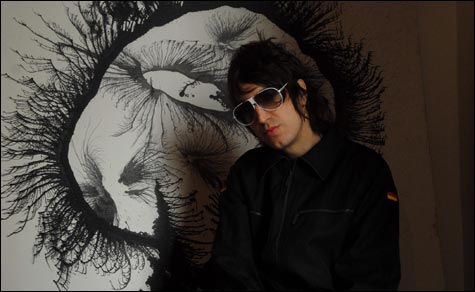
Joseph Arthur : MOMAR man

Joseph Arthur rounds the corner of a wall displaying his artwork, squinting into the soft, perfect light of the main gallery space. MOMAR — the Museum of Modern Arthur — unofficially opened in early June a block from the Brooklyn shore of the East River. The idea is to sell his large abstract paintings, many done live on stage as part of his solo performances, and maybe the work of other artists as well — he’s working it out as he goes along. He’s also busy recording another album with his band, the Lonely Astronauts, roughly his third recorded disc this year. Roughly, that is, because there’s already an album of Lonely Astronaut songs in the can, and he’s also sorting through 35 tracks for his next solo record. How many songs he’s written and recorded lately, he’s not exactly sure.

With his mouth bent into a smile under the heavy slits of his eyes and high forehead, Arthur looks like a porpoise poking his head above the surface of the water — or, eyes adjusting and readjusting to the light, a baby. Rock and roll is notoriously infantilizing to those who practice it. You’re carted to where adoration is readily available by people responsible for your safety, and all manner of intoxicants are presented to you as easily as a bottle tilted at your chin; the whole nocturnal/diurnal divide is just an abstract concept. But some of the best artists are indeed like babies: every sensation arrives as fresh information about the world. Babies are always in the moment.

Arthur is one of those for whom the differences between life and art blur into a smear. Inspiration isn’t something you spend time or energy doubting, no matter how absurd its origins. Take the idea of opening a gallery. “A few months ago, I was just walking around the neighborhood,” he explains, “and there was a broken storefront — somebody had broken into at night. I walked in there and just sat in the middle of it for a little while, and the idea came to me there.”

Art came first for Arthur, who’s 35. He drew and painted growing up in Akron, and he just never stopped. But he also started listening to his older sister’s records, and those of her friends. “I was really young hanging out with older upperclassmen and listening to Zeppelin and shit like that. In eighth grade, I was in a band with two seniors, which in high school years is a lot.”

It was validation from the older, more established set that also established his music as a career. Peter Gabriel signed Arthur to his Real World label, releasing the experimental folk rock of Big City Secrets in 1997. Arthur moved up to Virgin for Come to Where I’m From (2000), and he continued to label-hop with the acclaimed (Universal, 2002) and Redemption’s SonOur Shadows Will Remain (Vector, 2004). He released both Nuclear Daydream (2006) and Let’s Just Be (2007) on his own Lonely Astronaut label. With each recording, he’s taken a different approach to songwriting and presentation, moving from that idiosyncratic folk rock to a more straight-rock band.

The question now is when and where those 35 solo tracks will be winnowed down into a single album and released, because the songs so far are stunning. “A River Blue” — the only one available for public consumption, streamed on josepharthur.com — hints at these tracks. It was recorded in Northern Uganda with 100 young people from a camp for the internally displaced; the idea was to raise awareness for a music-art-and-drama project there. Imagine the displacement of the rough-hewn choir that’s crowding Arthur’s reedy vocals — assuage your guilt by donating at ariverblue.org — and you get an idea of the twilit grandeur to come.

At his best, Arthur positions his songs in the narrow space between heartache and compassion, creating a broad canvas onto which you can splatter your own mess of an internal life. Except that, now, inspired by the band’s drawing out of his inner junior-high rocker, even his solo songwriting drives those sentiments through with melodies that would be big pop hooks if they weren’t in the service of something more obscure.

“This one is more a follow-up to Our Shadows Will Remain,” he says of the upcoming solo disc, “where Nuclear Daydream was a sidestep and Let’s Just Be was a sidestep too. Nothing to diminish the quality of those records, but I was going in a certain direction with Redemption’s Son and Our Shadows Will Remain, and this is more in keeping with that, in that it’s more meticulously produced with in some ways bigger productions, but I think there’s a lot of light in it. There’s lots of love. It’s one of those things that’s hard to talk about in music. I’m not trying to sound esoteric, but you’re talking about one of those things that’s innately esoteric. So it’s difficult to not go there.”

Playing with the Lonely Astronauts has been a revelation, both to him and his audiences. His solo shows held elements of performance art — pretty inescapable when you’re painting a huge canvas throughout the performance — but he was limited to what he could do with his voice and an inventive looping of his acoustic guitar. It was a neat trick, but the Lonely Astronauts, whom he put together to tour Nuclear Daydream, make him a rock star. Thank guitarist Jennifer Turner’s muscular leads in particular; the effect is like hearing Lou Reed’s rocked-up Velvet Underground songs on Rock and Roll Animal. Theirs is the rare show where it seems that anything is possible. When at the end of the Nuclear Daydream tour they began closing sets with the Stones“Miss You,” it felt less ironic than a celebration.

“It’s like a new inspiration, the band,” says Arthur. “It’s a genuine band that came together organically. It feels like a bonus to me, this chemistry that we all discovered. We started writing together, and there was this openness and a lot of fun, just a big spirit about the whole thing, which is what Let’s Just Be is all about, because we took all that crazy energy and went into the studio. That’s why we put that record out. And now we’re recording another band record, which I feel will be quite different.

“It’s definitely liberating. With all this stuff, you have to keep challenging yourself. I suppose that’s what this space is about as well, to some degree.” He casts an eye toward the bright center of MOMAR. “You put these things in front of yourself and through them you grow.”

Located at 25 Jay Street in Brooklyn, the gallery — with its polished, freshly mopped floors and a leggy woman of indeterminately posh accent manning the front desk — officially opened on July 13; the event was marked only by a press release a week later. They’re still figuring things out. The plan is for a big opening event on September 5. (You can track progress at museumofmodernarthur.com)

Arthur’s paintings are mostly dense and layered, on huge unframed canvases. The original of the work seen on the cover of Let’s Just Be, however, is smaller and starkly emotional, with black rivulets of paint radiating out from a figure like a peacock plume coated in club-girl mascara. Some see the figure as the Virgin Mary; others, as a bird. So it goes with Abstract Expressionism.

“I suppose it’s like Abstract Expressionism,” he says. “I’m not too familiar with the labels of it. I have no license to be doing this. It’s all internal. It’s about bringing out something you see in your mind and following the forms. There’s an aspect of meditation to it, some sort of communion with the spirit. As hoky as that sounds, I think it’s true. I feel that it’s a form of therapy meets church meets performance. It’s a funny reaction to life.”

He brushes slept-on hair away from a week and a half’s worth of beard and continues, “I have many days when I write and paint all day long. If you don’t watch TV or get connected into the Internet, it frees up a lot of time, man. But that’s the whole thing, keeping your human spirit alive and awake and unfearful of its explorations.”

He pauses to take a pull from a claret-colored natural energy drink, blinking into the late-afternoon summer sun. “Just being in the moment, being with yourself,” he says of his creative process, which could also be considered a philosophy, or simply life as he’s received it. “It’s kind of like playing.”

Womad : Crime down at music festival

Crime went down significantly at this year's WOMAD festival in Wiltshire, it was announced today. And according to district council officers who attended the event, one woman visiting the festival gave birth while watching a performance. It is not known whether she was from the local area or whether she had planned the unusual birth venue.


Visitors to the festival at Charlton Park, Malmesbury reported 90 crimes to police officers, far fewer than at previous festivals. Nearly three times that number were reported in recent years. One person was arrested for a drugs offence. Traffic police were very happy with the flow of traffic, given the wet weather and volume of vehicles. There were some minor collisions on surrounding roads in Malmesbury that were not related to WOMAD but caused delays nevertheless.

Despite the severe test of wet weather and muddy ground conditions during the event, more than 35,000 people attended the World of Music, Arts and Dance festival organised by Box man Peter Gabriel.

Chief Inspector Rick Wright, from Wiltshire Police said: "I would like to thank everyone involved including North Wiltshire District Council, Wiltshire County Council, Great Western Ambulance Service and the event directors and their contractors for their cooperation in managing this event in such extremely wet conditions."

By Benjamin Parkes

Womad spirit defies rain and mud

Peter Gabriel marked Womad's anniversary with a show of his own

World music's biggest and best-known festival, Womad, was turned into Woe-mud at the weekend by the heavy rain earlier in the week. But Womad, which quit its old home in Reading for a new site in Wiltshire this year, still managed to celebrate its 25th anniversary in the presence of thousands of appreciative fans, and include a headline gig by the festival's founder, Peter Gabriel.

It was something of a homecoming for the former Genesis star as his Real World studios are only just down the road, and he was joined on stage by family and friends. It was something of a greatest hits affair, with fans voting on his website for the songs they wanted to hear. Blood of Eden, No Self Control, Sledgehammer and Solsbury Hill all made it onto the playlist. He was accompanied by the "Cambodian Ray Charles", Kong Nay, for Lay Your Hands on Me. And he was also joined by Mauritania's Daby Touré for a rousing version of In Your Eyes.

The ground was turned into a thick chocolate sauce that had fans squelching in their wellies between the stages, but Womad lost none of its Bohemian qualities. The men's communal showers were opened to women as I was getting washed, while middle-aged people clomped about the site in fairy wings and tutus.

Slightly bemused, Mud at Womad, Conditions were difficult for some

It may have taken an hour-and-a-half to drive the few miles from the M4 motorway to the Charlton Park site but the reggae of Toots and the Maytals soon had smiles back on the faces of some stressed-out drivers.

Chambao are one of a crop of Spanish groups who have emerged in recent years by mixing traditional with modern. They performed flamenco with soul and rap, while Lila Downs wore her very long hair extensions and Mexican/American heritage with pride. Her performances are what painter Frida Kahlo might have come up with if she had formed a mariachi band.

With a new location and the weather to compete with, the normally strict Womad timetable went array several times, while Viscount Andover, who helped bring Womad to his Charlton Park estate home, was still getting to grips with the site. He had to consult a map when asked the way to one of the stages.

Cesaria Evora, The Womad crowd loved Cesaria Evora

Such was the expectation for Cesaria Evora that she was wildly applauded before even opening her mouth in the Siam Tent on Saturday. She seemed slightly bemused by the fuss. Cape Verde's most famous export hardly spoke between her often sad and soulful songs, and she only really moved when she sat down to take a cigarette break while her band played on. But by the time she finished with Besame Mucho she had certainly moved the audience.

Sea of mud

The contrast with Candi Staton could not have been greater. She had the tent singing and dancing as she switched from soul to gospel to disco, taking in her own Young Hearts Run Free and Elvis's In the Ghetto.

Dry islands started to appear in the sea of mud as the sun shone on Saturday, but the heavens had opened again by the time The Imagined Village premiered their live show in the evening. Simon Emmerson of the Afro Celt Sound System had invited musicians such as Billy Bragg, Martin and Eliza Carthy, Johnny Kalsi of the Dhol Foundation and Sheila Chandra to reinterpret some traditional English folk music.

Billy Bragg reinterpreted English folk music for Womad

They were joined on a video screen by dub poet Benjamin Zephaniah for a reworking of the 15th Century poem Tam Lyn.

Isaac Hayes headlined in the pouring rain on the outdoor stage but his famous gravelly voice still managed to put some soul into the night. Clube do Balanco from Brazil had people sambaing in their wellies on Sunday.

David D'Or from Israel set Jewish prayers to music, his powerful voice calling out to people around the site. And he had the crowd dancing en masse to the Jewish folk song Chava Nagila.

By the time local lad Jamie Cullen and his brother Ben made the short trip down the road from Malmesbury the skies had turned blue. Jamie's jazzy, funky pop may not be traditional Womad fare but he and the crowd leapt to it. The brothers tried out some of their new material, including an improvised number called... Womad 2007.

The organisers said they left Reading because Womad had outgrown the site there. Charlton Park is certainly much bigger, but it needs the benefit of good weather before it can be properly judged.

By Martin Vennard, BBC News, Charlton Park, Wiltshire